The Immense Influence of the Bible on Human Law
It is a consistent argument by critics of God and the Bible that all laws that were framed for human beings, are secular in origin. When we examine the facts of history, in every civilized society where laws govern the people of their lands, the Bible is the origin of jurisprudence.
This extensive essay documents the 125 Biblical laws and principles that directly affected the human and secular laws that order every part of human life.
Did The Founders Of America Intend That It Would Be A Christian Nation?
Early American laws were heavily influenced by biblical law. The establishment of the United States of America depended on the Laws of God, detailed in Blackstone’s Commentary on the Law. The interplay between biblical principles, and English common law, shaped the legal systems in the American colonies and later the United States. Here’s how biblical law factored into early American law:
 The Bible’s Influence on Law, Copyright RCR
Biblical Foundations in Moral and Civil Law
Many early colonial laws drew directly from biblical principles, particularly the moral teachings of the Old Testament (e.g., the Ten Commandments). These principles guided laws related to murder, theft, adultery, and perjury.
There are over 100,000 documents from the founders of America that prove those who came to America, believed that God had brought them to this land to establish a nation with its laws and principles based on the Bible.
See The Words Of These 52 Men
Notice the opening text from the Declaration of Independence, which gives us the reason that the Founding Fathers felt compelled to try and do the impossible :
“When in the Course of human events it becomes necessary for one people to dissolve the political bands which have connected them with another and to assume among the powers of the earth, the separate and equal station to which the Laws of Nature and of Nature’s God entitle them, a decent respect to the opinions of mankind requires that they should declare the causes which impel them to the separation.”
In this one sentence, the founding fathers forcefully declared why they must separate themselves from Great Britain.
“The Laws of Nature, and Nature’s God”.
These 8 words expressed a complete manner of Law and of life.
This statement in our founding document declares an agenda, a wide spread movement, and has specific beliefs. The source for this statement was “Blackstone’s Commentary on the Law” Blackstone’s was the law book used for years before the American Revolution ever happened. Blackstone’s was the primary text book in law schools until 1920. Bar exams were taken from this book. The Supreme court quoted from this book several times in its opinions. Blackstone was considered the final authority on a majority of legal issues. Blackstone predicated all human law on the Laws of God.
The men who framed the Constitution and signed the Declaration of Independence believed that all of the laws in the United States of America came from God and His Word, as written in the Bible. The Founders of the United States of America believed that man does not have the right, or the capacity to institute laws apart from God’s law.
The Puritans in New England explicitly sought to create legal systems grounded in Scripture. For example, the 1641 Massachusetts Body of Liberties was influenced by Mosaic Law, with direct citations from the Bible.
Integration with English Common Law
English common law, which formed the foundation of American jurisprudence, itself bore evidence of Christian moral principles. This influence came through centuries of church teachings intertwined with the legal traditions of England.
Blackstone’s Commentaries on the Laws of England frequently referenced natural law and divine law, asserting that human laws should conform to God’s higher laws.
Key Examples of Early Biblical Influence
- Sabbath Laws: Many colonies instituted laws requiring Sunday observance, reflecting the biblical commandment to keep the Sabbath holy.
- Blasphemy and Oaths: Laws against blasphemy and requirements to swear oaths “so help me God” were rooted in biblical respect for the divine.
- Marriage and Family Laws: Early laws regulating marriage, divorce, and family structure were strongly influenced by biblical teachings.
- Charitable and Social Justice Laws: Biblical mandates to care for the poor and administer justice impartially were reflected in laws supporting the indigent.
Biblical Law Provided a Significant Moral and Ethical Foundation For early American Laws
Many laws in early American and Western legal traditions have their origins in biblical principles, particularly from the Ten Commandments and Mosaic Law found in the Old Testament. The following is a list of key biblical laws and their corresponding influence on legal systems:
Moral Laws
1. Prohibition of Murder
- Biblical Source: “You shall not murder.” (Exodus 20:13)
- Legal Application: Criminal laws against homicide.
2. Prohibition of Theft
- Biblical Source: “You shall not steal.” (Exodus 20:15)
- Legal Application: Laws against robbery, burglary, and larceny.
3. Prohibition of False Witness/Testimony
- Biblical Source: “You shall not bear false witness against your neighbor.” (Exodus 20:16)
- Legal Application: Laws against perjury in courts and false accusations.
4. Prohibition of Adultery
- Biblical Source: “You shall not commit adultery.” (Exodus 20:14)
- Legal Application: Early laws regulating marriage and penalizing adultery.
5. Honor Your Parents
- Biblical Source: “Honor your father and your mother.” (Exodus 20:12)
- Legal Application: Early colonial laws emphasized familial hierarchy and respect for parental authority.
Civil Laws
6. Restitution for Theft or Damage
- Biblical Source: “If someone steals an ox or a sheep and slaughters it or sells it, they must pay back five head of cattle for the ox and four sheep for the sheep.” (Exodus 22:1)
- Legal Application: Civil laws requiring restitution for property damage or theft.
7 .Fair Treatment of Workers
- Biblical Source: “Do not withhold wages from a hired worker overnight.” (Leviticus 19:13)
- Legal Application: Labor laws requiring prompt payment and fair treatment.
8. Sanctity of Contracts and Oaths
- Biblical Source: “If a man makes a vow to the Lord or takes an oath…he must not break his word.” (Numbers 30:2)
- Legal Application: Contract law enforcing promises and binding agreements.
Social and Humanitarian Laws
9. Protection of the Vulnerable
- Biblical Source: “Do not take advantage of a widow or an orphan.” (Exodus 22:22)
- Legal Application: Laws protecting widows, orphans, and marginalized groups.
10. Prohibition of Partiality in Justice
- Biblical Source: “Do not show favoritism to a poor person in a lawsuit.” (Exodus 23:3)
- Legal Application: Equality before the law and unbiased judicial systems.
11. Sabbath Laws
- Biblical Source: “Remember the Sabbath day by keeping it holy.” (Exodus 20:8)
- Legal Application: Blue laws restricting business and labor on Sundays.
12. Care for Strangers and Immigrants
- Biblical Source: “You are to love those who are foreigners, for you yourselves were foreigners in Egypt.” (Deuteronomy 10:19)
- Legal Application: Early colonial laws encouraging fair treatment of immigrants.
Sanctions and Penalties
13. Punishment for Blasphemy
- Biblical Source: “Anyone who blasphemes the name of the Lord is to be put to death.” (Leviticus 24:16)
- Legal Application: Blasphemy laws in colonial America.
14. Capital Punishment for Severe Crimes
- Biblical Source: “Whoever sheds human blood, by humans shall their blood be shed.” (Genesis 9:6)
- Legal Application: Laws mandating the death penalty for murder.
15. Eye for an Eye (Lex Talionis)
- Biblical Source: “You are to take life for life, eye for eye, tooth for tooth…” (Exodus 21:23-25)
- Legal Application: Principles of proportional justice (though often modified to monetary compensation).
Property and Economic Laws
16. Prohibition of Moving Boundary Stones
- Biblical Source: “Do not move your neighbor’s boundary stone set up by your predecessors.” (Deuteronomy 19:14)
- Legal Application: Property law regarding land disputes.
17. Regulation of Loans and Interest
- Biblical Source: “Do not charge a fellow Israelite interest.” (Exodus 22:25)
- Legal Application: Early colonial laws restricting usury.
18. Debt Forgiveness
- Biblical Source: “At the end of every seven years you must cancel debts.” (Deuteronomy 15:1)
- Legal Application: Influences on bankruptcy laws.
Personal Responsibility and Accountability
19. Responsibility for Negligence
- Biblical Source: “If anyone uncovers a pit or digs one and fails to cover it and an ox or a donkey falls into it, the one who opened the pit must pay the owner for the loss.” (Exodus 21:33-34)
- Legal Application: Tort law principles, where individuals are responsible for harm caused by their negligence.
20. Requirement to Return Lost Property
- Biblical Source: “If you come across your enemy’s ox or donkey wandering off, be sure to return it.” (Exodus 23:4)
- Legal Application: Early laws requiring the return of lost or stolen property to rightful owners.
21. Liability for Damages Caused by Animals
- Biblical Source: “If a bull gores a man or a woman to death, the bull is to be stoned to death…but if the bull has had the habit of goring and the owner has been warned but has not kept it penned up, the owner also must be put to death.” (Exodus 21:28-29)
- Legal Application: Laws on liability for animal attacks, especially in cases of prior knowledge of danger.
Environmental and Agricultural Laws
22. Protection of Trees in Wartime
- Biblical Source: “When you lay siege to a city…do not destroy its trees by putting an ax to them, because you can eat their fruit.” (Deuteronomy 20:19)
- Legal Application: Early environmental protection laws.
23. Resting the Land
- Biblical Source: “For six years you are to sow your fields and harvest the crops, but during the seventh year let the land lie unplowed and unused.” (Exodus 23:10-11)
- Legal Application: Sustainable agriculture principles, including crop rotation.
24. Leaving Gleanings for the Poor
- Biblical Source: “When you reap the harvest of your land, do not reap to the very edges of your field or gather the gleanings of your harvest.” (Leviticus 19:9-10)
- Legal Application: Early welfare practices, encouraging provisions for the poor and marginalized.
Sanitation and Public Health Laws
25. Quarantine for Contagious Diseases
- Biblical Source: “When anyone has a defiling skin disease, they must be brought to the priest…They must live alone; they must live outside the camp.” (Leviticus 13:1-46)
- Legal Application: Early public health measures to control infectious diseases.
26. Waste Disposal Outside Camp
- Biblical Source: “Designate a place outside the camp where you can go to relieve yourself.” (Deuteronomy 23:12-13)
- Legal Application: Early sanitation laws for waste management.
Ethics in Business and Trade
27. Honest Weights and Measures
- Biblical Source: “Do not have two differing weights in your bag—one heavy, one light.” (Deuteronomy 25:13-15)
- Legal Application: Regulations against fraud in trade and commerce, requiring fair scales.
28. Timely Payment of Wages
- Biblical Source: “Do not hold back the wages of a hired worker overnight.” (Leviticus 19:13)
- Legal Application: Laws ensuring fair treatment of workers and prompt payment.
Criminal Laws
29. Punishment for Kidnapping
- Biblical Source: “Anyone who kidnaps someone is to be put to death, whether the victim has been sold or is still in their possession.” (Exodus 21:16)
- Legal Application: Early laws criminalizing human trafficking and abduction.
30. Asylum for Accidental Killers
- Biblical Source: “Set aside for yourselves three cities…so that anyone who kills a person accidentally may flee there.” (Deuteronomy 19:2-4)
- Legal Application: Creation of “cities of refuge” as precursors to modern asylum laws or manslaughter defenses.
Human Rights and Social Justice
31. Prohibition of Oppression
- Biblical Source: “Do not oppress a foreigner; you yourselves know how it feels to be foreigners, because you were foreigners in Egypt.” (Exodus 23:9)
- Legal Application: Laws protecting immigrants and marginalized communities.
32. Prohibition of Bribery
- Biblical Source: “Do not accept a bribe, for a bribe blinds those who see and twists the words of the innocent.” (Exodus 23:8)
- Legal Application: Anti-corruption laws to ensure fairness in governance and judiciary.
33. Justice for the Poor
- Biblical Source: “Do not deny justice to your poor people in their lawsuits.” (Exodus 23:6)
- Legal Application: Legal aid and protections for disadvantaged individuals.
Religious Freedom and Worship
34. Freedom to Worship
- Biblical Source: “Let my people go, so that they may worship me.” (Exodus 9:1)
- Legal Application: Early advocacy for religious liberty.
35. Blasphemy Laws
- Biblical Source: “Whoever blasphemes the name of the Lord must be put to death.” (Leviticus 24:16)
- Legal Application: Early colonial blasphemy statutes.
These laws demonstrate that biblical principles extended far beyond moral conduct, influencing civil, criminal, public health, and economic laws.
The Bible also contains a vast array of laws and principles that influenced early legal systems, particularly in the areas of morality, governance, and societal structure:
Moral and Family Laws
36. Inheritance Rights
- Biblical Source: “If a man has two wives and he loves one but not the other…he must not give the rights of the firstborn to the son of the wife he loves in preference to his actual firstborn.” (Deuteronomy 21:15-17)
- Legal Application: Early inheritance laws ensuring rights for all legitimate heirs.
37. Parental Responsibility
- Biblical Source: “Parents are not to be put to death for their children, nor children put to death for their parents; each will die for their own sin.” (Deuteronomy 24:16)
- Legal Application: Laws ensuring individual responsibility in legal matters, opposing collective punishment.
38. Discipline of Children
- Biblical Source: “Whoever spares the rod hates their children, but the one who loves their children is careful to discipline them.” (Proverbs 13:24)
- Legal Application: Cultural and legal support for parental discipline (though adapted over time).
Property and Economic Justice
39. Boundary Integrity
- Biblical Source: “Cursed is anyone who moves their neighbor’s boundary stone.” (Deuteronomy 27:17)
- Legal Application: Property laws upholding land boundaries and penalizing encroachment.
40. Prohibition of Overwork
- Biblical Source: “Six days you shall labor and do all your work, but the seventh day is a sabbath to the Lord.” (Exodus 20:9-10)
- Legal Application: Labor laws limiting excessive work hours and advocating for rest days.
Governance and Leadership
41. Standards for Leadership
- Biblical Source: “Appoint judges and officials for each of your tribes in every town the Lord your God is giving you, and they shall judge the people fairly.” (Deuteronomy 16:18)
- Legal Application: Foundations for fair judicial systems and local governance.
42. Limits on Government Power
- Biblical Source: “The king, moreover, must not acquire great numbers of horses for himself or make the people return to Egypt to get more of them.” (Deuteronomy 17:16)
- Legal Application: Principles advocating limited government and checks on executive power.
Humanitarian and Charity Laws
43. Loans Without Oppression
- Biblical Source: “If you lend money to one of my people among you who is needy, do not treat it like a business deal; charge no interest.” (Exodus 22:25)
- Legal Application: Early laws on usury and fair lending practices.
44. Protection for Slaves and Servants
- Biblical Source: “If you buy a Hebrew servant, he is to serve you for six years. But in the seventh year, he shall go free.” (Exodus 21:2)
- Legal Application: Foundations for laws addressing servitude and manumission.
45. Hospitality to Strangers
- Biblical Source: “Do not oppress a foreigner; you yourselves know how it feels to be foreigners in Egypt.” (Exodus 23:9)
- Legal Application: Laws supporting humane treatment of immigrants and refugees.
Sanitation and Health
46. Clean vs. Unclean Animals
- Biblical Source: “These are the animals you may eat: the ox, sheep, and goat…” (Leviticus 11:2-47)
- Legal Application: Early dietary regulations that informed public health standards.
47. Protection Against Contamination
- Biblical Source: “When a man is unclean because of a nocturnal emission, he must wash himself and wait until evening.” (Leviticus 15:16)
- Legal Application: Principles of hygiene in legal frameworks.
Judicial Practices
48. Requirement of Two Witnesses
- Biblical Source: “One witness is not enough to convict anyone accused of any crime.” (Deuteronomy 19:15)
- Legal Application: Establishment of evidentiary standards in judicial proceedings.
49. Prohibition of False Charges
- Biblical Source: “Do not spread false reports. Do not help a guilty person by being a malicious witness.” (Exodus 23:1)
- Legal Application: Laws against defamation and slander.
50. Protection from Excessive Punishment
- Biblical Source: “Forty lashes he may give him, but no more, lest he should exceed and beat him with many stripes above these, and your brother be degraded in your eyes.” (Deuteronomy 25:3)
- Legal Application: Prohibition of cruel and unusual punishment.
Religious and Cultural Influence
51. Covenants and Treaties
- Biblical Source: “You shall not make a covenant with them or with their gods.” (Exodus 23:32)
- Legal Application: Emphasis on the sanctity of agreements and treaties.
52. Idolatry Prohibited
- Biblical Source: “You shall not make for yourself an image in the form of anything in heaven above or on the earth below.” (Exodus 20:4)
- Legal Application: Early influence on laws preventing religious imposition or idolatry.
Moral and Ethical Laws
53. Prohibition of Coveting
- Biblical Source: “You shall not covet your neighbor’s house. You shall not covet your neighbor’s wife, or his male or female servant, his ox or donkey, or anything that belongs to your neighbor.” (Exodus 20:17)
- Legal Application: Indirectly influenced property laws and discouragement of unethical competition or jealousy-driven disputes.
54. Kindness to Animals
- Biblical Source: “If you see your neighbor’s donkey or ox fallen on the road, do not ignore it. Help the owner get it to its feet.” (Deuteronomy 22:4)
- Legal Application: Animal welfare laws ensuring humane treatment and assistance for animals in distress.
55. Prohibition of Revenge
- Biblical Source: “Do not seek revenge or bear a grudge against anyone among your people, but love your neighbor as yourself.” (Leviticus 19:18)
- Legal Application: Encouragement of forgiveness and peaceful dispute resolution in community and legal contexts.
Marriage and Family Laws
56. Levirate Marriage
- Biblical Source: “If brothers are living together and one of them dies without a son, his widow must not marry outside the family. Her husband’s brother shall take her and marry her.” (Deuteronomy 25:5)
- Legal Application: Early inheritance laws ensuring protection for widows and continuation of family lines.
57. Protection from Forced Marriage
- Biblical Source: “If a man meets a virgin who is not betrothed, and he seizes her and lies with her, and they are found, then the man who lay with her shall give to the father of the young woman fifty shekels of silver, and she shall be his wife.” (Deuteronomy 22:28-29)
- Legal Application: Protection for women’s dignity, though culturally adapted in legal codes over time.
58. Prohibition of Sexual Exploitation
- Biblical Source: “Do not degrade your daughter by making her a prostitute.” (Leviticus 19:29)
- Legal Application: Early laws against sexual exploitation and prostitution.
Governance and Military Laws
59. Exemptions from Military Service
- Biblical Source: “If anyone is afraid or fainthearted, let him go home so that his fellow soldiers will not become disheartened too.” (Deuteronomy 20:8)
- Legal Application: Early consideration for conscientious objection or exemptions from service.
60. Prohibition of Excessive Force in Warfare
- Biblical Source: “When you march up to attack a city, make its people an offer of peace.” (Deuteronomy 20:10)
- Legal Application: Influence on laws concerning the humane treatment of enemy populations and attempts at diplomacy.
61. Requirement to Respect Captives
- Biblical Source: “If you notice among the captives a beautiful woman and are attracted to her, you may take her as your wife. Bring her into your home and have her shave her head, trim her nails.” (Deuteronomy 21:10-13)
- Legal Application: Provisions for humane treatment of captives and prohibitions against abuse.
Economic and Labor Laws
62. Limitations on Bonded Servitude
- Biblical Source: “Do not make them work as slaves. They are to be treated as hired workers or temporary residents.” (Leviticus 25:39-40)
- Legal Application: Early laws seeking to limit exploitation of workers and servants.
63. Release of Slaves Every Jubilee
- Biblical Source: “Consecrate the fiftieth year and proclaim liberty throughout the land to all its inhabitants.” (Leviticus 25:10)
- Legal Application: Influenced the concepts of periodic debt forgiveness and freedom from servitude.
64. Prohibition of Oppressive Interest Rates
- Biblical Source: “Do not charge your brother interest, whether on money, food, or anything else.” (Deuteronomy 23:19)
- Legal Application: Usury laws limiting predatory lending practices.
Environmental and Public Health Laws
65. Animal Rest on the Sabbath
- Biblical Source: “Six days do your work, but on the seventh day do not work, so that your ox and your donkey may rest.” (Exodus 23:12)
- Legal Application: Early protections for working animals, promoting humane treatment.
66. Prohibition of Cross-Breeding and Mixing
- Biblical Source: “Do not plant your field with two kinds of seed. Do not wear clothing woven of two kinds of material.” (Leviticus 19:19)
- Legal Application: Early agricultural laws influencing uniform practices.
67. Regulations on Clean and Unclean Food
- Biblical Source: “You may eat any animal that has a divided hoof and that chews the cud.” (Leviticus 11:3)
- Legal Application: Early dietary restrictions promoting health and cleanliness.
Judicial and Procedural Laws
68. Avoidance of Favoritism
- Biblical Source: “Do not pervert justice; do not show partiality to the poor or favoritism to the great.” (Leviticus 19:15)
- Legal Application: Laws enforcing impartiality in judicial proceedings.
69. Protection from Group Responsibility
- Biblical Source: “Fathers shall not be put to death for their children, nor children put to death for their fathers.” (Deuteronomy 24:16)
- Legal Application: Laws emphasizing personal responsibility and fairness in punishment.
Covenantal Principles
70. Blessings for Obedience and Curses for Disobedience
- Biblical Source: “If you fully obey the Lord your God…all these blessings will come on you… But if you do not obey, all these curses will come on you.” (Deuteronomy 28:1-68)
- Legal Application: Influence on early covenants and contracts, emphasizing consequences for compliance or breach.
71. Prohibition of False Idols in Governance
- Biblical Source: “You shall have no other gods before me.” (Exodus 20:3)
- Legal Application: Shaping early colonial laws discouraging idolatry and excessive allegiance to foreign powers.
The Bible provided a rich source of laws that influenced diverse areas of life and governance. These laws and principles permeated early legal systems, often adapted to fit specific cultural and historical contexts.
Moral and Ethical Laws
72. Prohibition Against Gossip
- Biblical Source: “Do not go about spreading slander among your people.” (Leviticus 19:16)
- Legal Application: Early laws against defamation, libel, and slander.
73. Encouragement of Reconciliation
- Biblical Source: “If your brother sins against you, go and tell him his fault between you and him alone.” (Matthew 18:15)
- Legal Application: Influence on mediation and alternative dispute resolution processes.
74. Prohibition of Malicious Intent
- Biblical Source: “Do not plot harm against your neighbor, who lives trustfully near you.” (Proverbs 3:29)
- Legal Application: Laws penalizing conspiracy and malicious acts.
Marriage and Sexual Ethics
75. Prohibition of Incestuous Relationships
- Biblical Source: “No one is to approach any close relative to have sexual relations.” (Leviticus 18:6)
- Legal Application: Laws banning incest, still observed in most jurisdictions.
76. Prohibition of Bestiality
- Biblical Source: “Anyone who has sexual relations with an animal is to be put to death.” (Exodus 22:19)
- Legal Application: Universal criminalization of bestiality.
77. Requirement for Faithfulness in Marriage
- Biblical Source: “You shall not commit adultery.” (Exodus 20:14)
- Legal Application: Early laws penalizing adultery, shaping family law and marital expectations.
Economic Justice
78. Honest Business Practices
- Biblical Source: “You must not have in your bag differing weights, a heavy and a light.” (Deuteronomy 25:13)
- Legal Application: Regulations ensuring fair trade and honest commerce.
79. Debt Relief for the Poor
- Biblical Source: “If anyone is poor among your fellow Israelites…you shall open wide your hand to them.” (Deuteronomy 15:7-8)
- Legal Application: Principles underlying bankruptcy laws and social safety nets.
80. Prohibition of Hoarding Resources
- Biblical Source: “The people are to go out each day and gather enough for that day.” (Exodus 16:4)
- Legal Application: Early influence on laws against monopolistic practices.
Sanitation and Public Health
81. Burial of the Dead
- Biblical Source: “You must bury him that same day.” (Deuteronomy 21:23)
- Legal Application: Early burial laws ensuring dignity and public health.
82. Rules on Isolation for Impurity
- Biblical Source: “Anyone with such a defiling disease must wear torn clothes, let their hair be unkempt…and live outside the camp.” (Leviticus 13:45-46)
- Legal Application: Foundation for quarantine measures in health crises.
83. Clean Water Practices
- Biblical Source: “The Lord your God moves about in your camp to protect you…therefore your camp must be holy.” (Deuteronomy 23:14)
- Legal Application: Principles of sanitation influencing public health policies.
Judicial and Procedural Fairness
84. Limitation on Punitive Damages
- Biblical Source: “An eye for an eye, a tooth for a tooth.” (Exodus 21:24)
- Legal Application: Basis for proportional justice and restrictions on excessive punishment.
85. Right to a Fair Hearing
- Biblical Source: “If they have a dispute, they are to take it to court and the judges will decide the case.” (Deuteronomy 25:1)
- Legal Application: Establishment of judicial systems and due process.
86. Impartiality of Judges
- Biblical Source: “Do not pervert justice or show partiality. Do not accept a bribe.” (Deuteronomy 16:19)
- Legal Application: Ethics for judges and public officials.
Covenantal and Societal Obligations
87. Commitment to Agreements
- Biblical Source: “When a man makes a vow to the Lord or takes an oath to bind himself by a pledge, he must not break his word.” (Numbers 30:2)
- Legal Application: Foundations for contract law and the sanctity of agreements.
88. Year of Jubilee
- Biblical Source: “Consecrate the fiftieth year and proclaim liberty throughout the land.” (Leviticus 25:10)
- Legal Application: Influenced property redistribution and economic resets.
Governance and Military Ethics
89. Rules of Engagement in Warfare
- Biblical Source: “When you march up to attack a city, make its people an offer of peace.” (Deuteronomy 20:10)
- Legal Application: Early norms for humane warfare and diplomacy.
90. Leaders Held to Higher Standards
- Biblical Source: “Appoint for yourselves wise, understanding, and respected men.” (Deuteronomy 1:13)
- Legal Application: Expectations of integrity for leaders and public servants.
Miscellaneous Principles
91. Safeguarding Human Dignity
- Biblical Source: “When you build a new house, make a parapet around your roof so that you may not bring bloodguilt on your house.” (Deuteronomy 22:8)
- Legal Application: Safety laws and building codes.
92. Prohibition Against Oppression
- Biblical Source: “Do not oppress a hired worker who is poor and needy.” (Deuteronomy 24:14)
- Legal Application: Labor laws ensuring fair treatment of workers.
93. Protection for Animals
- Biblical Source: “Do not muzzle an ox while it is treading out the grain.” (Deuteronomy 25:4)
- Legal Application: Animal rights and humane treatment laws.
These examples illustrate how biblical principles informed diverse aspects of legal, societal, and moral codes.
The Bible contains a wealth of laws and principles that have influenced legal, moral, and cultural systems throughout history. The following are further examples of biblical laws and their implications for society and legal systems:
Moral and Ethical Laws
94. Prohibition of Jealousy in Relationships
- Biblical Source: “Do not covet your neighbor’s wife.” (Exodus 20:17)
- Legal Application: Cultural norms emphasizing fidelity and respect for marriage.
95. Encouragement of Generosity
- Biblical Source: “Freely you have received; freely give.” (Matthew 10:8)
- Legal Application: Inspiration for charitable giving and social welfare programs.
96. Requirement to Speak Truthfully
- Biblical Source: “Therefore each of you must put off falsehood and speak truthfully to your neighbor.” (Ephesians 4:25)
- Legal Application: Basis for truth-in-advertising laws and transparency requirements.
Family and Marriage Laws
97. Prohibition of Polygamy for Leaders
- Biblical Source: “He must not take many wives, or his heart will be led astray.” (Deuteronomy 17:17)
- Legal Application: Early restrictions on polygamy, especially for public officials.
98. Right to Divorce in Cases of Infidelity
- Biblical Source: “I tell you that anyone who divorces his wife, except for sexual immorality, and marries another woman commits adultery.” (Matthew 19:9)
- Legal Application: Foundations for divorce laws in cases of infidelity.
Economic and Property Laws
99. Rules for Land Ownership and Redemption
- Biblical Source: “The land must not be sold permanently, because the land is mine.” (Leviticus 25:23)
- Legal Application: Principles influencing land use laws and property rights.
100. Fair Payment for Services
- Biblical Source: “The worker deserves his wages.” (Luke 10:7)
- Legal Application: Wage protection and labor laws.
101. Laws Against Hoarding Wealth
- Biblical Source: “Now listen, you rich people, weep and wail because of the misery that is coming on you.” (James 5:1-5)
- Legal Application: Support for progressive taxation and wealth redistribution.
Sanitation and Public Health
102. Regulations on Skin Diseases
- Biblical Source: “The priest is to examine them, and if the sore has turned white, the person is clean.” (Leviticus 13:13)
- Legal Application: Early health inspections and protocols for infectious diseases.
103. Disposal of Animal Carcasses
- Biblical Source: “Anyone who picks up one of their carcasses must wash their clothes, and they will be unclean until evening.” (Leviticus 11:25)
- Legal Application: Early waste management and sanitation practices.
Judicial and Procedural Fairness
104. Protection Against False Accusations
- Biblical Source: “If a malicious witness takes the stand to accuse someone of a crime, the judges must make a thorough investigation.” (Deuteronomy 19:16-18)
- Legal Application: Laws protecting individuals from false charges.
105. Right to Due Process
- Biblical Source: “Listen now to what I have to say: Do not bring charges against anyone without evidence.” (Job 5:24)
- Legal Application: Requirement for evidence-based trials.
106. Right to Defense
- Biblical Source: “Speak up for those who cannot speak for themselves, for the rights of all who are destitute.” (Proverbs 31:8)
- Legal Application: Legal provisions ensuring representation for the accused.
Governance and Social Order
107. Support for the Vulnerable
- Biblical Source: “Defend the weak and the fatherless; uphold the cause of the poor and the oppressed.” (Psalm 82:3)
- Legal Application: Laws providing social safety nets for marginalized groups.
108. Opposition to Tyranny
- Biblical Source: “Woe to those who make unjust laws, to those who issue oppressive decrees.” (Isaiah 10:1)
- Legal Application: Foundations for constitutional limits on government power.
109. Accountability for Leaders
- Biblical Source: “When the righteous thrive, the people rejoice; when the wicked rule, the people groan.” (Proverbs 29:2)
- Legal Application: Ethical standards and impeachment processes for leaders.
Environmental Stewardship
110. Preservation of Trees and Nature
- Biblical Source: “Are the trees people, that you should besiege them?” (Deuteronomy 20:19)
- Legal Application: Early environmental conservation laws.
111. Respect for Animals’ Needs
- Biblical Source: “Even the wild animals cry out to you because the streams have dried up.” (Joel 1:20)
- Legal Application: Laws ensuring access to water and protection of habitats.
Miscellaneous Principles
112. Right to Rest for All Beings
- Biblical Source: “On it you shall not do any work, neither you, nor your son or daughter, nor your male or female servant, nor your animals.” (Exodus 20:10)
- Legal Application: Universal rest days protecting workers and animals.
113. Prohibition of Manipulation
- Biblical Source: “Woe to those who draw sin along with cords of deceit.” (Isaiah 5:18)
- Legal Application: Laws against fraud and deception in contracts.
The following are a few specific historical examples of how biblical laws were implemented in legal systems, particularly during the early development of Western and American law:
114. Prohibition of Murder
- Biblical Source: “You shall not murder.” (Exodus 20:13)
- Historical Example:: Early colonial laws in America, such as the Massachusetts Body of Liberties (1641), explicitly codified the prohibition of murder, often citing the Ten Commandments as their foundation.
- English common law, which influenced American law, treated murder as a capital offense, directly reflecting the biblical view of the sanctity of life.
115. Sabbath Laws (Blue Laws)
- Biblical Source: “Remember the Sabbath day by keeping it holy.” (Exodus 20:8)
- Historical Example: Colonial Blue Laws: In the 17th and 18th centuries, many American colonies passed laws requiring Sunday observance, including prohibitions on work, trade, and recreational activities. For example:
- The Connecticut Blue Laws (1650) required all citizens to refrain from work on Sundays, citing biblical authority.
- These laws remained in effect in many states well into the 20th century.
116. Protection Against False Witness
- Biblical Source: “You shall not bear false witness against your neighbor.” (Exodus 20:16)
- Historical Example: The English legal system, adopted in America, included perjury laws influenced by this biblical commandment. False testimony under oath was treated as a severe crime because it undermined justice, echoing the biblical emphasis on truth in court.
117. Restitution for Theft
- Biblical Source: “If a man steals an ox or a sheep and slaughters it or sells it, he must repay five cattle for the ox and four sheep for the sheep.” (Exodus 22:1)
- Historical Example: Colonial laws in New England required restitution for theft, often specifying repayment in multiples of what was stolen, reflecting the Mosaic principle.
- English common law similarly mandated restitution as a remedy for theft, a practice carried into American law.
118. Prohibition of Adultery
- Biblical Source: “You shall not commit adultery.” (Exodus 20:14)
- Historical Example: Puritan Laws: In Puritan New England, adultery was treated as a criminal offense, punishable by fines, public shaming, or even death in severe cases. For example:
- The Massachusetts Bay Colony Laws (1641) made adultery punishable by death, reflecting the Old Testament prescription.
- Over time, these laws became less severe but still influenced the development of family law.
119. Quarantine Laws
- Biblical Source: “Anyone with such a defiling disease must live alone; they must live outside the camp.” (Leviticus 13:46)
- Historical Example: During the outbreaks of diseases like smallpox and yellow fever in colonial America, biblical principles of quarantine were explicitly invoked.
- For example, during the 18th century, laws in Massachusetts and Pennsylvania mandated isolation for those with contagious diseases, citing biblical precedents as justification.
120. Honest Weights and Measures
- Biblical Source: “Do not have two differing weights in your bag—one heavy, one light.” (Deuteronomy 25:13)
- Historical Example: England’s early trade laws, inherited by the American colonies, required standardized weights and measures, ensuring fairness in commerce. These laws were based on biblical principles of honesty and fairness in trade.
- The U.S. Constitution granted Congress the power to standardize weights and measures, a principle rooted in this biblical injunction.
121. Rules for Land Ownership
- Biblical Source: “The land must not be sold permanently, because the land is mine.” (Leviticus 25:23)
- Historical Example: Early American laws on land inheritance and use reflected the idea that land ownership carried responsibilities. For example, many colonial charters and state constitutions tied land use to moral obligations like providing for one’s family and community.
- The Homestead Act (1862) echoed the biblical idea of stewardship by requiring settlers to improve the land they claimed.
122. Laws of Witnesses
- Biblical Source: “A matter must be established by the testimony of two or three witnesses.” (Deuteronomy 19:15)
- Historical Example: The requirement for corroborating evidence in criminal cases, as seen in English common law and American jurisprudence, was influenced by this biblical standard.
- For example, during the Salem witch trials, the lack of credible witnesses or corroborating evidence was later recognized as a miscarriage of justice, reflecting the importance of this principle.
123. Care for the Poor
- Biblical Source: “When you reap the harvest of your land, do not reap to the very edges of your field…Leave them for the poor and the foreigner.” (Leviticus 19:9-10)
- Historical Example: Colonial poor laws, such as those in Massachusetts and Virginia, required communities to care for the needy, providing food, housing, and employment. These laws were often explicitly justified using biblical commands to care for the less fortunate.
124. Capital Punishment
- Biblical Source: “Whoever sheds human blood, by humans shall their blood be shed.” (Genesis 9:6)
- Historical Example: Capital punishment for murder and other serious crimes was enshrined in early colonial laws. The justification often cited Genesis 9:6, emphasizing the sanctity of human life and the need for justice.
125. Protection of Foreigners
- Biblical Source: “Do not oppress a foreigner; you yourselves know how it feels to be foreigners in Egypt.” (Exodus 23:9)
- Historical Example: Colonial charters and laws often emphasized fair treatment of immigrants and newcomers, reflecting this biblical ethic. For instance:
- Pennsylvania, under William Penn, welcomed diverse settlers and offered religious freedom, citing biblical principles of justice and kindness.
These are historical examples of biblical law implemented into practical human laws through every generation. These examples demonstrate that biblical principles were not only moral guidelines but also practical foundations for the development of legal systems. They were explicitly cited in laws, charters, and judicial decisions, especially in colonial America, and throughout the world.
See How The Laws Of The Bible Impacted The Foundation Of The United States
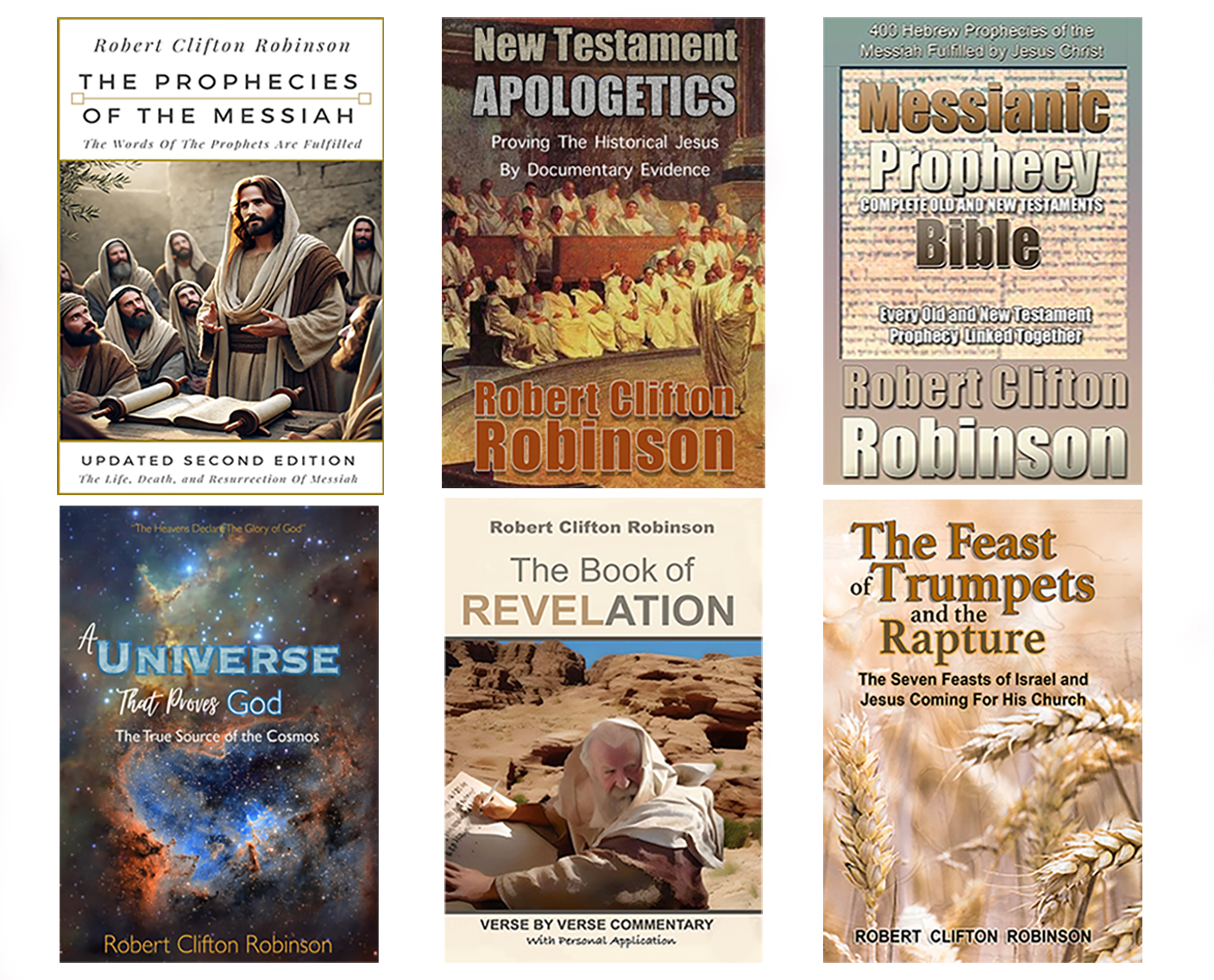
See All of Rob’s Books:
Categories: Robert Clifton Robinson
 Robert Clifton Robinson
Please see, "Guidelines For Debate," at the right-side menu. Post your comment or argument here: