God’s requirement for sorrow over sin and repentance before granting forgiveness and eternal life is rooted in His holiness, justice, and love.
This principle is found throughout the Bible and reflects the relational, moral, and transformative nature of the salvation God offers. Below is a detailed answer to the question of repentance before salvation.
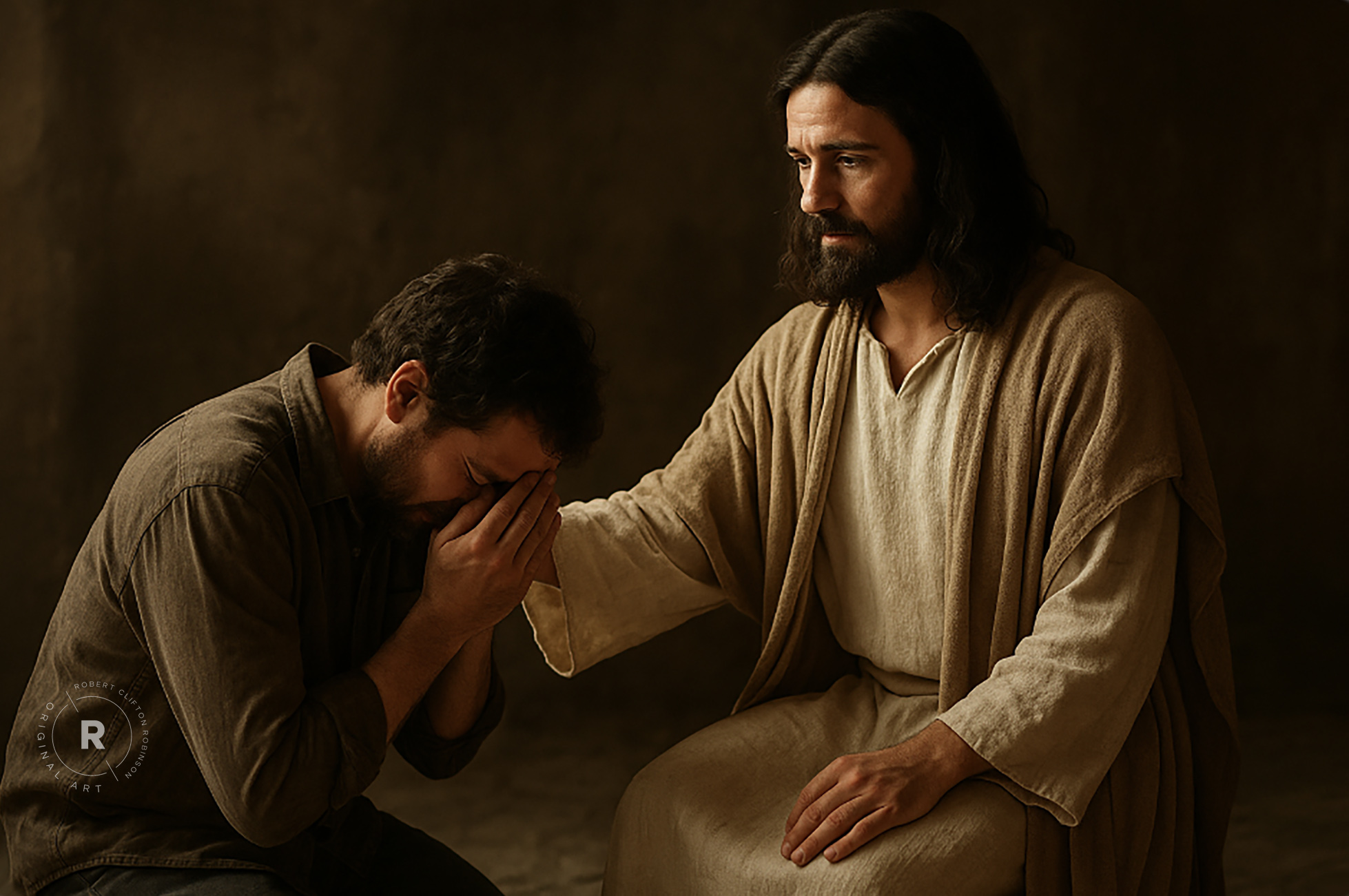
Why Does God Require Sorrow Over Sin and Repentance Before Forgiveness?
God’s Holiness Demands a Response to Sin
God is infinitely Holy and Just. Sin is not merely the breaking of rules; it is rebellion against the very nature and authority of God. Without recognizing the seriousness of our sin, a person cannot truly understand their need for a Savior.
Isaiah 59:2: “It’s your sins that have cut you off from God. Because of your sins, He has turned away and will not listen anymore.”
To forgive without repentance would violate God’s justice. His justice requires that sin be acknowledged and turned from—not ignored.
Romans 6:23: “For the wages of sin is death, but the free gift of God is eternal life through Christ Jesus our Lord.”
Before God can forgive sins, there must be a righteous reason that satisfied His justice. God said that “the soul that sins will die,” requiring death for the payment of all sins. The death of Jesus for the sins of the world, the Bible says, paid for all sins. Anyone who is sorry for their sins and comes to Jesus seeking the removal of their sins, provides God a righteous basis to forgive their sins and grant them eternal life.
Ezekiel 18:4: “Behold, all souls are Mine; the soul of the father as well as the soul of the son is Mine; the soul who sins shall die.”
Hebrews 10:12 “But this Man (Jesus), after He had offered one sacrifice for sins forever, sat down at the right hand of God.”
Repentance is the Expression of Faith in God’s Mercy
Repentance is not a “work” that earns salvation, but the genuine response of a heart awakened to the gravity of sin and the mercy of God. It is evidence that one is placing their trust in God rather than themselves.
Acts 3:19: “Now repent of your sins and turn to God, so that your sins may be wiped away.”
Luke 15:7: “There is more joy in heaven over one lost sinner who repents and returns to God than over ninety-nine others who are righteous and haven’t strayed away!”
What Does God Mean by “Repentance”?
The Biblical Definition of Repentance
The Greek word for repentance is metanoia, meaning a change of mind. Biblically, this “change of mind” includes:
- A recognition of sin
- A sorrow for having offended God
- A turning away from sin
- A turning toward God in trust
Repentance involves intellectual agreement, emotional sorrow, and volitional change—a total realignment of the heart and mind toward God.
2 Corinthians 7:10: “For the kind of sorrow God wants us to experience leads us away from sin and results in salvation. There’s no regret for that kind of sorrow. But worldly sorrow, which lacks repentance, results in spiritual death.”
Repentance is Not Perfection, but Direction
God does not require sinless perfection, but He does require a new direction—a heart that desires to be free of sin and walk in obedience.
Proverbs 28:13: “People who conceal their sins will not prosper, but if they confess and turn from them, they will receive mercy.”
The Role of the Heart in Repentance
God Looks at the Attitude of the Heart: God sees beyond outward actions. He looks for humility, contrition, and sincerity.
Psalm 51:17: “The sacrifice you desire is a broken spirit. You will not reject a broken and repentant heart, O God.”
David’s heart after his sin with Bathsheba is a model of true repentance—deep sorrow, no excuses, and a longing to be restored.
True Repentance Bears Fruit
Repentance is not just internal grief; it produces visible fruit in a person’s life—a new lifestyle, priorities, and values.
Matthew 3:8: “Prove by the way you live that you have repented of your sins and turned to God.”
Jesus Requires That We Don’t Repeat The Sins We Are Repenting From
John 8:10-11: “Then Jesus stood up again and said to the woman, “Where are your accusers? Didn’t even one of them condemn you?” “No, Lord,” she said. And Jesus said, “Neither do I. Go and sin no more.”
 Notice that Jesus does not condemn the woman for her sin, for He can see that she is sincerely sorry, but He also does not want the sin to continue. Jesus didn’t suffer and die for all sins so that we would continue in those sins.
The degree of suffering that Jesus experienced on the Cross as punishment for our sins, was directly proportional to the number of sins He was dying for. The person who seeks the forgiveness of Jesus, but will not stop the sins he is asking to be forgiven, does not respect the sacrifice Jesus made for them. This is a personal offense to God. That we would “trample underfoot, the suffering Jesus endured for us, and count the blood that He shed for us, as nothing.”
Hebrews 10:29: “Just think how much worse the punishment will be for those who have trampled on the Son of God, and have treated the blood of the covenant, which made us holy, as if it were common and unholy, and have insulted and disdained the Holy Spirit who brings God’s mercy to us.”
If we disregard the imperative of Jesus to “go and sin no more,” and we continue in our sins, we will not be forgiven; we will not be given eternal life:
Hebrews 10:26-29: “Dear friends, if we deliberately continue sinning after we have received knowledge of the truth, there is no longer any sacrifice that will cover these sins. There is only the terrible expectation of God’s judgment and the raging fire that will consume his enemies. For anyone who refused to obey the law of Moses was put to death without mercy on the testimony of two or three witnesses.”
Why Genuine Repentance Is Necessary for Eternal Life
Without Repentance, There Can Be No Fellowship With God: God desires relationship, not mere religious ritual. Repentance clears the way for reconciliation.
1 John 1:9: “But if we confess our sins to him, he is faithful and just to forgive us our sins and to cleanse us from all wickedness.”
Forgiveness without repentance would cheapen grace and allow sin to remain unchecked.
Hebrew Scholar, Paul, in his first letter to the Christians at Corinth, wrote to correct a moral problem that was happening in Jesus’ church. A young man was in a sexual relationship with his father’s wife.
The members of the church didn’t do anything about this problem, they let it continue. To this, Paul writes the following:
1 Corinthians 5:1-2: “I can hardly believe the report about the sexual immorality going on among you—something that even pagans don’t do. I am told that a man in your church is living in sin with his stepmother. 2 You are so proud of yourselves, but you should be mourning in sorrow and shame. And you should remove this man from your fellowship”
In Paul’s second letter to the Christians at Corinth, the young man had repented from his sexual sin, and was no longer in this immoral relationship.
2 Corinthians 7:8-10: “I am not sorry that I sent that severe letter to you, though I was sorry at first, for I know it was painful to you for a little while. Now I am glad I sent it, not because it hurt you, but because the pain caused you to repent and change your ways. It was the kind of sorrow God wants his people to have, so you were not harmed by us in any way. For the kind of sorrow God wants us to experience leads us away from sin and results in salvation. There’s no regret for that kind of sorrow. But worldly sorrow, which lacks repentance, results in spiritual death.”
Paul states that in confronting the sexual sin of this young man, it caused him to experience sorrow over his sin. He repented and “changed his ways,” he stopped the sin. Paul then says that this is the kind of sorrow that God wants us to have: a grief and sincere sorrow over our sins that compels us to stop the sin and not do it anymore.
Genuine repentance always causes a change in behavior. If there is no change in the behavior that caused the sin in the first place, there is no forgiveness from God.
All Christians Will Still Sin After They Are Saved, But Not All Christians Will Continue In These Sins.
The Apostle John said that he wrote his first letter, “so that the believers in Jesus who read the letter, “will not sin.” But then he adds, “but when you do sin, we have an advocate with the Father, Jesus…”
1 John 2:1-2 “My dear children, I am writing this to you so that you will not sin. But if anyone does sin, we have an advocate who pleads our case before the Father. He is Jesus Christ, the one who is truly righteous. 2 He himself is the sacrifice that atones for our sins—and not only our sins but the sins of all the world.
All of our sins, before, during, and after we repent and trust in Jesus, are forgiven. The fact is, though, we still will sin after we are saved by Jesus. The difference is that these sins are few and far between. They are not a constant lifestyle of sin as before we repented and trusted in Jesus. They are accidental, or sins that we commit without even realizing them. Even in the Old Testament, sins that were not intentional, still had to have a sacrifice made for them.
Jesus in the one sacrifice that took away all sins, but we must acknowledge our sins and feel sorrow over them. We must be willing to end these sins and try not to commit them again. When we do sin, John writes that “if we confess our sins” to Jesus and are sincerely sorry for them, He will always “forgive us and cleanse us from all unrighteousness.”
1 John 1:9-10: “But if we confess our sins to him, he is faithful and just to forgive us our sins and to cleanse us from all wickedness. 10 If we claim we have not sinned, we are calling God a liar and showing that his word has no place in our hearts.”
Sin after salvation does not cause us to lose our salvation, but it does break our constant fellowship with God.
The moment we realize or admit that we have sinned and we confess these sins to Jesus, He will forgive us, and restore our fellowship with Him. If we refuse to confess our sins, our fellowship with the Lord will be broken. He will not hear us again until we confess our sins, and are willing to not continue in them.
Isaiah 59:1-2: “Behold, the LORD’s hand is not shortened, that it cannot save; nor His ear heavy, that it cannot hear. But your sins have separated you from your God; your sins have hidden His face from you, so that He will not hear you.
King David expressed the correct and genuine sorrow over his sin, when he wrote:
Psalms 51:1-4
“Have mercy on me, O God,
because of your unfailing love.
Because of your great compassion,
blot out the stain of my sins.
Wash me clean from my guilt.
Purify me from my sin.
For I recognize my rebellion;
it haunts me day and night.
Against you, and you alone, have I sinned;
I have done what is evil in your sight.
You will be proved right in what you say,
and your judgment against me is just.”
- David confessed that his sins were his fault, not God or anyone else.
- David asked God to cleanse him from his sin.
- David recognized that all sins is against God, even though it may also be against other people.
- David acknowledged that God’s judgment against our sins in just.
Eternal Life Is a Gift—but can only be received by the humble
Eternal life is freely given through Jesus, but it must be received with a heart that acknowledges sin and accepts Christ’s righteousness.
Luke 24:47: “It was also written that this message would be proclaimed in the authority of his name to all the nations, beginning in Jerusalem: ‘There is forgiveness of sins for all who repent.’”
God Requires Repentance Because He Desires Transformation
God’s requirement of repentance and sorrow for sin is not about humiliation—it’s about healing and restoration. Without repentance:
- We cannot see the depth of our need
- We cannot appreciate the cross
- We cannot receive the cleansing and transformation God offers
Repentance prepares the heart to receive Christ, not as an accessory to life, but as the Savior and Lord of it.
Ezekiel 18:30–32: “Repent, and turn from your sins. Don’t let them destroy you! Put all your rebellion behind you, and find yourselves a new heart and a new spirit. For why should you die? I don’t want you to die, says the Sovereign Lord. Turn back and live!”
How Salvation Is Obtained From God, What He Requires:
Salvation begins with sincere sorrow over our sins. It is made possible only when we feel this regret and decide to take action to end our former sins. We come to Jesus in sorrow over our sins and ask Him to cleanse us from all of our transgressions. When we do this honestly, God sees our sincere heart and He takes away all of our sins, and then comes to live inside us by the Holy Spirit. This begins a new life that is guided by the Holy Spirit—where we start living the way Jesus lived.
 Every person who has been born on the earth could go to heaven and live with the Lord forever, if they would only humble themselves and come to God through Jesus Christ. Humility is all that is required by the Gospel to permit any one of us to be saved. Jesus died for the sins of the whole world; every one of our offenses against God is already paid in full. All that is required for heaven is that each individual person come to God in sincere sorrow for their sins and a willingness to turn from them. Once genuine repentance occurs, a person may ask God for the forgiveness of their sins. When this takes place, the Lord will forgive all the wrongs that have been done and grant eternal life as the gift of God. Simple faith in Jesus’ atoning work on the Cross makes eternal life a reality for any person who places all their trust in Him as their Savior.
Jesus died for the sins of the whole world:
1 John 2:2: “Jesus Himself is the propitiation for our sins, and not for ours only but also for the whole world.”
First requirement—repentance:
Mark 1:15 Jesus said: “The time is fulfilled, and the kingdom of God is at hand. Repent, and believe in the gospel.”
Luke 5:32 Jesus said, “I have not come to call the righteous, but sinners, to repentance.”
Second requirement—believe that Jesus died for your sins:
Acts 16:30-31: “And he brought them out and said, ‘Sirs, what must I do to be saved?” So they said, “Believe on the Lord Jesus Christ, and you will be saved, you and your household.”
Third requirement—confess that Jesus is your Savior, believe in your heart that He died for your sins:
Romans 10:9: “If you confess with your mouth the Lord Jesus and believe in your heart that God has raised Him from the dead, you will be saved.”
Fourth requirement—hold fast and keep believing in Jesus for the rest of your life:
1 Corinthians 15:1-2: “Moreover, brethren, I declare to you the gospel which I preached to you, which also you received and in which you stand, by which also you are saved, if you hold fast that word which I preached to you—unless you believed in vain.”
There are certainly many other articles of faith that people might attempt to add to the above four steps, but in the end, these are really the only four that are required by the Lord to be saved.
We see this principle demonstrated by the thief on the cross next to Jesus:
The New Testament describes two thieves who were condemned to die by crucifixion along with Jesus. They are placed on either side of the Lord. At first, it seems that both condemned men ridicule Jesus for being crucified with them. After one of these men witnesses the grace and the love with which Jesus endures His suffering—praying for those who placed Him on the Cross, this dying criminal has a change of heart. He cries out to Jesus: “Lord, remember me when You come into Your kingdom.” A subtle statement of salvation in the final moments of life from a man doomed to die. Though his confession is short and subtle, it is sufficient to move Jesus to pronounce him forgiven and worthy of eternal life: “Today you will be with me in paradise,” Jesus says.
Luke 23:39-43: “Then one of the criminals who were hanged blasphemed Him, saying, ‘If You are the Christ, save Yourself and us.” But the other, answering, rebuked him, saying, “Do you not even fear God, seeing you are under the same condemnation? And we indeed justly, for we receive the due reward of our deeds; but this Man has done nothing wrong.” Then he said to Jesus, “Lord, remember me when You come into Your kingdom.” And Jesus said to him, “Assuredly, I say to you, today you will be with Me in Paradise.”
When Jesus heard his sincere heart of repentance and a desire to be saved, He pronounced at that moment, on that very day, that this repentant thief would be with Jesus in paradise. We might note that this man whom Jesus declared as saved did not have an opportunity to join a church, be baptized, or take communion; yet Jesus saved him anyway.
As simple as these four steps might appear, they can be the most difficult steps that a person will ever attempt in their life. A willingness to change and a little movement are all that stand in the way of any person being able to have all his sins forgiven and to obtain eternal life in heaven.
The greatest obstacle to these four steps listed above—repentance, belief, confession, and living for Jesus—is pride.
A hard heart, bitterness, unwillingness to humble oneself, anger at God, resentment towards another, unwillingness to forgive, the loss of a loved one—all of these can make it nearly impossible for any person to be saved. Why? Under conditions of hurt, anger, or pride, many people find it extremely difficult to humble themselves and come to God in deep sorrow for their sins.
Pride tells the obstinate human heart, “You are not so bad. There are lots of people who are worse than you.” Humility tells our heart, “It doesn’t matter what everyone else does. You know that you are a sinner and you need a Savior. Receive Jesus’ offer of forgiveness and eternal life.”
In this present moment, while we are still alive, we have a little time left to humble ourselves and come to God through the sacrifice made by Jesus for our sins. When we draw our last breath and our body dies, it will be too late to change our minds. The decision of where we will spend eternity is being made by each one of us every day that we live. If, by the end of our life, we have not received Jesus as our Savior, it will be too late after death to change our minds. It is appointed by God that each one of us has only one life to live in order to make a decision either for or against Jesus, and then after death, we will be judged based on that decision.
Hebrews 9:27: “And as it is appointed for men to die once, but after this comes the judgment.”
If we have already received Jesus, then our place in heaven is assured. Many people incorrectly assume that because they have not made a decision either for or against Jesus, they have yet to determine their eternal destiny. This assumption is false. Jesus did not give us the option of indecision. We are either for Him or against Him. No decision is really a decision against Jesus.
Luke 11:23: “He who is not with Me is against Me, and he who does not gather with Me scatters.”
For a majority of people, pride, laziness, or fear hinders their important decision to receive and follow Jesus. A few individuals are so content in their present life that they feel no need for change. It is not until the final moments of their days on earth that many people realize the emptiness of their former earthly pursuits. After ignoring or rejecting God for a majority of their life, very few people can find repentance and a desire to call on the name of Jesus for their salvation.
This is the reason the New Testament continually encourages us to make today the day of our salvation.
2 Corinthians 6:2: “For He says: …Behold, now is the accepted time; behold, now is the day of salvation.”
James 4:14: “Whereas you do not know what will happen tomorrow. For what is your life? It is even a vapor that appears for a little time and then vanishes away.”
If you are ready to make a decision for Jesus and experience the forgiveness of all your sins, and have eternal life, you can pray a simple prayer and tell the Lord you are ready to receive Him. He will hear you and respond with forgiveness, a new life, and the assurance that when you die, you will live in heaven with the Lord and all who love Him, forever.
“Jesus, I want to receive You as my Lord and my Savior. Thank you for dying for me on the Cross to pay for all my sins. Please forgive me, Lord, for every sin I have committed during my life. Take away the burden of guilt and replace it with your peace. I want you to be the Lord of my life, and guide me every day in all of my decisions. Please take control of my life and lead me where You want me to go. I turn away from the old life of sin I have lived before I met You, and I ask You, Lord, to help me live a new life of righteousness. When I sin again, please forgive me and restore me. Thank you, Lord, for coming into my heart at this moment. Give me boldness to live for You and not be afraid to tell those I know what You have done for me. Please help me live for You all the days of my life and to bring You the glory You deserve. Remind me to pray for my family and friends every day, so that they might also come to know You and be saved. I pray these things in your name, Jesus, Amen.”
Categories: Robert Clifton Robinson
 Robert Clifton Robinson
Please see, "Guidelines For Debate," at the right-side menu. Post your comment or argument here: