This is a new series that examines the narratives about Jesus in the four Gospels and presents the differences between the texts of these testimonies. For many years, critics have claimed that the writers of the Synoptic Gospels borrowed from each other. Some pundits say that there was a “Q” document that was the origin of the Synoptics.
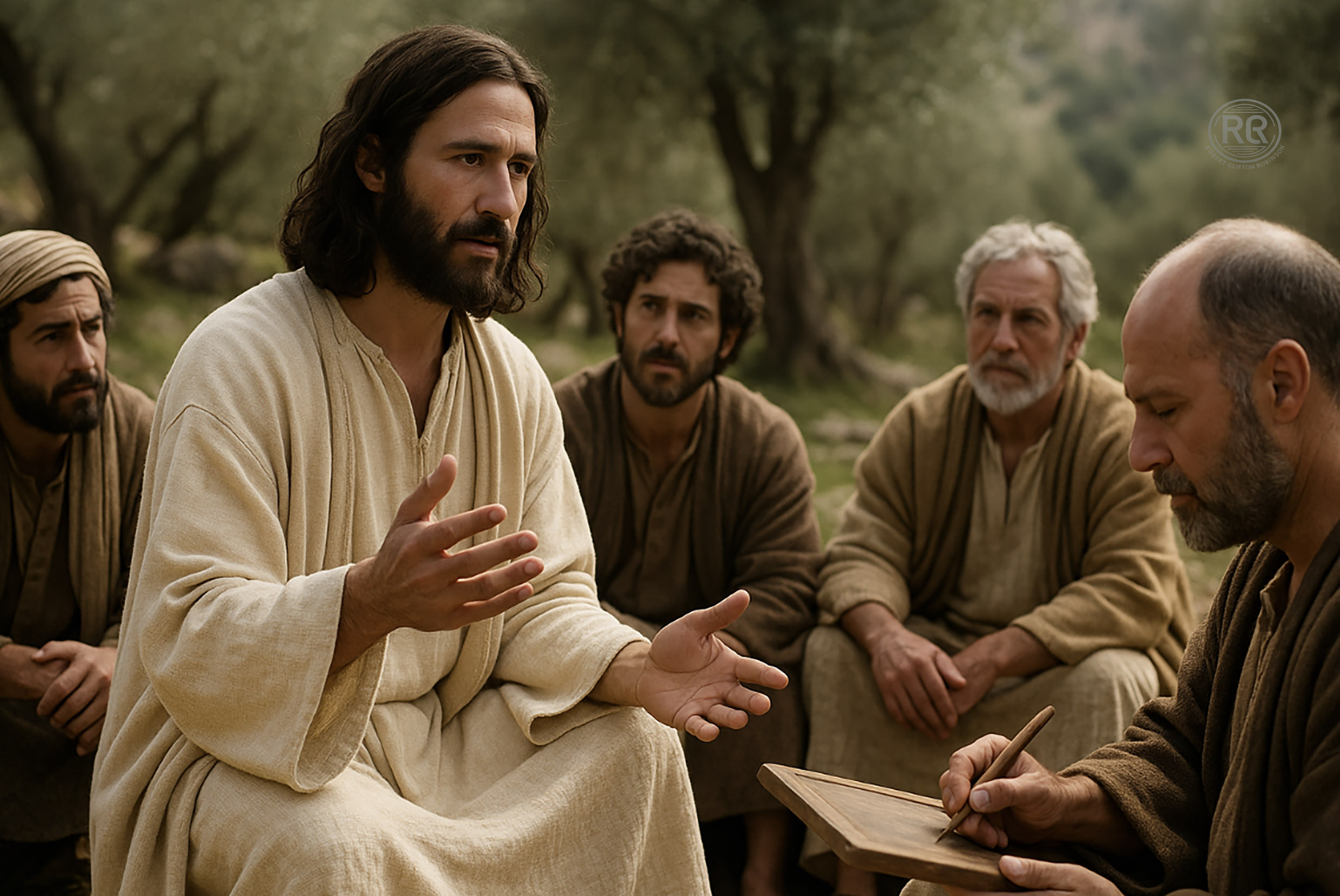
This series presents the complete narrative of the four Gospels and shows you what these differences are. In the end, you will see with your own eyes that the four canonical narratives about Jesus are historical eyewitness accounts that contain the actual testimony of the men who saw and heard Jesus.
In the events of history, there are always people who see and hear what takes place. Concerning the events of Jesus’ life, death, and resurrection, what these men saw is the most important event ever to take place on earth. These men say that they saw the Eternal Living God come to earth in the person of Jesus, the Messiah. They record what they saw and heard, they say, so that we might know the truth and have the opportunity to place our trust in Jesus and have eternal life.
In eyewitness testimony, there are always differences between multiple persons who see the same events. These differences are forensic evidence of truthful testimony. One person remembers details that others do not. Some writers in their testimony omit details that others record. In the science of forensic examination of written testimony, seeking to determined fact from fiction, these differences are known as markers for truthful testimony.
The Betrayal and Arrest of Jesus
(Matthew 26:47-56; Mark 14:43-52; Luke 22:47-53; John 18:1-12)
Matthew
47 And while He was still speaking, behold, Judas, one of the twelve, with a great multitude with swords and clubs, came from the chief priests and elders of the people. 48 Now His betrayer had given them a sign, saying, “Whomever I kiss, He is the One; seize Him.” 49 Immediately he went up to Jesus and said, “Greetings, Rabbi!” and kissed Him. 50 But Jesus said to him, “Friend, why have you come?” Then they came and laid hands on Jesus and took Him. 51 And suddenly, one of those who were with Jesus stretched out his hand and drew his sword, struck the servant of the high priest, and cut off his ear. 52 But Jesus said to him, “Put your sword in its place, for all who take the sword will perish by the sword. 53 Or do you think that I cannot now pray to My Father, and He will provide Me with more than twelve legions of angels? 54 How then could the Scriptures be fulfilled, that it must happen thus?” 55 In that hour Jesus said to the multitudes, “Have you come out, as against a robber, with swords and clubs to take Me? I sat daily with you, teaching in the temple, and you did not seize Me. 56 But all this was done that the Scriptures of the prophets might be fulfilled.” Then all the disciples forsook Him and fled.
Mark
43 And immediately, while He was still speaking, Judas, one of the twelve, with a great multitude with swords and clubs, came from the chief priests and the scribes and the elders. 44 Now His betrayer had given them a signal, saying, “Whomever I kiss, He is the One; seize Him and lead Him away safely.” 45 As soon as he had come, immediately he went up to Him and said to Him, “Rabbi, Rabbi!” and kissed Him. 46 Then they laid their hands on Him and took Him. 47 And one of those who stood by drew his sword and struck the servant of the high priest, and cut off his ear. 48 Then Jesus answered and said to them, “Have you come out, as against a robber, with swords and clubs to take Me? 49 I was daily with you in the temple teaching, and you did not seize Me. But the Scriptures must be fulfilled.” 50 Then they all forsook Him and fled. 51 Now a certain young man followed Him, having a linen cloth thrown around his naked body. And the young men laid hold of him, 52 and he left the linen cloth and fled from them naked.
Luke
47 And while He was still speaking, behold, a multitude; and he who was called Judas, one of the twelve, went before them and drew near to Jesus to kiss Him. 48 But Jesus said to him, “Judas, are you betraying the Son of Man with a kiss?” 49 When those around Him saw what was going to happen, they said to Him, “Lord, shall we strike with the sword?” 50 And one of them struck the servant of the high priest and cut off his right ear. 51 But Jesus answered and said, “Permit even this.” And He touched his ear and healed him. 52 Then Jesus said to the chief priests, captains of the temple, and the elders who had come to Him, “Have you come out, as against a robber, with swords and clubs? 53 When I was with you daily in the temple, you did not try to seize Me. But this is your hour, and the power of darkness.”
John
1 When Jesus had spoken these words, He went out with His disciples over the Brook Kidron, where there was a garden, which He and His disciples entered. 2 And Judas, who betrayed Him, also knew the place; for Jesus often met there with His disciples. 3 Then Judas, having received a detachment of troops, and officers from the chief priests and Pharisees, came there with lanterns, torches, and weapons. 4 Jesus therefore, knowing all things that would come upon Him, went forward and said to them, “Whom are you seeking?” 5 They answered Him, “Jesus of Nazareth.” Jesus said to them, “I am He.” And Judas, who betrayed Him, also stood with them. 6 Now when He said to them, “I am He,” they drew back and fell to the ground. 7 Then He asked them again, “Whom are you seeking?” And they said, “Jesus of Nazareth.” 8 Jesus answered, “I have told you that I am He. Therefore, if you seek Me, let these go their way,” 9 that the saying might be fulfilled which He spoke, “Of those whom You gave Me I have lost none.” 10 Then Simon Peter, having a sword, drew it and struck the high priest’s servant, and cut off his right ear. The servant’s name was Malchus. 11 So Jesus said to Peter, “Put your sword into the sheath. Shall I not drink the cup which My Father has given Me?” 12 Then the detachment of troops and the captain and the officers of the Jews arrested Jesus and bound Him.
Introduction
In eyewitness testimony, slight differences in detail are markers of truth, not contradictions. If four witnesses describe the same event in exactly the same way, suspicion of collusion arises. By contrast, when each describes the same core event but with unique details, emphases, or omissions, this is strong forensic evidence of authenticity.
The Betrayal and Arrest of Jesus is an excellent case study. Each Gospel records the same central facts—Judas’ betrayal, the armed crowd, Peter’s sword, Jesus’ rebuke, His submission, and the disciples’ flight. But the fine differences show independent memory, not fabrication.
Judas’ Role and Words
Matthew – Judas signals the arrest by kissing Jesus, greeting Him: “Greetings, Rabbi!” Jesus replies: “Friend, why have you come?” (Matt. 26:48–50).
Mark – Similar, but Judas adds: “Lead Him away safely” (Mark 14:44). He greets Jesus: “Rabbi, Rabbi!” (Mark 14:45).
Luke – Jesus intercepts Judas with a rebuke: “Judas, are you betraying the Son of Man with a kiss?” (Luke 22:47–48). Luke never actually records the kiss being delivered.
John – Omits the kiss entirely. Judas stands among the soldiers: “And Judas, who betrayed Him, also stood with them” (John 18:5).
Forensic Note: If the Gospels borrowed from one another, the kiss would be presented uniformly. Instead, each narrative treats it differently—Matthew/Mark emphasize it, Luke rebukes it, John bypasses it.
The Arresting Party
Matthew – “a great multitude with swords and clubs, from the chief priests and elders of the people” (Matt. 26:47).
Mark – “a great multitude with swords and clubs, from the chief priests and the scribes and the elders” (Mark 14:43).
Luke – Mentions chief priests, captains of the temple, and elders (Luke 22:52).
John – Provides the most detail: “a detachment of troops, and officers from the chief priests and Pharisees, with lanterns, torches, and weapons” (John 18:3).
Forensic Note: John includes Roman troops and temple police, Luke notes temple captains, Matthew/Mark emphasize Jewish elders. These different vantage points confirm independent memory.
The Sword Incident
Matthew – An unnamed disciple strikes the servant of the high priest and cuts off his ear. Jesus rebukes him: “Put your sword in its place … Do you think I cannot now pray to My Father, and He will provide Me with more than twelve legions of angels?” (Matt. 26:51–53).
Mark – Records only the sword strike: “one of those who stood by drew his sword and struck the servant … and cut off his ear” (Mark 14:47). No rebuke or theological comment.
Luke – Adds a preliminary question: “Lord, shall we strike with the sword?” (Luke 22:49). He notes the ear cut: “and cut off his right ear” (Luke 22:50). Only Luke records Jesus’ healing: “He touched his ear and healed him” (Luke 22:51).
John – Names both attacker and victim: “Simon Peter … struck the high priest’s servant, and cut off his right ear. The servant’s name was Malchus” (John 18:10). Jesus says: “Put your sword into the sheath. Shall I not drink the cup which My Father has given Me?” (John 18:11).
Forensic Note: Matthew emphasizes angelic deliverance, Luke records healing, John preserves names, Mark keeps it bare. No two accounts are identical.
Jesus’ Words to the Crowd
Matthew – Rebukes them: “Have you come out, as against a robber … I sat daily with you in the temple … all this was done that the Scriptures … might be fulfilled” (Matt. 26:55–56).
Mark – Nearly identical but shorter: “I was daily with you in the temple teaching, and you did not seize Me. But the Scriptures must be fulfilled” (Mark 14:49).
Luke – Adds: “But this is your hour, and the power of darkness” (Luke 22:53).
John – Presents no rebuke, but instead the dramatic: “Whom are you seeking?” … “I am He.” … They drew back and fell to the ground” (John 18:4–6).
Forensic Note: The Synoptics stress fulfillment of Scripture, Luke adds the theme of spiritual darkness, John stresses Jesus’ sovereign control.
Narrative Additions Unique to Each Gospel
- Matthew – Only he includes the statement about “twelve legions of angels” (Matt. 26:53).
- Mark – Only he records the “young man who fled naked” (Mark 14:51–52).
- Luke – Only he notes the healing of the servant’s ear (Luke 22:51).
- John – Only he provides names (Peter and Malchus) and the “cup” imagery (John 18:10–11).
Forensic Note: These unique details are classic markers of independent eyewitnesses.
The Forensic Significance
Agreement on the Basics: Judas betrays, a crowd arrests, a sword is drawn, Jesus submits, disciples flee (Matt. 26:56; Mark 14:50; Luke 22:49–53; John 18:8–12).
Variation in Details: The Dialogue, descriptions, characters, and theology differ.
Distinct Emphases: Matthew/Mark stress Scripture fulfillment; Luke stresses compassion and spiritual warfare; John emphasizes sovereignty and identity.
Legal Scholar Simon Greenleaf observed, that this divergence-with-core-agreement is what makes testimony credible in court. Modern forensic examiner J. Warner Wallace calls these “undesigned coincidences”—small differences that unintentionally confirm truth.
The Betrayal and Arrest narratives perfectly illustrate why the Gospels are not copies but independent eyewitness accounts. Each man remembered and preserved what struck him most. Together, they form a fourfold testimony that bears the unmistakable fingerprints of truth.
Let me know in the comments section of this essay if you would be interested in this format as a published book
Categories: Robert Clifton Robinson
 Robert Clifton Robinson
Please see, "Guidelines For Debate," at the right-side menu. Post your comment or argument here: