The Issue Of Presidential Authority To Dispatch The National Guard To States In Order To Enforce Federal Immigration Law
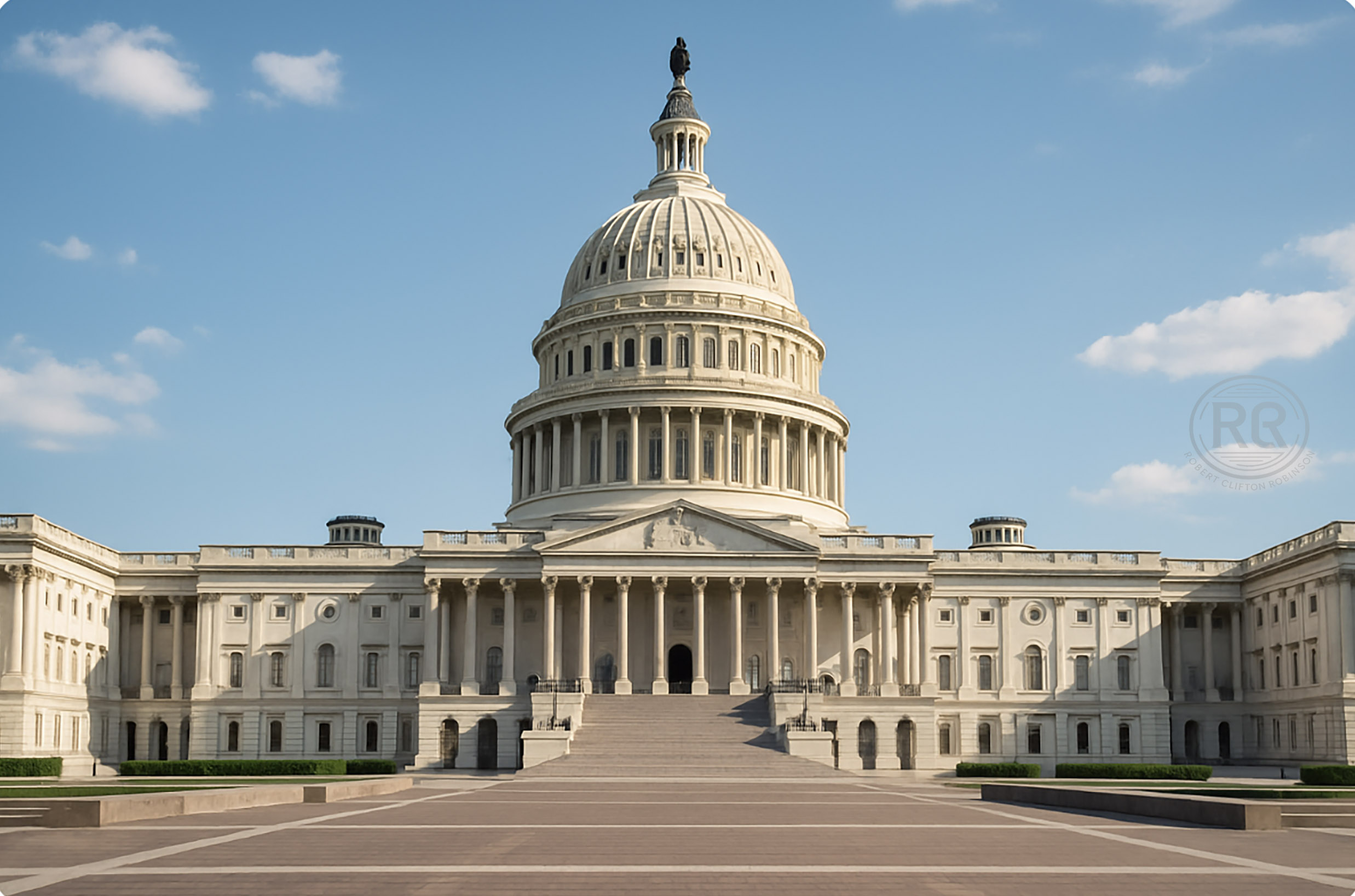
The following is an examination of Presidential authority concerning the use of National Guard Troops to assist in the enforcement Immigration laws by (ICE) officers. (1) the Supremacy Clause; (2) the federal government’s (and especially the President’s) authority over immigration; and (3) the limits and constraints on presidential enforcement discretion.
Supremacy Clause: The Constitutional Foundation
Text and Basic Principle
Article VI, clause 2 of the U.S. Constitution provides: “This Constitution, and the Laws of the United States which shall be made in Pursuance thereof; … shall be the supreme Law of the Land; and the Judges in every State shall be bound thereby, anything in the Constitution or Laws of any State to the Contrary notwithstanding.”
Under the Supremacy Clause, valid federal law (statutes, treaties, and the Constitution itself) displaces or preempts any conflicting state law. This displacement can be express (when Congress explicitly states that federal law supersedes state law) or implied (when state law conflicts in substance, or creates an obstacle to congressional purposes).
The doctrine of preemption is the mechanism by which courts implement the Supremacy Clause in contexts of federal–state conflict. But Supremacy does not mean federal law can do anything — the federal government’s laws must themselves fall within constitutional power (i.e. be “in pursuance” of constitutional authority).
Limits: Tenth Amendment / Anti‐Commandeering Doctrine
While the Supremacy Clause gives federal law primacy over conflicting state laws, the Tenth Amendment constrains how far the federal government may compel states (or local governments) to enforce federal law:
The Tenth Amendment provides: “The powers not delegated to the United States by the Constitution, nor prohibited by it to the States, are reserved to the States respectively, or to the people.”
From this flows the anti‐commandeering doctrine: the federal government generally cannot force state or local legislative or executive bodies to adopt or enforce federal regulatory programs. That is, Congress cannot conscript states to carry out federal laws. E.g., even when Congress has authority to legislate, it may not require a state legislature to pass particular laws or require state executive officers to use their resources to enforce federal law.
This doctrine was affirmed in cases like New York v. United States and Printz v. United States.
In the immigration context, that means while federal law is supreme, the federal government cannot force a state or local government to enforce or assist with immigration enforcement beyond what state/local officials voluntarily choose. Thus, the Supremacy Clause establishes federal primacy in immigration law, but the Tenth Amendment (via anti‐commandeering) ensures that states retain some guardrails against being compelled into federal enforcement.
The Constitutional Framework: Executive Authority vs. State Sovereignty
The President’s Constitutional Role
Under Article II, Sections 1–3, the President is the Chief Executive and Commander in Chief of the Armed Forces, and is charged to “take Care that the Laws be faithfully executed.”
This includes the responsibility to enforce federal immigration laws enacted by Congress (8 U.S.C. §§ 1101 et seq.), protect the nation’s borders, and maintain internal order.
The Tenth Amendment and Its Limits
The Tenth Amendment reserves to the states powers not delegated to the United States. However, when the Constitution explicitly delegates a power to the federal government — such as defense, foreign affairs, or immigration — that power is exclusive, and the Tenth Amendment cannot be used to block it.
The Supreme Court confirmed this principle in multiple cases, including:
- Hines v. Davidowitz, 312 U.S. 52 (1941): The Court held that immigration control is a matter of federal supremacy; state interference is preempted.
- Arizona v. United States, 567 U.S. 387 (2012): The Court reaffirmed that immigration enforcement “is a field in which the federal government’s authority is preeminent.”
Thus, when the President enforces federal immigration law or deploys federal personnel under federal statutes, those actions are not constrained by the Tenth Amendment — because the Constitution already delegates those powers to the national government.
The Anti-Commandeering Doctrine: What It Actually Forbids
The anti-commandeering doctrine (from New York v. United States, 1992, and Printz v. United States, 1997*) restricts Congress from forcing states or their officers to administer or enforce federal programs.
It does not restrict the President from:
- Using federal officers or federalized troops to enforce federal law;
- Deploying the National Guard under Title 10 (with or without state consent, depending on the statutory authorization);
- Enforcing federal immigration law directly through federal agencies.
The anti-commandeering rule protects states from being compelled to act, but it does not prevent the federal government from acting within its own jurisdiction. When President Trump sent National Guard units or federal agents to assist immigration enforcement, they were operating under federal authority — not under commandeered state authority.
Statutory Basis for Presidential Deployment of the National Guard
There are multiple long-standing statutes that authorize such action:
- Title 10 of the U.S. Code — Allows the President to federalize National Guard units to execute federal law or protect national security (10 U.S.C. §§ 12304, 12406).
- The Insurrection Act (10 U.S.C. §§ 251–255) — Permits the President to deploy military or federalized Guard forces to suppress insurrection, enforce the laws, or protect constitutional rights when local authorities cannot or will not act.
- 8 U.S.C. § 1103(a) —Expressly authorizes the Secretary of Homeland Security and the Attorney General — under the President’s direction — to enforce immigration laws and “employ any officer or employee of the United States, or of any State” for assistance.
Under these statutes, Presidents from both parties have used Guard forces for border or immigration support without judicial rebuke.
- President Eisenhower (1957 – Little Rock integration crisis);
- President George W. Bush (Operation Jump Start, 2006);
- President Obama (Operation Phalanx, 2010);
- President Trump (2018–2020 deployments under DHS support missions).
In every case, the President’s authority was grounded in statute and Article II powers — not in commandeering state resources.
Supreme Court and Lower Court Treatment
To date, no federal court — including the Supreme Court — has held that President Trump violated the Tenth Amendment or the anti-commandeering doctrine by deploying the National Guard or enforcing immigration law.
In fact, relevant jurisprudence affirms the opposite:
Perpich v. Department of Defense, 496 U.S. 334 (1990): The Court unanimously upheld the federal government’s authority to order National Guard troops into federal service without gubernatorial consent.
“When the Guard is called into federal service, it is subject to the control of the President.”
Hines v. Davidowitz and Arizona v. United States (above) emphasize that immigration control lies squarely in the federal domain.
Thus, the President’s actions to deploy or federalize units for border or immigration enforcement are constitutionally authorized and not violations of state sovereignty.
Common Misconceptions and Political Framing
- Anti-commandeering ≠ federal enforcement limit.
It restricts Congress from compelling states, not the President from using federal resources. - Federal supremacy overrides state objection in enumerated domains like defense, borders, and immigration.
- Tenth Amendment protections apply residually, not to powers the Constitution explicitly grants to the federal government.
- No Supreme Court precedent has ever invalidated a presidential border or immigration deployment as unconstitutional under the Tenth Amendment.
A Balanced Conclusion
- No evidence exists that President Trump’s use of the National Guard or federal agencies for immigration enforcement violated the Tenth Amendment or anti-commandeering principles.
- Federal supremacy and Article II executive authority affirm his power to act in these areas.
- Courts have consistently upheld this understanding — from Perpich v. DoD (1990) to Arizona v. United States (2012).
- Unless a President attempted to force state officers to act against their will in executing federal immigration policy — which Trump did not — there is no constitutional infringement.
References
- Perpich v. Department of Defense, 496 U.S. 334 (1990)
- New York v. United States, 505 U.S. 144 (1992)
- Printz v. United States, 521 U.S. 898 (1997)
- Hines v. Davidowitz, 312 U.S. 52 (1941)
- Arizona v. United States, 567 U.S. 387 (2012)
- NFIB v. Sebelius, 567 U.S. 519 (2012) (coercion limits under Spending Clause)
- 10 U.S.C. §§ 12304, 12406 (Guard activation)
- 10 U.S.C. §§ 251–255 (Insurrection Act);
- 8 U.S.C. § 1103(a) (Presidential immigration enforcement authority)
Constitutional & Statutory Basis for Federal Immigration Authority
To understand presidential authority, one must first see the constitutional and statutory foundations by which immigration law is made and enforced.
Constitutional Delegations & Implied Powers
Congress’s enumerated powers over immigration
- The Supreme Court and constitutional scholars generally situate federal immigration power in a combination of: The Naturalization Clause (Congress’s authority to establish rules of naturalization)
- The Foreign Commerce Clause (the admission and movement of noncitizens involves foreign commerce)
- The Foreign Affairs / Treaty Power (immigration being intertwined with international relations)
The broader idea that as a sovereign, the national government holds “all the powers incident to sovereignty,” of which control over borders and foreign entry is one.
Over time, the Supreme Court has treated immigration as a distinct field of federal authority, with significant deference to federal policymaking in that domain. But the Court has also recognized that Congress’s power is not unlimited, especially when enforcing laws against noncitizens already in the U.S. where individual constitutional rights are implicated.
Delegation to the Executive Branch and the President
While Congress drafts immigration statutes (primarily the Immigration and Nationality Act [INA]), the implementation and enforcement of immigration law is assigned largely to the executive branch (especially through the Department of Homeland Security, Immigration and Customs Enforcement, etc.).
The President’s authority in immigration flows in part from statutory delegations (i.e., Congress giving the executive branch discretion to issue regulations, defer action, grant relief, or set priorities).
Historically, courts have recognized a degree of executive (or prosecutorial) discretion in how to enforce immigration law (e.g. whom to arrest, deport, delay, etc.).
The Take Care Clause / Faithful Execution
Article II, Section 3 (“Take Care That the Laws be Faithfully Executed”) imposes upon the President the duty to enforce the laws enacted by Congress. The courts have interpreted this clause as limiting the President’s ability to nullify a law (i.e., the President cannot simply refuse to enforce a valid statute).
Some executive actions—especially those that amount to effectively rewriting statute, or broadly suspending law—have faced judicial scrutiny for overstepping the “faithful execution” duty. Thus, the President’s authority in immigration is derivative: based on constitutional clauses (Take Care, executive power) plus congressional grants of discretion.
Has President Donald Trump Violated The “Take Care” Clause?
The constitutional question of whether President Trump has violated the “Take Care” clause (Article II, § 3: “He shall take Care that the Laws be faithfully executed”) must be judged by legal evidence and judicial findings, not political opinion.
As of this date (October 2025), the answer based on all available court records and constitutional rulings is: No, there is no legal or judicial evidence that President Donald J. Trump has violated the “Take Care” clause or exceeded his constitutional authority by effectively rewriting or suspending immigration law.
Let’s examine this in depth, carefully distinguishing between allegations, judicial findings, and constitutional standards.
The Constitutional Standard: “Faithful Execution” vs. “Suspension or Rewriting of Law”
The Take Care Clause obligates the President to enforce the laws Congress enacts.
Violations occur when a President:
- Unilaterally suspends or nullifies a statute (refuses to enforce it altogether);
- Rewrites law through executive order or agency rulemaking inconsistent with congressional intent.
The clause does not require the President to enforce every statute to its maximum theoretical extent. Courts have long recognized prosecutorial discretion and resource prioritization as necessary parts of faithful execution.
See: Heckler v. Chaney, 470 U.S. 821 (1985) — “An agency’s decision not to prosecute or enforce is a decision generally committed to an agency’s absolute discretion.” Thus, the standard is not perfection of enforcement, but faithfulness to statutory purpose and boundaries.
Judicial Record: Trump-Era Immigration Actions Reviewed by the Courts
Between 2017 – 2021, numerous immigration-related executive actions were challenged.
None resulted in a final ruling that Trump violated the Take Care Clause or unconstitutionally suspended/re-wrote law.
Travel Restrictions (Executive Orders 13769 & 13780)
- Challenged under the Establishment Clause and statutory authority (8 U.S.C. § 1182(f)).
- Outcome: Trump v. Hawaii, 585 U.S. ___ (2018).
- Supreme Court holding: The President acted within statutory and constitutional authority.
- Chief Justice Roberts: “The President lawfully exercised the broad discretion granted to him by Congress.”
The Court explicitly rejected the claim that this was a violation of the Take Care duty.
Border Wall Funding and Emergency Declaration (2019)
- Challenges claimed misuse of appropriations, not a Take Care violation.
- Court rulings: Trump v. Sierra Club, 593 U.S. ___ (2021) — the Supreme Court ultimately vacated lower-court injunctions after President Biden rescinded the declaration; no finding of unfaithful execution was ever made.
Courts treated the issue as a separation-of-powers dispute, not a Take Care violation.
Migrant Protection Protocols (“Remain in Mexico”)
- DHS action under § 235(b)(2)(C) of the INA.
- Multiple injunctions, but none held that Trump exceeded constitutional authority; all were statutory interpretation cases.
Take Care clause was never violated — enforcement discretion was deemed legitimate.
Deferred Action and DACA Policy Reversal
- Trump’s rescission of DACA (created under Obama) was challenged.
- Department of Homeland Security v. Regents of the University of California, 591 U.S. ___ (2020)
- The Court ruled against the rescission for Administrative Procedure Act (APA) reasons (insufficient explanation), but explicitly declined to find any constitutional violation.
Justice Roberts: “The dispute before the Court is a question of administrative law, not constitutional power.”
- Public Charge Rule & Refugee Caps
- Several courts struck down or vacated Trump-era rules as inconsistent with statutory text (APA grounds), but none found that Trump suspended or rewrote law in violation of Article II.
Agencies acted within delegated authority, even if some regulations were procedurally defective.
Analysis: What Would Constitute a “Violation” — and Why None Exist
To constitute a Take Care violation, courts would need evidence that:
- The President explicitly refused to enforce a congressional statute in full, and
- The refusal had no basis in executive discretion or statutory delegation, and
- The action was not merely an administrative error but a constitutional usurpation of legislative power.
No Trump action meets those criteria.
Even where courts enjoined policies (DACA rescission, public-charge rule, asylum procedures), the grounds were statutory (violations of the INA or APA), not constitutional. The Supreme Court has never found a President in violation of the Take Care Clause. It remains a political and theoretical doctrine, not an operational test for most executive actions.
Scholarly Consensus and Congressional Oversight
- Constitutional scholars across the spectrum — including John Yoo, Robert Delahunty, and even some liberal academics — agree that Trump’s immigration orders, though controversial, fell within the broad discretion Congress gave the Executive.
- Congressional committees have issued oversight reports criticizing Trump’s policy choices, not constitutional compliance.
No impeachment article or judicial finding cited a Take Care violation.
Present Standing (as of October 2025)
- No active case in the federal judiciary alleges that Trump’s renewed immigration initiatives (including Guard deployments, expedited removals, or executive border compacts) constitute a violation of the Take Care Clause.
- No judicial precedent—Supreme Court, appellate, or district—has ever held that Trump “rewrote” or “suspended” immigration law.
While any President could in principle overstep the “faithful execution” duty, there is no record that President Trump has done so in law or in court.
Presidential Authority to Enforce (or Defer) Immigration Laws
Even though Congress passes immigration statutes, how vigorously and in what fashion they are enforced falls to the executive — within constitutional and statutory bounds. Below I outline how that discretion works and where limits may lie.
Enforcement Discretion and Administrative Relief
“Prosecutorial” or enforcement discretion
Like all executive agencies, those responsible for immigration enforcement have discretion to decide which cases to pursue, in what order, and which cases to defer. For example, the Department of Homeland Security (DHS) may prioritize deportation/removal of noncitizens posing criminal or national security threats, while delaying action against low-risk individuals.
The Supreme Court has recognized that in the immigration context courts give deference to executive judgments in matters implicating national security and foreign policy.
Deferred action, administrative relief, and prosecutorial nonrefoulement
One concrete form is deferred action: non-citizens may receive determinations that enforcement will be deferred (i.e. removal temporarily suspended). The U.S. executive branch has used this mechanism (e.g. DACA).
Courts and scholars generally accept that such forms of administrative relief are permissible so long as they are consistent with statute, not in direct conflict with congressional intent, and do not amount to a wholesale rewriting of the statute. However, the President cannot unilaterally grant broad legal status (e.g. amnesty, or create de novo statutory rights) unless Congress provides that authority.
Limits: non-enforcement vs. non-implementation
The distinction is critical: the executive may choose not to enforce certain provisions, but may not nullify, rewrite, or refuse to implement the statute entirely. If the executive action effectively contradicts or undermines the structure of the statute, courts may find it unauthorized.
Conflicts with State or Local Laws: Preemption and Litigation
When states or localities attempt to legislate immigration-related policies, or resist federal enforcement, tensions arise. The Supremacy Clause gives federal law a trump over conflicting state law, but the anti-commandeering doctrine limits how far the federal government can force states to act.
Preemption of state/local immigration regulation
The Supreme Court, in Arizona v. United States (2012), struck down portions of Arizona’s SB 1070 that conflicted with federal immigration law, holding that states cannot adopt immigration policies that conflict with or intrude into the domain allocated to the federal government. (E.g., requiring state police to verify immigration status in all stops)
Congress’s intent is central: if federal law indicates preemption, state law must yield.
States may enact laws that incidentally affect immigrants (e.g. employment laws, licensing) as long as they do not conflict with federal statutes or frustrate congressional objectives. The Supreme Court in De Canas v. Bica (1976) upheld a California law regulating employment of undocumented workers insofar as it did not conflict with federal immigration policy.
State/local “sanctuary” policies and non-cooperation
Some jurisdictions adopt “sanctuary” policies limiting cooperation with federal immigration enforcement (e.g. refusing to detain individuals beyond release dates, not asking about immigration status). The federal government may challenge such policies (e.g. as violating Supremacy or certain federal statutes like 8 U.S.C. § 1373, which forbids state laws restricting communication of immigration status). But courts have held that the federal government cannot compel states or localities to perform federal functions (anti-commandeering). So a state may choose not to assist, as long as it does not actively block or contradict federal law.
For example, a directive from the federal executive ordering state police to enforce immigration law might run afoul of anti-commandeering. There is judicial tension in drawing lines between permissible non-cooperation and impermissible interference.
Criminal or civil enforcement against state/local officials
The federal government may criminally prosecute individuals (including state or local officials) who violate federal immigration statutes regarding harboring, transportation, or obstruction (e.g. 8 U.S.C. § 1324). In earlier reported instances, state judges attempted to hold ICE agents in contempt; federal responses cited Supremacy to argue that state courts lack authority over federal officers performing their duties.
In sum, the relationship is delicate: federal immigration law is supreme, and states cannot contradict it; but states cannot be commanded to act on its behalf either.
Key Controversies, Limits, and Current Debates
Because the balance between executive discretion, federal supremacy, and state sovereignty is fraught, many contentious issues remain. Below are some prominent ones.
Extent and Validity of Broad Deferred Action Programs
Programs like Deferred Action for Childhood Arrivals (DACA), which grant relief from removal to large classes of undocumented migrants, have been challenged as exceeding executive authority by effectively altering statutory immigration policy. Courts have debated whether such programs are lawful executive discretion or unlawful policy-making.
Opponents argue that broad deferred action amounts to rewriting the INA, thereby usurping Congress’s role. Proponents argue they stay within prosecutorial discretion.The degree to which courts will allow such executive programs depends heavily on how the statute is framed, how flexible it is, and how clearly Congress has limited (or not limited) executive action.
Limits of Non-enforcement as De facto Nullification
A major tension arises when the executive effectively declines to enforce large swaths of a statute (e.g. immigration provisions) over long durations. Critics argue that at some point that is effectively a repeal or nullification, violating the Take Care Clause.
Courts will examine whether the executive’s non-enforcement is consistent with legislative intent, statutory structure, and constitutional boundaries.
State Efforts to Supplant Federal Authority (or to Enforce Immigration) Some state laws attempt to impose immigration sanctions, deportation processes, or criminal prohibitions against undocumented status. Such attempts often provoke preemption challenges. Courts must assess whether these laws conflict with or obstruct federal objectives. If they do, they are preempted.
Federal Coercion via Conditional Spending & Mandates
One way the federal government might pressure states is via tying federal funding to state cooperation in immigration. But that raises limits: if the conditions are coercive (i.e., states have no realistic choice but to comply), that could violate the anti-commandeering principle or the spending-power doctrinal limits.
The Supreme Court in NFIB v. Sebelius (the Medicaid expansion decision) drew a line between encouragement and coercion of states via federal funds; analogous reasoning may apply in immigration contexts.
Recent Litigation and Executive Enforcement Moves
In recent years, federal executive branches have filed suits against states/cities (e.g. Colorado, New York) asserting that sanctuary policies violate the Supremacy Clause. Some lower courts have invalidated state laws that too aggressively limit cooperation or attempt own immigration enforcement.
Conversely, state or local governments defending sanctuary policies invoke the anti-commandeering doctrine and argue that refusing to assist is lawful so long as they do not obstruct federal action.
The Constitutional Structure of Immigration Enforcement
Federal supremacy in immigration matters: The Constitution, through the Supremacy Clause and the structure of delegated powers, vests ultimate authority over immigration in the national government—not the states.
Executive enforcement is discretionary (but not unlimited): The President and executive branch have a duty to enforce immigration law (Take Care), but in practice operate with discretion in prioritizing enforcement, granting relief, and executing policy. However, that discretion cannot amount to rewriting or nullifying valid statutes.
State sovereignty and anti-commandeering: States and local governments cannot be forced to enforce federal immigration law; they may refuse cooperation. But they cannot enact laws that conflict with or obstruct the execution of federal immigration law.
Judicial oversight and conflict resolution: Courts play a critical role in assessing when executive enforcement actions exceed statutory authority, or when state or local laws conflict with federal law or improperly commandeer state authority.
From this architecture, any presidential attempt to unilaterally suspend, restrict, or expand immigration enforcement must be carefully circumscribed. It must lie within (a) the statute’s own delegation, (b) respect congressional intent and structure, and (c) not upset the constitutional balance between federal supremacy and state autonomy.
Sources and Citations
Supremacy Clause, Preemption, and Federal Power over Immigration
Supremacy Clause & Preemption
- The Supremacy Clause (Art. VI, cl. 2) provides that the Constitution, federal laws made pursuant to it, and treaties are “the supreme Law of the Land,” and that state judges must follow them “anything in the Constitution or Laws of any State to the Contrary notwithstanding.”
- The doctrine of preemption flows from that clause: if a state law conflicts with federal law, or if Congress has occupied a regulatory field, then the state law must yield.
- Federal preemption may be express (a statute explicitly states preemptive effect) or implied (through conflict or field preemption)
- Courts often apply a “presumption against preemption” in areas of traditional state regulation (especially in absence of clear congressional intent)
- A useful analysis of federal preemption and state authority over immigrant regulation is in the Congressional Research Service’s report Federal Preemption and State Authority to Deter the Presence of Unlawfully Present Aliens
Also, the CRS report federalism-based limitations (LSB11321) discusses how the Supremacy Clause interacts with the anti-commandeering doctrine.
Federal Power over Immigration: Plenary Power Doctrine & Constitutional Sources
The idea that the federal government has a broad, almost plenary, authority in immigration matters is deeply rooted in U.S. jurisprudence. The Supreme Court has repeatedly held that the power to admit, exclude, or remove noncitizens belongs to the federal government, not the states. 
Key constitutional bases and historical cases:
- The Naturalization Clause (Art. I, § 8) explicitly vests Congress with authority to “establish a uniform Rule of Naturalization.” While that clause alone does not cover all immigration, it is an anchor for congressional authority.
- The Commerce Clause (Art. I, § 8) has been used to support federal regulation of immigration as part of foreign trade, movement, and border control activities.
- In Chy Lung v. Freeman (1876), the Court held that the federal government—not the states—has authority to regulate immigration as part of foreign relations.
- In United States ex rel. Knauff v. Shaughnessy (1950), the Court recognized the executive’s power to exclude noncitizens, subject to congressional control, and limited judicial review.
- In immigration law treatises, the argument is made that the federal government’s inherent sovereignty (particularly over foreign affairs and border control) supports a broad role in immigration.
The University of Minnesota’s immigration law materials provide a good overview of the sources and scope of federal immigration power, including historical development and limits on state authority.
State & Local Laws, Sanctuary Policies, and Preemption
The Supreme Court’s decision in Arizona v. United States (2012) is a landmark in the immigration-preemption space. In that case, Arizona’s SB 1070 provisions were challenged, and the Court struck down parts of the law that conflicted with or intruded upon federal immigration authority. The Court reaffirmed that states cannot adopt laws that interfere with federal immigration enforcement.
- The Arizona opinion explicitly discusses how the Supremacy Clause gives Congress the power to preempt state law, both express and impliedly.
- The CRS reports and legal commentary note that even though states may have police powers, their immigration-adjacent laws must still survive preemption analysis.
- The anti-commandeering doctrine (discussed below) further constrains how far federal law may coerce state/local participation.
The Anti-Commandeering Doctrine, Tenth Amendment, and State Noncooperation
Anti-Commandeering Doctrine
The core idea is that the federal government, even when it has constitutional authority to regulate certain fields, cannot commandeer state or local governments by forcing them to legislate or enforce federal regulatory programs. This doctrine is grounded in the Tenth Amendment (reserving powers not delegated to the U.S. to the states or the people).
Key foundational cases:
- New York v. United States (1992) held that Congress may not compel states to pass certain legislation (the “take title” provision).
- Printz v. United States (1997) held that the federal government cannot compel state officers to execute federal background checks under the Brady Act. (The anti-commandeering doctrine is often traced through these cases.)
- Murphy v. NCAA (2018) is the Supreme Court’s most recent and influential articulation of the anti-commandeering doctrine. In Murphy, a provision of the federal Professional and Amateur Sports Protection Act (PASPA) that prohibited states from authorizing sports betting was struck down as an unconstitutional command to state legislatures. The Court rejected the distinction between affirmative commands and prohibitions, holding that either way, the federal law was improperly commandeering the states.
The Cornell Law School’s U.S. Constitution Annotated entry on the Tenth Amendment provides a succinct statement of the anti-commandeering doctrine, as reaffirmed in Murphy.
After Murphy, lower courts and legal commentators have debated how the anti-commandeering doctrine applies to state/local refusal to enforce immigration law or to sanctuary policies. 
Application to Immigration, Detainers, and Sanctuary Policies
The CRS federalism-based limitations report (LSB11321) discusses how the anti-commandeering doctrine limits the federal government from forcing states or localities to enforce immigration law (e.g. mandating compliance with ICE detainers).
- In Galarza v. Szalczyk, a U.S. citizen was detained past his release by a county jail in reliance on an ICE immigration detainer. The Third Circuit held that the county could not be compelled to comply with the detainer — because doing so would constitute commandeering.
- Legal commentaries and law reviews have argued that forcibly requiring local jails to hold persons under ICE detainers implicates the anti-commandeering doctrine, especially when no judicial warrant or probable cause supports detention.
- The CRS Immigration Detainers: Legal Issues report provides an analysis of how detainers work, their legal background, and the controversies around state/local compliance.
Some state/local jurisdictions have adopted sanctuary policies limiting cooperation with federal immigration authorities. Legal analysis generally holds that such policies are permissible so long as they do not interfere with or block federal enforcement, because states cannot be forced to enforce.
Executive Discretion, the “Take Care” Clause, and Limits on Presidential Enforcement Authority
The “Take Care” Clause & Faithful Execution
The Constitution’s Article II, Section 3 requires the President to “take Care that the Laws be faithfully executed.” This clause is often seen as imposing an obligation, not just a power, on the President to enforce duly enacted statutes. However, the practical complexity and resources required in administering federal law naturally entail executive or prosecutorial discretion. Statutes often themselves delegate discretion (e.g. to set enforcement priorities, waive or grant relief) to the executive branch.
The CRS report Executive Discretion as to Immigration: Legal Overview is an excellent resource on how courts and scholars view the scope and limits of executive authority in immigration enforcement. It notes, for instance, that the executive may decline to act in certain cases, but that there are statutory and constitutional constraints on broad refusal to enforce.
Limits on Discretion: When Executive Nonenforcement May Be Impermissible
The key boundary is between permissible nonenforcement, and impermissible nullification of statute. If the executive refuses to enforce a law in a way that fundamentally changes or undermines congressional policy, courts may step in.
- Executive programs of large-scale deferred action (like DACA or DAPA) have been challenged on the ground that they exceed delegated authority or violate the Take Care Clause. For example, United States v. Texas (2016) concerned President Obama’s DAPA program; the Court deadlocked (4–4) and left in place injunctions against implementation.
- The United States v. Texas case explicitly discussed the Take Care Clause as part of the legal framework for evaluating executive deferral programs.
- Courts will also examine whether the executive’s nonenforcement conflicts with mandatory statutory provisions (i.e. where Congress has required action) or undermines the structure of the statute.
More generally, in the administrative law field, doctrines of nondelegation, separation of powers, and procedural safeguards (e.g. under the Administrative Procedure Act) impose indirect checks on executive discretion. While not always litigated in immigration cases, they form part of the doctrinal backdrop.
Categories: Robert Clifton Robinson
 Robert Clifton Robinson
Please see, "Guidelines For Debate," at the right-side menu. Post your comment or argument here: