Justice Ketanji Brown Jackson in a recent Supreme Court oral argument, where she drew a parallel between minority voters and persons with disabilities, saying in effect “they’re disabled.”
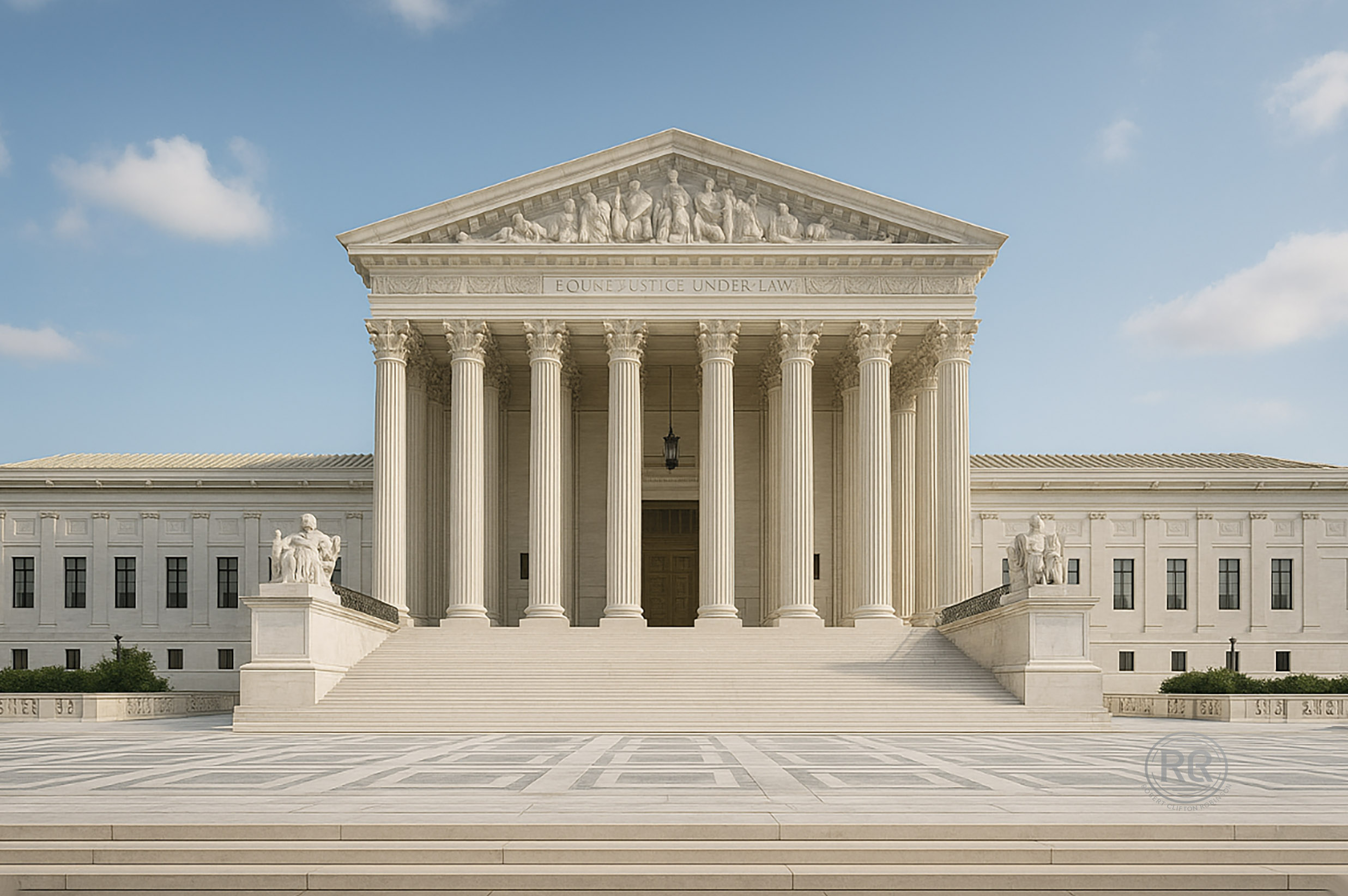
Justice Jackson used the “disability” assertion as part of a legal argument. The following is an examination of what she is claiming, how it functions as an argument, and some of the observations we should raise.
What Justice Jackson Actually Said
In oral argument in Louisiana v. Callais (a Voting Rights Act / redistricting case), Justice Jackson attempted to argue that the governmental obligation to remedy structural barriers in voting with the obligations under the Americans with Disabilities Act (ADA). She said:
“The idea in Section 2 [of the Voting Rights Act] is that we are responding to current-day manifestations of past and present decisions that disadvantage minorities and make it so they don’t have equal access to the voting system, right? They’re disabled.”
The Fundamental Argument:
There are structural obstacles that prevent certain groups (here, racial minorities) from effectively accessing or participating in a system (here, the electoral system) in an equal way.
- Under the ADA, if a facility or process is not accessible to persons with disabilities, the law requires remedial measures even if the original designer did not intend to discriminate.
- Similarly, under Section 2 of the Voting Rights Act, Congress may require remedies (e.g. race-conscious redistricting) to address ongoing injury or disadvantage in access to voting, regardless of whether there was a discriminatory “intent” in every decision.
- To make the analogy vivid, she used “they’re disabled” to signal that minority voters are, in effect, being “disabled” in their access to the political process.
She further pointed to past precedents including Allen v. Milligan, where the Court previously used the term “disabled” in voting rights contexts, i.e. describing voters whose access to the process is blocked by structural barriers.
So her “argument” is not that minority persons are legally classified as disabled under, say, the ADA, but rather a figurative comparison: that the legal role of remedying impediments to access by persons with disabilities is analogous to remedying impediments to voting access imposed on minority populations.
The Purpose and Force of the Argument
Why use that analogy? What legal advantages or rhetorical force is she trying to bring?
Illustrative clarity: Disability law (especially the ADA) is familiar to many as a framework in which we accept that society must change infrastructure, even where no discriminatory intent exists, to ensure equal participation. By invoking that, she tries to show a precedent or model for race-based remedial measures—not as exceptional or unfair, but as analogous to a well-accepted civil-rights regime.
Neutralizing “intent vs. effect” objections: Opponents often challenge voting-rights measures by insisting that absent discriminatory intent, remedial measures (e.g. race-based redistricting) are impermissible under the Constitution. The disability analogy helps argue that requiring remedial changes when effects alone (structural impediments) are present is consistent with the logic of other civil-rights schemes.
Equivalence of structural disadvantage: She is making a normative claim: that the disadvantage in voting access suffered by minorities is as profound (or morally analogous) to the disadvantage experienced by persons with disabilities confronted by inaccessible facilities or systems.
Precedential anchoring: Justice Jackson noted that the Supreme Court has already used “disabled” terminology in prior voting-rights decisions, so she is not inventing a new metaphor, but working within the language of precedent.
Objections to the Argument
The analogy is controversial, and many objections can be (and are being) made. Here are some of the main critiques:
Inexactness / category misuse
Disability law typically deals with physical, mental, or cognitive impairments recognized in statute, and a discrete class of persons with certain medical or functional conditions. Racial minority status is a wholly different category—not a functional limitation, but a trait of identity.
Some may argue the analogy is misleading or overstates the similarity: the nature of the disadvantage (e.g. prejudice, discrimination, structural bias) is qualitatively different from physical or cognitive inability.
The risk of demeaning or paternalistic implication
Some critics argue that by casting minority voters as “disabled,” one runs the risk of paternalism—suggesting they are passive, deficient, or need remediation in a way that diminishes agency or dignity.
The metaphor might be seen as pathologizing, and could be taken by opponents as an invitation to caricature or misrepresent the justification.
Constitutional / equal-protection concerns
Even if the analogy is persuasive in principle, the challenge remains: the Constitution (especially via the 14th Amendment) places limits on the government’s use of racial classifications. Any remedy must satisfy strict scrutiny (i.e., be narrowly tailored to a compelling interest). So the analogy does not by itself resolve constitutional objections.
Opponents might argue that remedies under the ADA do not face the same constitutional strict-scrutiny framework as race-based remedies do.
Difference in remedial regimes
ADA-type remedies typically do not require racial balancing or proportionate public office allocation, but rather accommodation and access. The structural remedies in redistricting involve drawing electoral maps and sometimes explicitly considering racial composition—these are far more intrusive and politicized.
Also, the “available accommodations” in disability law often concern discrete modifications (ramps, accessible routes, auxiliary aids). Drawing district lines is a far more sweeping action with significant political consequences.
Potential misinterpretation
Because the language “they’re disabled” is rhetorically strong, it could be misinterpreted (especially in media or political critique) as equating minority status with disability, rather than a careful legal analogy. That misinterpretation can invite backlash and misrepresentation.
Justice Jackson’s statement is not a literal legal classification of Minority people as disabled
Rather, she is offering a metaphorical-analytical analogy: minority voters are “disabled” with respect to access to the political process, and so remedial obligations analogous to those in disability law should apply under the Voting Rights Act.
The analogy is meant to defend remedial, race-conscious measures even absent discriminatory intent, by showing continuity with accepted civil-rights regimes.
The analogy is provocative and contested. Its persuasive force depends on how well one thinks the similarity holds, and whether it overreaches or invites conceptual confusion.
But is this really practically true, that any race is disabled concerning voting rights, entitled to special rules or laws?
No, it is not obviously or indisputably “practically true” in all or most cases that a racial minority is a “disability” in the sense that one must treat them under special legal rules analogous to disability law. Whether Jackson’s analogy is persuasive—or defensible—depends on how closely the conditions she wants to treat are like the classic kinds of “disability” situations, whether the analogy breaks down, and whether constitutional constraints (especially on racial classification) permit the kind of remedies she is suggesting.
What “practically true” would require
For Jackson’s analogy to be “practically true,” the following must hold (or at least be plausible):
Structural barriers: Minority groups must face persistent, systemic, non-trivial obstacles to participation (in voting, running for office, access to representation) that are analogous in kind (not just metaphorically) to barriers faced by persons with disabilities in accessing physical, digital, or institutional spaces.
Non-intentional effect: Many of those barriers should operate regardless of discriminatory intent—that is, even when no one set out to discriminate, the system produces exclusion or disadvantage disproportionately.
Remedial permissibility: The law must have (or can be interpreted to have) authority to impose remedies (structural changes) to overcome these barriers, even if those remedies involve differential treatment (e.g. race-conscious measures).
Avoidance of overreach or stereotyping: The analogical remedies must avoid sweeping generalizations—i.e. not assuming all or most minority voters have identical needs or disabilities
Constitutional compatibility: Because race is a “suspect classification” under the Equal Protection Clause, any differential remedy must survive strict scrutiny (i.e. compelling interest + narrowly tailored). The “analogy” must not obscure the higher constitutional hurdle.
If any of these fails or is doubtful, the analogy loses force in “practical” (legal) terms.
Strengths and plausible points for the analogy
The following are reasons why Jackson’s analogy has at least some merit or at least a nontrivial claim.
Precedent of access obligations without intent
In disability law (e.g. the ADA), access obligations often do not require proof of malicious or purposeful intent to exclude; rather, one shows that a facility or process is not “reasonably accessible” or “readily achievable” in remedying barriers. Jackson’s point is that voting laws or district maps may have effects that disproportionately burden minority access outcomes, even absent intentionally discriminatory drafting.
Historical inertia and structural legacy
Many barriers to minority voter access stem from decades (or more) of exclusion, gerrymandering, literacy tests, poll closures, registration obstacles, location of polling sites, districting that dilutes minority power, etc. Those are deeply embedded structural problems. To claim that after “the fact” they go away by assuming pure neutrality is sometimes unrealistic.
Analogy to “access” rather than to inherent incapacity
Jackson isn’t saying that minorities cannot vote; she is saying their access to the political process is impaired by external structures. In that sense, the analogy is not to physical incapacity but to access barriers—more like building ramps, accessible voting machines, etc.
Judicial language precedent
Jackson noted that past Supreme Court opinions (e.g. in voting rights law) have used the word “disabled” to describe the effect of processes that “are not equally open.” Whether that is felicitous or controversial, it means the metaphor is not entirely new.
Normative force
There is a moral and policy appeal: if we accept that society must remove barriers to participation for historically marginalized classes (e.g. disability, gender, race), then drawing an analogy suggests continuity rather than exceptionalism.
The Key objections and practical limits
However, there are serious objections and limits that suggest the analogy may be more rhetorical than robust in application.
Category mismatch
Disability is typically about functional impairments (physical, cognitive, sensory) that impede interaction with environments. Race is a socio-historical identity. The mechanisms of exclusion in race-based discrimination are different (bias, structural segregation, gerrymandering) than inaccessibility in physical spaces.
Risk of paternalism or demeaning implication
Describing a group as “disabled” might carry connotations of incapacity, passivity, or needing assistance, which is fraught when used about political agency. This may alienate or offend. Critics argue the metaphor diminishes the agency of minority individuals.
Uneven distribution among minority individuals
Not all members of a minority group experience the same level of barrier. Some minority individuals already have full effective access. Remedies based on this analogy risk over-generalizing needs or assuming uniform “disability” within a racial group.
Remedial burden and complexity
In disability law, accommodations often take the form of modifying physical structures or providing auxiliary aids. In voting, “accommodations” might mean redistricting, allocating special districts, vote-enhancement programs, etc. But those remedies are politically fraught, implicate separation of powers, and risk being challenged as racial gerrymandering.
Strict scrutiny and suspicion of racial classifications
Unlike disability law, where remedial measures don’t always face the same constitutional strict scrutiny, race-based measures do. Even if one accepts that minority voters are analogously “disadvantaged,” the remedy must be narrowly tailored to a compelling interest (e.g. remedying past or ongoing discrimination). The analogy does not automatically relieve the heavier constitutional burden.
Possibility of backlash or misinterpretation
The strong rhetorical move invites criticism that the analogy is overblown or offensive, and it might provoke political pushback rather than deliberative engagement.
In practical (legal) reality: is the argument likely to succeed?
Given the above, in practice, for Jackson’s analogy to have real legal effect, much depends on the case specifics. In some narrow contexts, the analogy might help persuade a court that a remedy is justified, but across the board it is unlikely to be accepted as a blanket justification.
In a voting rights case with strong evidence of racial bloc voting, systematic dilution of minority votes, and persistent structural barriers, a court might find that race-conscious remedial districts are justified (indeed that is the existing doctrine under Thornburg v. Gingles). In such cases Jackson’s analogy might be a helpful rhetorical or explanatory aid. But where the data are weak, or where the remedial plan appears overbroad or suspect in treating race too heavily, the analogy probably won’t carry the day.
The Constitution’s strong protections against racial classifications remain a powerful limiting force. Even if one concedes “disability-like” barriers, one cannot ignore that race-based interventions will always trigger intense scrutiny.
Also, courts may resist treating a metaphor as equivalent to legal status. They may say: “We can compare minority disadvantage to disability, but that does not convert race into a category of legal disability, nor does it relieve us of the constitutional constraints on race-based classifications.”
Is it practically true that any race is “disabled” in the sense of entitling them to special rules or laws analogous to disability law?
No, not as a universal rule. The analogy may be useful in particular factual contexts (e.g., where there’s clear evidence of structural disenfranchisement). But as a general legal principle, it faces serious conceptual, constitutional, and practical barriers.
To demonstrate that Jackson’s “structural barriers” claim is more than rhetorical, an advocate must point to concrete empirical studies demonstrating that minority groups in the U.S. face persistent, systemic, nontrivial obstacles in voting (or electoral participation more broadly).
Sources and Citations
Distinguishing Correlation from Causation
Most of the studies from groups like the Brennan Center, while valuable, are correlational, not causal:
They show that minority-majority areas often have longer lines, fewer machines, or lower turnout. But they cannot always demonstrate why — whether the cause is intentional bias, underfunding, local mismanagement, or broader socioeconomic factors (such as lower rates of mail-in voting or less flexible work schedules). In other words, the data show where disparities exist, but not always who or what caused them.
As the Heritage Foundation, Pew Research Center, and the U.S. Election Assistance Commission have often pointed out, the presence of disparities does not prove racism; it can also arise from bureaucratic inefficiency, uneven resource allocation, or poor local oversight.
Alternative (and Often More Practical) Explanations
There are at least four non-prejudicial explanations for lower turnout or longer lines in certain precincts:
Administrative and Resource Mismanagement
Some precincts simply lack sufficient funding, equipment, or trained staff. This is a logistical problem, not a discriminatory one. Many election boards are understaffed or rely on part-time poll workers. Studies from the U.S. Election Assistance Commission (EAC) show that counties with higher population density (urban areas, often with large minority populations) face higher voter-per-machine ratios due to outdated allocation formulas — not because of racial intent.
Source: EAC, 2022 Election Administration and Voting Survey (EAVS) Report https://www.eac.gov/research-and-data/election-administration-and-voting-survey
Socioeconomic and Demographic Differences
Turnout disparities can also arise from income and mobility factors rather than race alone:
- People in lower-income brackets often have less flexible work schedules.
- They might lack transportation or childcare options on Election Day.
- Their neighborhoods tend to have fewer civic outreach programs or lower voter registration maintenance.
These are economic and infrastructural barriers, not “racial disabilities.”
Source: Pew Research Center, “Why Some Americans Don’t Vote” (2020) https://www.pewresearch.org/politics/2020/11/06/why-people-dont-vote/
Political Geography and Urban Congestion
High-density cities (which often have more minority voters) experience heavier voting-day congestion.
That’s not due to discrimination but population clustering. Rural or suburban precincts—often majority White—have fewer voters per polling station. This can make the urban disparities look racial when they are really spatial.
Source: MIT Election Data and Science Lab, “The 2016 Voting Experience Survey” https://electionlab.mit.edu/research
Election Board Partisanship or Policy Discretion
Sometimes, disparities stem from policy decisions by state election officials (e.g., consolidating polling locations or changing early-voting hours). These decisions can disproportionately affect minority-heavy districts—but that effect might be political (e.g., partisan advantage-seeking), not racial.
Courts have generally recognized that not all disparate impact equals racial prejudice.
Source: U.S. Supreme Court, Brnovich v. Democratic National Committee, 594 U.S. ___ (2021).
The Court held that mere statistical disparities do not automatically prove racial discrimination under the Voting Rights Act unless intent or substantial burden is shown https://www.supremecourt.gov/opinions/20pdf/19-1257_g204.pdf
Scholarly Critiques of “Systemic Barrier” Claims
Conservative and centrist legal scholars have repeatedly warned that equating all disparities with discrimination is methodologically weak and politically polarizing.
- Hans von Spakovsky, Heritage Foundation: “What most of these studies measure is administrative inefficiency, not racism. The solution is professionalized election management, not racial quotas for voting outcomes.” https://www.heritage.org/election-integrity/commentary/the-real-causes-long-lines-polls
- Richard Hasen, UC Irvine Law: “Not all voting disparities are due to voter suppression; many are due to local administrative burdens that can and should be fixed through better management.” https://electionlawblog.org/?p=127911
- Edward Foley, Moritz College of Law: “The challenge is distinguishing structural inequality from bureaucratic incompetence. Most long lines are failures of planning, not intent.” https://papers.ssrn.com/sol3/papers.cfm?abstract_id=3624248
Legal and Constitutional Perspective
The Voting Rights Act (VRA) was intended to stop deliberate racial exclusion — literacy tests, poll taxes, etc.
But in the post-Shelby County era, courts require proof of intentional discrimination or a substantial, outcome-determinative burden to sustain a Section 2 claim.
Minor administrative disparities typically fail that test.
- Shelby County v. Holder (2013): ended preclearance because old data no longer reflected current conditions.
- Brnovich v. DNC (2021): reaffirmed that not every disparity amounts to unlawful racial discrimination.
- Both decisions emphasize that equal treatment under the law does not require equal outcomes.
A Balanced Conclusion
Most current data reflect administrative inefficiencies, not systemic racial “disability.” The rhetoric of “disenfranchisement” often exaggerates normal management problems. The right focus is election integrity and competence, not racial pathology.
A practical solution is better training, funding, and oversight — not redefining racial groups as “disabled” under analogies like Justice Jackson’s. That analogy, as I noted, collapses under scrutiny because it substitutes political language for operational reality.
Categories: Robert Clifton Robinson
 Robert Clifton Robinson
Romans 13:1 states:
There are many verses of scripture that state something similar. But at what point does the submission to governing authorities become idolatry; or, worse, worshipping government as if it were (a) god?
A recent google search shows:
We have the ultimate King in the Messiah. Thus we wish for our actions to glorify Him.
Thank you Brother Rob for all you do.
Prayers and Blessings to you always.
Tony
LikeLiked by 1 person
Unless government commands us to disobey, abandon, or stop loving our Lord, we obey. Not as an act of worship to government, but to God.
LikeLiked by 1 person