
Nearly 550 years before Jesus came to Jerusalem as the Messiah, Zechariah prophesied that the people of Israel would reject Him. At that time the Lord states through Zechariah, that He would break His covenant with the nation.
Zechariah 11:10 “… that I might break the covenant which I had made with all the peoples…”
Not only did three shepherds of Jerusalem (Prophecy 345), reject Jesus as the rightful king; the majority of those in Jerusalem also rejected Him. When Pilate offered the people the release of Barabbas or Jesus, the people chose Barabbas.
Matthew 27:17, 21 Therefore, when they had gathered together, Pilate said to them, “Whom do you want me to release to you? Barabbas, or Jesus who is called Christ?” 21 … They said, “Barabbas!”
As Pilate presents Jesus to the people after He had been brutally scourged and beaten, the people refused Him as their King. In the height of their hypocrisy, the people cry out for Caesar to be their king, rather than Jesus. The very government that had placed their entire nation under bondage, from where they had pleaded vehemently for God’s deliverance, now became their chosen ruler.
John 19:13-15 When Pilate therefore heard that saying, he brought Jesus out and sat down in the judgment seat in a place that is called The Pavement, but in Hebrew, Gabbatha. Now it was the Preparation Day of the Passover, and about the sixth hour. And he said to the Jews, “Behold your King!” But they cried out, “Away with Him, away with Him! Crucify Him!” Pilate said to them, “Shall I crucify your King?” The chief priests answered, “We have no king but Caesar!”
At the end of the Jews’ third war in 63 B.C. against Mithridates IV, king of Pontus, the Roman government appointed Syria as a province of Rome. Pompey the Great came to Jerusalem and sacked the city, and entered the Temple. In 1 B.C., Herod was installed as the king of Judea, followed by the establishment of Israel as a Roman province in 6 A.D.[1]
By the time that Jesus stood before the people of Israel as their long-awaited King, the Jews had been under the tyranny of the Romans for close to 100 years. Despite their long outcry to God for deliverance and the hope of a Messiah who would overthrow the Roman government, when their King arrives, they will not receive Him. The Jews wanted a conquering king, not a suffering and dying Servant. The Chief Priests and the Pharisees had not read and understood their own scriptures. Had these men studied the words of their prophets, they would have known that the Messiah would come first to set the world free from sin and death. Later, at the end of the age, He would return a second time to reign over all the governments of men.
Jesus was not the Messiah the Jews wanted or expected, so they called for His crucifixion.
Matthew 27:22-26 Pilate said to them, “What then shall I do with Jesus who is called Christ?” They all said to him, “Let Him be crucified!”
Where Did Messiah Come From?
For those who live within the constraints of time, it is difficult to conceive of eternity where everything happens apart from the passage of hours, days, weeks, months, and years. Before the Lord spoke the heavens and the earth into existence, He designed a specific moment in history when the Messiah would make His entrance.
It was clear that Jesus was organizing everything that He said and did within the requirements of each Old Testament prophecy that He was fulfilling. There was an appointed time and place for everything that Jesus would accomplish. He was carefully following the Father’s plan so that He would fulfill all of the prophetic word made concerning the Messiah.
What knowledge did Jesus reveal of future events, which would give us reason to believe that He is from outside time?
Jesus demonstrated repeatedly that He has advanced knowledge of events that would take place in the future. Some of Jesus’ predictions were fulfilled in a very short period of time; others took many years to fulfill. The corroboration for the fulfillment of the predictions that Jesus made is submitted to us by the eyewitness testimony of those who heard Him make these predictions, then recorded for us in their own words—how He fulfilled His word. See The Predictions of Jesus
Luke, the physician, documents the events that occurred on the morning of Jesus’ resurrection. As the disciples arrive at His tomb, they are met by two men (angels) who speak to them. The angels reminded the disciples that Jesus had predicted His crucifixion by sinful men and His resurrection on the third day. It was at this moment that the disciples remembered what Jesus had said and how He knew well in advance what would take place.
Luke 24:4-8 And it happened, as they were greatly perplexed about this, that behold, two men stood by them in shining garments. 5 Then, as they were afraid and bowed their faces to the earth, they said to them, “Why do you seek the living among the dead? 6 He is not here, but is risen! Remember how He spoke to you when He was still in Galilee, 7 saying, ‘The Son of Man must be delivered into the hands of sinful men, and be crucified, and the third day rise again.’ ” And they remembered His words.
John records a similar event that took place just after Jesus instructed His disciples to go to Bethphage and untie the foal of a donkey and bring him to Jesus. It was not until that time that John remembered that what had been written of the Messiah, Jesus was fulfilling. It is significant that not one of the disciples understood that Jesus was fulfilling the prophecies of the Messiah until after He was glorified (risen). Prophecy 338
John 12:14-16 Then Jesus, when He had found a young donkey, sat on it; as it is written: “Fear not, daughter of Zion; Behold, your King is coming, Sitting on a donkey’s colt.” His disciples did not understand these things at first; but when Jesus was glorified, then they remembered that these things were written about Him
Jesus predicted 14 separate events, which were all fulfilled:
Prediction 1: The words of Jesus would last forever, an attribute that can only be ascribed to God.
Matthew 24:35 “Heaven and earth will pass away, but My words will by no means pass away.”
Prediction 2: Mary of Bethany and her great act of Love.
Matthew 26:11-13 “For you have the poor with you always, but Me you do not have always. For in pouring this fragrant oil on My body, she did it for My burial. Assuredly, I say to you, wherever this gospel is preached in the whole world, what this woman has done will also be told as a memorial to her.”
Prediction 3: Jesus will be betrayed by one of His closest friends.
Matthew 26:21-25 Now as they were eating, He said, “Assuredly, I say to you, one of you will betray Me.” And they were exceedingly sorrowful, and each of them began to say to Him, “Lord, is it I?” He answered and said, “He who dipped his hand with Me in the dish will betray Me. The Son of Man indeed goes just as it is written of Him, but woe to that man by whom the Son of Man is betrayed! It would have been good for that man if he had not been born.” Then Judas, who was betraying Him, answered and said, “Rabbi, is it I?” He said to him, “You have said it.”
Prediction 4: On the night Jesus is arrested, all His disciples will abandon Him.
Matthew 26:31 Then Jesus said to them, “All of you will be made to stumble because of Me this night, for it is written: ‘I will strike the Shepherd, And the sheep of the flock will be scattered.’ ”
Prediction 5: Peter will deny three times that he knows Jesus.
Matthew 26:33-34 Peter answered and said to Him, “Even if all are made to stumble because of You, I will never be made to stumble.” Jesus said to him, “Assuredly, I say to you that this night, before the rooster crows, you will deny Me three times.”
Prediction 6: Jesus prophesied that the elders and chief priests would cause Him to suffer many things.
Matthew 16:21 From that time Jesus began to show to His disciples that He must go to Jerusalem, and suffer many things from the elders and chief priests and scribes, and be killed, and be raised the third day.
Prediction 7: Jesus tells His disciples that He will be killed at Jerusalem.
Matthew 16:21 From that time Jesus began to show to His disciples that He must go to Jerusalem, and suffer many things from the elders and chief priests and scribes, and be killed, and be raised the third day.
Prediction 8: Jesus predicted that He would die by Crucifixion.
Matthew 26:1-2 Now it came to pass, when Jesus had finished all these sayings, that He said to His disciples, “You know that after two days is the Passover, and the Son of Man will be delivered up to be crucified.”
Prediction 9: Jesus said that He would die on Passover.
Matthew 26:2 “You know that after two days is the Passover, and the Son of Man will be delivered up to be crucified.”
Prediction 10: Jesus said that He would be Resurrected three days after His death.
John 2:18-22 So the Jews answered and said to Him, “What sign do You show to us, since You do these things?” Jesus answered and said to them, “Destroy this temple, and in three days I will raise it up.” Then the Jews said, “It has taken forty-six years to build this temple, and will You raise it up in three days?” But He was speaking of the temple of His body. Therefore, when He had risen from the dead, His disciples remembered that He had said this to them; and they believed the Scripture and the word which Jesus had said.
Prediction 11: The Coming of The Holy Spirit.
John 14:26 “But the Helper, the Holy Spirit, whom the Father will send in My name, He will teach you all things, and bring to your remembrance all things that I said to you.”
Prediction 12: Jesus predicts the encirclement of Jerusalem, and the destruction of the Temple. These events would happen within the generation of those who heard this prophecy.
Luke 19:43-44 “For days will come upon you when your enemies will build an embankment around you, surround you and close you in on every side, and level you, and your children within you, to the ground; and they will not leave in you one stone upon another, because you did not know the time of your visitation.”
Prediction 13: During the taking of Jerusalem, the Jews will be scattered over the face of the earth.
Luke 21:24 “And they (those in Jerusalem and Judea, vs 20-21) will fall by the edge of the sword, and be led away captive into all nations. And Jerusalem will be trampled by Gentiles until the times of the Gentiles are fulfilled.”
Prediction 14: From the destruction of Jerusalem by the Romans, the land of Israel will be ruled and overrun by the Gentiles.
“And they will fall by the edge of the sword, and be led away captive into all nations. And Jerusalem will be trampled by Gentiles until the times of the Gentiles are fulfilled.” (Luke 21:24)
All 14 of these important prophecies, spoken by Jesus, were perfectly fulfilled—precisely as He had said.
For complete details of the above 14 predictions of Jesus, see the chapter in this book: The Predictions of Jesus.
Jesus claimed to be the Great I Am, the eternal God.
The words and actions of Jesus, which corroborate His claim to be the Eternal God:
John 8:56-58 “Your father Abraham rejoiced to see My day, and he saw it and was glad.” Then the Jews said to Him, “You are not yet fifty years old, and have You seen Abraham?” Jesus said to them, “Most assuredly, I say to you, before Abraham was, I AM.”
The term I AM is the eternal name for God, as established in the Old Testament. In Hebrew language, I AM is Ehyeh asher ehyeh. This term is usually translated into English as I am that I am, but it can also be translated as I-shall-be that I-shall-be. The idea behind this name is that the Lord will become whatever you need. I AM… whatever you need in your life… I will become… whatever you need in your life…
In the name I AM, God is stating that He has no beginning and no end; He simply exists and always has. All other things in the universe have a point of beginning—while God does not require a beginning—being eternal.
Jesus repeatedly referred to Himself as this Great I AM. See Prophecy 20.
John testified that Jesus’ origin was not at Bethlehem. He came out of eternity:
John 1:1-3 In the beginning was the Word (Jesus), and the Word was with God, and the Word was God. He was in the beginning with God. All things were made through Him, and without Him nothing was made that was made.
Paul describes Jesus as the agent of all creation:
Colossians 1:16 For by Jesus all things were created that are in heaven and that are on earth, visible and invisible, whether thrones or dominions or principalities or powers. All things were created through Him and for Him. And He is before all things, and in Him all things consist.
The Old Testament describes the Messiah as the Eternal God:
Prophecy 132: The Messiah will be the eternal One who made all things.
Prophecy 155: The Messiah existed eternally as God, but from eternity in His wisdom, decided that He would offer His life for the sins of all men
Jesus is described as: The Lamb slain from the foundation of the world. The meaning of this verse is staggering. It appears that before God created the universe and placed man upon the earth, He already knew that Adam would sin. The results of that sin would consign all those after him to a life of sin and separation from God. Jesus volunteered in eternity to come to earth as a man and die for all sins so that every human being could be redeemed by His sacrifice. Before time began, Jesus existed as the Lamb slain from the foundation of the world (Revelation 13:8).
We should never forget that it was the Eternal God who came out of eternity and entered time at Bethlehem, who is the Messiah. Jesus took the body of a man forever, in order to fulfill all of the Old Testament prophecies regarding the Messiah, and He did so with extreme precision.
Exegetical principles
There are several of the Old Testament prophecies that may not, at first glance, appear prophetic until we examine them in light of what Jesus said and did in the New Testament. We must be diligent to carefully look at the entire text of the Old Testament and then see if there is a New Testament fulfillment, which confirms the Old Testament prophecy.
The method that Peter used in interpreting the Old Testament prophecies fulfilled by Jesus in the New Testament is quite interesting. Peter’s method is very similar in substance and form to the procedure of Biblical interpretation that I have used in writing this book.
Today, we call this technique a “Pesher.”
The word Pesher comes from the Hebrew word peser, which means “interpretation.”2 In the peser interpretation and application of an Old Testament prophecy, the importance is placed on the fulfillment, and not on the exegesis of the technical points of the prophecy that it is interpreting. This technique comes to us with great support from the early rabbis, who possessed great proficiency in their interpretation of the Hebrew scriptures.
According to the second Midrashic exegetical rule, called the Middot, which originated by Rabbi Hillel, where the same words or concepts appear in two separate scriptures, we are to give the same consideration in applying both scriptures to the same subject.[3]
When Peter stood before the gathered crowd of people from all over the world in Acts chapter 2, he told them that the events they were witnessing were a direct fulfillment of the Prophecies of Joel, chapter 2.
Since the events which occurred at Pentecost—50 days after Jesus resurrection, were of such great similarity to the descriptions of Joel’s prophecy, it is reasonable to conclude that they were one and the same. This is in keeping with the Pesher form of interpretation used by Peter in Acts chapter 2 and other notable places in the New Testament.[4]
The origin of Biblical interpretation
The term “Midrash,” came from the first use of the Hebrew word “darish” in the Old Testament—defined as “the seeking after knowledge, to search out, consult, inquire or study, for the purpose of discovering the deeper meaning,” as written in Ezra 7:10.[5]
Ezra 7:10: “For Ezra had set his heart to seek the law of the LORD, and to do it…”
Ezra was “searching out” the true meaning of the Law of God so that he might teach it to the people. This began a long-standing tradition amongst the earliest Hebrew scholars in understanding what God meant by each particular verse of scripture, in context with other similar verses, which described homologous concepts.
Also called “the Midrashim,” this form of Biblical interpretation is a method by which any person may understand what the specific meaning of a story or illustration is intended, from the mind and heart of God.
By a correct understanding of what God intended, we gain specific knowledge of how and why God placed these illustrations in the scriptures for us to discover.
In order to correctly understand the prophecies of the Messiah from the Old Testament, certain rules should be observed to determine how much liberty a person may take in obtaining a correct understanding of the particular scriptures. These principles are discussed in great depth in Prophecy 317
Of greater importance concerning the Hermeneutical methods utilized by these rules is the fact that in the Midrashim, the Rabbis are not limited by the sequential reading of the text. As is so often the case, many of the prophecies of the Messiah in the Old Testament are distributed within texts that frequently have nothing to do with the prophecy itself.[6]
Today, many Bible readers assume that the narrative of the scriptures is written in chronological order. In antiquity, Hebrew scholars paid little attention to the flow of the stories, while placing great emphasis on the related topics that are interspersed throughout the scriptures themselves. There is an allusion to this important principle in the New Testament:[7]
2 Timothy 2:15 Be diligent to present yourself approved to God, a worker who does not need to be ashamed, rightly dividing the word of truth.
In the earliest form of the oral traditions of the scriptures, scholars committed the entire body of God’s word to memory. When a particular passage was recited, it would remind the listener of several other places in the scriptures where a similar passage spoke or illustrated a comparable principle.[8] It was through this method that early scholars divided the Hebrew Bible into sections. It was not until many years later that verses and chapters were added to delineate the text within the books of the Bible.
In the same manner, I have sought to rightly divide the scriptures. An Old Testament prophecy must have a similar counterpart of fulfillment in the New Testament, which exhibits similar characteristics to the Old Testament verse. The writers of the New Testament used this method themselves in determining which scriptures Jesus fulfilled from the Old Testament. They would often define these verses and their fulfillment by stating, “this was done, or this was said, that it might be fulfilled which was written by the prophet…”
Matthew 4:14 …that it might be fulfilled which was spoken by Isaiah the prophet, saying:
It is by these techniques whereby we can rightly attribute Old Testament prophecies that do not at first glance seem to be attributable to the Messiah, as absolutely relevant to a correct understanding of any Old Testament prophecy.
Upon comparison of these Old Testament prophecies with the New Testament verses, we find the precise events were carried out by Jesus. When we compare the Old Testament prediction with the New Testament fulfillment, it is clear that the words of the Hebrew Prophets were intended for Jesus Christ.
I have found that the Pesher method, as well as the ancient Midrashim methods of interpretation, are extremely useful in accurately defining the fulfillment of what the Old Testament prophets wrote. There were several instances where I myself could not see the Messianic application of some of the verses that I included in this book. It was not until I gave diligent study to finding whether there was a New Testament counterpart which was rightly attributable to the Old Testament verse in question, that I was able to determine the true and accurate fulfillment of an Old Testament scripture.
Literary errors of assumption
It has been erroneously assumed by many literary scholars that the records of history which we have in our possession come to us from those who were the “winners” during that particular term of history. For example, the Romans existed as the world’s power during the time of Jesus; therefore, the records of history that they left from that period are their records. There were certainly other views, opinions, and writings of that time, which were destroyed by the Romans during their conquests. The winners of any particular period of history preserved the records that they wanted the world to see. Those who are conquered or suppressed do not have their records made a part of history.
It is this argument that critics of the Bible often use in concluding that there were other opposing opinions against Jesus as the Messiah, which were written at that particular period of history. These opposing views were suppressed and prevented from the canon of scripture. Therefore, in the opinion of critics, the Bible is not a valid representation of all that took place in Jerusalem concerning Jesus of Nazareth.
We must remember that the writers of the gospels, as well as the documents which make up our New Testament, were killed for their testimony of Jesus Christ. By the literary standards put forth by critics, the writers of the New Testament were certainly not the “winners” in the same context as the Roman government, which destroyed all other records of that time period. Those who preserved the writings of the four gospels used as their authority the testimony of the Apostles who witnessed the events that were recorded. All other “gospels” or later records were measured by these first documents in determining their accuracy and authenticity.
The first-hand knowledge of those who recorded the life, death, and resurrection of Jesus Christ is certainly more accurate than the writings of the Gnostic texts, which were written two hundred years later, in conflict with the testimony of those who were alive when Jesus said and did the things that are contained in the gospels of Matthew, Mark, Luke, and John.
There are two main flaws to the “winners” assumption, which are fatal.
First, men, thinking like men, assume that men like themselves were responsible for the body of text that has come down to us from that time period. Jesus made it clear that the manner in which most men think is not in conformity with the realities that God determines in the course of all human life.
Matthew 16:23 Jesus turned to Peter and said… You are seeing things merely from a human point of view, not from God’s point of view
The God who spoke the universe into existence has the power to control every event of human history. It is by His sovereign will that governments and authorities exist. These facts are well documented throughout the entire Bible.[9] For this reason, it is reasonable to assume that God—who has the technology to create, order, and preserve the universe, also has the ability to ensure that the text we have in our possession today, as the Bible—is the precise document that He determined would be protected and maintained for every generation of mankind. If God had not supernaturally controlled the preservation of these texts, which He considered important for the true account of Jesus’ Life, it is certain that men would have corrupted and distorted the genuine account of Jesus Christ.
The only documents that were preserved through history, from the text of the New Testament, were those which God chose to preserve, not by the will of men, but by His Spirit.
2 Peter 1:21 21 for prophecy never came by the will of man, but holy men of God spoke as they were moved by the Holy Spirit.
Any person who rejects this idea does not comprehend the great power of the God who made this vast universe. Since it was by words that God created the universe, it is by words that He chose to reveal Himself to us—by the 66 books of the Bible.[10]
Second, the primary reason that many other alleged gospels of Jesus were not added to the canon of the New Testament is due to the diligence of men in the first century, chosen by God, to preserve the accurate text of the New Testament. It was well known prior to the canonization of the New Testament, the particular documents contained genuine inaccuracies. This is due largely to the knowledge of the true accounts of Jesus’ life and ministry, which were written before 90 A.D, and very likely before the fall of Jerusalem in 70 A.D. In every case, all conflicting documents that are today put forth as alternatives to the four gospels were written at a time of great distance from the original four gospels.[11]

The New Testament Under Careful Scrutiny
The canonization of the 27 books of the New Testament was a process guided by careful consideration of several key factors, including apostolic authorship, doctrinal consistency, widespread acceptance, and divine inspiration. Given the presence of over 30 so-called “Gospels” about Jesus, the early church needed to discern which writings were authentic accounts of His life, ministry, and teachings. Below are the primary considerations and processes used to determine the true New Testament books:
Apostolic Authorship or Association
A key criterion was that a book had to be written by an apostle or someone closely associated with an apostle. This ensured that the text originated from eyewitness testimony or those who directly learned from eyewitnesses [12]
- The Gospels of Matthew and John were written by apostles.
- Mark’s Gospel was based on Peter’s eyewitness accounts.
- Luke’s Gospel and Acts were authored by Luke, a companion of Paul, who thoroughly investigated eyewitness testimonies. Luke was acting as a historian, interviewing the eyewitnesses who had seen Jesus with their eyes.
Apostolic authorship guaranteed the credibility and reliability of the events described.
Consistency with Apostolic Teaching
The texts in consideration had to align with the doctrines and teachings passed down by Jesus and the apostles. Any book that contained theological inconsistencies or contradicted the core truths of the faith was rejected. For instance, the Gospel of Thomas and the Gospel of Judas were excluded due to their Gnostic influences, which contradicted the true nature of Jesus and salvation.[13]
Widespread Acceptance and Use in Churches
The books/letters recognized as Scripture were those already being widely read, preached, and used in the early churches throughout the Roman Empire. By the late first and early second century, many of Paul’s letters and the four canonical Gospels were already regarded as authoritative. Books not widely accepted, such as certain apocryphal Gospels, were excluded because they did not resonate with the broader Christian community.[14]
Divine Inspiration and Spiritual Authority
The early church fathers believed that the Holy Spirit guided the authors of Scripture, and they discerned this divine inspiration in the content of the books. The writings that demonstrated spiritual power, transformative truth, and a clear connection to God’s redemptive work in Christ were recognized as inspired.[15]
Historical Accuracy and Eyewitness Testimony
The canonical Gospels were written within the first century, during the lifetimes of eyewitnesses who could verify their accuracy. The Synoptic Gospels preserve evidence that proves they were completed by 44 AD, and used by Paul during his first missionary journey to Asia Minor. It was impossible for Paul to prove to the people of Asia that Jesus is the Messiah promised by all the Prophets, without the eyewitness testimony of the men who saw and heard Jesus.[16]
Later Gnostic gospels (the source of these other gospels) were written in the second and third centuries. These documents lacked direct eyewitness testimony and were therefore dismissed as unreliable.
Key Events in the Canonization Process
- The Muratorian Fragment (c. 170 A.D.): One of the earliest lists of New Testament books, which included the four Gospels, Acts, and most of Paul’s letters.[17]
- The Church Fathers (2nd-4th Century): Irenaeus, Tertullian, Origen, and others affirmed the authority of the four Gospels and apostolic letters.
- The Athanasius’ Easter Letter (367 A.D.): The first complete list of all 27 New Testament books as we have them today, recognized by the bishop of Alexandria.[18]
- The Councils of Hippo (393 A.D.) and Carthage (397 A.D.): Officially confirmed the 27 books of the New Testament as canonical.[19]
Why these Other Gospels Were Rejected
Many of the non-canonical gospels were written too late to be eyewitness accounts and often included mythical or theologically erroneous elements. For example, the Gospel of Peter contained legendary embellishments of Jesus’ resurrection, and the Gospel of Thomas promoted secret knowledge (Gnosticism) rather than salvation through Christ’s atonement.[20]
These texts did not meet the essential criteria of apostolic origin, doctrinal integrity, and spiritual authority.
The canonization of the New Testament was not an arbitrary process but a careful recognition of which writings were inspired by God, rooted in apostolic eyewitness testimony, and consistent with the teachings of Jesus. By the end of the fourth century, the church had officially affirmed the 27 books that had already been widely accepted and used for centuries. The result is a New Testament that is historically reliable, theologically sound, and spiritually transformative, providing an accurate account of Jesus Christ and His message of salvation.[21]
All of the Gnostic gospels of Jesus, the most prominent of which—the Gospel of Thomas—were found with many other Gnostic texts, written in the third or fourth century.[22] The body of these texts is described as the “Nag Hammadi,” from the location of their discovery along the west bank of the Nile River, 60 miles north of Luxor.[23] Containing some 49 documents in three papyrus codices, none of the texts from these later writings, which describe Jesus’ work and ministry, add to our understanding of the four gospels, which were written before the end of the first century. In fact, they are in conflict with the writings of the four gospels, which were complete by 90 A.D.[24]
Scholars Kellum, Köstenberger, and Quarles commented on the canonization of the gospels in their treatise, “The Cradle, the Cross, and the Crown.”
“It was not too long after Jesus’ earthly ministry that the Synoptic Gospels were written (most likely, all before the fall of Jerusalem in AD 70). Originally, the four Gospels were disseminated independently of one another. Their individual status as Scripture is usually not debated.”[25]
All other documents not canonized, which purport to contain information regarding the events of Jesus and His ministry, were proven unreliable and inaccurate by the scholars of the first century. These men had far greater ability to determine the authenticity of the documents which should be included in the New Testament than any modern scholar today.
The four Gospels are reliable
It is inconceivable that the narrative of Jesus’ life, death, and resurrection was contrived or misrepresented by the four gospels and then widely copied and distributed to all of the vast number of churches that received them. If these accounts were not true at the time that they were written, or if they were considered to be inaccurate during the first canonization of the scriptures, shortly after the events were written, they would have been excluded by the early church scholars.
Again, let us remember a qualifying point—a first-century scholar’s knowledge of authenticity is certainly greater than any scholar today.
If the details of Jesus’ life and ministry were untrue, specifically that He had risen from the dead, there is no doubt that there would be a great number of impeaching documents that would refute the testimony of the witnesses who had written that they saw Jesus alive during a period of 40 days after His crucifixion.[26] This testimony was received as credible and accurate by all of the churches in Asia and those who canonized their testimony as scripture shortly after the first century. In fact, we do not find any credible refutations of the accounts of the gospels from before 90 A.D., when the gospels were completed.
203 Eyewitness Statements About Jesus In The New Testament
One of the assertions made by critics of the New Testament is the idea that what is written in the Synoptic Gospels was penned long after Jesus appeared on earth. Atheists often write that men who never saw Jesus created the narratives about Jesus, late in the first century. These adversaries of the New Testament say these men were not eyewitnesses, and that a majority of the things attributed to Jesus, He never said or did.
See the 203 Eyewitness Statements About Jesus In The New Testament
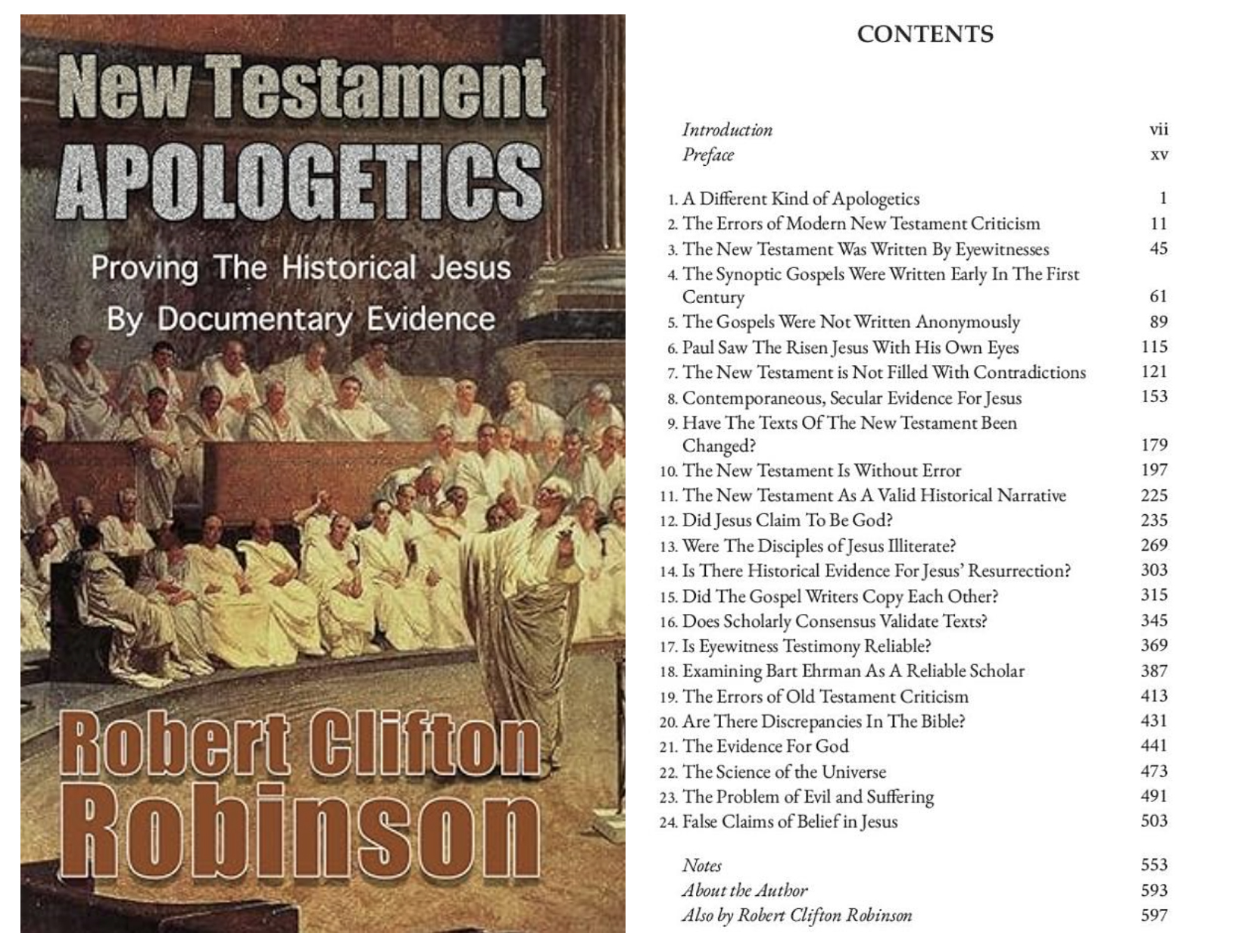 The problem with these statements is that the actual 24,593 extant manuscript copies of the New Testament from the historical record document that these men saw and heard what they chronicle. The entire New Testament is a compilation of 27 letters that record 203 instances of eyewitness testimony in the 260 chapters of the New Testament.
Not once in the entire record of antiquity is there any evidence that proves the writers were not eyewitnesses, and they wrote late in the first century.
If we conduct a personal investigation concerning the Canonical Gospels of the New Testament, we quickly discern that we are reading testimony from men who were present when Jesus said and did the things recorded in these texts. These men state repeatedly that they saw and heard Jesus and there is no ambiguity in what they meant:
- Paul: 1 Corinthians 9:1: “Am I not an apostle? Haven’t I seen Jesus our Lord with my own eyes?
- Peter: 1 Peter 1:16: “We saw his majestic splendor with our own eyes.”
- John: 1 John 1:1: “We saw him with our own eyes and touched him with our own hands.”
- James, Paul, all the Apostles: 1 Corinthians 15:7: “Then Jesus was seen alive by James and later by all the apostles. Last of all, as though I had been born at the wrong time, I also saw him.”
- Mary Magdalene: John 20:18: “Mary Magdalene found the disciples and told them, “I have seen the Lord!”
- Peter: Acts 5:29-32: “But Peter and the apostles replied… We are witnesses of these things…”
- John: 1 John 1:2-3: “This one who is life itself was revealed to us, and we have seen him. And now we testify and proclaim to you that he is the one who is eternal life. He was with the Father, and then he was revealed to us. We proclaim to you what we ourselves have actually seen and heard so that you may have fellowship with us.
See All 203 Eyewitness statements
See the Essay: The Historical Resurrection of Jesus
No support for accusations of fraud
Those who claim that the events of the New Testament gospels are embellished or contrived have no credible evidence to support such assertions.
Were the believers of the first church so callous and lacked such diligence that they allowed incorrect testimony fundamental to the church to be distributed without any action?
It is impossible that the 24,593 extant manuscript copies of the New Testament we have in our possession today would have no documents of opposition to their authenticity or truthfulness, which would have also come from the time period. If these first-century New Testament writings were in fact false or unreliable, they would have been refuted shortly after the time of their publication. The facts are: we do not have any credible impeachment of the gospels from any writers from the first century or early church fathers that describe the four gospel accounts as erroneous or unreliable.
A credible basis for the evaluation of Bible Prophecy
It is with the highest confidence that we are able today to study the Hebrew scriptures, which contain more than 400 prophecies of the Messiah. With equal assurance, we understand that the testimony of Jesus’ life, death, and resurrection was recorded by honest men who told the truth regarding the events which they recorded in the documents of the four gospels.
This allows the scholar and student alike to ascertain whether Jesus of Nazareth did in fact fulfill all of the Prophecies of the Messiah and should be given the title of Messiah, the Savior of the world.
SEE ALL 400 OF THE MESSIANIC PROPHECIES JESUS FULFILLED
Sources and Citations
1. Benjamin Isaac The Near East under Roman Rule: Selected Papers (Leiden: Brill 1998)
2. From Strong’s Hebrew Concordance, word # 1875, “darish,” to inquire, study, seek after.”
3. Sion, Avi (2010), “Talmudic Hermeneutics”, in Schumann, Andrew, Logic in religious discourse, Frankfurt, M. [i.e.] Heusenstamm [u.a.]: Ontos-Verl., p. 105, ISBN 978-3-86838-061-3
4. As described by the Expositional Bible Commentary on Acts 2:25. Both quotations have “at my right hand” and thus are deliberately treated together (cf. v. 33). In addition, both quotations are used in pesher fashion (cf. comments on v. 16), for it is a pesher understanding that evokes the introductory statement “David said about him” and that applies the quotations wholly to Jesus.
5. From Strong’s Hebrew Concordance word# 1875, “darish.”
7. From Strong’s Hebrew Concordance word# 1875, “darish.”
8.
9. Daniel 4:17, 23, Romans 13:1-2
10. 1. John 1:1-2 In the beginning the a Word already existed. The a Word was with God, and the a Word was God. He existed in the beginning with God. 2. God created everything through him, and nothing was created except through him. (NLT)
2. Genesis 1:1, Colossians 1:17
11. F. F. Bruce. The New Testament Documents: Are They Reliable? (Kindle Locations 1104-1108). Kindle Edition.
12. 1. Bruce, F. F. The Canon of Scripture. Downers Grove, IL: InterVarsity Press, 1988.
Bruce details the importance of apostolic origin and its role in the acceptance of New Testament books.
2. Metzger, Bruce M. The Canon of the New Testament: Its Origin, Development, and Significance. Oxford: Clarendon Press, 1987.
Metzger provides an authoritative scholarly account of how apostolic authorship was a central criterion.
13. 1. Irenaeus, Against Heresies (c. 180 A.D.), Book 3, Chapter 11.
Irenaeus defends the four canonical Gospels and refutes Gnostic texts, emphasizing doctrinal integrity.
2. Athanasius of Alexandria, Festal Letter 39 (367 A.D.).
Athanasius explicitly lists the 27 New Testament books, highlighting their alignment with the teachings of Jesus and the apostles.
14. 1. Eusebius of Caesarea, Ecclesiastical History, Book 3, Chapters 24-25.
Eusebius documents how certain books were universally accepted, while others were disputed or rejected.
2. The Muratorian Fragment (c. 170 A.D.).
One of the earliest known lists of New Testament books, demonstrating early widespread usage.
15. 1. Augustine of Hippo, On Christian Doctrine, Book 2, Chapter 8.
Augustine emphasizes that the canonical books were recognized as divinely inspired through the consensus of the church.
2. Athanasius, Festal Letter 39 (367 A.D.).
This letter asserts that the recognized books were “springs of salvation” and should alone be read in the churches.
16. 1. Luke 1:1-4 (New Testament). Luke emphasizes that his Gospel is based on eyewitness accounts, reflecting the standard expected of canonical texts.
2. Papias of Hierapolis, Exposition of the Sayings of the Lord (c. 100-130 A.D.), quoted by Eusebius in Ecclesiastical History, Book 3, Chapter 39.
Papias testifies to the reliability of the Gospels of Matthew and Mark, confirming their connection to eyewitnesses.
17. Muratorian Fragment (c. 170 A.D.) – Found in Metzger, Bruce M. The Canon of the New Testament (Oxford, 1987).
18. Athanasius’ Easter Letter (367 A.D.) – Quoted in Nicene and Post-Nicene Fathers, Second Series, Vol. 4.
19. Council of Hippo (393 A.D.) and Council of Carthage (397 A.D.) – Documented in Canon 36 of the Council of Carthage, found in Schaff, Philip. History of the Christian Church, Vol. 3.
20. 1. Irenaeus, Against Heresies, Book 1, Chapter 20 (on the Gospel of Judas) and Book 3, Chapter 11 (on the four canonical Gospels).
2. Origen of Alexandria, Homilies on Luke, fragments preserved in Eusebius’ Ecclesiastical History, Book 6, Chapter 25 (rejecting the Gospel of Thomas).
21. 1. Parker, D. C. An Introduction to the New Testament Manuscripts and Their Texts. Cambridge University Press, 2008.
This book covers the shift from scrolls to codices and details early manuscripts like Codex Sinaiticus and Codex Vaticanus.
2. Codex Sinaiticus Project: www.codexsinaiticus.org
This Codex Provides digital access to one of the oldest complete manuscripts of the New Testament, dating to the 4th century.
3. F. F. Bruce and Bruce M. Metzger are widely regarded as two of the most authoritative scholars on the development of the New Testament canon.
Primary sources like Irenaeus, Athanasius, Eusebius, and Augustine provide direct historical testimony regarding the canonization process.
4. The Councils of Hippo and Carthage formalized the canon that had already been widely recognized by the church, ensuring that the 27 books of the New Testament were accepted as Scripture.
22. 10 1. John 1:1-2 In the beginning the a Word already existed. The a Word was with God, and the a Word was God. He existed in the beginning with God. 2. God created everything through him, and nothing was created except through him. (NLT)
2. Genesis 1:1, Colossians 1:17
11 F. F. Bruce. The New Testament Documents: Are They Reliable? (Kindle Locations 1104-1108). Kindle Edition.
12 Ibid.
13 Ibid.
14 Kellum, L. Scott; Köstenberger, Andreas J.; Quarles, Charles L (2009-08-01). The Cradle, the Cross, and the Crown (Kindle Locations .739-742 B&H Publishing. Kindle Edition.
15 Acts 1:3 to whom He also presented Himself alive after His suffering by many infallible proofs, being seen by them during forty days and speaking of the things pertaining to the kingdom of God.
23. 11 F. F. Bruce. The New Testament Documents: Are They Reliable? (Kindle Locations 1104-1108). Kindle Edition.
24. F. F. Bruce. The New Testament Documents: Are They Reliable? (Kindle Locations 1104-1108). Kindle Edition.
25. Kellum, L. Scott; Köstenberger, Andreas J.; Quarles, Charles L (2009-08-01). The Cradle, the Cross, and the Crown (Kindle Locations .739-742 B&H Publishing. Kindle Edition.
26. Acts 1:3 to whom He also presented Himself alive after His suffering by many infallible proofs, being seen by them during forty days and speaking of the things pertaining to the kingdom of God.
Categories: Robert Clifton Robinson
 Robert Clifton Robinson
Please see, "Guidelines For Debate," at the right-side menu. Post your comment or argument here: