This Year, We Have Experienced Over 24,000 Essay Reads By Persons In China
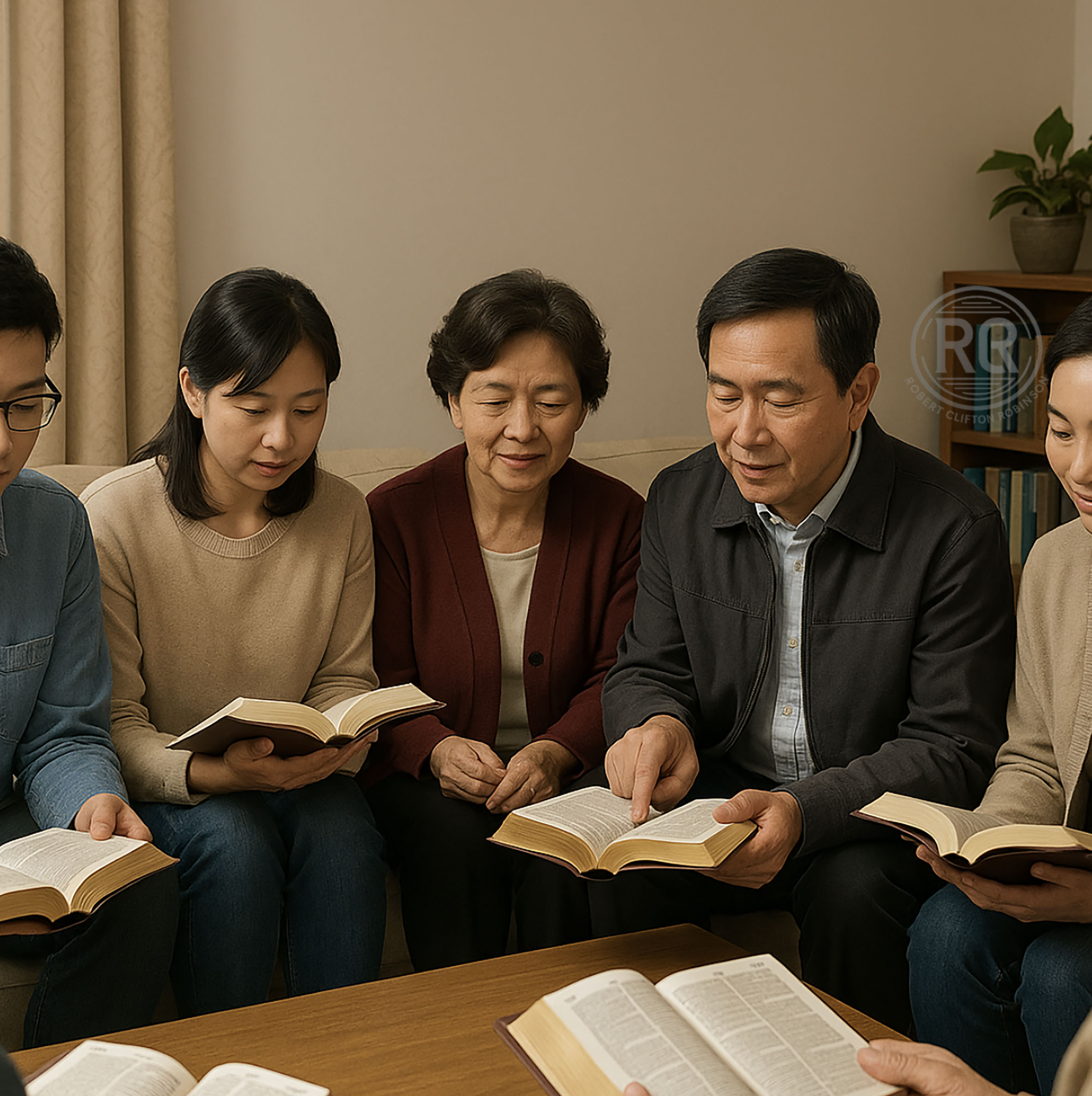
I publish biblical materials for people all over the world. Each year, we receive communication from people in 210 countries who read my biblical commentary. They ask me if they can have permission to print, distribute, and use these materials in teaching the Bible to people in their communities. This is the very reason that my website exists. To provide sound biblical material to people free of charge, so that they might know Jesus and be saved.
Beginning this year I started to see a marked increase in readership by persons in China. I wondered how this is possible since i had understood that Christianity is severely regulated by the Communist Chinese Government.
People who pray for me and my ministry, and support us in our attempt at providing this access all over the world, should know that at this time, we are seeing a great outpouring of the Holy Spirit in China.
The following is a brief essay that describes the environment that exists in China, and the obstacles Christians face in this communist nation.
The following are the key points regarding religious practice, Christian materials, and online access in China—presented with conservative, centrist and faith-based sources, as you prefer.
Freedom of religion in the constitution vs. the reality of regulation
The “People’s Republic of China,” (PRC) Constitution (Article 36) states that citizens “have freedom of religious belief.” However, the law qualifies this right by referring to “normal religious activities” conducted by registered religious organizations and prohibits using religion to “disrupt social order, impair the health of citizens or interfere with the educational system of the state.”
In practice, the PRC recognizes five official religions (Buddhism, Taoism, Islam, Protestantism and Catholicism) and requires religious groups to register with the state-supervised bodies. Many observers describe the system as state-control rather than full freedom.
Christian churches, materials and registration
For Protestant Christians, the officially sanctioned organization is the Three‑Self Patriotic Movement; for Catholics the Chinese Catholic Patriotic Association. Unregistered or “underground” house churches exist but face legal and practical risks.
Christian materials (for example Bibles) are produced and distributed in China, but only under strict state‐control. For example, the sale of Bibles via major online platforms was banned in 2018. Many church activities outside the approved structure are subject to harassment, detention, or shutdown of venues.
Internet regulation and religion
China’s internet is heavily regulated via the so-called Great Firewall: many foreign websites are blocked, domestic platforms are required to censor, filter and monitor content. More specifically for religion, in September 2025 the state issued a new “Code of Conduct for Religious Clergy on the Internet” (18 articles) that prohibits “online preaching, live streaming liturgies, prayer meetings, religious instruction of minors” and other activity unless done through state-approved channels.
The regulations ban raising funds online for “religious purposes” (e.g., building churches) and forbid religious “training” or evangelism online via unapproved platforms.
What these mean in practice
Being a member of the officially registered Protestant church is legal; unregistered gatherings (house-church style) carry elevated risk of intervention by authorities. Accessing Christian material (print or digital) is possible—but access to unapproved material, foreign web-sites, or large unregistered gatherings is restricted.
For online access from within China, content may be blocked, filtered or removed; foreign servers may be inaccessible or slow; local platforms may self-censor. That said, the ecosystem is not entirely closed: people inside China still find ways to access websites, read foreign materials, use VPNs, etc. Also, Chinese Christians still operate (both legally and illicitly) and consume Christian content.
The crackdown appears to be intensifying. For example, there have been recent high-profile detentions of house-church pastors.
Why I am seeing more than 24,000 essay reads from China
Legitimate readership: Many Chinese Christians (both in registered churches and unregistered “house church” networks) do access Christian materials online. My website may have been found via search engines, social media links, or shared among networks inside China.
Circumvented access: Even though there are regulatory blocks and censorship, users sometimes use VPNs or proxies to access foreign websites. Some content may not yet be flagged or blocked. Thus, my biblical materials are still readable, at least temporarily.
Global reader mis-location: Web analytics sometimes attribute IP addresses incorrectly (for example, users may be in Hong Kong, Macau, overseas Chinese, or other regions using Chinese IPs). So “China” reads may not all be from inside the mainland or strictly under the regulatory framework.
Partial regulation: The new regulations (Sept 2025) explicitly target clergy and online religious activities (preaching, live-streaming, recruiting, fundraising) via digital platforms. Reading an essay might not be classified as “preaching” or “conducting religious activity” under the letter of the regulation.
The Risk remains: Even though this reading may be happening, it doesn’t mean there is full freedom of dissemination or public evangelism. Distribution of my essays in China might be informal, and any organized “teaching” or “evangelizing minors” or “fundraising” could attract state intervention.
This Requires Us To Pray That This Access Continues
Since I engage in scholarly Christian work and outreach, there are practical points to consider (when you pray for my ministry).
Since my website is hosted outside China, there’s a chance it is or will be blocked by the Great Firewall (or specific content filtered). Analytics may show some reads now but could decline if access is blocked or slowed.
If my essays link to other Christian resources, videos, livestreams, or material described as “evangelism”, those could trigger more scrutiny. It may be safest to present your essays as academic, educational rather than overt evangelistic campaigns targeted at Chinese minors or mass conversion initiatives.
Some provinces in China have tighter controls than others; access may vary widely. Also, Chinese diaspora or Hong Kong readers might look like mainland readers in analytics.
These Are The Reasons I Ask For Your Prayers And Our Continued Access To Chinese Christians
While China does have significant restrictions on Christian practice, church organization, the distribution of Christian materials, and especially online religious activity, the situation is not one of 100 % total blockade. Many Christians inside China still access Christian material, share it, read foreign-hosted content, and participate in faith networks—sometimes covertly. The current 24,000 reads from China are plausible in that context.
However, the strong regulatory environment means that access and distribution are subject to risk and limitation—especially for public evangelism, online preaching, live streaming, youth instruction, or unapproved platforms.
For All of You Who Pray and Support This World-Wide Ministry, Thank You! We Still Have Much Work to Do Before Jesus Returns For us.
Categories: Robert Clifton Robinson
 Robert Clifton Robinson
Please see, "Guidelines For Debate," at the right-side menu. Post your comment or argument here: