What Are The Primary Differences Between the Mormon Jesus and the Biblical Jesus?
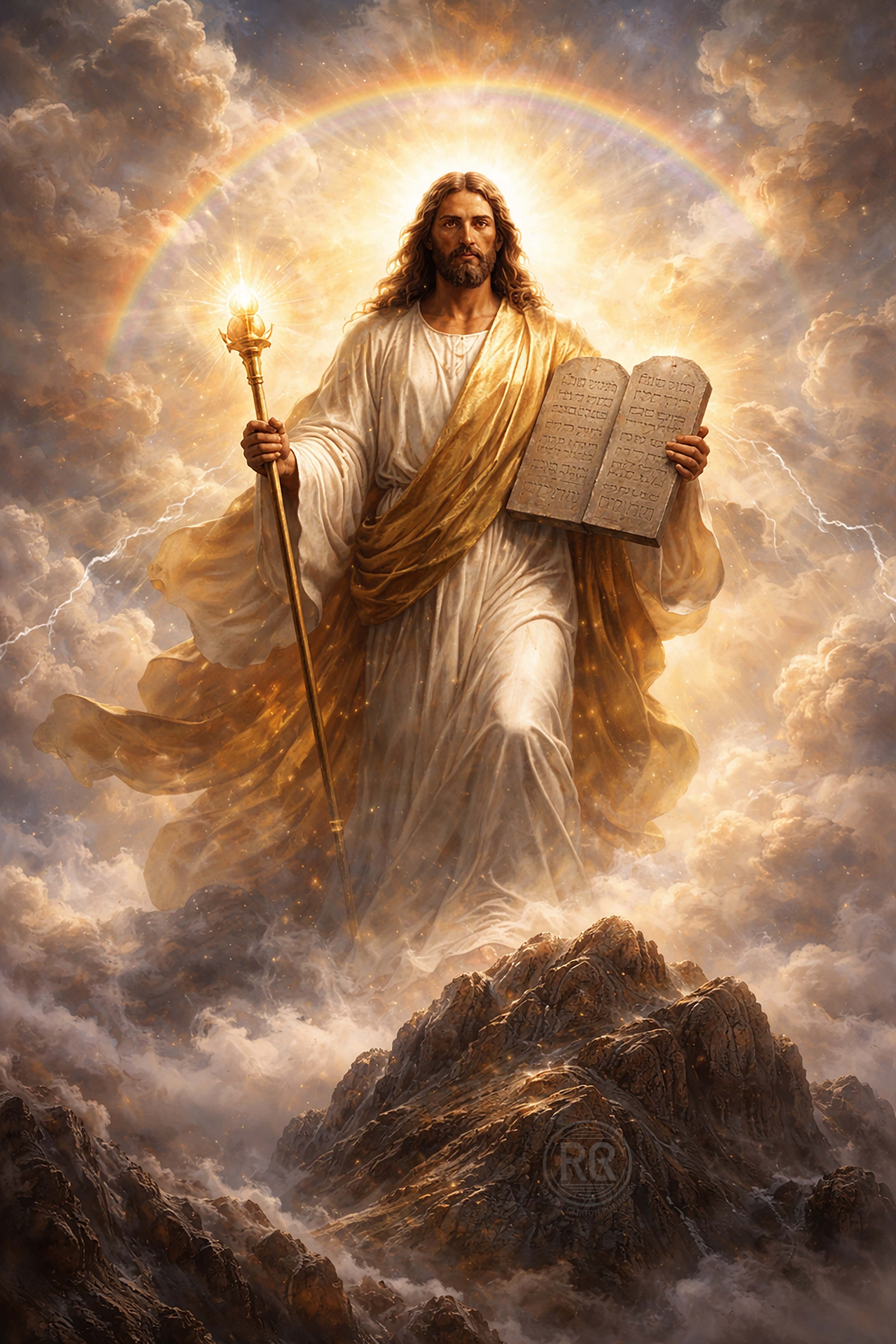
In LDS doctrine and theology, Jesus is not worshipped as God. Jesus is not prayed to as Jesus instructed His disciples. The LDS Jesus is completely different from the Jesus presented to us by the historical New Testament Gospels. The following are the actual statements about Jesus that are published in key LDS documents and taught in their churches:
1. The Nature of God
Mormon Jesus: Jesus is a created being, the first spirit-child of Heavenly Father and Heavenly Mother. God the Father was once a man who progressed to godhood.
Biblical Jesus: Jesus is eternally God, uncreated, sharing the same divine essence with the Father. God has always been God and was never a man (Isaiah 43:10; Psalm 90:2; John 1:1–3).
John 1:1–3: “In the beginning, the Word (Jesus) already existed. The Word was with God, and the Word was God. He existed in the beginning with God. God created everything through him, and nothing was created except through him.”
Isaiah 43:10: “But you are my witnesses, O Israel! says the LORD. You are my servant. You have been chosen to know me, believe in me, and understand that I alone am God. There is no other God—there never has been, and there never will be.”
Jesus Is a Created Being / Spirit Child: LDS Sources
Gospel Principles (LDS manual), ch. 2: “Jesus Christ is the firstborn spirit child of our Heavenly Father.”
Doctrine and Covenants 93:21: “And now, verily I say unto you, I was in the beginning with the Father, and am the Firstborn.”
The Father and the Son, Church Educational System manual: “All men and women are literal spirit children of God, including Jesus Christ.”
2. Ontological Status
Mormon Jesus: Jesus is a separate god from the Father, united only in purpose, not in being.
Biblical Jesus: Jesus is one in being with the Father, not merely one in purpose (John 10:30; John 14:9).
John 10:30: “The Father and I are one.”
John 14:9: “Anyone who has seen me has seen the Father!”
God the Father Was Once a Man: LDS Sources
Joseph Smith, King Follett Discourse (1844): “God himself was once as we are now, and is an exalted man…”
Lorenzo Snow (5th LDS President): “As man now is, God once was; as God now is, man may be.”
(Teachings of Lorenzo Snow, p. 2)
3. Jesus’ Relationship to Lucifer
Mormon Jesus: Jesus and Lucifer are spirit brothers, both offspring of Heavenly Father.
Biblical Jesus: Jesus is the Creator of all things, including angels (Colossians 1:16; Hebrews 1:5–8). Satan is a created angel; Jesus is not his brother in nature.
Colossians 1:16: “For through Jesus God created everything in the heavenly realms and on earth.
He made the things we can see and the things we can’t see… Everything was created through Jesus and for him.”
Hebrews 1:6: “And when he brought his supreme Son into the world, God said, ‘Let all of God’s angels worship him.’”
Jesus and Lucifer Are Spirit Brothers: LDS Sources
Gospel Principles, ch. 2: “Jesus Christ is our elder brother… Lucifer is also a spirit son of God.”
Pearl of Great Price, Moses 4:1: “Satan… said, ‘Behold, here am I, send me.’”
4. Jesus As Creator
Mormon Jesus: Jesus organized the universe from pre-existing eternal matter.
Biblical Jesus: Jesus created all things ex nihilo (out of nothing) by divine command (John 1:3; Hebrews 11:3).
John 1:3: “God created everything through Jesus, and nothing was created except through him.”
Hebrews 11:3: “By faith we understand that the entire universe was formed at God’s command, that what we now see did not come from anything that can be seen.”
Creation from Pre-Existing Matter: LDS Sources
Pearl of Great Price, Abraham 3:24: “We will go down, for there is space there, and we will take of these materials…”
Joseph Smith, Teachings of the Prophet Joseph Smith, p. 350: “The elements are eternal… God did not make the world out of nothing.”
5. Jesus As God
Mormon Jesus: Jesus attained godhood through obedience and progression.
Biblical Jesus: Jesus has always been God. He is Yahweh-God, known as the LORD, throughout the Old Testament. He did not become God (Philippians 2:6; John 17:5).
Philippians 2:6: “Though Jesus was God, he did not think of equality with God as something to cling to.”
John 17:5: “Now, Father, bring me into the glory we shared before the world began.”
Jesus Progressed to Godhood: LDS Sources
Gospel Principles, ch. 47: “Jesus Christ progressed line upon line until He achieved the fullness of godhood.”
Doctrine and Covenants 93:12–13: “He received not of the fulness at first, but continued from grace to grace.”
6. The Incarnation of Jesus
Mormon Jesus: Jesus was physically conceived through a literal sexual union between God the Father and Mary (as taught by early LDS leaders).
Biblical Jesus: Jesus was conceived miraculously by the Holy Spirit, without sexual relations (Luke 1:34–35).
Luke 1:34-35: “Mary asked the angel, “But how can this happen? I am a virgin.”
35 The angel replied, “The Holy Spirit will come upon you, and the power of the Most High will overshadow you. So the baby to be born will be holy, and he will be called the Son of God.”
Physical Conception of Jesus: LDS Sources
Brigham Young: “The birth of our Savior was as natural as are the births of our children.”
(Journal of Discourses, 8:115)
Orson Pratt: “God the Father had sexual relations with Mary.” (The Seer, p. 158) (Note: Though later softened by LDS Apologists, these teachings were never repudiated by LDS Leadership.)
7. Jesus’ Atonement For Sin
Mormon Jesus: Atonement began in Gethsemane and must be combined with human works, ordinances, and obedience.
Biblical Jesus: Atonement was completed once for all on the cross, sufficient in itself (John 19:30; Hebrews 10:10–14).
John 19:30: When Jesus had tasted it, he said, “It is finished!” Then he bowed his head and gave up his spirit.
Hebrews 10:10-14: For God’s will was for us to be made holy by the sacrifice of the body of Jesus Christ, once for all time. Under the old covenant, the priest stands and ministers before the altar day after day, offering the same sacrifices again and again, which can never take away sins. But our High Priest offered himself to God as a single sacrifice for sins, good for all time. Then he sat down in the place of honor at God’s right hand. There he waits until his enemies are humbled and made a footstool under his feet. For by that one offering he forever made perfect those who are being made holy.
Atonement Began in Gethsemane: LDS Sources
Doctrine and Covenants 19:16–19: “Which suffering caused myself, even God, the greatest of all, to tremble…”
Gospel Principles, ch. 12: “Jesus began His atonement in the Garden of Gethsemane.”
8. Salvation Through Jesus
Mormon Jesus: Salvation is achieved by grace plus works, temple ordinances, and perseverance.
Biblical Jesus: Salvation is by grace alone through faith alone, apart from works (Ephesians 2:8–9; Romans 4:5).
Ephesians 2:8–9: “God saved you by his grace when you believed. And you can’t take credit for this; it is a gift from God. Salvation is not a reward for the good things we have done…”
Romans 4:4-5: When people work, their wages are not a gift, but something they have earned. But people are counted as righteous, not because of their work, but because of their faith in God who forgives sinners.
Salvation Requires Works + Ordinances: LDS Sources
2 Nephi 25:23 (Book of Mormon): “We know that it is by grace that we are saved, after all we can do.”
Articles of Faith 1:3: “Through the atonement of Christ, all mankind may be saved, by obedience…”
9. Jesus’ Authority
Mormon Jesus: Jesus’ authority is mediated exclusively through the LDS priesthood restored by Joseph Smith.
Biblical Jesus: Jesus possesses all authority in heaven and on earth, independent of institutional mediation (Matthew 28:18).
Matthew 28:18: Jesus came and told his disciples, “I have been given all authority in heaven and on earth.
Authority Only through LDS Priesthood: LDS Sources
Doctrine and Covenants 84:20–21: “Without the ordinances thereof… the power of godliness is not manifest.”
Joseph Smith—History 1:69: “Authority was restored through angelic visitation.”
10. The Worship of Jesus
Mormon Jesus: Jesus is honored, but worship is primarily directed to the Father.
Biblical Jesus: Jesus is fully worshiped by angels and humans alike (Hebrews 1:6; Revelation 5:12–14).
Hebrews 1:6: And when he brought his supreme Son into the world, God said,
“Let all of God’s angels worship him.”
Revelation 5:12-14: And they sang in a mighty chorus: “Worthy is the Lamb who was slaughtered—to receive power and riches and wisdom and strength and honor and glory and blessing.”And then I heard every creature in heaven and on earth and under the earth and in the sea. They sang: “Blessing and honor and glory and power belong to the one sitting on the throne and to the Lamb forever and ever.”And the four living beings said, “Amen!” And the twenty-four elders fell down and worshiped the Lamb.”
Jesus Is Not the Primary Object of Worship: LDS Sources:
LDS Church Newsroom: “We worship God the Father in the name of Jesus Christ.”
Gospel Principles, ch. 1: “We do not pray to Jesus Christ.”
11. Human Exaltation as Gods
Mormon Jesus: Jesus is the model for humans who may become gods and rule their own worlds.
Biblical Jesus: Jesus is unique as the Eternal Living God and incomparable to any other gods or creation; believers are glorified but never become gods (Isaiah 42:8; Romans 8:29).
Isaiah 42:8: “I am the LORD; that is my name! I will not give my glory to anyone else, nor share my praise with carved idols.”
Romans 8:29: “For God knew his people in advance, and he chose them to become like his Son, so that his Son would be the firstborn among many brothers and sisters.”
Humans May Become Gods: LDS Sources
Doctrine and Covenants 132:20: “Then shall they be gods, because they have no end…”
Gospel Principles, ch. 47: “Faithful members… may become like Heavenly Father.”
12. Jesus’ Status as a god
Mormon Jesus: Jesus is one god among many, in an eternal regression of gods.
Biblical Jesus: Jesus is the one and only God incarnate, with no other gods before or after Him (Isaiah 44:6; John 8:58).
Isaiah 44:6: “I am the First and the Last; there is no other God.”
John 8:58: “Jesus answered, ‘I tell you the truth, before Abraham was even born, I AM!’”
Eternal Plurality of Gods: LDS Sources
Joseph Smith, King Follett Discourse: “If Jesus Christ was the Son of God, and John discovered that God the Father had a Father…”
The Premise of the Word “Christian,” as defined by the New Testament, is a Person who trusts and believes in the Historical Jesus of the Bible. Since LDS church members believe in a different Jesus, they cannot be properly defined as biblical Christians
The Mormon Jesus and the Biblical Jesus: A Doctrinal Comparison
Although the Church of Jesus Christ of Latter-day Saints uses biblical language and exalts Jesus Christ as Savior, the Jesus of LDS theology differs fundamentally from the Jesus revealed in the Bible. These differences are not minor but go to the heart of Christology, monotheism, salvation, and worship. A careful comparison of primary LDS texts with Biblical Scripture demonstrates that the two views of Jesus are doctrinally incompatible.
LDS theology teaches that Jesus is the firstborn spirit child of Heavenly Father, literally begotten in a premortal realm and for this reason, ontologically no different than all human beings, differing only in rank and obedience.[1] Jesus is understood by LDS theology as a created being, not the Eternal God as He is depicted in the Bible. In comparison, the Bible teaches that Jesus is eternally God, uncreated, and is the sole agent of all creation. “The Word was God (Jesus)… God created everything through him, and nothing was created except through him.”[2] This distinction by itself separates biblical Christianity from LDS doctrine concerning Jesus at the most fundamental level.
Closely related to this error is the LDS teaching that God the Father was also once a man who progressed to godhood, implying an eternal regression of gods.[3] Jesus, in the same way, is one god among many gods.[4] The Bible is clear that Jesus is not created but is the Eternal uncreated God, declaring that no God existed before Yahweh and none will exist after Him.[5] Jesus Himself identifies with Yahweh’s eternal self-existence, stating, “Before Abraham was even born, I AM!”[6]
Another significant change in LDS doctrine concerns Jesus’ relationship to Satan. LDS sources openly teach that Jesus and Lucifer are spirit brothers, both offspring of Heavenly Father.[7] The Bible, however, presents Jesus as the Creator of all things—including angels—placing Him categorically outside the created order of all other beings.[8] Satan is a fallen creature; Jesus is his Creator and Judge.
Creation itself further illustrates the divide between LDS teaching and the Bible. LDS doctrine rejects creation ex nihilo (out of nothing), asserting instead that Jesus organized the universe from pre-existing eternal matter.[9] Scripture affirms that God created all things by divine command, not from preexisting materials.[10] This distinction reinforces the biblical teaching that Jesus possesses absolute creative authority, not delegated craftsmanship.
LDS theology also teaches that Jesus progressed to godhood, receiving divine fullness “grace to grace.”[11] The Bible, however, teaches that Jesus did not become God but eternally existed as God and voluntarily took on human form.[12] His incarnation represents a voluntary surrender of rights as God, not progression.
The doctrine of Jesus’ incarnation moves even further in LDS teaching. Early LDS leaders taught that Jesus was conceived through a literal physical union between God the Father and Mary.[13] Scripture unequivocally teaches a miraculous conception by the Holy Spirit, safeguarding both the holiness of God and the sinlessness of Christ.[14]
Differences in atonement theology are equally decisive. LDS doctrine teaches that Jesus’ atoning suffering and death began in Gethsemane and must be applied through obedience, ordinances, and perseverance.[15] The Bible teaches that Jesus’ atonement was completed once for all on the cross, fully sufficient in itself.[16] “It is finished!” Jesus declared, marking the completion—not the continuation—of redemption.[17]
In the same way, LDS soteriology (salvation) teaches grace plus works, stated in the LDS phrase “after all we can do.”[18] The Bible teaches salvation by grace alone through faith alone, explicitly excluding human merit.[19]
Authority and worship of Jesus further distinguishes the difference between the LDS and Biblical Jesus. LDS teaching states that Jesus’ authority is mediated exclusively through the LDS restored priesthood.[20] The Bible teaches that Jesus possesses all authority inherently, without institutional mediation.[21] In the same way, LDS practice directs worship primarily to the Father, not to Jesus.[22] Scripture commands the worship of Jesus by angels and humans alike.[23]
Finally, LDS theology presents Jesus as the example of human exaltation to a god—those who are faithful may themselves become gods and rule their own worlds.[24] The Bible teaches that Jesus is singular, God, Creator, and was never a man before He took the body of a man at Bethlehem. The Bible is clear that God shares His Glory as God with no one.[25]
Finally, the LDS Jesus is a created, exalted being within a pluralistic god system, progressing toward godhood and sharing ontological kinship with humanity and angels. The biblical Jesus is the eternal, uncreated Creator—fully God and fully man—the sole Savior and rightful object of worship. Though the names are the same, the identities are not. These are not different interpretations of the same Jesus, but two fundamentally different Jesuses.
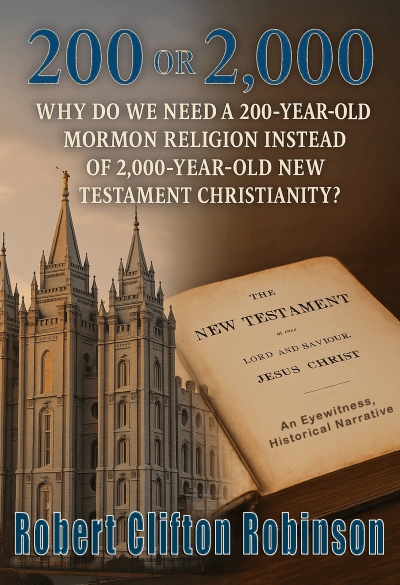
See The New Book That Uncovers The Mystery of LDS Theology in Comparison With Historical New Testament Truth:
Sources and Citations
- Gospel Principles, ch. 2; Doctrine and Covenants 93:21.
- John 1:1–3).
- Joseph Smith, King Follett Discourse (1844).
- Ibid.
- Isaiah 43:10; 44:6.
- John 8:58.
- Gospel Principles, ch. 2.
- Colossians 1:16; Hebrews 1:5–8.
- Abraham 3:24; Joseph Smith, Teachings of the Prophet Joseph Smith, 350.
- Hebrews 11:3.
- Doctrine and Covenants 93:12–13.
- Philippians 2:6–7.
- Brigham Young, Journal of Discourses, 8:115; Orson Pratt, The Seer, 158.
- Luke 1:34–35.
- Doctrine and Covenants 19:16–19; Gospel Principles, ch. 12.
- Hebrews 10:10–14.
- John 19:30.
- 2 Nephi 25:23.
- Ephesians 2:8–9; Romans 4:5.
- Doctrine and Covenants 84:20–21.
- Matthew 28:18.
- Gospel Principles, ch. 1.
- Hebrews 1:6; Revelation 5:12–14.
- Doctrine and Covenants 132:20; Gospel Principles, ch. 47.
- Isaiah 42:8; Romans 8:29.
Categories: Robert Clifton Robinson
 Robert Clifton Robinson
It is my understanding that these types of beliefs, specifically those of the Jehovah’s Witnesses, occur because they reject the Trinity and by the Trinity they cannot accurately place Jesus simply because they place the Father in the role of God. It becomes easy for them to say the Father is God and the Holy Spirit is His active force; but, who is this Son? And from this question originates blasphemies and heresies of the highest order – the Denial of the Deity of the Son of God Jesus Christ. And to my eye, this is one the things Satan hopes to achieve.
I often find myself learning more about the true of Nature of God by reading the Word and then asking the Holy Spirit for help if I feel I need it – and most times I need it. And as I have done this, I have come to an understanding that I too am a Triune Being – in that I have a soul, a body and a spirit; three different persons in one being.
So if I deny God’s Triune nature – by denying the Trinity – then I am denying who I am; and thus, in that denial, I am denying the Father, Son and Holy Spirit the Glory of God’s creation. To which is the ultimate desire of Satan – to show that God is NOT GOD; but rather, he is.
Therefore, the Trinity is not an easy doctrine to grasp primarily because we have inadequate linear timed analogies to help explain that which is eternal. I am now grateful that this is such a difficult doctrine to grasp because it is the failure of grasping this doctrine that lead to the mess we are currently in when Adam and Eve believed the original lie that THEY WOULD BE LIKE GOD. No one can be like God … NO ONE! But we can be in the image of God and this was and will be again our true Nature – to be in the IMAGINE OF GOD.
Prayers and blessings to you Brother Rob for all you do.
Tony
LikeLiked by 1 person