Did Jesus Intend That What Has Already Been Written Is All That His Church Will Need Through Every Generation?
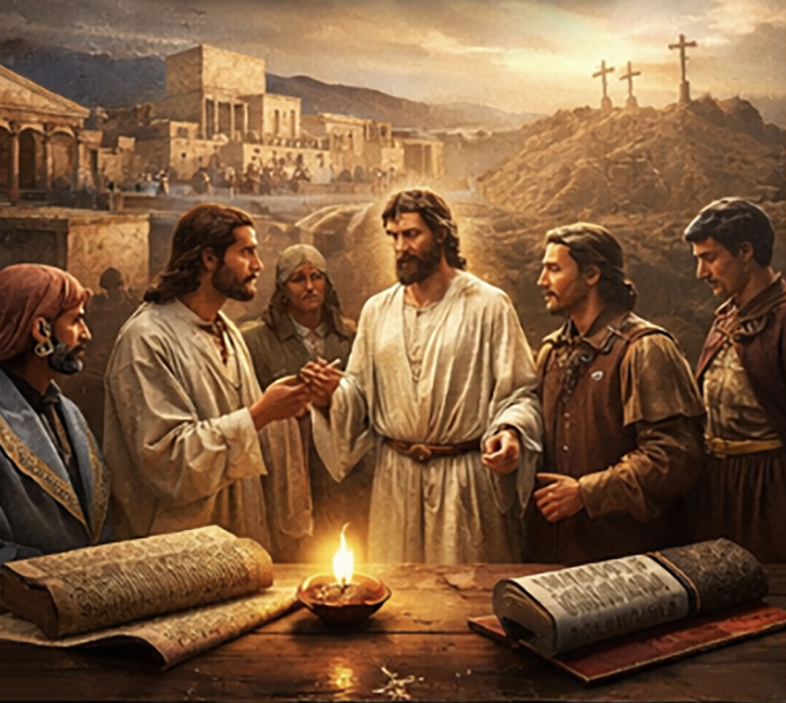 The question of whether God can raise up modern apostles and prophets is often framed as a test of faith in God’s sovereignty. If God does not change, it is asked, does that not mean He remains free to act as He chooses in every generation, including the calling of new apostles and prophets? At first glance, the question seems compelling, even spiritual. Yet when examined carefully, it rests on a subtle but critical confusion between God’s unchanging nature and God’s arranged method of working out His will within time and history. God does not change in essence, character, or purpose, but He acts within time through different ways that are necessary in each stage of His plan. God first spoke through His prophets of the Old Testament, but once Jesus arrived, He spoke to us through His Son. Then God spoke to the church Jesus established by His Apostles.
God reveals truth in stages, each building upon the former, but never contradicting what came before. “Long ago God spoke… by the prophets, but in these last days He has spoken to us by His Son” (Hebrews 1:1–2). Earlier revelation in the Old Testament was true but partial; later revelation is fuller and climactic. The redemptive economy moves forward, not in cycles, but toward completion.
Jesus is the center and finality of God’s Plan of Salvation. “For all the promises of God find their Yes in Him” (2 Corinthians 1:20). Jesus’ arrival on earth is not one stage among many—He is the goal of the entire plan. After Jesus, no new redemptive stage is introduced. The Apostles and prophets belong to the foundational phase, and served a foundational, time-limited role: delivering and inscripturating revelation necessary to establish Jesus’ Church. “Built on the foundation of the apostles and prophets, Christ Jesus Himself being the cornerstone” (Ephesians 2:20)
Once the foundation was laid in the pages of the New Testament, the plan of God moved forward from this completed revelation to preserving what the New Testament records through every generation so that all the world could know the truth about God and His desire to save every person. Jesus’ Church, today, lives in the post-apostolic administration, where scripture is complete; there will be no new revelation. The Pastor/Teacher teaches the full revelation of God’s Word that has already been delivered. “The faith once for all delivered to the saints” (Jude 3).
The Bible leaves us with no doubt that God is unchanging in His nature, character, holiness, truthfulness, and purposes. “I the LORD do not change” is not a statement of divine inactivity but of divine consistency¹. God’s immutability does not mean He is static or unable to act in history. It means that all His actions are perfectly consistent with who He eternally is. God creates, judges, redeems, disciplines, reveals, and saves, yet never contradicts Himself. The immutability (unchanging nature) of God, therefore, cannot be used as an argument that God must continue to act in identical ways through every generation by newer revelation. The arrival of Jesus on Earth and the men He called to record His words and works in establishing His church is complete.
Throughout biblical history, God has acted in distinct and purposeful phases. He spoke through patriarchs, judges, kings, prophets, and finally through His Son². The author of Hebrews does not merely describe a continuation of prophetic voices, but a decisive transition: “Long ago God spoke to our ancestors by the prophets… but in these last days He has spoken to us by His Son”³. Jesus is not one more prophet in a long line of prophets but the final and most complete revelation of God. To claim that God’s revelation is ongoing, requiring modern apostles and prophets today to be equal in authority to those who came before Jesus, diminishes the work and purpose of Jesus coming to earth.
In fact, Paul said that the arrival of Jesus completed the full purpose of all the Old Testament Law and the prophets. Romans 10:4 “For Christ has already accomplished the purpose for which the law was given.” Luke 24:44 “Then Jesus said, “When I was with you before, I told you that everything written about me in the law of Moses and the prophets and in the Psalms must be fulfilled.”
The New Testament presents apostles and prophets as foundational offices, not perpetual (everlasting) ones. Paul states explicitly that the Church is “built on the foundation of the apostles and prophets, with Christ Jesus Himself as the cornerstone”⁴. A foundation, by definition, is laid once. It establishes structure; it is not repeatedly re-poured with each generation. The Church does not remain forever in its foundational stage, nor does it continually receive new doctrinal principles. Christ is the singular cornerstone, and the apostolic-prophetic witness is the once-for-all foundation upon which the Church stands. Jesus intended that we understand that once He arrived and established His church, all that we need to know about God and His church has been delivered to us. The church teaches its members what the Bible says. It does not add to or take away from what the Bible states.
This defines the qualifications for apostles as those men who walked with Jesus during His time on earth, witnessed His miracles that prove He is God, and saw Him raised from the dead. These Apostles participated in events that will never be repeated. They saw and heard Jesus; no one after the first century saw or heard Jesus, or can witness what they saw or heard. This makes the first century Apostled unique and their office, authority, and power cannot be continued.
Apostles were personally chosen by Christ⁵, were eyewitnesses of His resurrection⁶, were authorized to speak with Christ’s delegated authority⁷, and were authenticated by signs and wonders that functioned as divine validation of their unique role⁸. When Judas was replaced, the criteria were explicit and restrictive, not open-ended or symbolic⁹. Acts 1:21-22 “So now we must choose a replacement for Judas from among the men who were with us the entire time we were traveling with the Lord Jesus—from the time he was baptized by John until the day he was taken from us. Whoever is chosen will join us as a witness of Jesus’ resurrection.”
Paul himself, the last apostle, describes his calling as untimely and extraordinary, likening it to a birth “out of due time,” thereby implicitly closing the category¹⁰. There is no New Testament expectation of a continuing apostolic succession in the revelatory sense claimed by modern movements. Paul stated that he was chosen by Jesus personally because he had witnessed the risen Jesus with his own eyes. 1 Corinthians 9:1-2 “Am I not as free as anyone else? Am I not an apostle? Haven’t I seen Jesus our Lord with my own eyes?”
Prophets, likewise, are consistently portrayed in Scripture as bearers of direct revelation from God, not merely inspired teachers or gifted communicators. Their words carried divine authority and were subject to the strictest standards of verification. A prophet who spoke falsely, even once, was not mistaken but false.¹¹ The gravity of this office cannot be overstated. The Old Testament prophets spoke the words that God dictated to them. The New Testament prophets recount and teach what the Old Testament prophets and New Testament eyewitnesses wrote in the Bible. We don’t add to these texts, and we don’t take away from what was recorded.
The New Testament does not loosen this standard; rather, it heightens accountability and warns repeatedly against false prophets who would arise within the community of believers¹².
More importantly, the New Testament anticipates the ending of revelatory functions once their purpose was fulfilled by Jesus. Paul teaches that prophecies, tongues, and revelatory knowledge were partial and temporary, given during the Church’s formative period, and destined to pass away¹³. This passage does not imply the disappearance of spiritual vitality or divine guidance but signals the completion of something provisional. Once the apostolic witness was complete and the faith delivered, the Church would no longer require ongoing revelation of the same kind. Apostles and Prophets are not needed today because we have the full counsel of God’s Word in the 66 books of the Bible.
This expectation is reinforced by Jude’s assertion that “the faith” has been “once for all delivered to the saints.”¹⁴ The language here is clear and final. The content of Christian doctrine is not evolving through successive prophetic installments; it has been entrusted, preserved, and proclaimed. Similarly, Paul warns that even if an angel were to proclaim a gospel different from the one already delivered, it must be rejected outright¹⁵. The authority of the original apostolic message is so absolute that no subsequent claimant—human or angelic—may supersede or revise it.
Not adhering to these basic biblical principles is the reason today that we have progressive churches and churches that have departed from biblical teaching by extreme measures. The new Progressive Christian church does not believe or teach portions of the Bible that are seen today as irrelevant to a modern generation. Homosexuality, lesbianism, and transgender sexual practices are embraced and accepted by the Progressive Church today. The LDS church has committed blasphemy against the God of the Bible by claiming and teaching that God was once a man like us, and that He was exalted to God. The words of Joseph Smith and the Book of Mormon that he fabricated by lifting scripture from the 1611 KJV bible are seen as superior to the historical eyewitness texts of the Old and New Testaments.
A careful distinction must therefore be maintained between revelation and illumination. Revelation refers to God’s act of disclosing new, authoritative truth; illumination refers to the Holy Spirit’s ongoing work of helping believers understand, apply, and obey what God has already revealed. Scripture promises that we can learn and know what God said and requires, but only by studying what has already been delivered to us once and for all by the entire Bible.¹⁶ Nowhere does any text of the Bible promise revelation of God and His Word beyond the teaching of the Apostles who walked with Jesus, saw and heard Him. To confuse these categories is to open the door to doctrinal instability, error, and to undermine the sufficiency of Scripture.
The sufficiency of Scripture is not a later theological invention but a direct apostolic claim stated by Jesus and the writers of the New Testament. Paul affirms that Scripture equips the believer “for every good work,” lacking nothing necessary for faith, doctrine, correction, or instruction¹⁷. If new apostles and prophets with binding authority were required, Scripture would be, by definition, insufficient. The New Testament consistently states the opposite. These texts point believers back to what has already been written as the final authority.¹⁸
Historically, the early Church understood this reality with remarkable clarity. Once the apostolic generation passed, the Church did not seek replacement apostles. Instead, authority shifted to elders and overseers whose role was not to generate revelation but to guard, teach, and transmit what had been received¹⁹. When heretical movements arose claiming new revelations or prophetic authorities, they were rejected based on what had already been written, and precisely because they deviated from what the Apostles had already recorded.²⁰
The claim that God must still be raising apostles and prophets because He does not change, He raised up Paul after the other Apostles, misunderstands both God’s nature and the finality of what Jesus intended for His church when the New Testament was completed. God’s immutability guarantees that He will not contradict Himself. Because He has spoken finally and decisively in Christ, and because that revelation has been faithfully preserved through the apostolic witness in Scripture, God’s faithfulness now consists not in adding to that revelation but in upholding it. To introduce new revelatory authorities is not an expression of trust in God’s freedom but a denial of the finality of what He has already given.
Scripture affirms without ambiguity that God is immutable, sovereign, and free. Yet it also teaches, with equal clarity, that apostles and prophets served a foundational, non-repeatable role in redemptive history. God does not change, but His redemptive plan reached completion when the New Testament was delivered to the world. Christ is the final revelation; the apostolic witness is complete; the canon is closed. God continues to speak today, not by adding new revelation, but by the teaching of what has already been written and applied to our lives. This is true for every generation and has never changed. These facts do not limit God but express the completion of all that God intended for those who love Him and trust in Jesus for their salvation
Endnotes
- Malachi 3:6.
- Numbers 12:6–8; 2 Samuel 7:4–17.
- Hebrews 1:1–2.
- Ephesians 2:20.
- Luke 6:13.
- Acts 1:21–22; 1 Corinthians 9:1.
- John 14:26; John 16:13.
- 2 Corinthians 12:12.
- Acts 1:23–26.
- 1 Corinthians 15:8–9.
- Deuteronomy 18:20–22.
- Matthew 7:15; 2 Peter 2:1; 1 John 4:1.
- 1 Corinthians 13:8–10.
- Jude 3.
- Galatians 1:8–9.
- John 16:13; 1 Corinthians 2:12–13.
- 2 Timothy 3:16–17.
- Acts 17:11; 1 Corinthians 4:6.
- Titus 1:5–9; 1 Timothy 3:1–7.
- Irenaeus, Against Heresies 3.1.1; Tertullian, Prescription Against Heretics 21.
Categories: Robert Clifton Robinson
 Robert Clifton Robinson
Please see, "Guidelines For Debate," at the right-side menu. Post your comment or argument here: