Friday, February 20, 2026, The Supreme Court’s Decision On Tariffs
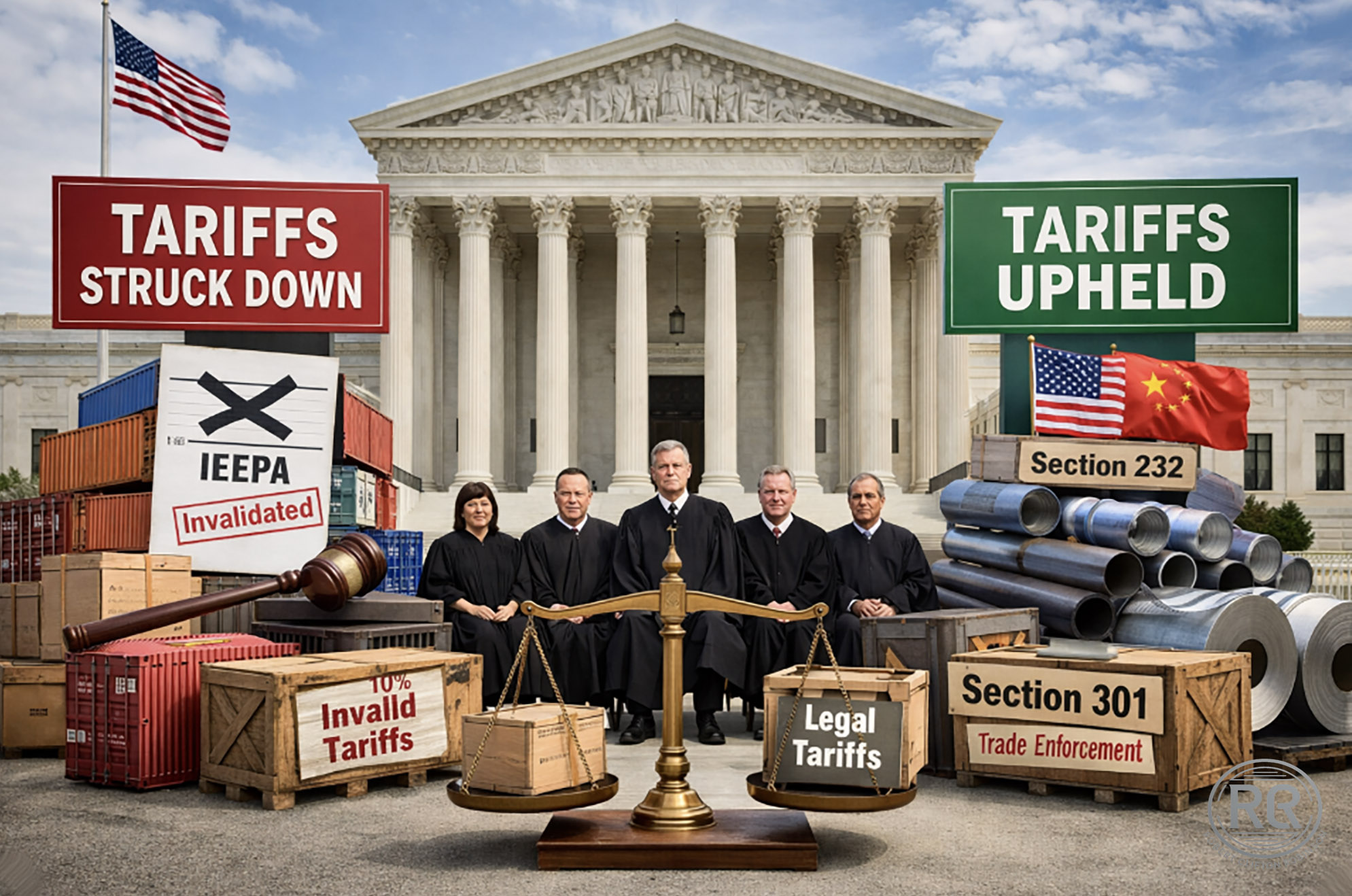
What the Court Blocked (Tariffs Struck Down)
Invalidated Tariffs Under Emergency Law (IEEPA)
The Supreme Court ruled 6–3 that the president cannot use the International Emergency Economic Powers Act (IEEPA) of 1977 to impose broad tariffs on imports because that statute does not authorize tariff-setting authority. The majority opinion (led by Chief Justice Roberts) explained that IEEPA gives the president authority to act during a national emergency, but its language does not explicitly provide power to impose taxes or duties.
Because tariff authority — like all forms of taxation — is constitutionally vested in Congress, the court said the president exceeded his power by imposing sweeping IEEPA-based tariffs without clear congressional authorization.
Full Transcript Of President Trump’s Response On The Supreme Courts Decision On Tariffs
The Effect:
Most of the tariffs imposed in 2025 under IEEPA — such as a 10 % general duty on imports and “reciprocal” tariff schedules covering many countries — are struck down. These tariffs are effectively treated as void ab initio (i.e., unlawful from the beginning) because they lacked statutory authority.
Why this matters:
This ruling enforces constitutional separation of powers — tariffs are a form of taxation and must be authorized specifically by Congress.
What the Court Allowed (Tariffs Still in Place)
Tariffs Under Separate, Statutory Authorities Remain Legal
The Supreme Court’s ruling was not a blanket invalidation of all tariff measures. It specifically addressed tariffs that relied solely on IEEPA authority. Tariffs that remain in effect include those imposed under section 232 of the Trade Expansion Act (1962)
This law lets the president impose tariffs on imports for national security reasons (e.g., steel or aluminum tariffs). These remain valid because they were enacted under their own specific statutory authority.
Section 301 of the Trade Act (1974)
Under this statute, the U.S. can levy tariffs in response to unfair trade practices by foreign governments. These tariffs also stand because they’re backed by a separate congressional mandate rather than emergency powers.
Other tariff measures with clear statutory or congressional backing remain in force.
Why Some Tariffs Survive While Others Don’t
Law Must Clearly Authorize Tariff Power
The core legal issue is authority:
IEEPA-based tariffs were struck down because the statute never mentions tariffs or gives the president explicit taxing power. Without clear legislative authorization, the court said the executive branch cannot impose such duties — even during a declared emergency.
Tariffs with specific statutory bases (Sections 232/301) are presumed lawful because Congress explicitly delegated the authority to impose such tariffs — even if courts or critics have debated the policy merits. This distinction reflects the constitutional principle that tax and trade policy reside with Congress unless a statute unmistakably says otherwise.
What This Means Going Forward
Blocked Tariffs Could Be Replaced
The administration can still pursue tariff strategies using other statutory frameworks (Sections 301, 232, etc.) that are legally grounded. For example, tariffs targeting specific sectors or unfair trade practices — even if similar in economic effect to the rescinded IEEPA tariffs — can be re-imposed under these separate authorities.
The Potential Refunds Are Still Unclear
The ruling didn’t lay out a refund process for revenue already collected under illegal IEEPA tariffs. Legal challenges in lower courts and administrative procedures will determine whether importers can reclaim what they paid.
Limits on Emergency Power
The decision limits the use of broad emergency authority for economic policy, reinforcing that major tariff decisions require clear congressional backing.
The Supreme Court blocked broad tariffs imposed under the IEEPA because that law doesn’t authorize tariff power. It allowed tariffs enacted under other statutes — such as Sections 232 and 301 — to continue because those have explicit congressional authorization. The decision reshapes how the U.S. will legally justify tariff policy going forward, underscoring that significant economic measures must rest on clear legislative authority.
See The Events of the Last Days In Context With Current Events Happening Today: “The Last American President: Prophecy, Peace, and the Return of the King”

Categories: Robert Clifton Robinson
 Robert Clifton Robinson
Please see, "Guidelines For Debate," at the right-side menu. Post your comment or argument here: