
Evolutionary Creation From One Common Organism, Copyright, RCR
The idea that all species evolved from a single common ancestor is central to the theory of evolution. However, there are several scientific challenges and problems associated with this idea. While many of these challenges are addressed within evolutionary biology, they remain points that make a common ancestor impossible. The following facts of science, biology, and geology, address these primary scientific impossibilities:
Most people think of Evolution as a singular subject—every creature on earth evolved from a singular source. The truth is that Evolution has three parts to its premise.
- Evolution by Natural Selection
- Abiogenesis
- Universal Common Ancestry
Only One Is Provable By Science!
Evolution by Natural Selection (Provable)
Definition: A process where organisms better adapted to their environment tend to survive and produce more offspring. This mechanism, proposed by Charles Darwin and Alfred Russel Wallace, explains how traits advantageous for survival and reproduction become more common in a population over generations.
Scope: Explains changes within populations of organisms (microevolution) and the emergence of new species over time (macroevolution). Producing new species within already existing species, but does not produce a new “Family, or Kind.”
Observed Evidence: Includes phenomena such as:
- Antibiotic resistance in bacteria.
- Variations in finch beak sizes in the Galápagos Islands.
- Artificial selection (e.g., breeding domestic dogs, crops).
Key Point: Evolution by natural selection starts with existing life forms and focuses on how species change and adapt over time. It does not explain the origin of life itself.
According to the texts of the Bible, God created all species with the capacity to adapt.
Abiogenesis (Unprovable)
Definition: The hypothesis that life arose from non-living chemical substances through natural processes on the early Earth.
Scope: Seeks to explain the origin of life—how the first self-replicating molecules or cells formed.
Hypothetical Process:
- Formation of organic molecules (e.g., amino acids) from simpler compounds.
- Polymerization of these molecules into proteins, nucleic acids, etc.
- Development of self-replicating systems, possibly involving RNA (RNA World Hypothesis).
Problems:
The primary problem with abiogenesis—the hypothesis that life arose naturally from non-living chemical processes—is the immense scientific and probabilistic challenges associated with explaining how life could emerge from purely natural processes. Below are the key issues:
Lack of Empirical Evidence: Despite decades of research, there is no direct empirical evidence demonstrating that life can arise from non-living matter under natural conditions. Laboratory experiments attempting to recreate abiogenesis (e.g., the Miller-Urey experiment) have only managed to produce some basic organic molecules, not the highly complex molecular systems required for life.
Extreme Complexity of Life: Even the simplest life forms require an extraordinary level of molecular complexity: (this will be addressed in great detail in this essay)
Proteins: Functional proteins are composed of highly specific sequences of amino acids. The odds of a functional protein forming by chance are astronomically low.
DNA and RNA: The origin of self-replicating nucleic acids (DNA and RNA) is a major challenge. They require specific sequences of nucleotides, the presence of sugars and phosphate groups, and the right chemical environment.
Cellular Machinery: Life requires molecular machines like ribosomes, ATP synthase, and membranes. These systems are irreducibly complex and interdependent, making their spontaneous emergence impossible.
Chirality Problem: Biological molecules like amino acids and sugars are chiral, meaning they exist in “left-handed” or “right-handed” forms. Life uses exclusively left-handed amino acids and right-handed sugars. Natural processes, however, produce a 50/50 mix of both forms (a racemic mixture). The origin of this homochirality remains unexplained.
Thermodynamic Constraints: The formation of complex, information-rich molecules like proteins and nucleic acids involves a decrease in entropy, which is thermodynamically unfavorable. Natural environments tend to break down complex molecules rather than build them up. For example:
- Hydrolysis: Water breaks down polymers like proteins and nucleic acids.
- UV Radiation: Early Earth conditions would likely degrade complex organic molecules.
Information Problem: Life is fundamentally information-driven. The genetic code stored in DNA is analogous to software, guiding the synthesis of proteins. The question of how this information arose from non-information remains unresolved. No natural process is known to generate the complex, specified, and functional information found in living systems.
Chicken-and-Egg Paradox
- Biological systems depend on interdependent components that cannot function without each other:
- DNA requires proteins (enzymes) to replicate, but the proteins themselves are encoded by DNA.
- RNA-world hypotheses suggest RNA could perform both functions, but RNA is unstable and difficult to form under prebiotic conditions.
Hostile Early Earth Conditions
- The early Earth was not an ideal environment for abiogenesis:
- High levels of UV radiation and volcanic activity could destroy organic molecules.
- Lack of a protective ozone layer meant harsh conditions for fragile prebiotic compounds.
- Rapid dilution or destruction of organic molecules in oceans and other environments would impede concentration and polymerization.
Fossil Record and Abiogenesis Timeline: The fossil record indicates that life appeared suddenly and relatively early in Earth’s history (~3.5–4 billion years ago). This rapid emergence leaves little time for the gradual chemical evolution proposed by abiogenesis models.
Mathematical Improbability: The probability of the spontaneous formation of even a single functional protein is often estimated to be less than 10^{-150}. Given the age of the Earth and the available atoms, the likelihood of forming a single functional cell by chance is considered effectively zero.
Abiogenesis faces insurmountable challenges in explaining the origin of life through naturalistic means. The lack of evidence, coupled with the extreme complexity, interdependence of biological systems, and the informational requirements of life, make abiogenesis impossible without invoking an intelligent cause. Many see this as pointing to the necessity of a purposeful Creator, as natural processes alone seem insufficient to account for the origin of life.
Abiogenesis will be expounded later in this essay
Universal Common Ancestry (Unprovable)
Definition: The hypothesis that all living organisms on Earth descended from a single common ancestor, often referred to as the “Last Universal Common Ancestor” (LUCA).
Scope: Addresses the divergence of life forms from a shared origin, tracing back to the earliest life form capable of replication and heredity.
Evidence:
- Shared genetic code (DNA/RNA) across all life.
- Similarity in fundamental biochemical pathways (e.g., ATP usage, protein synthesis).
- Fossil records showing transitional forms.
Key Point: The concept of universal common ancestry suggests that all species are connected through branching evolutionary processes, but it does not address the origin of life (abiogenesis).
Problems:
The theory of Universal Common Ancestry (UCA) posits that all living organisms on Earth descend from a single common ancestor. While this theory is widely accepted in mainstream biology, there are several challenges and problems associated with it, both scientific and philosophical. These challenges often stem from gaps in evidence, assumptions in evolutionary mechanisms, and inconsistencies in observed biological phenomena.
Lack of Transitional Fossils
- Fossil Record Discontinuity: The fossil record often shows abrupt appearances of fully formed and distinct life forms, rather than gradual transitions between simpler and more complex organisms as UCA predicts.
- Example: The Cambrian Explosion (~540 million years ago) demonstrates the sudden emergence of nearly all major animal phyla without clear evolutionary precursors.
Many “transitional forms” that are proposed are controversial or incomplete, making it difficult to trace a clear, gradual lineage from one life form to another.
The Genetic Code Anomaly
- While most organisms share a common genetic code, there are notable exceptions (e.g., variations in mitochondrial genetic codes). If UCA were strictly true, it is unclear why such deviations exist.
- Additionally, the genetic code is highly complex and optimized for error minimization. The question arises: How could such an efficient code evolve incrementally without an intelligent guiding process?
Horizontal Gene Transfer (HGT)
- In bacteria and archaea, genes can be transferred across species through mechanisms like conjugation, transduction, and transformation. This complicates the tree-like structure of descent proposed by UCA.
- The prevalence of HGT suggests a “web of life” rather than a tree of life, challenging the idea of a single common ancestor for all life.
Irreducible Complexity
- Biological systems, such as the bacterial flagellum, the blood clotting cascade, and the eye, are often cited as irreducibly complex. These systems require multiple interacting parts to function, and removing any one part renders the entire system non-functional.
- UCA struggles to explain how such systems could evolve incrementally, as the intermediate stages would not confer survival advantages.
Lack of Mechanistic Explanations for Key Transitions
- Origin of Eukaryotes: The transition from simple prokaryotic cells (bacteria and archaea) to complex eukaryotic cells with nuclei, organelles, and cytoskeletons remains inadequately explained. The proposed endosymbiotic theory (mitochondria and chloroplasts originating from engulfed bacteria) is widely debated and lacks direct evidence.
- Multicellularity: The leap from single-celled organisms to complex multicellular organisms requires coordinated gene regulation and communication. UCA does not fully address how these mechanisms could evolve from simpler forms.
Problem of Convergent Evolution
- Convergent Evolution refers to the independent evolution of similar traits in unrelated lineages (e.g., eyes in octopuses and vertebrates, wings in birds and bats).
- If UCA is true, convergent evolution suggests that complex traits can arise independently multiple times. This undermines the idea that such traits were inherited from a common ancestor and raises questions about the plausibility of random processes producing similar outcomes.
Genetic Similarity Does Not Imply Common Ancestry
- Similarities in DNA (e.g., between humans and chimpanzees) are often cited as evidence for UCA. However:
- Similar genetic sequences could also be explained by common design rather than common descent.
- Significant differences (e.g., humans and chimps differ in regulatory DNA, epigenetics, and chromosomal structures) challenge the assumption that small genetic changes can account for the observed phenotypic differences.
Probabilistic Challenges
- UCA assumes that random mutations and natural selection can account for the immense complexity of life. However:
- The probability of evolving functional proteins, regulatory networks, and complex organs through random processes is astronomically low.
- Many genetic mutations are deleterious or neutral, making the accumulation of beneficial mutations insufficient to explain large-scale evolutionary changes.
Incompatibility with Biogeography
- Certain biogeographical patterns are difficult to reconcile with UCA. For example:
- Unique species found on isolated islands (e.g., marsupials in Australia) do not always align with the expected migration and divergence patterns from a common ancestor.
Epigenetics and Non-DNA Inheritance
- UCA focuses heavily on DNA as the primary driver of inheritance and evolution. However:
- Epigenetic factors (chemical modifications to DNA and histones) and non-DNA inheritance (e.g., prions) play crucial roles in phenotype expression.
- These mechanisms challenge the simplistic view that DNA mutations alone drive evolutionary divergence from a common ancestor.
Origin of Information
- UCA does not adequately explain the origin of the massive amounts of functional information required to build complex life forms.
- DNA, RNA, and proteins are information-rich systems. Random mutations and natural selection are insufficient to account for the emergence of highly specified and functional biological information.
Philosophical and Theological Challenges
- UCA assumes a purely naturalistic process without considering alternative explanations, such as intelligent design.
- For those who hold to a biblical or theistic worldview, UCA is inconsistent with the idea that life was created according to “kinds” as described in Genesis. The lack of observed “kind-to-kind” transitions aligns with this perspective.
While Universal Common Ancestry is a widely held framework in evolutionary biology, it faces significant scientific, philosophical, and theological challenges. The absence of transitional fossils, genetic and biochemical anomalies, irreducible complexity, and the lack of a clear mechanism for major evolutionary transitions cast doubt on its validity. Many see these issues as pointing to the possibility of common design rather than common descent, suggesting an intelligent cause for the diversity and complexity of life.
The Subject of Universal Common Ancestry Will Be Addressed in Detail in This Essay
As you have seen, just one of these parts that comprise Evolution is provable by science and observation: Natural Selection.
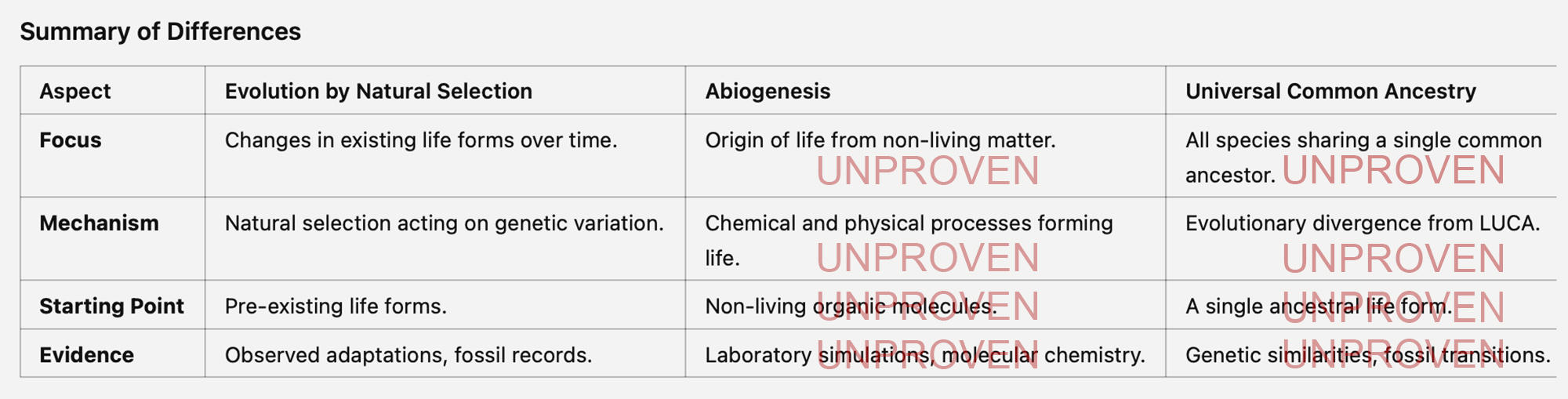
The Three Aspects of Evolution (Copyright RCR)
The Balance of This Essay Provides an In-Depth Examination of these Three Aspects of Evolution
The Origin of Life (Abiogenesis)
Problem: Evolution presupposes the existence of a self-replicating organism, but the origin of the first life (abiogenesis) is an unresolved issue in science. The leap from non-living chemicals to a functional, self-replicating cell is highly complex.These processes are impossible in an unguided natural process.
Challenges:
- The formation of complex biomolecules (e.g., DNA, RNA, proteins) under prebiotic conditions, defines a self-replicating process as impossible,
- Science has proven that the assembly of these molecules into a functional, enclosed system capable of metabolism and replication, is impossible under the conditions described in a prebiotic earth.
- The origin of information coding in DNA and RNA, is impossible in a prebiotic environment.
Detailed Explanation:
Abiogenesis must explain how the first self-replicating, metabolizing system arose from purely chemical processes. Theories like the “RNA World” propose that RNA was the first replicator, but RNA’s complexity poses significant issues that cannot be proven scientifically:
- Chemical Instability: RNA is prone to hydrolysis, meaning it breaks down quickly in water—a problem in proposed prebiotic environments. This eliminates the possibility that abiogenesis is tenable.
- Synthesis Challenges: Laboratory experiments have not produced RNA under realistic prebiotic conditions without intelligent intervention.
Alternative Hypotheses:
- Metabolism-First Models: Suggest that metabolic networks (chemical cycles) predate genetic information, but they fail to explain how information storage (like DNA) arose.
- Hydrothermal Vents: Hypothesized as cradles of life, yet they are chemically hostile to the stable formation of many biomolecules.
- Key Philosophical Implications: Abiogenesis requires a leap from chemical processes to coded biological information, which some argue suggests design.
All of the above problems that exist in asserting abiogenesis, fail to demonstrate how a natural process could produce the results necessary to prove that that all species evolved from a single common ancestor.
The Problem of Randomness In DNA and Evolutionary Biology
In evolutionary biology, mutations are random changes in an organism’s DNA sequence, and they occur independently of whether they will be beneficial, neutral, or harmful. A successful mutation—one that provides a beneficial advantage—is relatively rare, but it can occur “on the first attempt” under certain circumstances, though it’s probabilistically unlikely.
The Difficulties:
- Randomness of Mutations: Mutations happen randomly during DNA replication, recombination, or due to external factors like radiation. There is no “intent” for a mutation to succeed on its first attempt.
- Natural Selection Filters Mutations: Beneficial mutations—those that confer an advantage in the organism’s environment—are naturally selected over time because they help the organism survive and reproduce. Harmful or neutral mutations either disappear or have no significant impact.
- Success on the First Attempt: While rare, a mutation could produce a beneficial trait immediately upon occurring. For example, a single mutation in bacteria might allow resistance to an antibiotic, leading to survival in an antibiotic-rich environment. In such a case, it would be considered “successful” on its first occurrence.
- Population Dynamics: In large populations with high mutation rates (e.g., bacteria, viruses), the odds of a successful mutation increase because more mutations are occurring simultaneously. Even so, any single mutation occurring and being beneficial “on the first try” is statistically uncommon.
With the inability of mutations being unable to produce a successful result on the first attempt, most of the species on earth require a first try result. Bacterial flagellum (a molecular “motor”), the blood clotting cascade, and the immune system, demand that all the parts are created and installed at once, or these machines could not exist or function. .
The Problem of Randomness In DNA and Evolutionary Biology, in the most basic component of life, a simple cell, proves that these tiny devices are not simple, but highly sophisticated machines. They require a complete working machine or they cannot function. Evolution is incapable of producing any complete machine on the first attempt. The individual parts of these highly complex machines in every cell could not have evolved since every tiny part of the cell are necessary for its operation. Evolution is not capable of producing every part of a cell all at the same time.
While mutations are random and typically neutral or deleterious, it is possible for a beneficial mutation to succeed on its first occurrence if it confers an immediate advantage. Evolution does not guarantee such events, but natural selection can ensure those rare successes persist and spread over time.
These natural processes are unguided, radom, and without purpose. Only a intelligent guided process could produce a highly sophisticated machine that all of life on earth requires. This defines life as only possible by a person, not a natural process.
Genetic Entropy and the Evidence for Intelligent Design: A Critique of Evolutionary Theory through Molecular Biology and Information Science
The Central Role of Genetics in Challenging Evolutionary Theory
The most compelling argument against Darwinian evolution lies in the science of genetics. The study of genes, their transmission across generations, and their role in biological function reveals critical flaws in evolutionary theory. Specifically:
Genetic mutations, which are touted by evolutionists as the drivers of diversity and complexity, actually degrade genetic information over time.
- Empirical evidence shows that mutations are overwhelmingly harmful, leading to a phenomenon termed genetic entropy—the gradual accumulation of deleterious mutations that impair biological systems.
Key Observations in Genetic Science
- The transmission of genetic material involves precise, highly regulated mechanisms that do not align with random, undirected processes proposed by evolution.
- Darwinian evolution does not address the origin of genetic information, its transfer, or the intelligent modifications required to create novel biological functions.
The Complexity of Biological Systems
Modern biology has uncovered extraordinary complexity in cellular processes that surpass anything Darwin could have envisioned. Key systems include:
DNA to Protein Translation: A Multilayered Process
Transcription:
- DNA, the carrier of genetic information, must be copied into RNA. This process begins with the unwinding of DNA by an enzyme called RNA polymerase, which “reads” the DNA code and synthesizes a complementary RNA strand.
- RNA differs slightly from DNA in its structure, replacing thymine (T) with uracil (U) as one of its four bases (A, C, G, U).
Translation:
- Once formed, the RNA exits the nucleus and interacts with ribosomes—molecular machines that translate the RNA sequence into a chain of amino acids.
- This translation uses a three-letter code (codons) in RNA to determine the sequence of the 20 amino acids in proteins.
Protein Folding and Transport:
- Proteins must be folded into specific three-dimensional shapes to function. This is facilitated by molecular “chaperones” and “chaperonins,” which prevent misfolding and ensure proper structure.
- Specialized molecular “post offices,” called kinesins, transport proteins and other materials to precise locations within the cell, akin to a highly organized delivery system.
The Overarching Complexity
- This intricate system involves translation between two distinct “languages”—the linear genetic code of DNA/RNA and the three-dimensional structure of proteins.
- The presence of overlapping codes within the genome makes evolutionary explanations untenable. Altering one code would disrupt others, making random mutations a destructive, rather than constructive, force.
The Central Role of Information in Biology
All life depends on information. However, this is not merely “data” but a dynamic, multi-dimensional communication network within cells.
Necessary Components for Cellular Communication
- Language: A defined system of symbols (e.g., genetic code) for transmitting and interpreting messages.
- Channels: Pathways or structures (e.g., RNA, ribosomes) for communication.
- Meaningful Content: Functional instructions (e.g., genes) that guide biological processes.
Key Discoveries
Information in DNA operates across multiple levels:
- Linear codes (e.g., DNA sequences).
- Two-dimensional networks of interactions between DNA and regulatory elements.
- Three-dimensional structures of folded DNA and proteins.
- Four-dimensional dynamics involving changes over time.
Much of what was once labeled as “junk DNA” is now recognized as essential for regulatory and functional purposes, undermining Darwinian assumptions of useless remnants.
Genetic Entropy: The Flaw in Evolutionary Theory
Genetic entropy describes the inevitable degeneration of genomes over time due to the accumulation of harmful mutations. This is a profound challenge to the theory of evolution.
Key Insights: Mutation Load:
- Each human inherits approximately 60-100 new mutations per generation.
- These mutations accumulate, leading to a steady decline in genetic fitness.
Natural Selection’s Limitations:
- Selection can remove the worst mutations but cannot eliminate all harmful changes.
- Over generations, even the “fittest” individuals accumulate deleterious mutations.
Human Mortality and Aging:
The accumulation of mutations explains why humans age and eventually die. For example, a 60-year-old man has trillions of mutations across his body, leading to cellular and systemic breakdown.
Implications for Human History:
- The evidence supports a recent origin for humanity, with genetic diversity traceable to an original pair, as consistent with the biblical account.
- Overlapping codes in the genome, previously dismissed as evolutionary leftovers, are highly functional and point to intelligent design.
The Philosophical Implications of Cellular Complexity
The evidence from genetics and cellular systems overwhelmingly points to design, not randomness:
- The simultaneous presence of language, communication networks, and meaningful information in cells requires an intelligent source.
- Evolutionary theory cannot explain the origin of this information. In contrast, the Bible describes an initial perfect creation, corrupted over time—a description consistent with genetic entropy and human mortality.
Key Questions
- How could the first cell, with its immense complexity, arise naturally when even the simplest cells demonstrate intricate communication systems?
- Where did the initial perfect genetic information come from, if not from an intelligent source?
Overarching Critique of Evolutionary Assumptions
- Evolutionary paradigms, such as “junk DNA” or the 98% similarity between human and chimp genomes, have proven to be erroneous. As our understanding deepens, these assumptions are being replaced with evidence that points to design.
Chimpanzees and human beings sharing 95% of their DNA sequence and about 99% of their coding DNA sequences. Because of this close proximity in these two, many have assumed that the boundaries are not impossible to cross.
One of the biggest obstacles in creating an ape-human hybrid is that humans have 46 chromosomes and apes have 48. Even in the event that a zygote should form, this difference in chromosomes will not permit the chromosomes to pair together correctly in order to cause pregnancy.
- There is at least a 40 million base pair difference between the code of apes and humans that further make the chance of creating a living missing link impossible.
- Chromosomes alone are not the key in this regard. The genetic code that is necessary to instruct cells on how to form living tissue, organs, and body parts is the key to making it possible for an ape and human to produce offspring. The genetic code for an ape is lacking 40 million characters.
Making human and ape genetic code compatible is a bit like trying to use the operating system of an iPhone to run a nuclear submarine. The genetic code of an ape is lacking the key instructions necessary to make a viable being between ape and human. This has never happened before, and it never will happen. Understanding these things, how could an advanced life form such as man, exist at all if not by the creation of an infinite Being?
- The genome’s multi-dimensional coding system and its inevitable degeneration (genetic entropy) are fatal to Darwinian theory.
The cumulative evidence from genetics, molecular biology, and information theory suggests that life is the product of intelligence, not random processes. The Bible’s description of a perfect creation, marred by sin and decay, aligns with observable scientific evidence. Genetic entropy confirms the biblical narrative: humanity is not evolving but devolving.
The Lack of Transitional Fossils
Problem: The fossil record does not always show a clear and gradual transition between species, as would be expected under Darwinian evolution.
Challenges:
- Sudden appearances of fully formed species in the fossil record (e.g., the Cambrian Explosion).
- Gaps between major groups (e.g., fish and tetrapods, reptiles and birds, apes and humans).
- The relatively few “transitional forms” compared to the vast diversity of species that exist or have existed.
Detailed Explanation:
- Fossilization is rare, but the lack of transitional forms is particularly pronounced in “macro-evolutionary” transitions (e.g., from reptiles to birds). Fossil gaps are not limited to minor species differences but exist between major taxonomic groups.
Examples:
- Archaeopteryx: Often cited as a transitional form between dinosaurs and birds, but it is fully feathered with modern avian flight adaptations, making its classification contentious.
- Tetrapod Transition: Fossils like Tiktaalik are proposed intermediates, yet many features (e.g., robust legs for terrestrial movement) appear fully formed without clear precursors.
Creation of All things by God as Their Source: Copyright RCR
Irreducible Complexity
Problem: Some biological systems are so complex that they could not have evolved through successive small modifications, as intermediate stages would not be functional.
Examples:
- The bacterial flagellum (a molecular “motor”).
- The blood clotting cascade.
- The immune system.
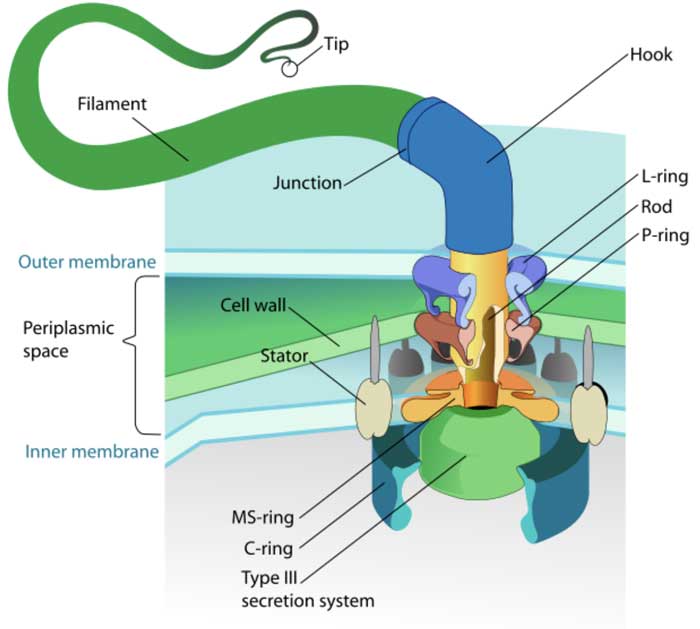
Bacterial Flagellum, Irreducibly Complex
This Flagellum is, by its purest definition, an outboard motor that is used by bacteria to propel themselves. This tiny Flagellum contains machine parts which allow this propulsion to occur.
The top part of the flagellum is the propulsion device of the bacteria. The motor that turns the propulsion device is a rotary mechanism.
When we see the individual parts of this flagellum, we quickly realize that they exist and are ordered in such a way that each part has a very specific purpose. This allows us to accurately define this flagellum as a mechanically designed apparatus. The ability to propel itself in virtually any direction is enabled by 40 different proteins. Amongst the parts of the flagellum are a motor, rings, and a propeller.
This type of system can only exists when every part of the flagellum is present at the same time. If any part were missing, the bacteria could not move and would quickly die.
This type of machine is called an “Irreducibly Complex Device.” There are hundreds of these devices that we find in nature which make life possible. Take away any single part of these Irreducibly Complex machines and they cannot operate.
This means that none of these devices could have come into being by a contingent combination of parts over millions or billions of years. Every part of these devices must be in place at the same time. This disqualifies the idea of evolution for life. The most basic of all life is the cell, and these cells contain parts that must be present all at once before the cell can exist. This means that all the parts of these cells were created at once, they did not evolve over time.
Incredible by design, this bacterial flagellum closely resembles the same type of machines that are built by human beings. Just as a man-made machine must have every part before it can function, so also are these biochemical machines. No one looks at a machine with a motor and rings used to seal fluid and imagines that it evolved by itself. For the same reason, we cannot see the machine parts of a bacterial flagellum and believe they came into existence by accident. All machines are evidence of a creative process where a mind conceived the idea and skill was required to assemble and permit operation.
These Biochemical machines, which have the exact same components as a man-made machine, require that all their individual parts are present at the same time before operation is possible. If we build a machine and take out one of the parts, it will no longer function.
This is also true of every biochemical machine. Unless all the parts are created and installed at once, these machines could not exist.
It is clear in the most basic component of life, a simple cell, that these tiny devices are not so simple after all. Each part of every cell in our bodies must be present all at once, or they will not function. These individual parts could not have evolved since all of the parts which exist in the cell are necessary for its operation. Evolution is not capable of producing every part of a cell all at the same time.
Challenge: Explaining how all the components of such systems could arise together, since partial systems would offer no selective advantage.
Detailed Explanation:
Biological systems like the bacterial flagellum require dozens of interdependent proteins. Removing one renders the system non-functional.
Evidence and Challenges:
- Modularity vs. Evolution: Some propose that parts of complex systems served other functions (exaptation), but this explanation often lacks detailed pathways. For example, how would a non-motile structure evolve into a motor-like flagellum incrementally?
Other Examples:
- The immune system’s cascade involves tightly regulated steps. A partial system would likely lead to harmful, uncontrolled immune responses.
The immune system’s cascade is one of the most intricate and finely tuned processes in biology. It involves numerous steps and molecules that must work in concert to protect the body from infection while avoiding damage to its own tissues. Here’s a detailed breakdown of the statement:
The Immune System’s Cascade: What It Is
The term “immune cascade” refers to the sequence of events that occur in response to infection or injury. This includes:
- Innate Immune System: The first line of defense, which includes barriers (skin, mucous membranes) and cellular responses (phagocytes, natural killer cells).
- Adaptive Immune System: A more specific response involving T-cells and B-cells, which target pathogens based on recognition of specific antigens.
- Complement System: A subsystem of the immune response involving proteins that tag pathogens for destruction, directly destroy pathogens, or amplify the immune response.
These processes are tightly regulated, with checks and balances to ensure they are activated only when necessary and stopped when the threat is neutralized.
The Problem with a Partial System
A “partial” immune system refers to a system that is incomplete or missing critical components. Such a system would create serious problems, as outlined below:
Lack of Defense
Without the full complement of proteins, cells, or signaling molecules, pathogens could evade detection or destruction, leading to uncontrolled infections. For example:
- If the complement system is incomplete, bacteria might avoid being tagged for destruction (opsonization) or killed directly (lysis).
- Missing antibodies (adaptive immunity) would mean the system cannot remember pathogens or mount targeted responses.
Overreaction or Harmful Responses
A partially functional immune system could trigger uncontrolled inflammation or autoimmune responses. Here’s why:
- Cytokine Storms: Cytokines are signaling molecules released during an immune response. If their regulation is incomplete or defective, an uncontrolled release can cause excessive inflammation, damaging tissues and organs.
- Tissue Damage from Complement Activation: The complement system includes proteins like C3 and C9 that must act in a stepwise manner. Partial activation (e.g., unregulated C3 activation without proper control) can attack host tissues, leading to autoimmune-like damage.
- Failure to Stop the Response: Regulatory mechanisms like T-regulatory cells or inhibitory proteins (e.g., C1 inhibitor in the complement system) ensure the immune response is terminated when the infection is cleared. Without these, inflammation persists, harming the host.
Examples of Partial Immune Systems in Disease
- Hereditary Angioedema (HAE): Caused by a deficiency in C1 inhibitor, leading to uncontrolled activation of the complement system. This results in excessive inflammation and tissue swelling.
- Autoimmune Disorders: Improper regulation of immune cascades (e.g., in lupus or rheumatoid arthritis) can lead to the immune system attacking the body’s own cells.
Why Irreducible Complexity Matters
The immune cascade is an example of irreducible complexity, where all parts must function together for the system to work effectively. If any component is missing or malfunctioning:
- Pathogens are not effectively neutralized.
- The body may harm itself due to uncontrolled responses.
Critical Components of the Immune Cascade
- Complement Proteins: Work in a sequence (e.g., C1 activates C4 and C2, leading to the activation of C3, etc.).
- Regulatory Proteins: Prevent overactivation of the cascade (e.g., C1 inhibitor, Factor H, and CD59).
- Effector Cells: Like macrophages and neutrophils, which require proper signaling to know when and where to act.
- T-Cells and B-Cells: Must be trained to recognize pathogens but not attack host cells (a failure here causes autoimmunity).
If any of these components are missing, the system either fails to protect the host or causes significant harm.
Evolutionary Challenge
From an evolutionary perspective, the immune system’s cascade poses a significant challenge:
Incremental Steps: Evolution relies on small, incremental changes. However, a partially functional immune system would not offer survival advantages; it might be harmful instead.
Simultaneous Development: Multiple components of the cascade would need to evolve simultaneously to avoid harmful intermediate states. For example:
- Complement proteins must interact precisely with their regulators to prevent tissue damage.
- Adaptive immunity requires T-cells, B-cells, and antigen-presenting cells to work together; partial systems would be ineffective or even harmful.
This has led some to argue that the immune system exemplifies irreducible complexity, where all parts must exist simultaneously for the system to function.
Analogy for Clarity
Imagine a car with:
- An engine (immune cells).
- Brakes (regulatory proteins).
- A steering system (signaling molecules).
If the brakes are missing, the car (immune response) will crash (uncontrolled inflammation). If the engine is incomplete, the car won’t move (no defense). A car without all its parts working together is not just less functional—it’s potentially dangerous.
The immune system is a prime example of a finely tuned biological system. A partial system would lead to either inadequate protection (leaving the host vulnerable to pathogens) or uncontrolled, harmful responses (damaging the host itself). This complexity raises questions about how such a system could evolve incrementally, as intermediate stages would likely be detrimental rather than advantageous. It highlights the extraordinary coordination required for life to function and survive.
No Natural or Evolutionary System Could Produce An Immune System
The Cambrian Explosion
Problem:
The Cambrian Explosion is one of the most significant and puzzling events in the history of life on Earth. It refers to the geologically rapid emergence of most major animal phyla (body plans) approximately 540 million years ago, during a relatively short period of about 20–25 million years. Below is an expanded and detailed explanation of the Cambrian Explosion, including its features, evidence, challenges, and implications.
Challenges:
- Explaining the rapid diversification of life forms.
- The apparent absence of ancestors for many of these phyla in pre-Cambrian strata.
Sudden Appearance of Complexity
Problem: Most major animal phyla appear suddenly in the fossil record, with little or no evidence of simpler precursors in earlier strata.
Example: Trilobites (a class of arthropods) appear with fully formed exoskeletons and highly complex compound eyes, with no clear transitional forms linking them to earlier life.
Lack of Pre-Cambrian Precursors
- Before the Cambrian, life was predominantly simple:
- Microbial life (e.g., cyanobacteria).
- Multicellular organisms of the Ediacaran biota (~600–541 million years ago), which were mostly soft-bodied and lacked complex structures.
- The gap between these simple forms and the complex Cambrian animals remains largely unexplained.
Genetic and Developmental Hurdles
The Cambrian Explosion implies a massive increase in genetic information to produce new body plans, organs, and complex tissues.
Hox Genes: These regulatory genes control body plan development. Their origin and sudden complexity during the Cambrian are challenging to explain via gradual mutations alone.
Time Constraints
Evolutionary processes like mutation, natural selection, and genetic drift typically require vast amounts of time to produce significant changes. The 20–25 million years of the Cambrian Explosion is a blink of an eye geologically, raising questions about the sufficiency of these mechanisms.
Detailed Explanation:
The Cambrian Explosion occurred over approximately 20–25 million years—a “blink” in geological time. During this period, nearly all modern animal phyla emerged.
Genetic and Developmental Insights:
- The development of complex body plans likely required regulatory genes, such as Hox genes, which coordinate the construction of body structures. How these genes appeared and diversified so rapidly remains unexplained.
Contrasting Hypotheses:
- Ecological Arms Race: Some suggest predator-prey dynamics drove rapid diversification, but this fails to address the genetic and morphological complexity required.
Proposed Explanations for the Cambrian Explosion:
Environmental Changes
Oxygen Increase:
- Hypothesis: A rise in atmospheric oxygen levels allowed larger and more complex organisms to evolve.
- Challenge: Oxygen alone cannot explain the appearance of genetic and structural complexity.
Snowball Earth Aftermath:
- Hypothesis: The end of global glaciations (Snowball Earth) created favorable conditions for evolution.
- Challenge: The link between glaciation and biological innovation remains speculative.
Ecological Factors
Predator-Prey Dynamics:
- The evolution of predators likely triggered an “arms race,” driving rapid innovation in defenses (e.g., shells, spines) and sensory systems.
- Challenge: This does not explain how predators themselves evolved so quickly.
Ecosystem Engineering:
- Burrowing animals may have altered ocean sediments, releasing nutrients and creating ecological niches.
- Challenge: Burrowing organisms themselves require explanation for their sudden appearance.
Genetic and Developmental Factors
Hox Gene Duplication:
- Duplication of Hox genes could have enabled the rapid diversification of body plans.
- Challenge: The origin of Hox genes and their regulatory networks remains a major question.
Developmental Plasticity:
- Early animals may have had greater developmental flexibility, allowing rapid adaptation.
- Challenge: This hypothesis lacks empirical evidence for how plasticity leads to entirely new phyla.
Fossil Preservation Bias
- Hypothesis: Pre-Cambrian animals may not have fossilized well due to a lack of hard parts.
- Challenge: Even soft-bodied organisms are preserved in Cambrian sites, yet few are found in earlier strata.
Implications of the Cambrian Explosion
Evolutionary Theory
- The Cambrian Explosion challenges the gradualism central to Darwinian evolution.
- Darwin himself was troubled by the apparent lack of precursors, calling it a “mystery of mysteries.”
Origin of Genetic Information
- The sudden appearance of complex animals suggests a rapid increase in genetic and epigenetic information.
- Critics argue that random mutations and natural selection cannot account for such a leap in complexity.
Alternative Explanations
- Intelligent Design: Some argue the Cambrian Explosion points to purposeful design rather than unguided processes.
- Punctuated Equilibrium: Suggests evolutionary change occurs in rapid bursts, but this raises questions about the mechanisms driving these bursts.
Biodiversity and Ecosystems
The Cambrian Explosion laid the foundation for modern ecosystems, introducing trophic levels (producers, consumers, decomposers) and complex interactions.
Case Study: Trilobites
Description: Trilobites are among the most iconic Cambrian organisms. They had:
- Hardened exoskeletons.
- Highly complex compound eyes with lenses made of calcite.
- Segmented bodies and articulated legs.
Challenges for Evolution:
- Their eyes are among the most advanced optical systems known, appearing fully formed without clear precursors. No natural process could create this attribute. Only if full formed at their creation, would this be possible.
- The genetic and developmental pathways required for such complexity remain unclear.
The Cambrian Explosion represents a profound puzzle for evolutionary biology, highlighting the sudden emergence of complexity and diversity in life. While numerous hypotheses attempt to explain it, no single theory fully accounts for the event’s speed, scale, and genetic implications. No natural of evolutionary process is capable of these events. It remains a focal point of scientific and philosophical inquiry, with implications for understanding life’s origins and the processes that drive its development.
The Cambrian Explosion was almost exclusively a phenomenon of underwater marine life. During this period, around 540 million years ago, life on Earth was confined to aquatic environments. The organisms that emerged were predominantly marine and included a wide variety of body plans and forms.
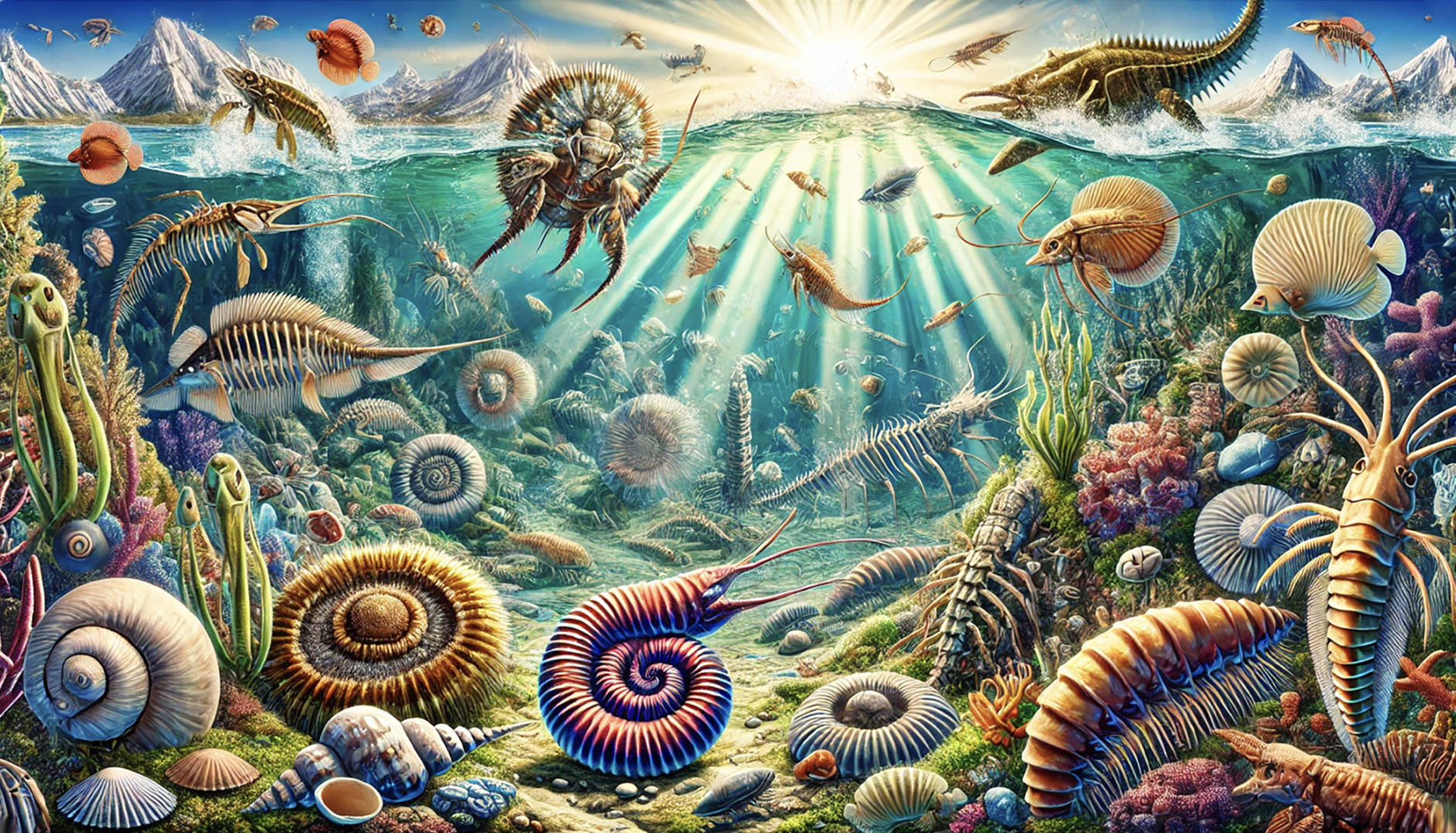
The Cambrian Explosion: A vibrant underwater environment filled with diverse and complex marine life forms. This illustrates the rapid emergence of creatures like trilobites, Anomalocaris, and other early Cambrian organisms. Copyright: RCR
Marine Environment: The Cradle of Early Life
Abundant Resources:
The oceans provided a stable environment rich in nutrients, such as dissolved minerals and organic compounds, which were essential for early life forms.
Protection from UV Radiation:
Before the development of the ozone layer (formed by oxygen buildup much later), the land was exposed to harmful ultraviolet (UV) radiation. Water acted as a natural shield for organisms, enabling life to thrive underwater.
Buoyancy:
Aquatic environments offered buoyancy, allowing soft-bodied and newly evolved organisms to grow larger without the need for complex skeletal systems to counteract gravity.
Organisms of the Cambrian Period
The explosion primarily involved marine animals such as:
- Trilobites: Hard-shelled arthropods with segmented bodies and advanced compound eyes.
- Anomalocaris: A large predator with a segmented body and grasping appendages.
- Hallucigenia: A bizarre creature with spines and soft appendages.
- Wiwaxia: A soft-bodied organism covered in protective scales.
- Pikaia: An early chordate, thought to be a precursor to vertebrates.
These organisms were part of the marine food web, ranging from filter feeders to active predators.
Absence of Land Animals: No Evidence of Land Animals:
Fossil evidence from the Cambrian period shows no trace of terrestrial animals or plants. Life was not yet equipped to survive on land due to several constraints:
Lack of Adaptations for Dry Environments: Organisms lacked structures to retain water, such as impermeable skin or protective coatings.
Respiration Challenges: Gills and other early respiratory systems were unsuitable for extracting oxygen from the air.
Absence of Terrestrial Ecosystems: There were no plants or microbial soils to create a suitable environment for land colonization.
The reality of the Cambrian Explosion makes the Darwinian Evolutionary Theory impossible.
- Evolutionists cannot explain the rapid diversification of life forms, or:
- The apparent absence of ancestors for many of these phyla in pre-Cambrian strata.
Genetic Information and Complexity
Problem: The vast amount of genetic information in living organisms poses a challenge for the gradual accumulation of mutations and natural selection to account for.
Challenges:
- How entirely new genetic information (e.g., genes coding for novel structures) arises.
- The observed limits of mutation, as most mutations are neutral or deleterious rather than beneficial.
- The improbability of random mutations leading to highly organized, functional systems.
Detailed Explanation:
DNA and RNA store genetic instructions using a “language” of nucleotide sequences. Evolution requires random mutations and natural selection to increase this information over time.
Challenges:
- Information Origin: Mutations typically degrade or duplicate existing sequences rather than create entirely new, functional genetic codes.
- Coding Systems: The genetic code itself appears highly optimized for error minimization, leading some to argue it is a designed system.
Probability Calculations:
The chance of forming a simple functional protein (~150 amino acids) randomly is estimated at 10^{-77}, far exceeding the probabilistic resources of the universe.
The Origin of Consciousness and Human Traits
Problem: The evolution of uniquely human traits, such as abstract reasoning, morality, and language, is difficult to explain purely through natural selection.
Challenges:
- The gap between human cognitive abilities and those of other primates.
- The emergence of self-awareness and complex emotional experiences.
- The lack of fossil evidence for the gradual development of advanced human traits.
Detailed Explanation:
Consciousness involves subjective experience (qualia), which materialist explanations struggle to address.
Evolutionary Issues:
- Language: The leap from animal communication (signals) to human language (syntax, grammar, and semantics) is profound. There are no intermediate “proto-languages” documented.
- Moral Reasoning: Humans exhibit self-sacrificial behavior (e.g., risking life for strangers), which seems at odds with survival-based evolutionary principles.
Philosophical Implications:
Some argue consciousness points to immaterial realities beyond physical processes.
Horizontal Gene Transfer (HGT)
Problem: Horizontal gene transfer (common in bacteria) complicates the “tree of life” model, as genetic material can move across species in ways that do not fit traditional evolutionary pathways.
Challenges:
- Determining the extent of HGT in early evolutionary history.
- Understanding how HGT influences the evolutionary relationships between species.
Detailed Explanation:
HGT complicates evolutionary models by allowing unrelated species to share genetic material. This is common in bacteria but raises questions for early eukaryotic evolution.
Examples of Impact:
- Antibiotic resistance genes frequently spread between unrelated bacteria.
- Some argue that HGT played a role in early life forms, making the “tree of life” more of a “web.”
Implications:
- Common ancestry becomes harder to define when genetic material can bypass traditional lineage constraints.
Convergent Evolution
Problem: Convergent evolution—where unrelated species develop similar traits—raises questions about the explanatory power of common ancestry.
Examples:
- The eye (which evolved independently in many lineages).
- Echolocation in bats and dolphins.
- Similarities in genetic sequences between unrelated organisms.
Challenge: Explaining how complex traits evolve independently multiple times through random processes.
Detailed Explanation:
Convergent evolution occurs when unrelated species evolve similar traits due to similar environmental pressures.
Examples:
- The eye evolved independently in vertebrates and cephalopods, yet both achieve high functionality. The genetic and developmental pathways differ significantly, suggesting limited pathways to achieve complex traits.
Philosophical Challenge: Why would evolution “converge” on similar solutions multiple times if random processes were at play?
The Role of Epigenetics
Problem: Epigenetic changes, which do not involve alterations to the DNA sequence but can be inherited, challenge the traditional gene-centric view of evolution.
Challenges:
- Accounting for how epigenetic mechanisms influence long-term evolutionary processes.
- Reconciling epigenetics with the Darwinian framework.
Detailed Explanation:
- Epigenetic mechanisms modify gene expression without changing DNA. For example, methylation can “silence” genes.
Inheritance Challenges:
- Traits influenced by diet or stress can persist across generations, contradicting the idea that genetic mutations are the sole drivers of evolution.
The Statistical Improbability of Complex Systems
Problem: The probability of random mutations and natural selection producing highly complex biological systems is exceedingly low.
Challenges:
- The combinatorial explosion of possibilities for assembling functional proteins or genetic sequences.
- The time available for these processes to occur, given the age of the Earth.
Detailed Explanation:
The probability of forming functional proteins, enzymes, or cellular machinery through random processes is exceedingly low.
Case Studies:
- A typical eukaryotic cell contains thousands of interdependent proteins. Building such complexity incrementally is akin to assembling a jet from a tornado passing through a junkyard.
Limitations of Natural Selection
Problem: Natural selection, while a powerful mechanism, is insufficient to account for all observed complexity and diversity in life.
Challenges:
- Explaining the origin of traits that are not immediately advantageous.
- Addressing the limitations of gradualism in light of phenomena like punctuated equilibrium (rapid evolutionary changes).
Detailed Explanation:
Natural selection explains adaptation but struggles with innovation. Many traits (e.g., wings, eyes) require multiple coordinated mutations.
Examples:
- A partially developed wing offers no flight advantage, yet it must persist until fully functional.
While evolution is widely accepted within the scientific community, these unresolved challenges demonstrate the complexity of the theory and its reliance on assumptions about historical processes that are difficult to test directly. Critics often argue that alternative explanations, such as intelligent design or divine creation, provide more plausible answers to these problems, especially concerning the origin of life and the complexity of biological systems.
See: Arguments Against Irreducibly Complex Machines, And Counterarguments That Impeach These Arguments
See Rob’s New Book: “A Universe That Proves God: The True Source of the Cosmos.”
Now available at Amazon in Kindle eBook, Paperback, and Hardback Editions
NOTES:
From the facts above, the following are the key points from the list above, along with sources and citations to support these scientific observations. While some of these are primary scientific references, others are critical reviews or discussions that analyze these challenges.
The Origin of Life (Abiogenesis)
Source: Cleland, C. E., & Chyba, C. F. (2002). “Defining ‘Life’” Origins of Life and Evolution of the Biosphere, 32(4), 387-393.
- Discusses the difficulties in explaining the transition from non-life to life.
Source: Walker, S. I., & Davies, P. C. W. (2013). “The Algorithmic Origins of Life.” Journal of the Royal Society Interface, 10(79), 20120869.
- Highlights the challenges of explaining the origin of biological information.
The Lack of Transitional Fossils
Source: Gould, S. J. (1977). Ontogeny and Phylogeny. Harvard University Press.
- Stephen Jay Gould, a proponent of punctuated equilibrium, discusses gaps in the fossil record and the rarity of transitional forms.
Source: Bechly, G., & Meyer, S. C. (2017). “The Fossil Record and Universal Common Ancestry.” In Moreland et al. (Eds.), Theistic Evolution: A Scientific, Philosophical, and Theological Critique.
- Reviews the lack of transitional forms and the implications for evolutionary theory.
Irreducible Complexity
Source: Behe, M. J. (1996). Darwin’s Black Box: The Biochemical Challenge to Evolution. Free Press.
- Introduced the concept of irreducible complexity and its challenges to Darwinian evolution.
Critique: Orr, H. A. (1997). “Darwin v. Intelligent Design (Again).” Boston Review.
- Critiques Behe’s arguments while acknowledging the complexity of biological systems.
The Cambrian Explosion
Source: Valentine, J. W., & Erwin, D. H. (1987). “Interpreting Great Developmental Experiments: The Fossil Record.” American Zoologist, 27(3), 647-661.
- Discusses the rapid emergence of major animal groups during the Cambrian.
Source: Meyer, S. C. (2013). Darwin’s Doubt: The Explosive Origin of Animal Life and the Case for Intelligent Design. HarperOne.
- Argues that the Cambrian Explosion poses a challenge to the gradualistic model of evolution.
Genetic Information and Complexity
Source: Axe, D. (2004). “Estimating the Prevalence of Protein Sequences Adopting Functional Enzyme Folds.” Journal of Molecular Biology, 341(5), 1295-1315.
- Demonstrates the statistical improbability of functional protein sequences arising through random mutations.
Source: Meyer, S. C. (2009). Signature in the Cell: DNA and the Evidence for Intelligent Design. HarperOne.
- Argues that the origin of genetic information requires an intelligent cause.
The Origin of Consciousness and Human Traits
Source: Deacon, T. W. (1997). The Symbolic Species: The Co-evolution of Language and the Brain. W.W. Norton.
- Explores the unique features of human cognition and their evolution.
Source: Nagel, T. (2012). Mind and Cosmos: Why the Materialist Neo-Darwinian Conception of Nature Is Almost Certainly False. Oxford University Press.
- Argues that consciousness and rationality cannot be fully explained by evolutionary processes.
Horizontal Gene Transfer (HGT)
Source: Keeling, P. J., & Palmer, J. D. (2008). “Horizontal Gene Transfer in Eukaryotic Evolution.” Nature Reviews Genetics, 9(8), 605-618.
- Reviews the impact of HGT on evolutionary models.
Source: Koonin, E. V. (2009). “The Origin at 150: Is a New Evolutionary Synthesis in Sight?” Trends in Genetics, 25(11), 473-475.
- Discusses how HGT challenges the traditional tree of life model.
Convergent Evolution
Source: Losos, J. B. (2011). “Convergence, Adaptation, and Constraint.” Evolution, 65(7), 1827-1840.
- Reviews examples and implications of convergent evolution.
Source: Conway Morris, S. (2003). Life’s Solution: Inevitable Humans in a Lonely Universe. Cambridge University Press.
- Argues that convergence suggests constraints on evolution.
The Role of Epigenetics
Source: Jablonka, E., & Lamb, M. J. (2005). Evolution in Four Dimensions: Genetic, Epigenetic, Behavioral, and Symbolic Variation in the History of Life. MIT Press.
- Explores how epigenetics adds complexity to evolutionary theory.
Source: Skinner, M. K. (2015). “Environmental Epigenetics and a Unified Theory of the Molecular Aspects of Evolution: A Neo-Lamarckian Concept.” Epigenetics, 10(2), 1-10.
- Suggests epigenetic inheritance challenges traditional evolutionary models.
Statistical Improbability of Complex Systems
Source: Dembski, W. A. (1998). The Design Inference: Eliminating Chance through Small Probabilities. Cambridge University Press.
- Discusses the statistical challenges of explaining complexity through random processes.
Critique: Sober, E. (2007). “What is Wrong with Intelligent Design?” Quarterly Review of Biology, 82(1), 3-8.
- Critiques improbability arguments while addressing the complexity of the problem.
Limitations of Natural Selection
Source: Pigliucci, M. (2007). “Do We Need an Extended Evolutionary Synthesis?” Evolution, 61(12), 2743-2749.
- Argues that natural selection alone cannot explain all evolutionary phenomena.
Source: Koonin, E. V. (2007). “The Biological Big Bang Model for the Major Transitions in Evolution.” Biology Direct, 2(1), 21.
- Suggests that evolutionary mechanisms beyond natural selection are needed.
These sources provide a foundation for understanding the scientific challenges to the evolutionary paradigm. Many of the references also include responses and critiques, reflecting the ongoing dialogue in the scientific community.
AI-Assisted Content Disclosure: Some text and images on this website were created or enhanced with the assistance of artificial intelligence tools. These tools were used to improve the quality and creativity of the content, while adhering to accuracy and originality. All content has been reviewed to ensure it aligns with the purpose and integrity of this website.
Categories: Evidence: Evolution From A Common Ancestor Not True, Robert Clifton Robinson
 Robert Clifton Robinson
I wish to be fair to Bob Seidensticker, so, If I have read the comments carefully, can I posit that Bob is a descendant of monkeys? I do not believe you are Bob. For I believe the One True God created you as He did me, but, it is my opinion that YOU may believe you are. Is that what the math is showing you Bob that you are a descendent of monkeys? Do you believe the math is that accurate? If the answer is Yes, then OK thats what you believe; who am I to question that. But if the answer is No … then I am lost as to your beliefs.
I will endorse the book mentioned above. It is is worth the money whether you believe in God, are an Atheist, or, have no idea what to believe. Pastor Rob has presented much information on Our Creation regardless of how think we got here.
I will say I do enjoy the back and forth though so I will thank you both. Remember. Steel sharpens steel.
Bob. Our faith does not allow us to hate anyone. It is Ok that we disagree. And the Bible tells us that we should offer prayers for those that are our enemies (I use the enemy word because that is literally what it says … but please take it as I mean it as in someone to whom we may just disagree with). I will offer a prayer to my God for you Bob if you are OK with that. Meantime … peace and blessings be with you.
The Beginning is Near!
LikeLike
Here’s my concern with your raising unanswered questions within science: so what? Yes, science has unanswered questions. That’s how it works. If there were no more questions, then there’s be nothing to do within science. So unanswered questions is quite the opposite of something embarrassing.
But what are you saying when you raise these questions? Are you saying that abiogenesis being an unanswered question means that if/when science does find a satisfactory theory that explains it, you’ll stop being a Christian? That a fundamental brick holding up your Christian faith means abiogenesis must remain unanswered? Or would you in that case simply drop abiogenesis and scramble for another unanswered question (of which there will certainly be plenty)? If so, your position devolves to simply, “science has unanswered questions; therefore God,” which is hardly an argument.
LikeLike
The point of this essay is that God as the source of all life is a more credible answer than Abiogenesis and Evolution. To assert that evolution and abiogenesis are true, a person must make many assumptions that cannot be proven by science.
This essay presents 11 facts that science cannot overcome, in proving a natural process for life and the universe. If you carefully read the problems these 11 have, it is clear that abiogenesis and Darwinian Evolution are the wrong source for all life.
My final statement was:
“While evolution is widely accepted within the scientific community, these unresolved challenges demonstrate the complexity of the theory and its reliance on assumptions about historical processes that are difficult to test directly. Critics often argue that alternative explanations, such as intelligent design or divine creation, provide more plausible answers to these problems, especially concerning the origin of life and the complexity of biological systems.”
After 170 years of Darwinian evolution, scientists still cannot make the link between life and the assertions of Darwin, because his ideas were wrong. If Darwin had access to the DNA studies we have today, he would have abandoned his theory very quickly.
Atheists will not abandon evolution, even when it is proven impossible, because Atheists rely on the assumption of natural processes so they can remain atheists.
LikeLike
“The point of this essay is that God as the source of all life is a more credible answer than Abiogenesis and Evolution.”
Despite the fact that there’s loads of evidence for evolution (and even quite a bit for abiogenesis) but pretty much none for God doing anything or even existing?
“To assert that evolution and abiogenesis are true, a person must make many assumptions that cannot be proven by science.”
You’re again making a frequent mistake. Are you not listening? The atheist (or naturalist) has no obligation to prove anything. You are the one making the fantastical claims; you have the burden of proof.
That you like to attack evolution makes me wonder if you think that if you proved evolution false that you would have taken a step in proving Creationism. You wouldn’t. Creationism must stand on its own. It must answer more questions than evolution does to be the winner.
“If you carefully read the problems these 11 have, it is clear that abiogenesis and Darwinian Evolution are the wrong source for all life.”
And yet the scientific consensus says otherwise. I’ll go with the evidence.
“After 170 years of Darwinian evolution, scientists still cannot make the link between life and the assertions of Darwin, because his ideas were wrong.”
Irrelevant. And you now understand why, right?
“Atheists will not abandon evolution, even when it is proven impossible”
Proven? I wonder then why you waste time with me. You should be writing up your paper. There’s a Nobel Prize in Physiology and Medicine with your name on it.
LikeLike
If you had read the arguments that prove abiogenesis is a false solution for the origin of life, you wold not assert that it is based on “loads of evidence.”
This essay impeaches the assertion of spontaneous life by “loads of scientific evidence.
Darwinian Evolution is equally unprovable as the solution for life on earth. It simply can’t work.
I gave you the scientific evidence that disproves Darwinian Evolution, and the sources that support this fact.
You have admitted that you don’t care what I write, you read the title and assume what it contains, and make comments accordingly.
I’m sorry, Bob, but this is dishonest.
You and I cannot have honest, fruitful debates if you refuse to read the premise of the essay.
I didn’t ask you to disprove abiogenesis, and Darwinian Evolution. I gave you the evidence by scientist, geneticists and geologists that disproves these.
You only believe scientists who have the same bias that you do, and say what you want to hear.
I am not attacking anything. I am stating the facts that other than adaptive evolution, which God created in every creature, spontaneous creation, and one common ancestor as the source of all life on earth, are myths that cannot be proven by science.
In fact, modern science disproves these ideas.
A person with the technology and skill to create life, is far easier to believe than billions of fortuitous accidents.
The accuracy of “scientific consensus, depends on the source and the evidence this source presents.
In your case, you source for consensus, are other atheists like yourself who refuse to believe that a person created all life, instead of an impossible, unprovable natural process.
Certainly after 170 years of expounding Darwinian Evolution, it would have been proven by now. In truth, your sources are further away from proving this type of evolution that ever before. Genetics has quickly made DE impossible.
If you read the scientific evidence I gave you, and the insurmountable obstacle that DW has, with the scientific sources that publish this evidence, you would see enough to convince you that DW is impossible.
But… you won’t read and study, and you refuse to change your mind.
LikeLike
“You and I cannot have honest, fruitful debates if you refuse to read the premise of the essay.”
OK. I won’t comment on a post that I haven’t read completely.
“You only believe scientists who have the same bias that you do, and say what you want to hear.”
I believe the scientific consensus as the best guess we have. The idea of picking and choosing the consensus from different fields based on whether I like it or not is a crazy concept. No consensus steps on my toes because my worldview is that the scientific consensus is always the best bet. Easy.
“I am not attacking anything. I am stating the facts that other than adaptive evolution, which God created in every creature, spontaneous creation, and one common ancestor as the source of all life on earth, are myths that cannot be proven by science.”
Proven like a proof in logic or math? Science doesn’t do that. Science is always provisional.
“A person with the technology and skill to create life, is far easier to believe than billions of fortuitous accidents.”
The idea of a supernatural daddy who looks like nothing more than the imaginary god of a tiny tribe living 3000 years ago in Palestine actually being the creator of the entire universe is quite hard for me to believe.
“In your case, you source for consensus, are other atheists like yourself who refuse to believe that a person created all life, instead of an impossible, unprovable natural process.”
What does atheism have to do with it? 99% of biologists are fine with evolution, and many of those are Christian. Francis Collins, for example (NIH, Human Genome Project). Also Kenneth Miller (Dover trial).
Bob said: “Proven? I wonder then why you waste time with me. You should be writing up your paper. There’s a Nobel Prize in Physiology and Medicine with your name on it.”
RCR said: “If you read the scientific evidence I gave you, and the insurmountable obstacle that DW has, with the scientific sources that publish this evidence, you would see enough to convince you that DW is impossible.”
You sidestep my challenge. I’ll repeat: you’re wasting your time with a dodo like me. I’m not an expert in biology, but there’s a sea of them out there. Convince them and change science.
But you won’t do that because your audience is Christians who want you to shore up their faith. I wonder: do you realize that your case would be like tissue paper to then, or do you actually think that, like me, the case for Creationism should bowl them over?
LikeLike
It’s disappointing that the limit of your intelligence is only things you choose to read.
At one time I thought that you were honest in your atheism. Not wanting to understand the issues that are important concerning the creation of the universe, earth, and human life, reveals a heart that wants only the conflict, and disagreement.
I don’t care if you make comments or refrain.
Just don’t make comments about things you have no evidence to prove.
The problem is that there is “consensus” among atheists, in asserting what they believe promotes their ideology.
I have at my website the scientific evidence that proves a person was necessary for the universe to exist, the arguments, and the counterarguments.
You tell me that there is a consensus, and the Biologists have proven Darwinian Evolution and Abiogenesis, but you don’t give me their names of evidence they used to prove what you say is true.
I just happen to know both sides of these issues: the premise, the arguments against, and the counterarguments that impeach the arguments.
What math proves that a natural process created the universe? There is none.
By using the term, “supernatural daddy,” you show that your intent is to mock, rather than prove your arguments.
I would hope that in consideration a Being of infinite capacity is the author of all that exists, you might have some curiosity about his nature, mind, and works. When you call such a Being a “Supernatural daddy,” you reveal that you have no interest in anything outside you own agenda to not accept that God exists.
Personally I don’t care if you believe, Bob. My entire purpose is to provide people who have interest in knowing the truth, with truthful evidence that proves God by several different sources.
“99% of Biologists are fine with evolution,” is a deceptive statement.
I believe in evolution, adaptive evolution that God built into all creatures.
I don’t believe there is any evidence that evolution by Abiogenesis, is true.
So in rephrasing your statement, 99% of Biologists are find with adaptive evolution. I has been observed and proven.
The percentage of Biologists who assert abiogenesis; all life from one common ancestor, is less than 50%.
Do you understand the difference between Adaptability by Natural Selection, and Abiogenesis?
Adaptability is a reality, we see it, very few doubt the reality of species adaptability. This is a fact that God built into His creation.
Where many people, likely yourself, are confused, is in what type of evolution is not provable. This the abiogenesis reality that I am asserting.
All species did not evolve from one common ancestor, and there is not only no scientific evidence this is true, there is tremendous evidence it is not true or provable.
I publish the evidence from people who have proven their evidence is true.
I use this evidence to disprove evolution by one common ancestor.
They are already convince. They have published papers, books, and have credible standing in Biology and the sciences.
1. Michael Behe, Biochemistry, Phd
2. Douglas Axe, Molecular Biology, Phd
3. Stephen Meyer, Biological Origins, Phd
4. Dean Kenyon, Biophysics, Phd
5. Werner Gitt, Information Science, Phd
6. Fred Hoyle, Astrophysics, Phd
7. Chandra Wickramsinge, Phd
8. Duane Gish, Biochemistry, Phd.
9. Jonathan Wells, Molecular and Cell Biology, 2 Phd’s
10. Hugh Ross, Astrophysics, Phd
11. Alvin Plantinga, Philosophy, Phd
I have a list of 75 additional Phd’s at My Website
These scientists and scholars represent a diverse set of backgrounds and critiques, ranging from creationist arguments and scientific skepticism based on specific aspects of abiogenesis research. Their disagreements highlight the ongoing debates over the plausibility of naturalistic explanations for life’s origin.
My “audience” comes from over 180 countries all over the world, not all Christian, many skeptics and seekers, not all believers.
Why didn’t the case against God as Creator, proven by science, “bowl over” the 11 preeminent Phd’s I listed here?
Are all of them stupid?
These are some of the world’s most brilliant scientists.
Perhaps you should open your mind and start over with a desire to seek whether these Phd’s are telling the truth?
LikeLike