The Following Is A Concise Record That Documents The Fraud Of The Mormon Bible
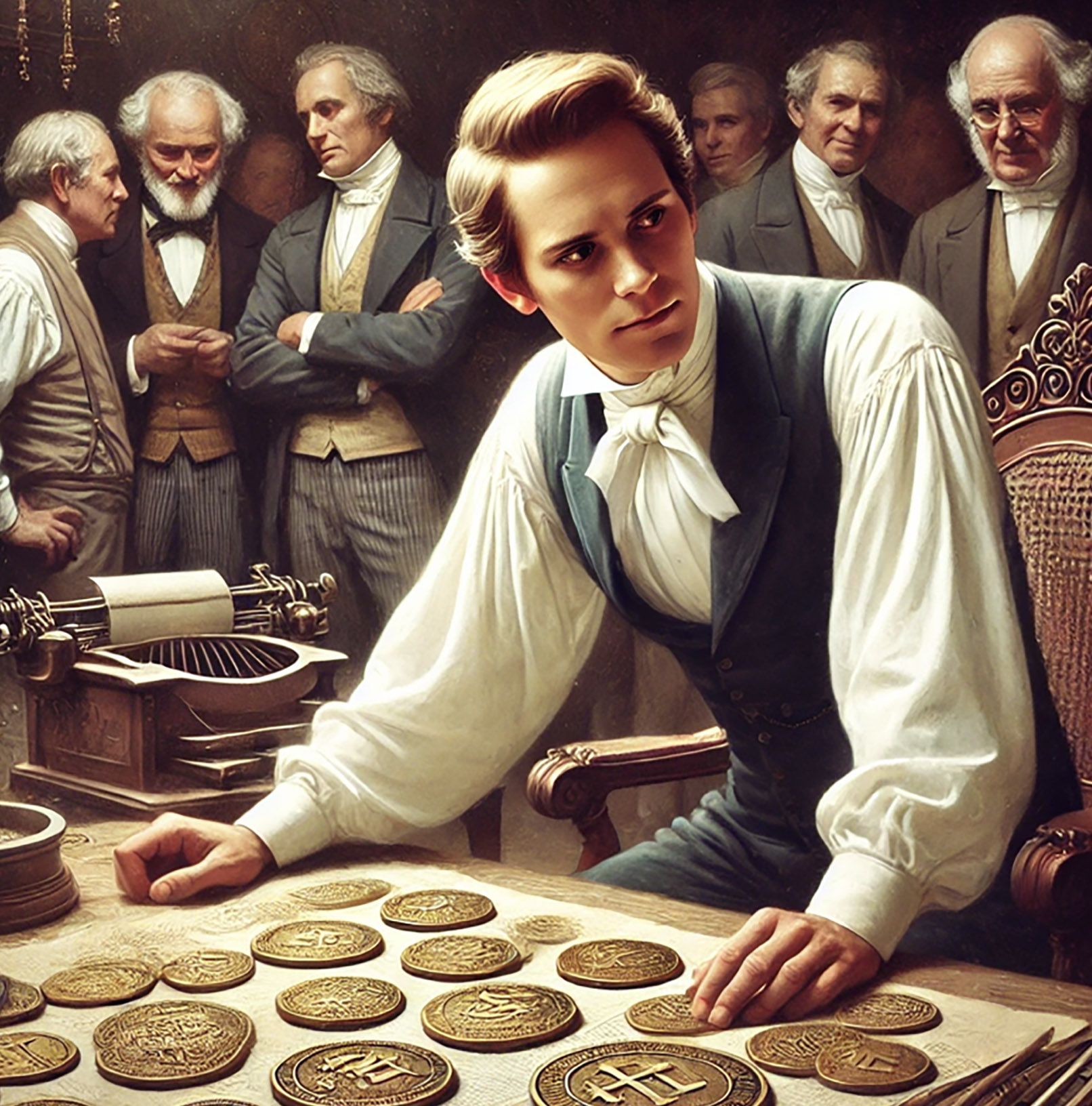
Joseph Smith And The Kinderhook Incident, Copyright RCR
The Book of Abraham and the Egyptian Papyri
Joseph Smith claimed to have translated the Book of Abraham from a collection of Egyptian papyri that he acquired in 1835. He described the papyri as containing writings by Abraham himself, written in Egyptian. The papyri became the basis for one of the LDS Church’s canonical texts, the Pearl of Great Price.
Scholarly Analysis:
- After the rediscovery of the surviving fragments of the papyri in the 1960s, Egyptologists examined them and concluded that they were standard funerary texts, specifically portions of the Book of Breathings and Book of the Dead, dating to around the first century BCE. These are common funerary documents and have no connection to Abraham.
- There is no evidence in the papyri or translations to support Joseph Smith’s claim that they contained writings by Abraham or that they were in any way unique.
Translation Issues:
Joseph Smith provided an “Egyptian Alphabet and Grammar,” claiming to describe the meanings of Egyptian hieroglyphs. However, Egyptologists have confirmed that the interpretations in this document bear no resemblance to actual Egyptian grammar or language.
Understanding The Egyptian Language
Ancient Egyptian hieroglyphs were undeciphered during Joseph Smith’s lifetime (1795–1844). The Rosetta Stone, discovered in 1799, had only recently provided the key to deciphering hieroglyphs. By the 1820s and 1830s, scholars like Jean-François Champollion were still developing their understanding of the language. Joseph Smith had no formal training in Egyptian or access to credible translations.
Scholarly Consensus:
- Professional Egyptologists agree that Joseph Smith’s interpretations of the papyri and his Egyptian Grammar are entirely incorrect.
- Modern translations of the papyri confirm that Joseph Smith’s descriptions and content from the Book of Abraham do not match the original texts.
Defenders’ Arguments
Some LDS apologists argue that Joseph Smith’s “translation” was not a literal linguistic translation but an inspired revelation. They suggest that the papyri served as a catalyst for receiving divine insight into the story of Abraham.
Challenges to This View:
- Joseph Smith explicitly described the Book of Abraham as a direct translation of the papyri.
- If it was a revelation, it raises questions about why he claimed linguistic accuracy or attempted to construct an “Egyptian Grammar.”
The Kinderhook Plates Incident
Joseph Smith’s encounter with the Kinderhook Plates provides additional evidence about his claims of linguistic knowledge. In 1843, Smith examined six brass plates that were allegedly discovered in Illinois and claimed to translate them, suggesting they contained a record of an ancient civilization. It was later revealed that the Kinderhook Plates were a hoax created to test Smith’s credibility. His failure to recognize the fraud further undermines his claims of linguistic ability.
The historical and literary evidence proves that Joseph Smith did not understand ancient Egyptian as he claimed. His interpretations of the Egyptian papyri used for the Book of Abraham have been conclusively disproven by modern Egyptology, and incidents like the Kinderhook Plates demonstrate his inability to discern authentic ancient texts from forgeries. While some LDS defenders frame the Book of Abraham as a divinely inspired text, the historical and linguistic evidence indicates that Joseph Smith’s claims of translating ancient Egyptian are untenable.
The Book of Mormon is Not A Reliable, Credible Record of True Events
NOTES:
The Book of Abraham and the Egyptian Papyri
Historical Background
Joseph Smith’s Claims:
- Joseph Smith History, History of the Church, Vol. 2, pp. 236–238. (Describes Smith’s acquisition of the papyri and his claim that they contained writings of Abraham.)
- The Pearl of Great Price, Book of Abraham, published by The Church of Jesus Christ of Latter-day Saints.
Rediscovery and Egyptological Analysis:
- Ashment, Edward H. “The Book of Abraham: Facsimiles and Semitic Adaptation,” in Dialogue: A Journal of Mormon Thought, Vol. 33, No. 4 (2000): 97–106.
- Ritner, Robert K. The Joseph Smith Egyptian Papyri: A Complete Edition. Salt Lake City: Signature Books, 2013.
- Rhodes, Michael. “The Joseph Smith Hypocephalus… Twenty Years Later.” BYU Studies Quarterly, Vol. 17, No. 3 (1977): 259–274.
Scholarly Analysis
Egyptologists on the Papyri:
- Ritner, Robert K. The Joseph Smith Egyptian Papyri: A Complete Edition. Provides a detailed analysis of the surviving papyri and identifies them as parts of the Book of Breathings and Book of the Dead.
- Nibley, Hugh. The Message of the Joseph Smith Papyri: An Egyptian Endowment. While apologetic in nature, it acknowledges that the papyri are funerary texts.
Translation and Grammar:
- Gee, John. An Introduction to the Book of Abraham. Provo, Utah: Religious Studies Center, Brigham Young University, 2017.
- Ashment, Edward H., in Dialogue, outlines the issues with the so-called “Egyptian Alphabet and Grammar.”
Understanding Egyptian Language
Egyptology in the Early 19th Century:
- Parkinson, R.B. Cracking Codes: The Rosetta Stone and Decipherment. London: British Museum Press, 1999. Covers Champollion’s work and the timeline of deciphering Egyptian hieroglyphs.
Challenges with Joseph Smith’s Grammar:
- Ritner, Robert K. in The Joseph Smith Egyptian Papyri. Shows the discrepancies between Smith’s interpretations and actual Egyptian grammar.
Scholarly Consensus
Professional Opinions on the Papyri:
- Larson, Charles M. By His Own Hand Upon Papyrus: A New Look at the Joseph Smith Papyri. Salt Lake City: Institute for Religious Research, 1992.
The Kinderhook Plates Incident
Historical Accounts
Original Discovery:
- Clayton, William. Clayton Journals. Describes the initial presentation of the Kinderhook Plates to Joseph Smith in 1843.
- Smith, Joseph. History of the Church, Vol. 5, p. 372.
Hoax Revealed:
- Fugate, Wilbur, and Wiley, Robert. “The Kinderhook Plates,” in Journal of Discourses (Historical description by participants in creating the hoax).
- Stanley P. Kimball, “Kinderhook Plates Brought to Joseph Smith Appear to Be a Nineteenth-Century Hoax,” in Ensign (August 1981): 66–74.
Scholarly Analysis:
- Quinn, D. Michael. Early Mormonism and the Magic World View. Discusses Smith’s failure to identify the forgery.
- Ashment, Edward H., in Dialogue, discusses how Smith’s claims about the plates were inconsistent with the eventual revelation of the hoax.
Defenders’ Arguments
Apologetic Perspectives:
- Gee, John. An Introduction to the Book of Abraham. BYU Religious Studies Center.
- Sorenson, John L. and Gee, John. “Joseph Smith and Ancient Egypt,” in BYU Studies Quarterly.
Critical Analysis of Apologetics:
- Vogel, Dan. Joseph Smith: The Making of a Prophet. Salt Lake City: Signature Books, 2004.
- Brodie, Fawn M. No Man Knows My History: The Life of Joseph Smith. New York: Knopf, 1945. (Classic critical biography discussing inconsistencies in Smith’s claims.)
- AI-Assisted Content Disclosure: Some text and images on this website were created or enhanced with the assistance of artificial intelligence tools. These tools were used to improve the quality and creativity of the content, while adhering to accuracy and originality. All content has been reviewed to ensure it aligns with the purpose and integrity of this website.
Categories: Robert Clifton Robinson


There is absolutely no evidence for the Book of Mormon. It is all fraudulent, the product of a lunatic:
LikeLike