Is Jesus God? Did Jesus Claim To Be God? Did The People of the First Century Understand That Jesus Is God?
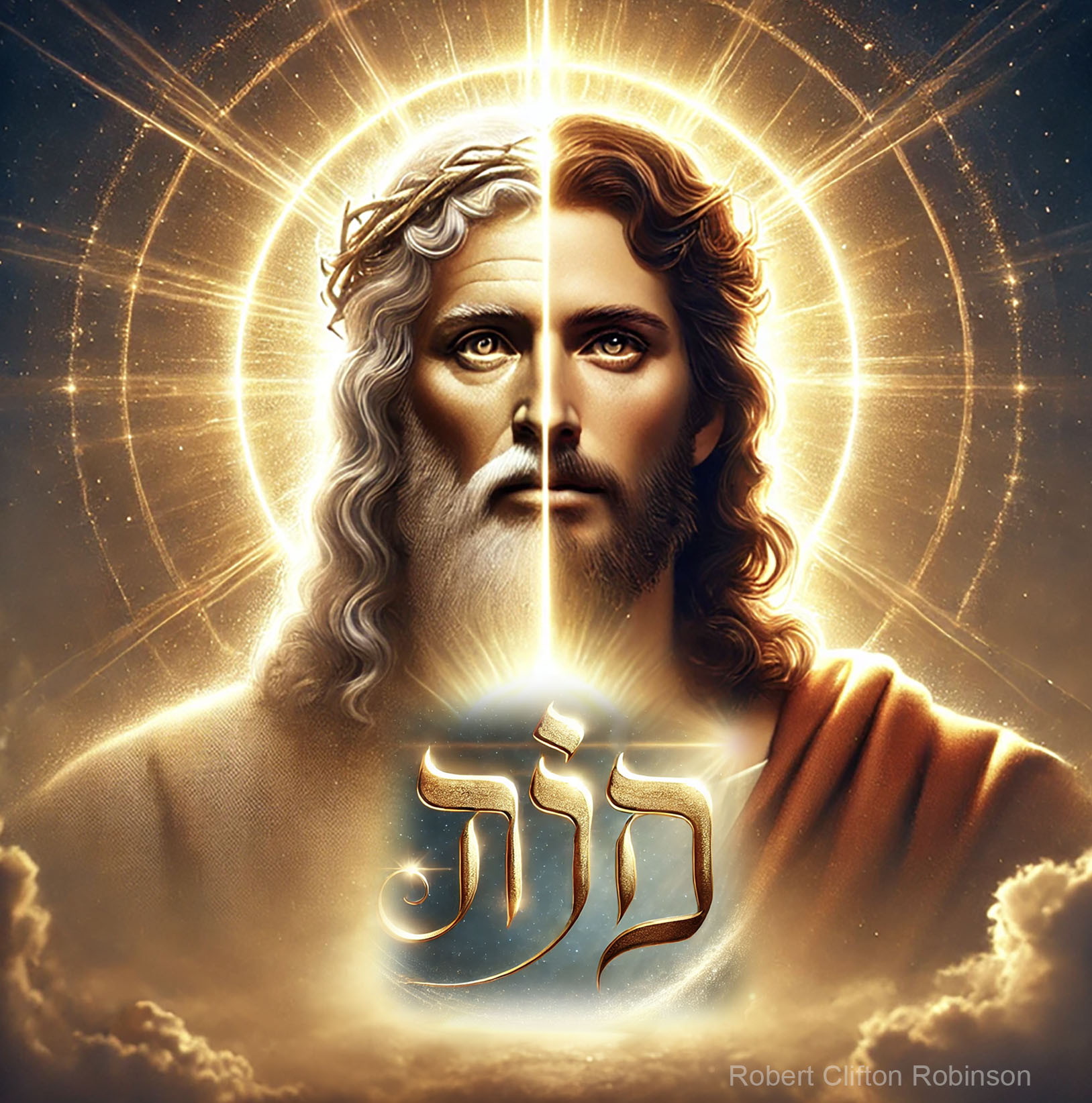
Jesus as Yahweh, Copyright RCR
The early translators of the New Testament from Koine Greek into English understood that the word “Lord” (κύριος, kurios) in the New Testament was often used to refer to Yahweh (יהוה, YHWH) in the Old Testament.
Understanding “Kurios” in the New Testament
In the Koine Greek Septuagint (LXX) translation of the Hebrew Scriptures (Tanakh), the divine name YHWH (יהוה) was consistently translated as κύριος (kurios), meaning “Lord.” This established a precedent for using “kurios” as a direct substitute for God’s covenant name.
The New Testament writers, being Jewish and well-versed in the Septuagint, carried this practice into their writings. When quoting Old Testament passages that referred to Yahweh, they used kurios in place of the Hebrew name for God. This is evident in many quotations where an Old Testament verse referring to YHWH is applied to Jesus Christ in the New Testament, equating Him with Yahweh.
Examples of “Kurios” as Yahweh in the New Testament
- Joel 2:32 → Romans 10:13
- Hebrew (Masoretic Text): “Whoever calls on the name of Yahweh (יהוה) shall be saved.”
- Septuagint (LXX): “Whoever calls on the name of kurios (κύριος) shall be saved.”
- Romans 10:13: “For whoever calls on the name of the Lord (κύριος) will be saved.”
Application: Paul explicitly applies this verse about Yahweh to Jesus Christ, equating Him with the Lord (YHWH).
- Isaiah 40:3 → Matthew 3:3
- Isaiah 40:3 (MT): “Prepare the way of Yahweh (יהוה); make straight in the desert a highway for our God.”
- Matthew 3:3: “Prepare the way of the Lord (κύριος), make His paths straight.”
Application: The verse about Yahweh is applied to Jesus, confirming that kurios in the NT refers to Yahweh.
- Psalm 102:25-27 → Hebrews 1:10-12
- Psalm 102:25-27 (MT): “Of old You laid the foundation of the earth, and the heavens are the work of Your hands… but You are the same, and Your years will have no end.”
- Hebrews 1:10-12: “You, Lord (κύριος), in the beginning laid the foundation of the earth…”
Application: The writer of Hebrews directly attributes Yahweh’s creative power to Jesus.
Did The Koine-Greek English Translators Recognize These Facts?
Yes, the early English translators (Tyndale, Geneva Bible, KJV, etc.) were aware of this exegetical connection. However, due to the limitations of English, they followed the tradition of using “LORD” (all caps) for YHWH in the Old Testament but “Lord” (capitalized) for kurios in the New Testament.
This sometimes obscured the fact that when the New Testament uses kurios, it is often referring to Yahweh Himself, particularly in passages where Jesus is identified with Yahweh.
The translators understood that kurios in the New Testament was often referring to Yahweh (יהוה) from the Old Testament. However, the lack of capitalization or differentiation in English sometimes makes this less explicit to modern readers. The theological reality remains that the NT writers, through the use of kurios, equated Jesus with YHWH, confirming His divine identity.
- Evidence That Jesus Claimed To Be God
- Evidence That Jesus Is Yahweh/Elohim
- The Baby Born In Bethlehem Is Yahweh From Eternity
- It Was Jesus Who Destroyed Sodom And Gomorrah

Notes:
1. Lexical and Linguistic Sources
- Louw, Johannes P., and Eugene A. Nida. Greek-English Lexicon of the New Testament Based on Semantic Domains. 2nd ed. United Bible Societies, 1988.
- Defines κύριος (kurios) as “one who has power or authority, particularly used for God and Jesus.”
- Thayer, Joseph H. Thayer’s Greek-English Lexicon of the New Testament. Hendrickson Publishers, 1996.
- Notes that kurios is used in the LXX (Septuagint) to translate YHWH and that the New Testament applies kurios to Jesus in the same divine sense.
- BDAG (Bauer, Danker, Arndt, and Gingrich). A Greek-English Lexicon of the New Testament and Other Early Christian Literature. 3rd ed. University of Chicago Press, 2000.
- Recognizes kurios as “Lord,” indicating both human authority and divine identity (often referring to Yahweh and Jesus).
2. Old Testament Use of “Kurios” for YHWH in the Septuagint
- Tov, Emanuel. The Greek and Hebrew Bible: Collected Essays on the Septuagint. Brill, 1999.
- Discusses how the LXX consistently translates YHWH as kurios.
- Hengel, Martin. The Son of God: The Origin of Christology and the History of Jewish-Hellenistic Religion. Fortress Press, 1976.
- Shows that kurios was used in Jewish contexts for God and was later applied to Jesus.
3. New Testament Application of OT “YHWH” Texts to Jesus
Romans 10:13 (quoting Joel 2:32)
- “Whoever calls on the name of the Lord (κύριος) will be saved.” (Paul applies YHWH’s name from Joel to Jesus.)
- Reference: Dunn, James D.G. Romans 9-16. Word Biblical Commentary, Vol. 38B, Zondervan, 1988.
Matthew 3:3 (quoting Isaiah 40:3)
- “Prepare the way of the Lord (κύριος), make His paths straight.”
- Reference: France, R.T. The Gospel of Matthew. NICNT, Eerdmans, 2007.
Hebrews 1:10-12 (quoting Psalm 102:25-27)
- “You, Lord (κύριος), in the beginning laid the foundation of the earth.” (YHWH’s act of creation is attributed to Jesus.)
- Reference: Bruce, F.F. The Epistle to the Hebrews. NICNT, Eerdmans, 1990.
4. Early Church Fathers Confirming the Identification of Jesus as YHWH
Justin Martyr (c. 160 AD)
- “Christ is called both God and Lord of hosts.” (Dialogue with Trypho, ch. 36)
- Reference: Falls, Thomas B. The Fathers of the Church: St. Justin Martyr. CUA Press, 2008.
Irenaeus (c. 180 AD)
- “Christ Himself, therefore, together with the Father, is the God of the living.” (Against Heresies, Book 3, ch. 16)
- Reference: Schaff, Philip. Ante-Nicene Fathers, Vol. 1. Hendrickson Publishers, 1995.
The linguistic evidence, textual application, and early Christian writings confirm that:
- The Septuagint (LXX) consistently translated YHWH as “kurios”.
- The New Testament authors used “kurios” to refer to Jesus in OT contexts that originally spoke of YHWH.
- Early Church Fathers explicitly recognized this identification.
Categories: Evidence: Jesus is God, Robert Clifton Robinson
 Robert Clifton Robinson
Please see, "Guidelines For Debate," at the right-side menu. Post your comment or argument here: