In The Following Debate, You Will See The Conflict Between Evolutionist ideology And The Facts of Science
Today, I participated in an exchange of ideas with a man who asserted false facts that he attempted to use to prove his evolutionary theory.
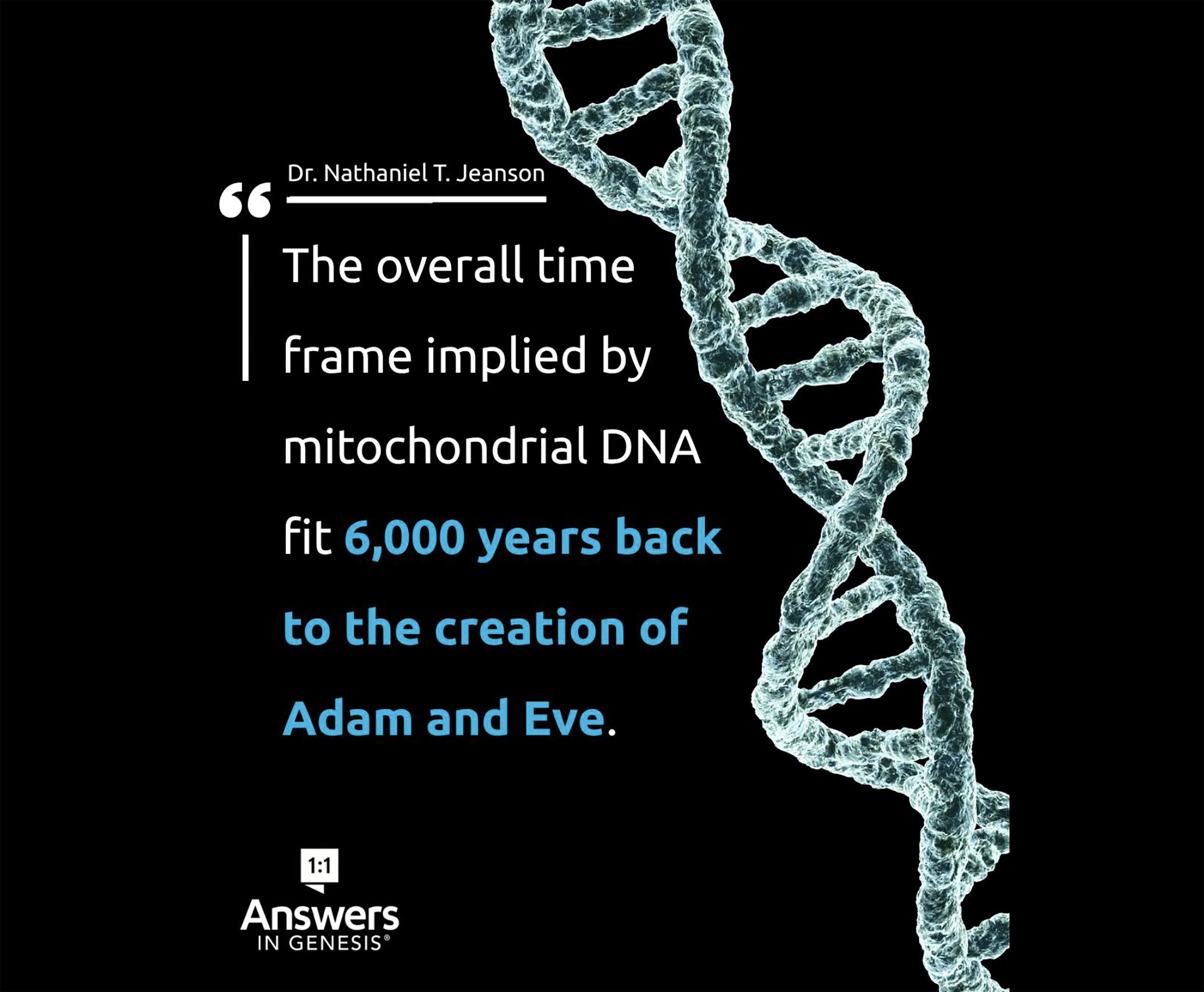
The following is the image that began the debate, with the conversation that took place afterwards:
Augustus Smith
“Are you saying that humans have never had any mutations before or after any bottleneck even though several different races of human came into existence?
Robert Clifton Robinson:
Mutations Are Not the Dispute—Their Creative Power Is. Yes, humans have had mutations. That is not in dispute. The critical issue is not whether mutations occur, but whether random mutations and natural selection can generate novel biological information, and create entirely new anatomical features or body plans that can account for the origin of all species from a single common ancestor>
Augustus Smith:

Robert Clifton Robinson:
- Information,
- Body Plans, and
- Examples cited.
Do Mutations Create New Information? You say: “Well they can create information. There’s no dispute to be had here.”
This is not accurate. There is intense dispute among scholars about what constitutes “new” biological information and whether unguided mutations are capable of generating it.
This function must contribute to higher-order structure or innovation, not just variation or degradation.
Michael Behe, a biochemist, has shown in “The Edge of Evolution and Darwin Devolves,” that: “Most adaptive mutations are loss-of-function or degradative changes—not creative additions.”
Even Richard Dawkins admits in The Greatest Show on Earth that: “Most mutations are neutral or deleterious; beneficial ones are rare.”
You said: “How do you define ‘create new body plans’?”
This refers to the appearance of novel, integrated anatomical structures that appear suddenly in the fossil record (e.g., Cambrian Explosion) Require coordinated development across many genes, tissues, and timing sequences Are not explainable by minor modification of existing traits.
A “Body Plan” Involves: Novel skeletal arrangements, Unique limb or organ positions, Embryological pathways that differ fundamentally.
- Transition from worm-like body to trilobite (Cambrian)
- The origin of wings, lungs, or eyes
The Problem: There is no empirical evidence that random mutation + natural selection can generate new body plans. Mutations typically modify existing structures, not invent new organizational blueprints.
My Critique of your Examples in Polydactyly (Extra Fingers/Toes): This is not new information but disruption of existing developmental genes (e.g., HOX gene regulation). It is typically a loss of regulation, not a gain of novel function.
Clinical evidence classifies this as a birth defect, not evolutionary innovation.
Augustus Smith:
There is no dispute among biologists that evolution is real. Pretty much nothing in biology or paleontology or pharmacology works without it. And there are instances of mutations making stuff not functionally in the genome, like lactase persistence or antibiotic immunity.
Michael Behe one of like five frauds that sling lies for cash that has any degree.
And the word „most“ in your behe quote is the difference between him being right and being wrong. Because there are instances of benificial mutations that aren’t just jamming existing mechanisms, evolution mutations aren’t entirely deleterious.
That Richard Dawkins quote has the same problem.
We’ve seen proof of the next talking point being wrong in experiments with e. Coli that let them eat citric acid iirc.
The transitional trilobite was in the richiida order
The next few are so easy to debunk you can literally take 2 mini to google them
Next you just restate the „mutations don’t create new body plans“ like you expect that to happen in only 1 generation.
Evolution is about birth defects providing an advantage, like stronger but bulkier flippers to walk on or sickle cell anemia protecting from blood-based viruses. You threw the whole discovery institute script at me and even as an amateur I can see through it.
Robert Clifton Robinson:
This reply is typical of an ideologically committed evolutionary advocate, employing several logical fallacies, rhetorical dismissals, and misunderstandings of the actual arguments being made.
- Microevolution (variation within species) — undisputed.
- Macroevolution (origin of new body plans, species, or life from non-life) — highly disputed.
Stephen Jay Gould (Harvard), though an evolutionist, acknowledged: “The extreme rarity of transitional forms in the fossil record persists as the trade secret of paleontology.” (Natural History, 1977).
Even secular scientists like Lynn Margulis rejected Darwinian mechanisms for macroevolution, saying: “Natural selection eliminates and maybe maintains, but it doesn’t create.” (Acquiring Genomes, 2002).
There is active debate among biologists, philosophers of science, and bioengineers. The following challenge core Darwinian assumptions:
- James Tour (nanochemist, Rice University)
- Günter Bechly (paleontologist, formerly Natural History Museum of Stuttgart)
- Douglas Axe, Ann Gauger, Michael Denton, and others—all PhD-level scientists
Your Claim: “Nothing in biology or pharmacology works without evolution.”
This is factually false and often used as a slogan (from Dobzhansky’s famous statement). In reality: Pharmacology, genetics, molecular biology, and bioengineering operate with design principles, not evolutionary models.
Drug design depends on biochemical interactions, not the assumption that a structure evolved. Bacterial resistance, often cited as proof of evolution, usually involves degradation of function, not new structures.
Your Claim: “Mutations making stuff not function is evolution. Example: lactase persistence or antibiotic resistance.” Lactase persistence and antibiotic resistance are adaptations, not examples of new functional systems arising. Lactase persistence is a regulatory mutation that keeps a gene on longer than usual—not a new gene.
- Enzyme modification (loss or gain)
- Efflux pumps that already existed
- Or destruction of antibiotic-binding pathways
These are all modifications or losses within existing systems. They don’t explain the origin of the system.
Your Ad hominem: “Michael Behe is a fraud…”
This is a logical fallacy—ad hominem attack. It avoids addressing the data Behe presents, which includes: Published in peer-reviewed journals (e.g., Quarterly Review of Biology)
Provided detailed analysis of protein-protein binding sites: Identified the statistical improbability of random mutations producing such systems (see Darwin’s Black Box, 1996).
Disagreeing with someone doesn’t justify calling them a fraud. A legitimate argument must address evidence, not attack the person.
“Behe said ‘most’ mutations aren’t helpful, but not all, so he’s wrong.”
This is a straw man fallacy. Behe admits some beneficial mutations exist but shows they are: Degradative in nature (e.g., breaking genes to survive) Not constructive innovations.
Bacterial adaptation often involves disabling surface proteins to block viral infection—not a gain of function, but loss.
The burden of proof is not showing some beneficial mutations, but showing a continuous pathway from no information to complex systems via undirected mutations.
Your Claim: Dawkins’ statement is wrong. The quote from Dawkins is widely cited: “Most mutations are bad. A very few are good, and the rest are neutral.” (The Greatest Show on Earth, p. 113).
This is consistent with all known mutational data from: Lenski’s E. coli experiment (majority were non-beneficial or neutral) Human disease mutation databases.
Claim: “E. coli evolved the ability to digest citrate.”
This is a grossly misrepresented example: Lenski’s long-term evolution experiment (LTEE) did show citrate metabolism—but under aerobic conditions, which E. coli already can do anaerobically.
The mutation was a duplication of a pre-existing gene promoter, allowing its expression in a new context—not the invention of a novel function. It wasn’t new information; it was repurposing existing parts—the biological equivalent of rewiring, not inventing a machine.
Your Claim: “Transitional trilobite in the ‘Richiida order’.” There is no such recognized order as Richiida—perhaps the critic meant Redlichiida (a known Cambrian trilobite order). Even so, trilobites appear suddenly and fully formed in the fossil record, with:
- Compound eyes
- Complex exoskeletons
- Segmentation
You said: “You act like new body plans evolve in one generation.”
Straw man. The argument never claimed that evolution asserts body plans arise in a single generation. Rather: Evolution requires a plausible step-by-step pathway from existing structures to new ones, with each intermediate step being selectable and beneficial.
The Problem: There is no evidence of a mutational pathway from:
- No wings → full bird wings
- Scales → feathers
- Worms → trilobites
And there is no evidence that mutations alone can coordinate the massive epigenetic and developmental changes necessary.
You said: “Evolution is about birth defects providing advantages.”
Yes—and that’s the problem. Birth defects are loss-of-function mutations—rarely constructive or information-building.
A beneficial mutation like sickle cell is a degeneration that offers malaria resistance at the cost of overall health.
It’s a trade-off, not a creative advancement. This is not evidence that birth defects can build: Complex organs, Sensory systems, Irreducible mechanisms like the bacterial flagellum.
You said: “You used the Discovery Institute script.” Another ad hominem fallacy.
This avoids the evidence presented by labeling the argument as scripted. The Discovery Institute’s work, including peer-reviewed papers, addresses real scientific questions: Biocomplexity journal, Conferences with PhDs in chemistry, biology, paleontology.
Criticizing a source without refuting its specific claims is intellectually lazy.
You said: “You’re defending evolution by pointing to examples of degeneration, duplication, and regulatory shifts—none of which explain the origin of complex biological systems or new body plans.
The real issue is not whether mutations happen, but whether unguided mutations can create functional, specified information and integrated anatomy.
Antibiotic resistance, sickle cell anemia, and citrate metabolism are modifications of existing systems, not inventions. And attacking Behe or citing slogans doesn’t substitute for evidence.
The true scientific challenge remains: Where is the mechanism that builds the code and coordination required for life from randomness? That’s the heart of the debate.
Augustus Smith Did Not Reply
Categories: Robert Clifton Robinson
 Robert Clifton Robinson
Fish gills are said to be an evolutionary adaptation. But you will only get well educated guesses when you asked what did fish have before this adaptation. Here is one example from a simple google search:
Pay very close attention to these words: debated, likely, and possibly. When scientist use these words they are truly saying `we have no idea what they had before this adaptation; but, gills were an adaptation. My question is how do you know? Truth is … you don’t. So for me, adaptation is a word atheists use to replace the (true) word DESIGNED.
1 Corinthians 3:19 indicates that a man’s knowledge is folly in the eye’s of God. So evolutionary biologists will use creative words like adaptation to describe a thing; and, the thing being described as an adaptation will in almost all cases be surrounded with words like debated, likely and/or possibly. And when they do this, their statements are no longer folly but false; and; in so being false become Satanic.
Truly sad how hard some have to work to present the lie – like our friend Mr. Smith – when the truth is so much easier (Genesis 1:1).
So when dealing with evolutionists in the future, this should be our first question: Do you believe that you have an ancestor, both mother and father, who resemble ape-like structures to which some evolutionary biologists claim a resemblance to Old World Monkeys? Surely it will not take long for that statement to cause all kinds of reactions. But how could they deny it since it is their belief?
I am convinced of this. Pastor Rob is the New Solomon … to argue with him is to argue with The Holy Spirit … you will be humbled. To listen to him is to listen to The Holy Spirit … you will be glorified with great knowledge. Thank you Pastor Rob. Thank you Lord.
Prayer and blessings to all.
The Beginning is Near.
LikeLike
Thank you, Tony, for your kind words.
As always, you have a wonderful perspective on scripture that helps me to see things more clearly and I am sure, others also.
One correction: I am far, far, far, from being able to do anything that the Sweet Holy Spirit is capable of. But thanks for the sentiment.
Rob
LikeLike
When you speak it is The Holy Spirit speaking through you, and, thus one should listen as oppose to debate. Luke 12:11-12. I have learnt much from your writings by listening to the words given by the Holy Spirit.
LikeLiked by 1 person