This Essay Examines Churches That Claim They Are “Christian,” While Denying The Christ Who Founded The Christian Church
 When Jesus had risen from the dead He met with His disciples and told then to wait in Jerusalem for the gift of the Holy Spirit that He would give them in fifty days, on the Feast of Pentecost.
Acts 1:8 “But you will receive power when the Holy Spirit comes upon you. And you will be my witnesses, telling people about me everywhere—in Jerusalem, throughout Judea, in Samaria, and to the ends of the earth.”
In Acts chapter 2 we see these believers meeting together on the Feast of Pentecost, and the Holy Spirit coming to fill every person in that meeting. It was from this power that Jesus gave the followers of His true church, that the church began. Since that time satan has sought to infiltrate Jesus church and plant false believers that He called, “Tares,” among the true, the “Wheat.”
Pretend Christians
In the Parable of the Wheat and the Tares, Jesus describes persons who are planted in Jesus’ church by satan as pretend Christians. Their purpose is to undermine the Gospel that Jesus proclaimed.
In the Parable of the Wheat and the Tares, Jesus distinguishes the false believer from the true, with the Greek word “zizanion,” a weed or tare; a plant that looks like a stalk of wheat but is not.
Matthew 13:24-30 The Parable of the Wheat and Tares
“Here is another story Jesus told: “The Kingdom of Heaven is like a farmer who planted good seed in his field. But that night, as the workers slept, his enemy came and planted tares (zizanion) among the wheat, then slipped away. When the crop began to grow and produce grain, the tares also grew.”
“The farmer’s workers went to him and said, ‘Sir, the field where you planted that good seed is full of tares! Where did they come from?’”
‘An enemy has done this!’ the farmer exclaimed. ‘Should we pull out the tares?’ they asked. ‘No,’ he replied, ‘you’ll uproot the wheat if you do. Let both grow together until the harvest. Then I will tell the harvesters to sort out the tares, tie them into bundles, and burn them, and to put the wheat in the barn.’”
The enemy that Jesus described is satan. It is not possible for him to destroy the church from the outside, so he installs false or pretend Christians in Jesus’ church, in order to try and destroy the work that Jesus is doing through true Christians.
From this brief parable, we learn that not everyone who says they are a Christian is telling the truth. The reality is that amongst us in our churches and in the world, there are pretend believers who are working against all that Jesus is accomplishing.
In Matthew 7:21-23, Jesus said: “Not everyone who calls out to me, ‘Lord! Lord!’ will enter the Kingdom of Heaven. Only those who actually do the will of my Father in heaven will enter. On judgment day many will say to me, ‘Lord! Lord! We prophesied in your name and cast out demons in your name and performed many miracles in your name.’ But I will reply, ‘I never knew you. Get away from me, you who break God’s laws.’”
The Tares are people who claim to be Christians but have not been born again by the Spirit of God. They are people who have not felt sincere sorrow for their sins and are unwilling to turn from their sins to Christ. Very often, these persons don’t believe in the historical Jesus described in the New Testament or that the Bible is the completely inspired Word of God. Many of these persons are a part of the new “Progressive Christian Movement.”[1]
The following is a detailed list of churches or religious movements that self-identify as Christian but hold doctrines that fundamentally depart from the biblical and apostolic faith once delivered to the saints (Jude 1:3). Each includes their core errors, particularly concerning the nature and identity of Jesus, salvation, and Scripture.
Progressive Christianity
Foundational Errors:
Scripture: Denies the full inspiration and inerrancy of Scripture. Views the Bible as a human, evolving record of people “trying to understand God.”
Jesus: Often rejects Jesus’ substitutionary atonement. Some teach He is merely an example of divine love, not the incarnate Son of God who bore the wrath of God for sin.
Salvation: Emphasizes social justice over personal salvation. Many deny the necessity of repentance and faith in Christ for salvation.
Hell & Judgment: Often denies eternal judgment, asserting universalism or annihilationism.
Sexual Ethics: Rejects biblical sexual morality. Affirms same-sex relationships, transgenderism, and other views condemned by Scripture.
Impeaching Biblical Texts: 2 Tim. 3:16; John 14:6; Rom. 3:25–26
The Church of Jesus Christ of Latter-day Saints (Mormons)
Foundational Errors:
Jesus: Believes Jesus is the spirit-brother of Lucifer, a created being, once a sinner, not the eternal, uncreated Son of God.
God: Believes God the Father was once a man who became a god (“As man is, God once was…” – Lorenzo Snow).
Salvation: Requires obedience to LDS ordinances and teachings (works doctrine), not grace alone through faith (Eph. 2:8–9).
Scripture: Holds extra-biblical books (Book of Mormon, Doctrine and Covenants, Pearl of Great Price) as equal or superior to the Bible.
Trinity: Denies the orthodox Trinity. Teaches that Father, Son, and Holy Spirit are three separate gods.
Impeaching Biblical Texts: Isa. 43:10; John 1:1–3,14; Gal. 1:6–9
Jehovah’s Witnesses (Watchtower Bible and Tract Society)
Foundational Errors:
Jesus: Teaches Jesus is Michael the archangel, a created being—not God in the body of a man, as the New Testament presents Jesus.
Salvation: A Works-based salvation. Member must participate in Watchtower teachings, they must go door-to-door as witnesses, and adhere to the organization to hope for salvation.
Resurrection: Denies physical resurrection of Jesus. Teaches He rose as a “spirit creature.”
Scripture: The Watchtower Magazine is a primary texts for doctrine, Witnesses use as their scripture, the “New World Translation,” a highly biased and edited version of the Bible with changes in diminishing Jesus as a man, not the Eternal God, Jehovah.
Hell & Judgment: Denies eternal punishment. Teaches annihilation of the wicked.
Impeaching Biblical Texts: John 8:58; Col. 1:15–17; Rom. 10:9–13
Unitarian Universalism
Foundational Errors:
Jesus: Not the Eternal God. Viewed as a great moral teacher.
God: Denies the Trinity. Views God as impersonal or open to various interpretations.
Salvation: Believes all religions are valid paths to God. Rejects the exclusivity of Christ.
Bible: Not authoritative. Considered one of many spiritual guides.
Impeaching Biblical Texts: John 14:6; Acts 4:12; 1 John 2:22–23
Christian Science (founded by Mary Baker Eddy)
Fundamental Errors:
Jesus: Was not God but a divine idea. His death was not a literal atonement for sin.
Sin & Death: Viewed as illusions. Disease and suffering are mental errors.
Scripture: Science and Health with Key to the Scriptures is considered divinely inspired and interprets the Bible through metaphysical filters.
Impeaching Biblical Texts: Heb. 9:22–28; 1 Pet. 2:24; Rom. 6:23
Unity Church (Unity School of Christianity)
Fundamental Errors:
Jesus: Denies the uniqueness of Jesus as the Eternal God/man. All people are considered divine or “Christ-conscious.”
Salvation: Based on “realizing your divine potential,” not faith in Christ’s atonement.
Bible: Reinterpreted through New Thought metaphysics. Denies literal interpretations.
God: An impersonal force. Panentheistic (God in everything).
Impeaching Biblical Texts: Col. 2:8–10; Isa. 45:5–6; John 3:16–18
The New Apostolic Reformation (NAR) / Some Charismatic Movements
Note: Not all Charismatics fall under this, but NAR represents a movement with serious doctrinal deviations.
Fundamental Errors:
Authority: Elevates modern-day apostles and prophets to nearly scriptural authority.
Jesus: Focuses less on His substitutionary atonement and more on dominion theology.
Kingdom Now Theology: Teaches the Church must conquer and rule before Christ returns.
Scripture: Often subordinated to “new revelation” from leaders.
Impeaching Biblical Texts: Rev. 22:18–19; 2 Pet. 1:19–21; Jude 1:3
Emergent Church Movement
Fundamental Errors:
Truth: Embraces postmodern relativism. Absolute truth is often questioned or rejected.
Jesus: His divinity, substitutionary death, and resurrection are reimagined or diminished.
Doctrine: Doctrinal boundaries are viewed as divisive; unity and conversation are prioritized over truth.
Impeaching Biblical Texts: 2 Tim. 4:3–4; John 8:32; 1 Tim. 4:1
Jesus said in Matthew 7:22–23, “Many will say to Me in that day, ‘Lord, Lord…’ And I will declare to them, ‘I never knew you; depart from Me.’”
Simply calling a church “Christian” does not mean that it is a biblical New Testament church that Jesus founded by His death and resurrection. Jesus’ true Church is built upon the testimony of Jesus as the Christ, the Son of the Living God (Matt. 16:16–18), and must believe the following:
- The authority of Scripture (2 Tim. 3:16)
- The deity, death, and resurrection of Christ (Rom. 10:9–10)
- Salvation by grace through faith (Eph. 2:8–9)
- The return of Christ to judge and redeem (Rev. 22:12)
- A Different Jesus
- How The Bible Defines Sexual Immorality v. How The Progressive Church Defines Sexual Immorality
- How The LGBTQ Movement Created The Progressive Christian Church
- Repentance Is Not Required For Salvation; A Fundamental Progressive Christian Doctrine
- What The Historical Record Proves Regarding Joseph Smith And The Book Of Mormon
- What Is The Difference Between Biblical New Testament Christianity And Man-Made Religions Of The World?
- The Stunning Difference Between Jesus And All Other Gods And Religions
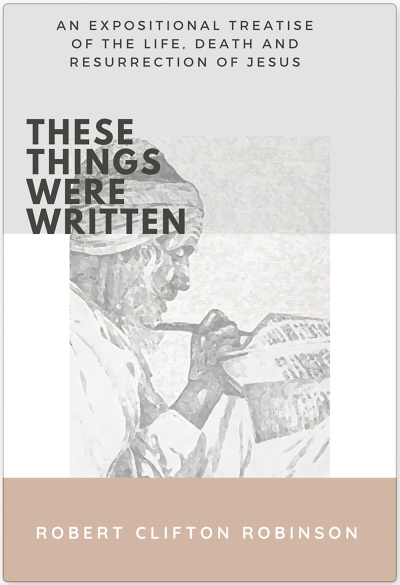
SEE WHO JESUS REALLY IS, ACCORDING TO THE BIBLE: “These Things Were Written: An Expositional Treatise of the Life, Death, and Resurrection of Jesus“
Citations and Sources:
—Progressive Christianity
Denial of Penal Substitutionary Atonement & Biblical Authority
“You will find rejection of the Penal Substitution Atonement theory among the Progressive churches and theologians. They reject the theory because it makes God out to be no different than the pagan gods.”
[1]. Progressive Christianity v. Fundamental Christianity, a good definition written by Kalen Fristad: “Perhaps the most basic difference between fundamentalists and progressives is how they view Scripture. Fundamentalists believe the Bible is divinely inspired, is the Word of God, is infallible in all respects, is to be interpreted literally, and that all parts of it are of equal value and truth.
Progressives also generally have a high view of Scripture and believe as well that it is divinely inspired. They, however, recognize that the Bible reflects the human limitations and cultural biases of the writers. Thus, progressives don’t believe that the Bible is infallible. Rather than believing that it literally is the Word of God, they contend that it contains the Word of God. Progressives believe that much of the Bible should not be taken literally. Instead, in recognition that the Bible contains different kinds of literature, such as legend, allegory, metaphor, hyperbole, and parable, they look for deeper meanings that a literal interpretation misses. Progressives do not believe that all parts of Scripture are equal. They give the greatest credence to the teachings and example of Christ.”
—Jehovah’s Witnesses
Jesus as Michael the Archangel & Altered Bible Translation
“Likewise, the Bible indicates that Michael is another name for Jesus Christ, before and after his life on earth.”
Their unique New World Translation is also criticized for bias, though the quote is summarized from exegesis.
—The Church of Jesus Christ of Latter‑day Saints (Mormons)
Jesus and Lucifer as Spirit Brothers
“Both the scriptures and the prophets affirm that Jesus Christ and Lucifer are indeed offspring of our Heavenly Father and, therefore, spirit brothers.”
Further confirmation:
“Mormons also teach … even Satan (Lucifer) is a spirit brother of Jesus.”
—Unitarian Universalism
Jesus Seen Merely as a Great Religious Genius
“I believe that Jesus was one of the world’s great religious geniuses… but that he would have been appalled at the notion of calling him God.”
UU affirms diverse spiritual paths, rejecting exclusivity in Christ.
—Christian Science (Mary Baker Eddy)
Jesus as Human, Christ as Divine Idea
“Jesus is the human man, and Christ is the divine idea; hence the duality of Jesus the Christ.” (Mary Baker Eddy, Science and Health with Key to the Scriptures, p. 473:15).
Another key quote on divine idea: Eddy writes of “divine idea… ignorance of divine Principle… the message of salvation.”
—Unity Church (Unity School of Christianity)
Jesus as an “Elder Brother” and We Have Divine Potential
“We believe that Jesus expressed his divine potential and sought to show humankind how to express ours… Jesus is the great example of the Christ in expression.” 
Unity teaches panentheistic divine consciousness in everyone.
—New Apostolic Reformation (NAR)
Modern Apostles & Dominion Theology
“Both then and now, the gift of apostle, once given by God, becomes a special attribute of the individual… confers extraordinary authority on true apostles.” (C. Peter Wagner, Apostles Today, p. 56)
NAR also promotes dominionism: “When Jesus came, He brought the kingdom of God and He expects His kingdom‑minded people to … push back … Satan and bring … prosperity of His kingdom here on earth.” —C. Peter Wagner
—Emergent Church Movement
Rejection of Penal Substitution
“You will find rejection of the Penal Substitution Atonement theory among the Progressive churches… they reject the theory because it makes God … primitive and petty.” 
ECM embrace postmodern theology and relativism regarding Scripture and truth.
Categories: Robert Clifton Robinson
 Robert Clifton Robinson
Please see, "Guidelines For Debate," at the right-side menu. Post your comment or argument here: