Although Critics Often Assert That The Bible Is Filled With Contradictions, Inaccuracies, Discrepancies, And Historical Errors, No Evidence Proving These Errors Has Ever Been Presented

The brown stone tablet on the left in the image represents the Tel Dan Stele—an archaeological artifact discovered in northern Israel in 1993. It dates to the 9th century B.C. and contains an inscription in Aramaic that mentions the “House of David” (ביתדוד)—the earliest extra-biblical reference to King David ever found.
While the actual stele is damaged and only partially preserved, the key line traditionally reads:
“…killed Jehoram, son of Ahab king of Israel, and I killed Ahaziah son of Jehoram king of the House of David…”
In Hebrew/Aramaic script: […] ויהוא בן יהושפט מלך ישראל ויהו[רם בן אחאב…] בית דוד
This inscription confirms the existence of David as a historical figure, not merely a biblical legend. Also, that the kingdom of Judah was referred to as the “House of David,” showing dynastic continuity and public recognition.
The small stone tablet on the right in the image is a replica of the “Pilate Stone”—an extraordinary archaeological discovery made in 1961 at Caesarea Maritima, Israel. This stone provided the first archaeological evidence of Pontius Pilate, the Roman prefect who ordered Jesus’ crucifixion, as recorded in all four Gospels.
Translation:
“To the Divine Augusti [this] Tiberieum
Pontius Pilate,
Prefect of Judea,
has dedicated [this]”
- This stone tablet confirms Pilate’s historical existence, title (Prefect, not Procurator, which clarifies Roman administrative terminology in the New Testament era).
- It Validates the Gospel accounts, which consistently name Pilate as the Roman governor who sentenced Jesus to death (e.g., Matthew 27:2, John 19:10).
- It Provides archaeological evidence from a hostile source—the Roman government itself—not Christian tradition.
This discovery was so Important that even secular atheist scholars like John Dominic Crossan and Bart Ehrman accept the historicity of Pilate’s role in Jesus’ trial based on this inscription.
There is no verifiable, universally accepted evidence that proves anything in the Bible is untrue. This statement is based on the following:
The Burden of Proof and Standards of Evidence
The burden of proof lies upon anyone asserting that the Bible contains errors, contradictions, or falsehoods. Merely claiming something is untrue does not constitute proof. Assertions must be tested by:
- Historical evidence
- Textual analysis
- Archaeological verification
- Consistency with established facts
- Logical coherence
Alleged Contradictions and Resolutions
Critics often claim the Bible contains contradictions. However, thousands of these supposed contradictions have been examined, documented, and resolved by scholars over the centuries.
The Claim: The resurrection accounts in the Gospels contradict each other.
Response: Each Gospel provides a selective account focusing on different details—common in eyewitness testimony. Forensic analysis, as done in modern legal evaluation, supports the conclusion that the accounts are divergent, not contradictory—just like multiple credible witnesses describing the same event from different angles.
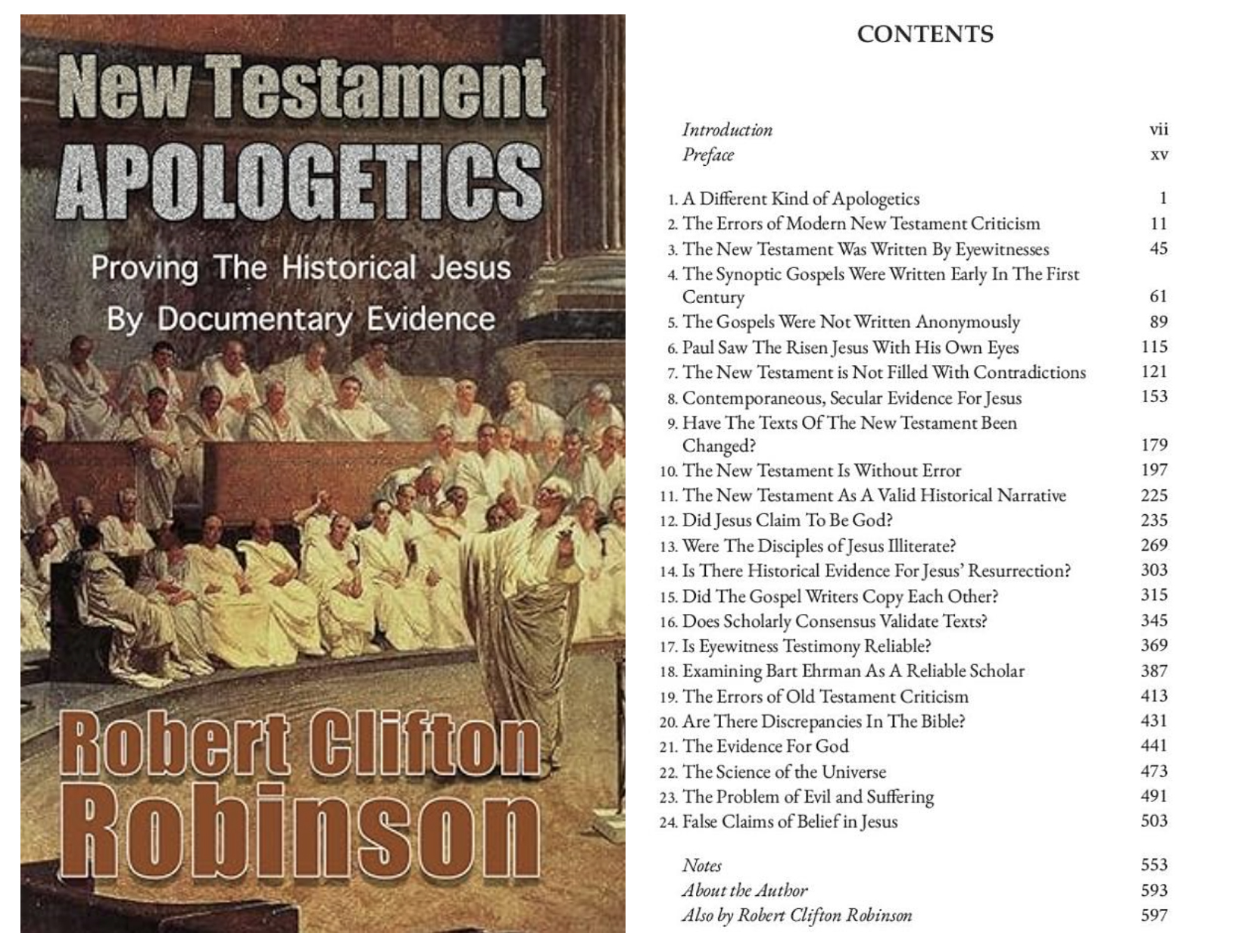
See The Historical, Eyewitness Evidence That Proves New Testament Reliability: “New Testament Apologetics“
Simon Greenleaf, a Harvard professor and legal expert on evidence, concluded: “The discrepancies between the testimonies of different witnesses in minor matters, instead of discrediting them, confirm their truth.” — Simon Greenleaf, “The Testimony of the Evangelists,” 1874
Legal Analysis Of The Four Gospels As Valid Eyewitness Testimony
Archaeological and Historical Evidence
Many historical claims of the Bible were once doubted but have been vindicated by archaeology:
- The existence of King David: Denied by critics until the Tel Dan Stele (1993) was discovered, naming the “House of David.”
- Pontius Pilate: Once considered fictional; now confirmed by the Pilate Stone found in 1961 in Caesarea Maritima.
- The Hittites: Once thought mythical until 19th-century discoveries revealed an entire Hittite empire.
No archaeological find has ever proven any biblical event to be false. In fact, the cumulative effect of archaeological discoveries continues to affirm the historical reliability of Scripture.
“It may be stated categorically that no archeological discovery has ever controverted a single biblical reference. Scores of archeological findings have been made which confirm in clear outline or in exact detail historical statements in the Bible.”[1]
Is The New Testament A Valid Historical Narrative?
Scientific Misunderstandings
Some critics attempt to discredit the Bible on supposed scientific errors, such as: The claim that Genesis teaches a flat Earth, and the “firmament” in Genesis 1 being interpreted as a solid dome.
Evidence:
- The Bible never teaches a flat Earth; such ideas are read into the text, not out of it. Hebrew words like “raqia” (firmament) are poetic and pre-scientific in description but not scientifically erroneous.
- Phenomenological language (e.g., “sun rises”) is still used in modern science without implying geocentrism.
See The Scientific Evidence That Proves God Is The Only Viable Source For The Universe

Click On Image To Look Inside
Eyewitness and Forensic Testimony of the New Testament
Critics often allege the New Testament was written too late to be accurate. But manuscript, historical, and internal textual evidence shows:
- The Synoptic Gospels were written by 44 AD because Paul carried these eyewitness statements about Jesus, with him on his first missionary journey to Asia in 45 AD. There is no possibility that people in Asia would believe Paul’s testimony that Jesus is the Messiah, without these eyewitness accounts by the men who saw and heard Jesus.
- All New Testament books were written between 45–95 A.D., within the lifetime of eyewitnesses.
- The early church Leaders (Clement, Ignatius, Polycarp) quoted the New Testament extensively before A.D. 110.
- Forensic linguistic analysis of the Gospel of Luke and Acts (e.g., Colin Hemer) demonstrates detailed historical accuracy.
No critic has ever disproved the eyewitness testimony of the Gospels using forensic literary methods, which are the standard in legal investigations today. There are 203 eyewitness statements in the New Testament.
Common Atheist Objections Do Not Prove Falsehood
Many critics reject the Bible on philosophical or theological grounds:
- A Disbelief in miracles.
- Moral objections to God’s commands (e.g., judgment of Canaan).
- Emotional rejection of divine authority.
These are not evidentiary arguments but philosophical biases. Disbelief in a miracle is not proof that the miracle did not happen. If God exists and created the universe (Genesis 1:1), then miracles are not only possible, but expected.
Jesus performed tens of thousands of miracles in the pages of the New Testament. Only God has the power to accomplish the things written of Jesus.
The Bible’s Internal Claims About Its Truth
The Bible repeatedly claims to be the Word of God:
- “All Scripture is inspired by God and is useful to teach us what is true…” (2 Timothy 3:16)
- “Your word is truth.” (John 17:17)
These claims require examination, not dismissal. If a person disbelieves Scripture solely on presupposition, this is not a rational argument but circular reasoning.
Can We Prove The Bible, By The Bible?
Scholars Who Affirm the Reliability of the Bible:
- William F. Albright, archaeologist: “There can be no doubt that archaeology has confirmed the substantial historicity of Old Testament tradition.”
- Sir William Ramsay, once a skeptic, after decades of field research concluded: “Luke is a historian of the first rank—not merely are his statements of fact trustworthy; he is possessed of the true historic sense.”
- F. F. Bruce, biblical scholar: “There is no body of ancient literature in the world which enjoys such a wealth of good textual attestation as the New Testament.”
- Robert Clifton Robinsons: “The New Testament presents is with the largest body of historical eyewitness testimony for any person of antiquity.”
Conclusion: There Are No Proven Falsehoods
In over 3,450 years of biblical history, and more than 2,000 years of critical scrutiny, no one has proven that any part of the Bible is not true by uses of historical, archaeological, textual, or forensic evidence.
While people disagree with the Bible, disagreement is not disproof. Assertions are not evidence. Until a claim can be demonstrated with verifiable facts that withstand scholarly scrutiny, the Bible remains unfalsified and historically credible.
How The Documented Secular Date For Pilate’s Death, Proves The Synoptic Gospels Were Written By 44 AD.
Eusebius of Caesarea (c. A.D. 260–339) In his Ecclesiastical History (Book II, Chapter 7), Eusebius reports: “It is said that Pilate himself fell into such calamities that he was forced to become his own murderer and executioner.”
- Source: Ecclesiastical History, II.7.1
- Date of account: Early 4th century
- Claim: Pilate committed suicide during the reign of Emperor Caligula (A.D. 37–41)
The Gospel of Nicodemus (Apocryphal)
Also called the Acts of Pilate, this 4th-century apocryphal text claims that after Pilate fell out of favor with Emperor Caligula, he was exiled to Gaul, where he committed suicide.
- Date of writing: Likely 4th century A.D.
- Value: Not canonical or historical, but reflects early Christian traditions and rumors.
I have published in my book, “New Testament Apologetics,” that the Synoptic Gospels were likely completed by 44 AD because Paul carried these eyewitness testimonies with him on his first missionary journey to Asia. There is no possibility that the people of Asia would believe Paul’s testimony about Jesus as the Messiah, without the written eyewitness testimonies of the men who saw HIm.
Understanding this, that the Synoptic Gospels were likely written by 44 AD, and the date of Pilates death at 37, this added historical fact lends credibility to the fact that the Synoptic Gospels were written very early.
- Is The Bible Filled With Contradictions?
- Proving There Are No Discrepancies In The New Testament
- Impeaching A Primary Atheist Argument: Contradictions In The Bible
Sources and Citations
[1] Nelson Glueck, Rivers in the Desert, 1960, page 31, Source: Robinson, Robert Clifton. These Things Were Written: An Expositional Treatise Of The Life, Death, And Resurrection Of Jesus (Function). Kindle Edition.
Categories: Robert Clifton Robinson
 Robert Clifton Robinson
If the justice system used this line of thinking- if you were on trial for murder- the premise is that you committed the murder. Your argument against was that you were home alone when the murder occurred. The judge would say “you can’t prove that you didn’t commit the murder, therefore you are guilty and the premise is true- you did commit the murder. Can’t you see this is illogical? This thinking has disastrous results. In the formal study of logic- it’s called the “Argument from Ignorance”. If I concocted a new medicine and I claimed it cured cancer. If your daughter had cancer- you could not prove the medicine doesn’t work- therefore you must assume it works and give it to your daughter. one more example- Jerry cannot prove he didn’t eat the last jellybean. Therefore he DID he the last jellybean. Conclusions must be built upon proof-positive evidence supporting a premise, not lack of proof to the contrary.
LikeLike
I don’t see a specific argument from you here that specifically identifies any part of the Bible as contradictory.
I see several word salad scenarios and assertions, but nothing of substance.
Give me an alleged contradiction in the Bible and I will demonstrate why it is not a contradiction.
LikeLike
People are going to believe what they are going to believe until their minds are significantly changed by an event so unbelievable that no doubt can even begin. This event will be The (Great) Tribulation. These pages will make those events make sense saving many. Today Pastor Rob plants the seed, the Church provides the water and God gives the increase.
Thank you Pastor Rob.
LikeLiked by 1 person