All Human Beings Believe The Law of God—Whether Or Not They Admit He Exists

Copyright, Robert Clifton Robinson
Atheists can, and often do, obey the Law of God instinctively—without consciously realizing they are following God’s moral principles—because the Creator who made all people has written His Law on every heart.”
Before God created human life He decided to imprint a knowledge of Himself on every person who would exist. If we think about this, it’s pretty smart of God to place this knowledge in us so that later we cannot claim we didn’t know He exists.
Romans 1:19-20 “Because what may be known of God is manifest in them, for God has shown it to them. For since the creation of the world His invisible attributes are clearly seen, being understood by the things that are made, even His eternal power and Godhead, so that they are without excuse.”
“Manifest in them,” from the Koine Greek language, “φανερός phaneros, knowledge that is hardwired into the mind of a person. An instinctive, natural knowledge that does not require evidence or education.
This knowledge that God exists does not convey salvation or conscious obedience to God, but rather it is an expression of the moral imprint God has placed in every human being since creation. Here’s how that works:
The Biblical Basis: God’s Law Written on the Heart
Romans 2:14–15 Describes This Principle:
“Even Gentiles, who do not have God’s written law, show that they know his law when they instinctively obey it, even without having heard it. They demonstrate that God’s law is written in their hearts, for their own conscience and thoughts either accuse them or tell them they are doing right.”
Paul is saying that moral truths—such as “do not murder,” “do not steal,” “honor commitments,” “be truthful”—are universally recognized because they reflect God’s unchanging nature and character. Even those who deny God’s existence still live under the influence of His moral design, simply because they are human.
Why This Happens: The Imago Dei (Image of God)
From creation, all human beings were made in the image of God (Genesis 1:26–27). That image includes a built-in moral sense—what we call conscience. While sin has distorted and weakened our conscience (Romans 1:18–21), it still operates enough that even unbelievers tend to acknowledge basic moral principles.
For This Reason, atheists usually condemn murder, theft, cruelty, or betrayal. Atheists often promote justice, fairness, compassion, and altruism—core values that originate in God’s character and are reflected in His commandments.
What Is An Atheist Called Who Does Not Condemn Murder, Theft, Cruelty, Betrayal, or other Moral Wrongs?
Amoral: Lacking any sense of right or wrong; indifferent to morality. An atheist who does not condemn acts like murder or cruelty could be described as amoral if they are genuinely unconcerned with whether actions are morally right or wrong. There is an Important distinction between Amoral ≠ Immoral: Amoral = No concern for morality Immoral = Willfully choosing what is wrong
Nihilist (specifically moral nihilist): This person believes that objective moral values do not exist. If the atheist believes that there is no such thing as right or wrong in any objective sense—and thus sees no problem with murder or betrayal—this is moral nihilism.
Nietzsche and others explored this idea: without God, all values become subjective or meaningless.
Sociopath / Psychopath (Clinical / Behavioral): A person with antisocial personality disorder (ASPD), marked by a lack of empathy, remorse, or moral conscience. If the atheist exhibits a consistent disregard for others’ rights or suffering (e.g., supports murder or cruelty), they may fall under clinical definitions of sociopathy or psychopathy. This is a psychological diagnosis, not a philosophical term. Not all morally indifferent atheists are sociopaths, but some may meet this clinical threshold.
Antinomian (in theological critique): Someone who rejects the existence or authority of moral law. In a theological context, you could say such a person lives “without law” (Greek: anti = against, nomos = law). While this usually applies to religious antinomians, it fits someone who rejects moral law altogether.
Reprobate (Biblical term): A person who has been abandoned to a depraved mind, no longer discerning right from wrong. Biblical Basis: Romans 1:28 (KJV): “And even as they did not like to retain God in their knowledge, God gave them over to a reprobate mind…” A person who applauds evil or is hardened against conscience fits Paul’s definition of a reprobate—one who has been given over to moral blindness.
Most Atheists Do Believe That There Are Moral Absolutes. The Following Are An Examples of Instinctive Obedience
Even while rejecting the texts of the Bible, many atheists naturally:
- Value human life → Reflecting “You shall not murder” (Exodus 20:13).
- Promote honesty → Reflecting “You shall not bear false witness” (Exodus 20:16).
- Support marriage fidelity → Reflecting “You shall not commit adultery” (Exodus 20:14).
- Condemn theft → Reflecting “You shall not steal” (Exodus 20:15).
- Advocate fairness and equality → Reflecting God’s justice (Leviticus 19:15).
- Help the needy → Reflecting God’s compassion (Deuteronomy 15:7–8).
Atheists may see these six attributes as cultural or evolutionary behaviors, but biblically they stem from God’s imprint on the human soul.
125 Biblical Laws That Are The Foundation Of Our Legal System
Valuing Human Life – Is Not an Evolved Ideal
The Evolutionary Claim: Life is valued because preserving others in a group increases the survival of the species.
Why this argument fails:
Evolutionary biology can describe how a behavior might help a group survive, but it cannot prescribe why we ought to value all human life—including the weak, elderly, terminally ill, unborn, or disabled—who contribute nothing to group survival. In fact, if natural selection were the sole moral arbiter, it would favor eliminating the weak or unproductive (e.g., eugenics), which is morally abhorrent. Yet we instinctively believe that every human life has intrinsic value, regardless of usefulness—a view rooted in Genesis 1:27, which teaches that humans are created in the image of God.
Belief in the inherent worth of all human life transcends evolutionary utility and points to a moral framework grounded in divine creation.
Honesty – Is Not an Evolved Ideal
The Evolutionary Claim: Honesty builds trust within a group, improving cohesion and survival.
Why this argument fails:
Evolution favors deception when it benefits survival (e.g., camouflage in animals). If honesty were purely a product of evolution, dishonesty would be favored when it increases advantage. Yet humans recognize that lying is wrong even when it helps us, and we admire those who tell the truth at personal cost. Honest martyrs, whistleblowers, and principled truth-tellers defy evolutionary self-interest.
The universal sense that truth has value in itself points to a moral absolute, not a biological adaptation.
Support Marriage Fidelity – Is Not an Evolved Ideal
The Evolutionary Claim: Monogamy helps ensure the raising of offspring in a stable environment.
Why this argument fails:
Many species (and even some human societies) practice polygamy or promiscuity, which can increase reproductive success. From an evolutionary standpoint, adultery could maximize gene spread—yet we condemn infidelity as a betrayal. Covenantal loyalty in marriage is a moral commitment rooted in God’s design for family and sexual ethics (Genesis 2:24, Hebrews 13:4).
Fidelity reflects a sacred, moral commitment, not merely a survival tactic. It presupposes covenant, not convenience—a theological concept, not a biological one.
Theft – Not an Evolved Ideal
The Evolutionary Claim: Property rights stabilize groups and reduce internal conflict, promoting survival.
Why this argument fails:
In nature, taking what one wants by strength is common and advantageous (predator-prey, dominance). Evolution offers no reason why one person shouldn’t steal if it benefits them and they can get away with it. Yet humans across cultures affirm the inviolability of personal property and condemn theft, even when it offers advantage.
The principle of “do not steal” is not derived from survival, but from a moral standard of justice and respect, revealed in God’s law (Exodus 20:15).
Fairness and Equality – Not an Evolved Ideal
The Evolutionary Claim: Cooperation and equality enhance social harmony and increase survival odds.
Why this argument fails:
Evolution favors dominance hierarchies—the strong survive, the weak perish. Nature is inherently unequal, and evolution has no reason to oppose that. Yet humans universally believe in equal rights, equal dignity, and justice for the oppressed—values which are anti-evolutionary.
Leviticus 19:15: “Do not pervert justice… judge your neighbor fairly.”
Fairness is not a utilitarian invention; it is a moral truth grounded in God’s character as righteous and impartial.
Help the Needy – Not an Evolved Ideal
The Evolutionary Claim: Helping others ensures reciprocal help and strengthens group survival.
Why this argument fails:
Evolution supports reciprocal altruism only when the helper receives something in return. But true charity—helping strangers, enemies, or those who can never repay—is sacrificial, not strategic. Evolution cannot explain why someone would give their life or resources for a complete stranger.
Proverbs 19:17: “If you help the poor, you are lending to the Lord—and he will repay you!”
Helping the needy is a moral imperative, not a survival tactic. It reflects God’s heart for the poor, not nature’s law of the strong.
The Evolutionary View Is Descriptive, Not Prescriptive
Evolution may explain why certain behaviors might exist biologically (description), but it cannot tell us why we ought to do them (prescription). Only a transcendent moral law can answer why murder is wrong, why we should love truth, or why the weak deserve protection. That moral law requires a moral Lawgiver—not random mutation, but a righteous God.
The irony is that many atheists use these moral values as evidence against God—claiming morality comes from society or evolution—yet in holding and practicing such values, they demonstrate that an objective, transcendent moral law exists. If morality were purely a human invention, it would vary wildly between cultures without any enduring universal principles. But history shows that certain moral norms remain constant across civilizations, precisely because they are rooted in God’s eternal nature.
What Atheists Mean When They Say That They Can Be Moral Without God Or His Law
There is a clear distinction between biblical morality and secular humanist morality: one is objective and rooted in God’s unchanging character, while the other is subjective and variable, based on human reasoning, emotion, or consensus.
Atheists and Morality Without God
When atheists say, “I can be moral without God,” they usually mean:
- “I follow what I think is right.”
- “I don’t need religion to be a good person.”
- “Morality is what promotes human flourishing, happiness, or reduces harm.”
However, in almost every case, what they are describing is subjective morality, not objective morality. Here’s why that matters:

The Problem with Atheist Morality
When morality is not grounded in God and His Law, several problems arise:
There Is No Ultimate Standard
Without a transcendent moral lawgiver, there’s no fixed standard for right and wrong. Everything becomes a matter of opinion or utility. What is “good” in one culture (e.g., helping the poor) may be “useless” in another (e.g., Nazi Germany eliminating the weak).
C.S. Lewis wrote: “A man does not call a line crooked unless he has some idea of a straight line.”
Atheists often use moral language but borrow it from the biblical worldview.
Morality Becomes Situational
Without God, and His Law, right and wrong become contextual (depending on circumstances):
- Lying is wrong—unless it gets you out of trouble.
- Stealing is wrong—unless you’re hungry.
- Killing is wrong—unless it’s inconvenient (abortion, euthanasia).
This is moral relativism in practice, and it undermines the very structure of a moral society.
There Is No Justification for Moral Duties
Even if an atheist feels compassion or believes in justice, they cannot explain why they are obligated to act morally:
- Why must I be honest if lying helps me?
- Why should I help the weak if it costs me?
- Why is rape, slavery, or genocide always wrong?
Without God and His Law, these issues become personal preferences, not binding duties.
Biblical Morality: Unchanging and Universal
The Bible grounds morality in the character of God Himself:
- “Be holy, because I am holy” (Leviticus 11:44)
- “The law of the Lord is perfect” (Psalm 19:7)
- “I am the Lord; I do not change” (Malachi 3:6)
This means that murder is always wrong; lying is always sin; love, mercy, justice, and truth are always good.
These truths are not up for a vote, and they apply to all people, in all times, in all places—because they reflect God’s eternal nature.
When atheists say, “I can be moral without God,” they are redefining morality as something subjective, situational, and self-governed. But morality without a Lawgiver is like: Laws without a legislator; obligations without accountability; truth without a foundation. The morality of atheists may imitate God’s moral law out of conscience (Romans 2:14–15), but they borrow from a worldview they deny.
Atheists instinctively obey the Law of God because His moral code is written into the human conscience as part of the image of God. This inner law operates regardless of religious belief, revealing a universal awareness of right and wrong. By living according to these innate moral principles, atheists unwittingly confirm the truth of Scripture—even while denying the God who authored it.
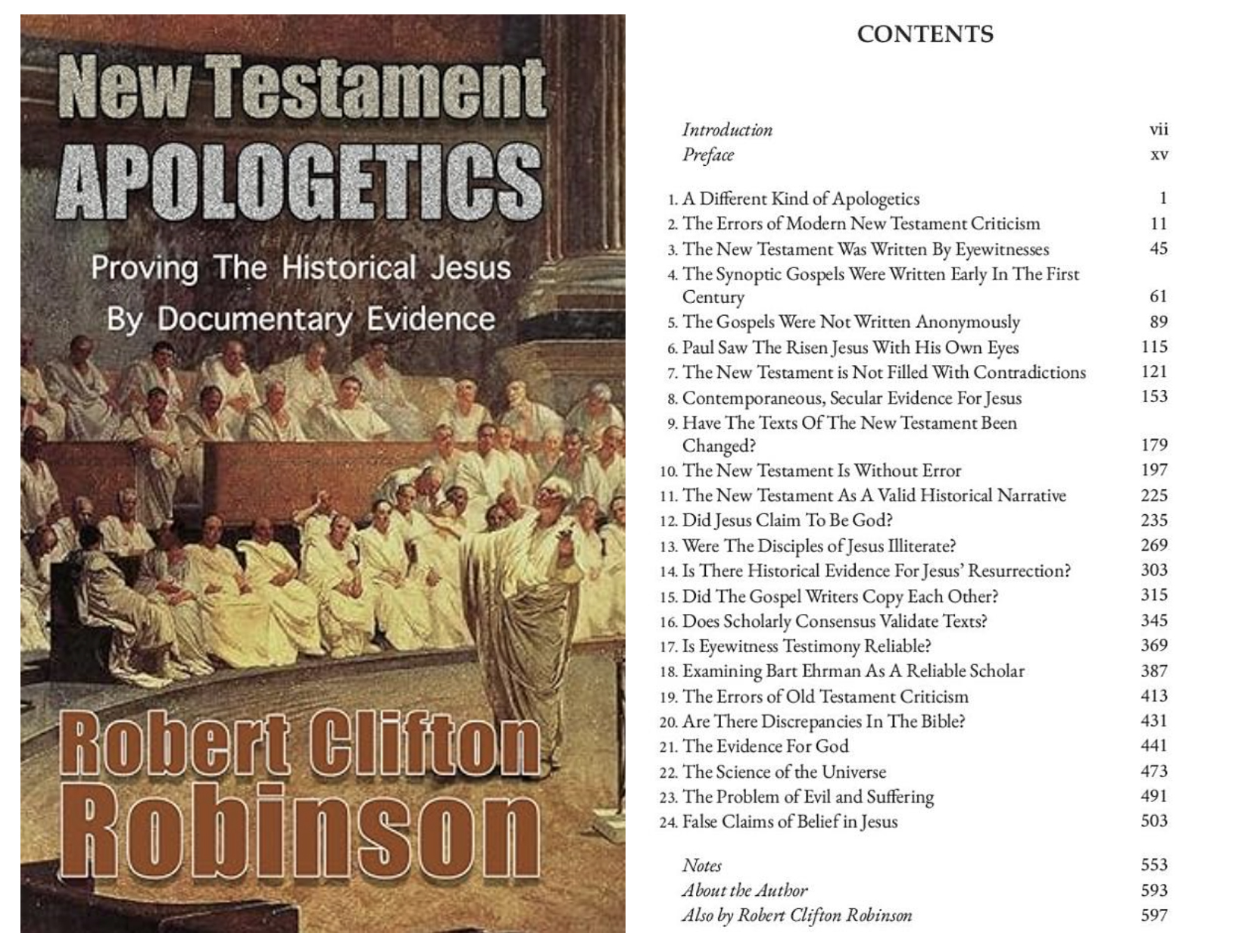
See The 21 Primary Arguments Atheists Assert Against The New Testament Narrative: “New Testament Apologetics: Proving The Historical Jesus By Documentary Evidence“
Sources and Citations:
Moral Law Written on the Heart: Romans 2:14–15 “Even Gentiles, who do not have God’s written law, show that they know his law when they instinctively obey it… They demonstrate that God’s law is written in their hearts…”
C. S. Lewis, Mere Christianity, Book I, Ch. 1 (“Right and Wrong as a Clue to the Meaning of the Universe”): “The moment you say that one set of moral ideas can be better than another, you are, in fact, measuring them both by a standard… the standard that is not one of them.”
J. Budziszewski, What We Can’t Not Know: A Guide, 2nd ed., Ignatius Press, 2011: Budziszewski argues that the moral law is innate, universal, and revealed through conscience—even if suppressed.
Objective vs. Subjective Morality: Greg Koukl, Relativism: Feet Firmly Planted in Mid-Air, Stand to Reason / Zondervan, 1998: Explores the dangers of moral relativism and its inability to ground objective truth.
Francis J. Beckwith & Gregory Koukl, Relativism: A Just War Against Absolute Truth?, Zondervan, 1998: Demonstrates that moral relativism ultimately fails to justify universal human rights or moral judgments.
Norman Geisler & Frank Turek, I Don’t Have Enough Faith to Be an Atheist, Crossway, 2004:
Chapter 7: “Mother Teresa vs. Hitler” argues that without God, there is no objective moral law, only preferences.
William Lane Craig, “The Indispensability of Theological Meta-Ethical Foundations for Morality,” Foundations of Christian Scholarship, 2008:
Craig argues that objective moral values and duties cannot exist without God.
Evolution Cannot Ground Objective Morality: Michael Ruse, philosopher of science and atheist, admits: “Morality is a biological adaptation no less than hands and feet and teeth. Considered as a rationally justifiable set of claims about an objective something, ethics is illusory.” —Quoted in The Darwinian Paradigm: Essays on Its History, Philosophy and Religious Implications, Routledge, 1989, p. 262.
Richard Dawkins, River Out of Eden: A Darwinian View of Life, Basic Books, 1995, p. 133:
“In a universe of blind physical forces and genetic replication, some people are going to get hurt… You won’t find any rhyme or reason in it, nor any justice.”
The Biblical Foundation for Morality:
- Leviticus 11:44 – “Be holy, for I am holy.”
- Exodus 20:1–17 – The Ten Commandments: foundational moral code.
- Psalm 19:7 – “The law of the Lord is perfect, reviving the soul.”
- Malachi 3:6 – “I am the LORD, I do not change.”
- Micah 6:8 – “What does the Lord require of you but to do justice, love mercy, and walk humbly with your God?”
- Matthew 22:36–40 – Jesus affirms that all the law is summarized in love for God and neighbor.
Atheists Borrowing from Christian Morality: Cornelius Van Til, The Defense of the Faith, Presbyterian and Reformed Publishing, 1955: Van Til argued that atheists can live moral lives, but only by borrowing from the Christian worldview they reject.
Greg Bahnsen, Always Ready: Directions for Defending the Faith, Covenant Media Press, 1996:
Bahnsen’s presuppositional apologetics demonstrates that logic, morality, and science only make sense in a theistic framework.
Moral Obligation and Accountability Without God: Immanuel Kant, Critique of Practical Reason (1788): Argued that belief in God is a rational necessity to make sense of moral obligation.
Alvin Plantinga, God and Other Minds; Warranted Christian Belief: Plantinga asserts that atheism has no ontological grounding for objective moral values, and any claim to them must be borrowed from theism.
Fyodor Dostoevsky, The Brothers Karamazov (1880): “If there is no God, everything is permissible.”
Categories: Robert Clifton Robinson


If there is no God, then how can any act of morality come from a chemical reaction? What is it about that chemistry that would make morality even possible? It appears to me that atheists do not truly believe in evolution especially when they espouse the very protections that are offered by the One True God as LAW! And thus, the atheist does not realize that when they credit morality as a virtue of evolution they do so at the whims of Satan and not some scientific endeavor – 2 Thessalonians 2:9-12.
Very interesting essay. Thank you Pastor Rob.
The Beginning is Near.
LikeLiked by 1 person