Is the “Last Trumpet” Described by 1 Corinthians 15:52, the Seventh Trumpet of Revelation 11:15, or the Rapture Trumpets that are sounded during the Feast of Trumpets?
“It will happen in a moment, in the blink of an eye, when the last trumpet is blown. For when the trumpet sounds, those who have died will be raised to live forever. And we who are living will also be transformed.” (1 Corinthians 15:52)
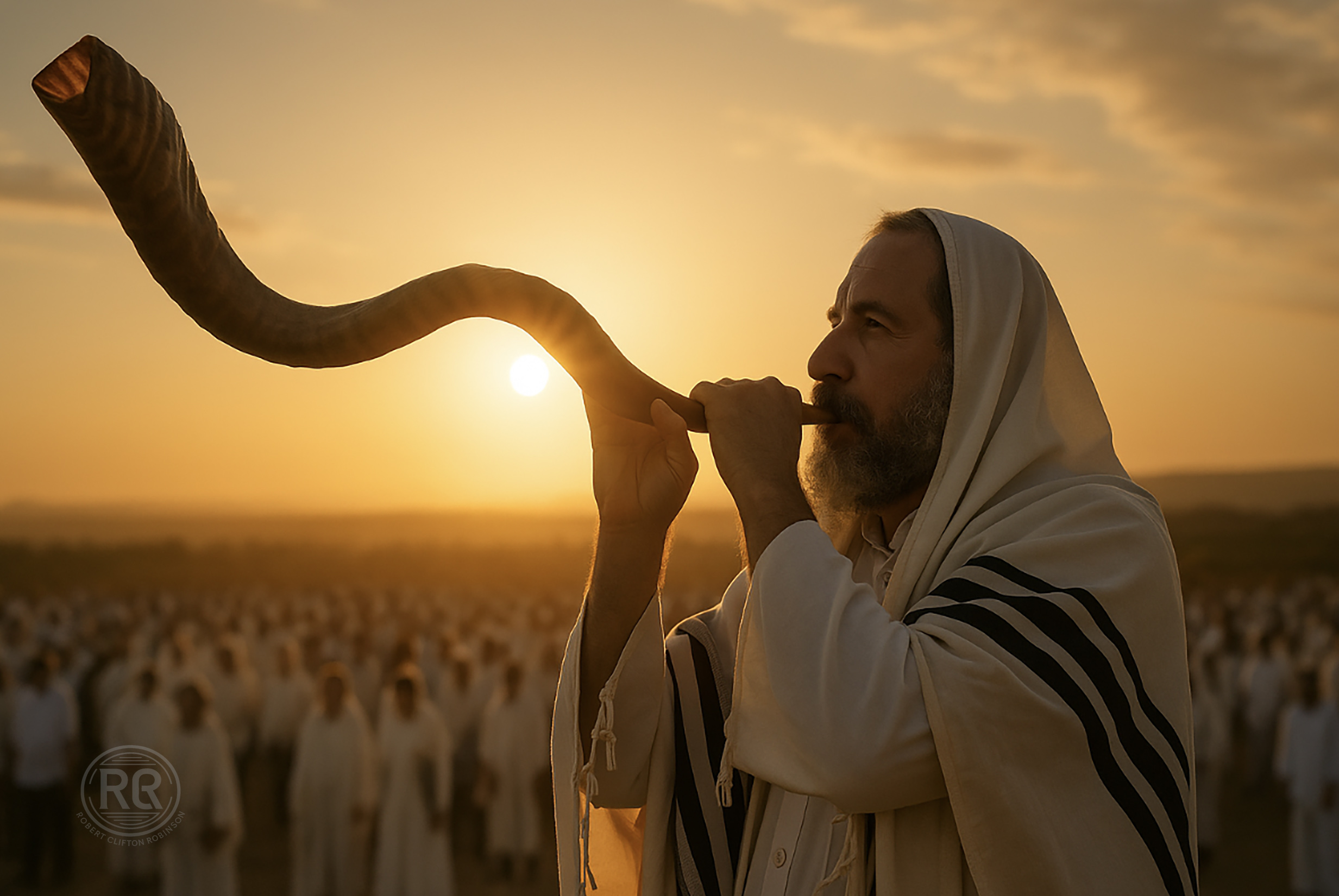
Why Is This Important?
Our understanding of which Trumpet Paul is describing will affect our accuracy for when the Rapture will take place: Pre, Mid, Post Tribulation
Pundits of the “last trumpet” described by Paul in 1 Corinthians 15:52 define Paul’s statement of the last trumpet, as the seventh trumpet of Revelation 11:15):
This means, (in their view) that the resurrection and rapture of believers would occur after or during the Tribulation, demanding a post-tribulational or mid-tribulational Rapture of the church. This means believers would endure God’s judgments described in Revelation 6–18.
If the “last trumpet” is understood as the trumpet of God described in 1 Thessalonians 4:16, associated with the Feast of Trumpets, then the rapture happens before the Tribulation, the wrath of God (the Day of the Lord, 1 Thessalonians 5:9). This would prove a pre-tribulational view, where Christ calls His Church out before the Tribulation judgments fall.
How Many Trumpets Were Sounded During The Feast of Trumpets?
The Biblical command to sound trumpets:
- Leviticus 23:23–25 – “a memorial of blowing of trumpets, a holy convocation” (KJV).
- Numbers 29:1 – “It shall be a day of blowing the trumpets for you.”
Trumpets During The Second Temple Period (Time of Jesus)
At the Temple, two silver trumpets (ḥaṣoṣerot) were blown by priests, often together with shofars. Josephus (Antiquities 3.291) records that silver trumpets were used in festivals to summon the assembly and mark offerings. Several blasts throughout the day, especially at the morning sacrifice, the afternoon sacrifice, and during the offering of additional festival sacrifices.
The Rabbinic and Liturgical Tradition (Mishnah/Talmud)
After the destruction of the Second Temple in 70 AD, the rabbis codified synagogue practices:
In the Mishnah, Rosh Hashanah 4:9 – The required minimum was nine blasts (three sets: tekiah–teruah–tekiah). In practice, this was expanded to 30 blasts: considered the baseline fulfillment.
100 blasts of the Trumpet were sounded during the Feast of Trumpets, became the common custom in post-Talmudic Judaism, still practiced today.
In Ancient Israel, Tekiah Gedolah, (the long, final blast) came to be known as the “last trumpet” or final shofar blast of the day.
This historical record of Israel Impeaches the idea that the Seventh Trumpet of Revelation 11:15, is not the “Last Trumpet” Paul describes in 1 Corinthians 15:52.
The Jewish Mishnah establishes 9 as the minimum (three tekiah–teruah–tekiah sets). Later traditions expanded this to 30, then 100.
“The order of the blasts is three sets of three: three times a tekiah, three times a teruah, and three times a tekiah. Thus, the minimum number of blasts is nine. However, the length of the tekiah is like three teruot, and the length of the teruah is like three moans. If one blew a tekiah and prolonged it into two, it counts only as one.” — Mishnah Rosh Hashanah 4:9 (Danby translation, 1933)
This means that during the time that Paul penned the text of 1 Corinthians (First Century), Jews would have understood trumpet-sounding at the Feast of Trumpets not as a single blast, but as a series culminating in a final, climactic trumpet — which gives natural meaning to his phrase, “the last trumpet” (1 Cor 15:52).
Understanding which Trumpet the “Last Trumpet” is Affects How We Link Old and New Testament Prophecy
The Jewish background of the shofar blasts at the Feast of Trumpets gives Paul’s phrase a distinctly covenantal and festal context. This feast foreshadows resurrection, gathering, and coronation of the King (Messiah). If Paul’s trumpet is rooted here, then he is intentionally tying the Church’s hope to Israel’s prophetic calendar.
If instead Paul means the Revelation trumpets, that would make his statement dependent on a vision written 40 years later, which his Corinthian audience could not yet know.
Getting This right Affects The Nature of God’s Trumpet vs. Angelic Trumpets
- Paul calls it “the trumpet of God” (1 Thess 4:16).
- This is unique—directly sounded by God, not an angel.
- Its purpose: resurrection, gathering, transformation.
- Revelation’s trumpets are angelic, announcing judgments on the earth.
- Their purpose: wrath and woe, not blessing or resurrection.
- Distinguishing them protects us from confusing judgment with redemption.
Having The Correct Interpretation of “The Last Trumpet,” Guards Against Misinterpretation of Hope
Paul’s teaching in 1 Corinthians 15 and 1 Thessalonians 4 is meant as comfort and hope: “Encourage each other with these words” (1 Thessalonians 4:18).
If we insert Paul’s “last trumpet” from 1 Corinthians 15:52 into Revelation’s trumpet judgments, the message becomes one of fear and survival, not of imminent hope and resurrection.
For these reasons, identifying the right trumpet preserves Paul’s pastoral intent.
Correctly Understanding 1 Corinthians 15:52 Clarifies the Church’s Role in Prophecy
Jesus and Paul promised His Church deliverance from “the wrath to come”
Jesus in Revelation 3:10 “Because you have kept My command to persevere, I also will keep you from the hour of trial which shall come upon the whole world, to test those who dwell on the earth.
Paul in 1 Thessalonians 5:9-10 “For God did not appoint us to wrath, but to obtain salvation through our Lord Jesus Christ, 10 who died for us, that whether we wake or sleep, we should live together with Him.”
- If Paul’s “last trumpet” is God’s call at the Rapture, the Church is distinguished from Israel and spared the Tribulation.
- If the trumpet Paul describes is the seventh trumpet of Revelation, then the Church is merged into Israel’s Tribulation program—obscuring the biblical distinction between the church and Israel.
Determining which trumpet Paul means is crucial because it:
- Establishes whether the Church faces the Tribulation or is taken out of the earth before the Tribulation begins.
- Connects Paul’s teaching to Jewish feast prophecy (pre-trib) or Revelation judgments (post-trib).
- Preserves the distinction between God’s trumpet of blessing and angelic trumpets of wrath.
- Maintains Paul’s pastoral aim: that the resurrection and rapture are a source of hope, not terror.
Correctly Understanding The Scriptures:
The Rapture Trumpet (In The Feast of Trumpets Context)
 Expositional teachers of the Bible (especially pre-tribulational and mid-tribulational scholars) see this “last trumpet” as the trumpet of God that calls the Church to resurrection and transformation at the Rapture (cf. 1 Thessalonians 4:16–17).
This interpretation is strengthened by the Feast of Trumpets (Yom Teruah, Rosh Hashanah). The feast is literally called “the Day of Blowing” (shofars), and Jewish tradition calls the final trumpet blast of that feast “the last trumpet.”
Paul, was a trained Pharisee. He would have been intensely familiar with the Jewish imagery, making it certain that his Jewish audience understood the “last trumpet” in Jewish terms, the final trumpet during the Feast of Trumpets.
The Trumpet Paul Describes in 1 Corinthians 15:52 Is Not The Seventh Trumpet of Revelation 11:15
Those who define the “last trumpet” with the seventh trumpet judgment of Revelation 11:15, see the angel blowing the trumpet as he proclaims Christ’s kingdom.
There are several problems with this interpretation:
- In Revelation 8-11, it is an angel who blows the trumpet.
- In 1 Thessalonians 4:16, it is God who blows the trumpet.
- The Seventh Trumpet of Revelation comes in judgment.
- The Last Trumpet in 1 Corinthians 15 comes as a result of the resurrection.
- Revelation was written ~40 years after 1 Corinthians, meaning that Paul’s Corinthian audience could not have connected his phrase to Revelation that was not written yet.
The Theological Emphasis — “Last” as Finality
The correct interpretation of “last” sees “last” not as a chronological tie to Revelation, but as emphasizing the finality of God’s call for His Church. In other words, this is the last trumpet for believers—the final summons that ushers them into resurrection life.
Parallel Scriptures
- 1 Thessalonians 4:16–17 – “the trumpet call of God” raises the dead in Christ and gathers the living saints.
- Numbers 10:1–4 – Trumpets summoned Israel for assembly and for moving camp; Paul may be echoing this imagery of God summoning His people.
- Matthew 24:31 – At the coming of the Son of Man, angels gather the elect with “a loud trumpet call.”
- Leviticus 23:23–25 – Feast of Trumpets: a day of blowing trumpets, often connected in prophetic interpretation to the Rapture.
The “Last Trumpet” in 1 Corinthians 15:52 refers to the last trumpet of God that will sound at the Rapture, during the Feast of Trumpets when Christ gathers His Church.
It is not the seventh trumpet of Revelation 11:15, but rather corresponds to the shofar blasts of the Feast of Trumpets, known in Jewish tradition as “the last trumpet.” Paul uses this language to assure believers that resurrection and transformation will occur at that climactic moment.
See Also:
- Why The Rapture Is Called: “No Man Knows The Day or the Hour”
- This Is Our Final Opportunity To Tell The World About The Return Of Jesus Before The Feast Of Trumpets
- The Approaching Rapture: What Is It? Who Will Be Taken? What Will Happen After?
- Revelation 11:7 “When They Finish Their Testimony” Charlie Kirk, A Voice For Jesus In The Last Of The Last Days
- The Time Of Charlie KIrk’s Death Is Described By Jesus
- Is The Term: “No Man Knows The Day Or The Hour” A Hint By Jesus For The Time When He Will Return For His Church?
See The Verse by Verse Revelation Commentary by Robert Clifton Robinson

Sources and Citations
New Testament Text
Primary text. “In a moment, in the twinkling of an eye, at the last trumpet… the dead will be raised… and we shall be changed.” (1 Cor 15:52). Closest parallel in Paul: “the trumpet of God” at the Lord’s descent and the resurrection/translation of the saints (1 Thess 4:16–17).
Trumpets and eschatological ingathering in Jesus’ teaching: the loud trumpet call gathering the elect (Matt 24:31). (NT primary text; include your preferred translation.)
Jewish History: Shofar Blasts on Rosh Hashanah (Yom Teruah) Torah basis for a day of trumpet/shofar sounding: “a memorial of blowing” (Lev 23:23–25; Num 29:1). (Hebrew Bible primary text.)
Mishnah: the order and number of blasts (three sets; nine core sounds; expanded in practice). See Mishnah Rosh Hashanah 4:9 (order: tekiah–teruah–tekiah; repeated).
Talmud (Rosh Hashanah 16a) explains the doubled shofar blowing (before and during the Amidah) as a practice that “confuses the Satan,” illuminating liturgical emphasis on multiple, culminating blasts.
From 30 to 100 blasts: halakhic/liturgical development summarized (Shulchan Aruch O.C. 590; common customs of 30, 100+ blasts, etc.).
The long final blast (tekiah gedolah)—the elongated concluding call in synagogue practice—attested in mainstream Jewish explanations of the blasts. While the classical sources describe orders and counts, popular and rabbinic summaries highlight the climactic nature of the tekiah gedolah as the final shofar note of the day.
Historical facts of Trumpets as public acknowledgment of the Lord’s kingship (useful background from Edersheim’s classic synthesis).
Early Christian Witnesses to Trumpet–Resurrection
- Didache 16 (late 1st/early 2nd cent.): lists three end-time “signs,” including “the sound of the trumpet” followed by “the resurrection of the dead.” (Greek & English).
- Irenaeus (Against Heresies V): defends the bodily resurrection, citing 1 Cor 15 language and explicitly mentioning resurrection “at the last trumpet.”
- John Chrysostom (Homily 42 on 1 Cor 15): expounds “at the last trump… the trumpet shall sound, and the dead shall be raised”—emphasizing the instantaneous transformation.
- Tertullian (On the Resurrection of the Flesh): repeatedly invokes the trumpet/resurrection connection to argue for the literal, bodily rising of believers.
Why Paul’s “Last Trumpet” does not equal Revelation’s Seventh Trumpet
A Different agent: In Revelation the trumpets are angel-blown (Rev 8:2; 8:6; 11:15), whereas Paul speaks of “the trumpet of God” (1 Thess 4:16)—distinguishing the phenomenon and function.
Different emphasis: Revelation’s trumpet series announces escalating judgments; Paul’s trumpet announces resurrection/translation for the saints (1 Cor 15; 1 Thess 4). (NT primary texts; see links above.)
Different Dates: 1 Corinthians was written c. AD 54–55 (during Paul’s Ephesian ministry), long before Revelation (commonly AD 95–96 under Domitian). Therefore, Paul’s Corinthian audience could not have “looked ahead” to John’s trumpet series.
Paul’s “last trumpet” (1 Cor 15:52) aligns with the “trumpet of God” calling the saints to resurrection/translation (1 Thess 4:16–17), not with Revelation’s seventh angelic trumpet. The Jewish liturgical context of Rosh Hashanah—culminating shofar blasts and the climactic tekiah gedolah—offers natural background imagery for an ultimate, final summons. The earliest Christian writers (Didache, Irenaeus, Chrysostom, Tertullian) consistently connect the eschatological trumpet with the resurrection, reinforcing this reading.
Annotated Sources
Scriptures: 1 Thess 4:16–17; Rev 8–11 trumpet texts.
Mishnah/Talmud/Halakhah on shofar: M. Rosh Hashanah 4:9; b. Rosh Hashanah 16a; summaries of blast counts & forms (Shulchan Aruch O.C. 590; tekiah gedolah). 
Early Church: Didache 16; Irenaeus Against Heresies (V); Chrysostom Hom. 42 on 1 Cor 15; Tertullian De Res. Carn.
Dates: 1 Corinthians mid-50s (Ephesus); Revelation c. 95–96 (Domitian).
Citations:
- Corinthians 15:52 (New Living Translation).
- 1 Thessalonians 4:16–17 (NLT).
- Matthew 24:31 (NLT).
- Mishnah Rosh Hashanah 4:9, in The Mishnah, trans. Herbert Danby (Oxford: Oxford University Press, 1933), 188–189.
- Babylonian Talmud, Rosh Hashanah 16a, in The Talmud: The Steinsaltz Edition, trans. Israel Steinsaltz (New York: Random House, 1989).
- Shulchan Aruch, Orach Chayim 590:1–4, in Shulchan Aruch HaRav, ed. and trans. Eliyahu Touger (Brooklyn: Moznaim, 2002).
- Louis Ginzberg, The Legends of the Jews, Vol. 6 (Philadelphia: Jewish Publication Society, 1909), 279–281 (discussion of the tekiah gedolah as climactic trumpet).
- Alfred Edersheim, The Temple: Its Ministry and Services as They Were at the Time of Jesus Christ (London: Religious Tract Society, 1874), 277–278.
- Didache 16.6–7, in The Apostolic Fathers, Vol. 1, trans. Bart D. Ehrman, Loeb Classical Library 24 (Cambridge, MA: Harvard University Press, 2003), 463–465.
- Irenaeus, Against Heresies 5.35.2, in Ante-Nicene Fathers, Vol. 1, ed. Alexander Roberts and James Donaldson (Buffalo, NY: Christian Literature Publishing Co., 1885), 565.
- John Chrysostom, Homilies on First Corinthians 42, in Nicene and Post-Nicene Fathers, First Series, Vol. 12, ed. Philip Schaff (Peabody, MA: Hendrickson, 1994), 253–254.
- Tertullian, On the Resurrection of the Flesh 25, in Ante-Nicene Fathers, Vol. 3, ed. Alexander Roberts and James Donaldson (Buffalo, NY: Christian Literature Publishing Co., 1885), 562.
- Revelation 8:2, 8:6, 11:15 (NLT).
- F. F. Bruce, Paul: Apostle of the Heart Set Free (Grand Rapids: Eerdmans, 1977), 307–309, on the mid-50s dating of 1 Corinthians.
- Eusebius, Ecclesiastical History 3.18, in Nicene and Post-Nicene Fathers, Second Series, Vol. 1, ed. Philip Schaff and Henry Wace (Peabody, MA: Hendrickson, 1994), 148–149, for the late Domitianic dating of Revelation.
Bibliography
Primary Sources:
- The Bible. New Living Translation. Carol Stream, IL: Tyndale House Publishers, 2015.
- Danby, Herbert, trans. The Mishnah. Oxford: Oxford University Press, 1933.
- Edersheim, Alfred. The Temple: Its Ministry and Services as They Were at the Time of Jesus Christ. London: Religious Tract Society, 1874.
- Ehrman, Bart D., trans. The Apostolic Fathers, Volume I: I Clement, II Clement, Ignatius, Polycarp, Didache. Loeb Classical Library 24. Cambridge, MA: Harvard University Press, 2003.
- Eusebius. Ecclesiastical History. In Nicene and Post-Nicene Fathers, Second Series, Vol. 1. Edited by Philip Schaff and Henry Wace. Peabody, MA: Hendrickson, 1994.
- Irenaeus. Against Heresies. In Ante-Nicene Fathers, Vol. 1. Edited by Alexander Roberts and James Donaldson. Buffalo, NY: Christian Literature Publishing Co., 1885.
- John Chrysostom. Homilies on First Corinthians. In Nicene and Post-Nicene Fathers, First Series, Vol. 12. Edited by Philip Schaff. Peabody, MA: Hendrickson, 1994.
- Tertullian. On the Resurrection of the Flesh. In Ante-Nicene Fathers, Vol. 3. Edited by Alexander Roberts and James Donaldson. Buffalo, NY: Christian Literature Publishing Co., 1885.
- The Babylonian Talmud: Rosh Hashanah. Trans. Israel Steinsaltz. New York: Random House, 1989.
- Touger, Eliyahu, ed. and trans. Shulchan Aruch HaRav: Orach Chayim. Brooklyn: Moznaim, 2002.
Secondary Sources:
- Bruce, F. F. Paul: Apostle of the Heart Set Free. Grand Rapids: Eerdmans, 1977.
- Ginzberg, Louis. The Legends of the Jews. Vol. 6. Philadelphia: Jewish Publication Society, 1909.
Categories: Robert Clifton Robinson
 Robert Clifton Robinson
God The Mother https://triton.news/2023/09/have-you-heard-of-god-the-mother/
And just when I thought I had seen it all. Wrong. My wife’s family is from Korea and this woman is under indictment. They showed her in her religious attire on Korean news and Revelation 17 immediately came to mind. I will post that picture if I can find it. So far … I have yet to find it.
And I thought the Jehovah’s Witnesses had whacked views. The Jehovah’s Witnesses changed the Bible to enforce their beliefs. These guys just twist the crap out of scripture.
Hopefully they will find the True Christ in the Tribulation Period and live.
But my belief is it will be more like what happened in Jeremiah’s day with the Queen of the Heavens – Jeremiah 44:18. The blind will continue to be blind – 2 Thessalonians 2:9-12.
Prayers and blessing to all as we wait for the Lord.
LikeLike
Brother Rob check out this lives countdown. Please note their is a disclaimer.
LikeLike
Israel is preparing for a 100 Shofar blast advertised to the world on September 24, 2025. Given what I think we know this could lead to the Rapture and the fulfillment of Ezekiel 38 and 39 as the UN is set to vote on Palestinian statehood on September 23. There are some obvious misconceptions in the video and the author tries to blend the events with FoT and FoA.
I post here for everyone to view.
Brother Rob. I would love your opinion on this because you wrote specifically about this in the above essay.
LikeLike
At this point, based on official and reliable sources, the claim that there will definitely be an Israel-sponsored worldwide 100 shofar blasts broadcast on September 24, 2025 remains unverified. It appears more like a rumor or a project of social media promotion rather than something established in official religious or state channels.
LikeLike
I could not verify it thru my sources either but wanted to post it thinking maybe you had seen something thru your contacts. There was a couple of moments while I was watching the video that maybe me pause and think … but … that action would cause a lot of bad things to happen rapidly I think.
I just told my wife about the Rapture. We’re ready.
Prayers and blessings always.
LikeLike
Dropping a video showing the relationship between Saudi Arabia and Pakistan as it relates to Israel.
https://www.youtube.com/shorts/fBTLo7uKm-I
CNN article confirming this agreement:
https://www.cnn.com/2025/09/17/middleeast/saudi-arabia-pakistan-defense-pact-intl-hnk
Prayers and Blessings to all as we wait on the Lord.
LikeLike
I’m not sure Robert and Anthony,
Have you followed Brother Joshua’s YouTube videos regarding prophecy given to him by Jesus initially in 2018 and then subsequently confirmed in many dreams and visions regarding the rapture of the church. If you haven’t heard of him I encourage you to do so. You can find him in this YouTube video and others…
To summarize what he said, Jesus told him September 23 or 24, 2025 will be the rapture. And get this….add 2,550 days to that date and you get September 15, 2032. Is this a significant date?
That just so happens to fall on The Day of Atonement, also known as Yom Kippur. 2,550 days is the final period for the tribulation….1,260 + 1290 days=2,550.
The 1,290 days came from Daniel 12:11. I’m sure you know where the 1,260 days came from.
I have listened to just about all of Brother Joshua’s videos and words and he has passed my test- definitely not a false prophet, but rather God is using him to be his mouthpiece to proclaim the date(s) for His return to get the Church and then to return to be King of the World. The man is completely humble, not even wanting this publicity, has been often mocked by many Christians who obviously don’t believe in a pre trib rapture and every word he has spoken is backed by scripture. In other words, I found nothing he said that does not align with scripture.
I’m not surprised God chose a humble man from South Africa, a man of color, who had a “miracle birth” and who didn’t even know much about the 2nd coming of Christ or the rapture…..until Jesus personally (bodily) came to him and revealed such to him. Anyhow, he has passed my test so this is mere confirmation for me because I have believed for years that the rapture would be on the FoT in either 2023 (thinking Jesus was crucified in 30 AD), 2025 (thinking Jesus was crucified in 32 AD), or 2026 (thinking Jesus was crucified in 33 AD).
Well, it looks like 32 AD is the ticket…and that 2,550 days from 9/23/25 is the next God’s Appointed Day after Trumpets…which lines up perfectly- the Day of Atonement.
He even said, “I am a billion % sure this will happen on the days I’ve given you.” Guess what? I’m now 2 billion % sure too. My wife asked me, “What if Jesus doesn’t pick us up on one of those days?”
“Oh well…..not my will be done, but His will. I’m not ashamed to be wrong and have no problem with people mocking me too. I will just continue to study and show myself approved and continue to live out my life to bring glory and happiness to Him every day I have left.”
But I don’t think I am wrong this time….2 Billion %….😂👏😎🙏🏻😇
We will be ✈️✈️✈️✈️ very soon. Hope to see you soon in the Heavenlies.
Shalom,
Paul (IStallion)
LikeLiked by 2 people
I am excited by the signs seen that points to this Rosh Hashanah. However, I want to caution about setting a date. We are told to watch. The Father will set the date … let’s be prudent here. But like you said, I too am excited as well and very hopeful. I had a co-worker ask me how sure I was and I said 99%. But I always leave room for humility sake. But I digress.
As Brother Rob has indicated, everything is set to Jerusalem time. That being said, it is expected that this event will happen in a tinkling of an eye on a global scale. Why is that important? There are 24 time zones. So if the event happens at night as we expect, given Jesus comments about night watches; and, since they will be watching the moon; then, 12 timezones east will be tomorrow and 12 timezones to the west will be today which literally has 24 different hours to consider (I hope you see the point I making here even though the timezone analogy it is not completely accurate to time specifics of a general location on the planet; but, is being made to illustrate a point concerning no one could know the day or hour).
So, if Jesus does not come during this Feast, do not let Satan discourage you. Only YOU and Jesus will know if you are saved. Avoid the being left behind talk. This is a joyous occasion in that we are going home to immortality in the presence of our Lord not to mention infinitely more blessings like the 2nd death has no power over you and seeing the New Heavens and Earth just to name a few.
Continuously pray.
On a side note, I am posting a video showing that Israel is preparing a 100 Shofar Blast on September 24. This was exactly what Brother Rob was writing to us about. The Holy Spirit has grounded our Brother Rob in the Word. I praise the Holy Spirit for Him. May my ear remain close to his words since they are Words given by the Holy Spirit.
So do not let your Lanterns run dry.
Prayers and blessings.
LikeLike
A new video for everyone to consider:
LikeLike
Why would it be necessary for Christ to suffer God’s wrath on the cross if we, His followers, must also suffer God’s wrath by going through the Tribulation/Great Tribulation period?
Logically to me, that would mean that those who believe the mid-or-post Tribulation Rapture diminish that which Christ did on our behalf. It simply makes no sense why someone would have that interpretation when scripture is clear on the matter.
Brother Rob has made the case.
I thank the Holy Spirit for you Brother Rob.
LikeLiked by 1 person