Some Scientists Claim That God Is Not Necessary For Our Universe To Exist: Quantum Physics Could Create The Cosmos
How could quantum physics create our universe?

Quantum physics can describe conditions within the universe, but it cannot create the universe itself. Some physicists argue that the principles of quantum mechanics (like quantum fluctuations) might have triggered the beginning of our universe — though this explanation has major limitations.
What Quantum Physics Actually Describes
Quantum physics is the set of laws that govern matter and energy at the smallest scales—subatomic particles, fields, and forces. It explains phenomena such as:
- Wave-particle duality (particles behave like waves).
- Uncertainty principle (Heisenberg): you cannot know certain pairs of properties, like position and momentum, with perfect precision.
- Quantum fields: empty space isn’t truly empty; it’s a seething “vacuum” of fluctuating energy.
These laws are mathematical descriptions, not mechanisms for creating something from true “nothing.” They only work when something already exists — space, time, and physical laws.
The “Quantum Creation” Hypothesis
Physicists such as Stephen Hawking, Alexander Vilenkin, and Lawrence Krauss have proposed scenarios where quantum physics could “create” the universe:
Quantum Tunneling from Nothing: Vilenkin proposed that the universe could arise as a quantum fluctuation of spacetime itself, “tunneling” from a state of “nothing” to a small, hot, dense state — which then inflated into the universe.
Quantum Fluctuations of the Vacuum: The idea here is that “empty” space has energy (“vacuum energy”), and under the right conditions, this energy could produce particles and even spacetime itself. This is sometimes tied to “inflation theory,” where a quantum field (the “inflaton”) drives exponential expansion.
Hawking’s No-Boundary Proposal: Hawking argued the universe could be finite but without a boundary in time. In his model, time behaves like space near the origin, so there is no “before” the Big Bang — thus no need for a “cause” in classical terms.
The Limitations of Quantum Creation
While these ideas are mathematically interesting, they face huge philosophical and scientific problems: Quantum laws require a preexisting framework. To “create” a universe by quantum tunneling, you already need quantum fields and the laws of physics to exist. But then you’re not explaining how those came to be.
Nothing ≠ Quantum Vacuum. A quantum vacuum is not “nothing.” It’s a structured field with properties, energy, and laws. True “nothing” has no fields, no energy, no laws, no potential. By definition, nothing cannot fluctuate.
Inflation doesn’t explain ultimate origin. Even if the inflaton field caused rapid expansion, you must still explain how that field (and its properties) existed.
Vilenkin admits: “The concept of ‘nothing’ is tricky… the laws of physics must be there, and they are not nothing.”
The Creator/God Perspective
From a theistic or biblical view (which I have written extensively about), quantum physics cannot create the universe from nothing. It can at best describe how the universe evolved after it existed. This aligns with:
“In the beginning God created the heavens and the earth.” (Genesis 1:1)
God is an infinite, unlimited, perfect Being from outside space and time. As the Creator of all that exists, He has no first cause. He acts as the uncaused cause who brings everything (space, time, matter, energy, and even the laws of physics) into existence. This is actually more logically coherent than quantum “nothing” creating something, because:
- An agent (God) has causal power.
- “Nothing” has no causal power.
Even secular philosophers like David Albert criticized Krauss’s book A Universe from Nothing for redefining “nothing” as “something” (a quantum vacuum).
In The Final Analysis
Quantum physics cannot “create” the universe from absolute nothingness. At best, it can describe hypothetical mechanisms by which an already-existing quantum state might “expand” into a universe. But to get a quantum state, you already need laws, mathematics, fields, and potential energy — which are not “nothing.”
There Are Two Views
- The Naturalistic view: Universe may have “popped” into existence from a quantum vacuum (but you must assume the vacuum and its laws already exist).
- The Theistic view: A transcendent Creator brought both the universe and the laws of quantum physics into existence.
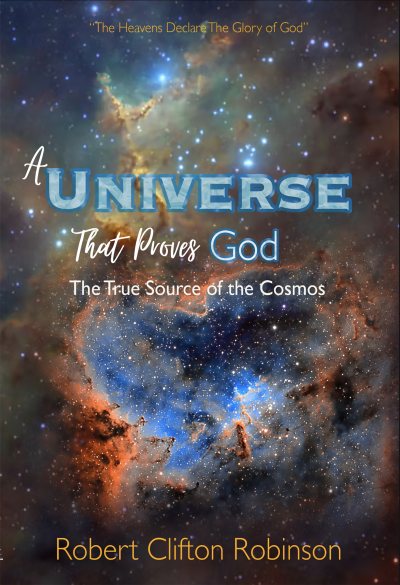
See Rob’s Book That Details God As The Only Viable Source For The Creation of the Universe: “A Universe That Proves God: The True Source of the Cosmos.”
Sources and Citations
Vilenkin — “Creation of Universes from Nothing” (1982)
In this foundational paper, Vilenkin proposes a cosmological model in which a closed (“de Sitter”) universe tunnels from literally nothing into existence, then evolves via inflation.
Quote (abstract): “A cosmological model is proposed in which the universe is created by quantum tunneling from literally nothing into a de Sitter space.”
This model avoids a Big Bang singularity, and claims to require no initial boundary conditions.
Hartle–Hawking “No-Boundary” Proposal
In their 1983 paper, James Hartle and Stephen Hawking propose that the universe’s wavefunction should be built from summing over geometries that have no boundary to the past. Thus, there is no “initial boundary” in time, eliminating (in their view) a classical “beginning.”
According to the proposal, near what we think of as “the beginning,” time behaves more like a spatial dimension: time “rounds off” smoothly, analogous to how the South Pole is not an edge in geography. Asking “what happened before the Big Bang” becomes meaningless, similar to “what is south of the South Pole.”
Hawking’s notes: “The no boundary proposal … predicts that the universe would start at a single point … But this point wouldn’t be a singularity … it would be an ordinary point of space and time.”
Recent reviews (e.g. Review of the No-Boundary Wave Function) explain the standard interpretation: the origin is treated as a “tunneling from nothing” or “from the absence of both matter and classical spacetime,” replacing a classical singularity with a quantum geometry description.
Critiques, Revisions & Challenges
While these models are mathematically interesting, they face serious critiques. Some of the main ones: Instabilities & perturbations in path integrals A persistent criticism is that when you sum over geometries (in the path integral formalism) to enforce no boundary, many of those geometries correspond to unstable perturbations. That is, small fluctuations grow uncontrollably, producing universes far from what we observe (highly non‐homogeneous).
Recent refinements (by Di Tucci & Lehners) try to “stabilize” the path integral by imposing boundary conditions (e.g. Robin boundary conditions) that remove unstable saddle points, but this introduces the interpretative concession that there may already be “fluctuations of space and time” rather than absolute nothingness.
Interpretational ambiguity of “nothing”
A widespread philosophical critique is that the “nothing” used in these models is not metaphysical nothing (no laws, no fields, no potential). The quantum vacuum or quantum geometry background is already “something” — with structure, laws, and possibility. As one critique puts it: “quantum tunneling starts with something and ends with something as well.”
William Lane Craig (via ReasonableFaith) argues that Vilenkin’s model effectively moves the “cause” problem backward rather than solving it: one must still explain how the quantum laws (fields, vacuum, potentials) exist if the universe is supposed to arise from absolutely nothing. 
Dependence on the laws of physics / quantum structure
All versions of quantum creation models presuppose a framework: quantum field theory, geometry, action integrals, wavefunctions, etc. You cannot get those from nothing by quantum mechanics itself, because quantum mechanics is a lawful framework, not a cause. Many authors note this is the “bootstrapping” problem:
“Even Vilenkin admits: ‘What causes the universe to pop out of nothing? No cause is needed.’” (But this is a non-causal declarative, not a physical derivation from nothing.) 
Also, Vilenkin himself has acknowledged that the laws of physics that describe quantum creation also describe the universe’s evolution, thus suggesting that those laws have some sort of pre-existence or metaphysical status independent of physical reality.
The BGV theorem & Past-incompleteness of inflationary universes
The Borde–Guth–Vilenkin (BGV) theorem, in physical cosmology, shows that any universe which has been, on average, in expansion must be geodesically incomplete in the past (i.e. must have some kind of boundary or beginning in time). So even inflationary cosmologies (which many quantum creation models rely upon) do not avoid a kind of “beginning.”
Thus, even if a quantum tunneling event “birthed” expansion, the background model suggests there still is a past boundary beyond which the model does not apply (i.e. the “nothing” is not derivable from within the model).
Recent work on topologies and singular instantons
Newer papers further question whether all spatial topologies can be nucleated from nothing in a consistent semiclassical way. For example, in the paper “On quantum creation of a toroidal universe” (Guth & Vilenkin, 2025), the authors argue that attempts to create a flat 3-torus universe from nothing lead to singular instantons or require Planckian physics, making the “creation from nothing” interpretation dubious.
A Lack of observational testability
Most critics point out that quantum creation proposals are highly speculative and, as of yet, lack definitive empirical predictions that distinguish them from alternatives. Vilenkin himself calls his scheme “the first attempt to formulate the problem of cosmic origin” but acknowledges the deep mystery remains.
Additional Supporting (Philosophical / Conceptual) Sources
- “Science before the Big Bang” — a Cambridge Core blog explaining how the no-boundary proposal reinterprets the “beginning” by using Euclidean (imaginary) time to avoid a boundary.
- “Quantum theory and the beginning of the Universe” (MPG / AEI essay) — shows that in refined views, the no-boundary proposal may be recast as emerging from quantum fluctuations of spacetime itself, not from “absolute nothing.”
- “You Can’t Smooth the Big Bang” (blog) — a more informal but well-argued critique of smoothing away singularities via quantum cosmology.
- “Stephen Hawking’s Creation Confusion” (Public Discourse) — a philosophical critique of conflating “no boundary” with a universe that needs no Creator.
Categories: Robert Clifton Robinson
 Robert Clifton Robinson
To the atheist. I identify as something from nothing. I exist out of nothing. There was nothing that caused me to exist. For nothing was in the beginning and truly I say to you if there was nothing in the beginning there can be nothing now. Therefore I must identify correctly as physically nothing even though here I stand.
Sarcasm. I mock you.
Those that are perishing will believe anything … but God.
Now affirm my identity or deny everything you believe! Feel my laughter.
If you deny my identity you do so because you are a liar. For in the beginning … God created … everything … including ME … in the beginning. And He stood me up on this planet when it was MY TIME to be stood up. So I truly identify as a Follower Of Christ and that is not nothing … but … is something … truly out of this world something … literally.
So atheist go and live in your darkness where you pretend to have light. You have no light … you only have confusion … a delusion that God stood you up with. I truly feel sorry for you. To live separate from God will truly mean to exist in nothing … literally … nothing … and we all know you will beg in that hour … your will cry in that hour … you will gnash your teeth in that hour.
I mock you for you deserve to be mocked. But I also pray for you for Christ died for every sin ever committed from the first moment of this reality until its last. He covered us all … you included. All you got to do … John 3:16.
Thank Brother Rob. I recommend the book above. It is a pillar in my library. I refer to it fondly as The Universe … for it is truly mine.
Prayers and blessings always while we wait for the return of the Lord.
LikeLiked by 1 person