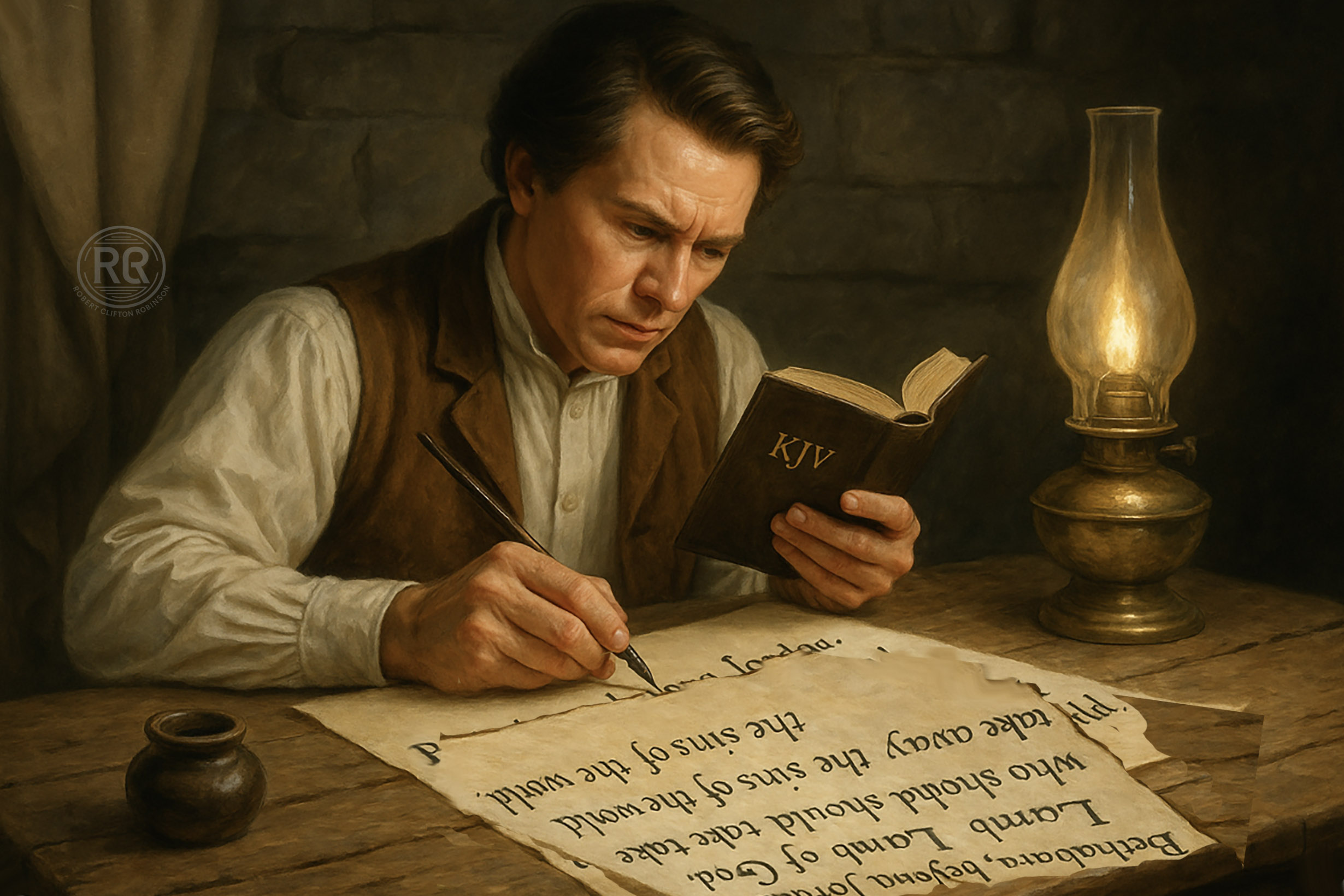
Is There Evidence That 1 Nephi 10:9-10 Is Not A Valid Text
“And my father said he [John the Baptist] should baptize in Bethabara, beyond Jordan; and he also said he should baptize with water; even that he should baptize the Messiah with water. 10 And after he had baptized the Messiah with water, he should behold and bear record that he had baptized the Lambof God, who should take away the sins of the world”
1 Nephi 10:9–10 is widely regarded by scholars—both religious and secular—as a later fabrication composed by Joseph Smith, not an ancient Israelite text from 600 BC.
This response uses textual criticism, historical linguistics, intertextual dependence, anachronisms, and manuscript-forensic reasoning—the same categories you regularly use in your own work.
Why This Passage Is Considered Fabricated
The text in 1 Nephi 10:9–10 contains direct quotations and concepts lifted from the Gospel of John, written ~90 AD, that did not exist in 600 BC. No manuscript, no Jewish tradition, no archaeology, and no ancient source shows that Jews in the 6th century BC,
- knew the name “Bethabara”
- used the phrase “Lamb of God” as a messianic title
- predicted John the Baptist by name
- linked John’s baptism to “the Messiah”
- had the Johannine theology of atonement “take away the sins of the world”
Every element in the passage is demonstrably post-Christian, and specifically Johannine.
ANACHRONISMS IN THE PASSAGE
A. “Bethabara” did not exist as a place-name in 600 BC
- The earliest known use of Βηθαβαρά (Bethabara) appears in Origen, Commentary on John (c. 240 AD).
- Origen suggested “Bethabara” as an alternative reading to “Bethany beyond Jordan” (John 1:28), because he could not locate a “Bethany” east of the Jordan.
- No Hebrew, Aramaic, Assyrian, Babylonian, or Persian record mentions “Bethabara” before Origen.
Conclusion: Lehi could not possibly have known or used this later Christian (and specifically Origenian) place-name.
“Lamb of God” is explicitly a Christian title introduced by John the Baptist
The phrase “Lamb of God who takes away the sins of the world” occurs only in the Gospel of John 1:29, 36.
Nowhere in 600 BC Judaism do we find:
- A messianic “Lamb” figure
- A doctrine of substitutionary atonement applied to a future Messiah
- A messianic sacrificial lamb removing the world’s sins
These are strictly New Testament theological developments.
Conclusion: 1 Nephi is quoting Christian theology from ~90 AD, not ancient Israelite prophecy.
The statement that “my father said [John the Baptist] should baptize…”
Nothing in any pre-Christian Jewish text:
- predicts John the Baptist by name,
- predicts his method of baptism,
- links him with the Messiah,
- or connects him with Judean geography.
The only source where these ideas appear together is the New Testament.
DIRECT LITERARY BORROWING FROM THE GOSPEL OF JOHN
The Nephi text is clearly dependent on John 1:28–34:
John 1:28–34 (KJV):
- John baptized “in Bethabara beyond Jordan.”
- John says about Jesus: “Behold the Lamb of God, which taketh away the sin of the world.”
- John’s baptism of Jesus is central to his witness.
- John is the one who bears record.
1 Nephi 10:9–10:
- John baptizes “in Bethabara, beyond Jordan.”
- John baptizes “the Messiah… the Lamb of God, who should take away the sins of the world.”
- John “should behold and bear record.”
This is not coincidental similarity—it is direct literary dependence on the King James Version of John.
Linguistic markers prove KJV dependence:
The phrases:
- “beyond Jordan”
- “bear record”
- “Lamb of God”
- “taketh away / should take away the sins of the world”
- “Messiah with water”
—all are exact KJV verbal patterns.
If 1 Nephi were truly written in 600 BC Hebrew, we would expect NONE of these English KJV markers.
HISTORICAL FORENSICS: WHAT REAL 600 BC TEXTS LOOK LIKE
We have abundant real sources from this period:
- Lachish Letters (c. 590 BC)
- Arad Ostraca (7th–6th century BC)
- Babylonian exile documents
- Ketef Hinnom silver scrolls (7th century BC)
These sources prove:
- No messianic system like 1st-century Judaism
- No lamb-atonement messiah theology
- No baptism tradition
- No anticipation of John the Baptist
- No geographical references to “Bethabara”
- No fusion of messianic and baptistic imagery.
This evidence proves the religious world described in 1 Nephi did not exist.
TEXTUAL CRITICISM: INTERNAL EVIDENCE OF 19th-CENTURY PRODUCTION: The passage depends on a late textual variant (Bethabara)
The only Bible that uses “Bethabara” is the KJV (following Origen). Modern textual criticism bases the reading on earlier manuscripts (P66, P75, Codex Vaticanus), which read Bethany.
This proves Joseph Smith copied the King James textual variant, not an ancient Hebrew original.
The narrative presupposes the fully formed Christian story
The Book of Mormon text assumes:
- the full Christian understanding of Jesus’s identity
- the ministry and role of John the Baptist
- the meaning and purpose of his baptism
- Johannine christology
- post-Easter atonement theology
These ideas developed no earlier than 50–100 AD.
The style is English KJV, not ancient Semitic narrative
Real ancient Hebrew texts (e.g., Samuel, Kings, Jeremiah) demonstrate:
- parallelism
- terse syntax
- compact poetic phrases
- no extended future prophecies naming individuals centuries ahead
Nephi’s sentences, however, mirror 19th-century KJV imitation prose.
LACK OF CORROBORATING MANUSCRIPTS
Concerning the Book of Mormon Texts here are:
- No pre-1830 manuscripts
- No Nephite documents
- No paleo-Hebrew inscriptions
- No archaeological sites
- No ancient records mentioning a Nephi, Lehi, or similar exilic migration
In Comparisson With The Extant New Testament Documents
- We have 24,593 authentic 600 BC manuscripts or inscriptions from Judah, Babylon, Assyria, Egypt, and the Levant.
- No Extant New Testament Manuscripts corroborate the Book of Mormon world, vocabulary, geography, or theology.
CONCLUSION: THE MORMON TEXT IS FABRICATED
Every line of evidence—textual, historical, linguistic, archaeological, and forensic—independently confirms the same conclusion: 1 Nephi 10:9–10 is a 19th-century composition dependent on the King James Bible, not an authentic ancient record.
The anachronisms (Bethabara, Lamb of God, Johannine theology), the KJV verbal dependence, the historical impossibilities, and the absence of any pre-Christian parallels make ancient authorship impossible.
Thus, scholars across disciplines view this passage—and the Book of Mormon as a whole—as a product of Joseph Smith’s creative rewriting of KJV texts, not an ancient document.
Response BY LDS Apologist:
The commenter is correct, and the evidence is extremely strong. This issue—the appearance of “Bethabara” in 1 Nephi 10:9—is one of the most decisive pieces of internal evidence that the passage was not written in 600 BC, but was instead copied from the King James Version, which itself inherited Origen’s 3rd-century guess about John 1:28.
“Two Bethanys” Theory vs. the Historical Record
The argument refers to two locations:
- Bethany near Jerusalem (home of Mary, Martha, Lazarus)
- The “Bethany beyond Jordan” of John 1:28
Scholars agree: There may have been two sites called “Bethany,” but there is zero evidence that the “beyond Jordan” site was ever called Bethabara before Origen.
This is the key: There is no ancient map, inscription, manuscript, or extra-biblical text from antiquity that uses the name “Bethabara” before Origen proposed it.
How Origen Invented “Bethabara” (3rd Century AD)
Origen (c. 185–253 AD) lived in Caesarea and wrote a commentary on the Gospel of John.
While commenting on John 1:28, he said:
- He could not locate a “Bethany” east of the Jordan.
- He believed scribes may have copied the wrong word.
- He therefore proposed replacing “Bethany” with “Bethabara.”
Primary Source: Origen, Commentary on John, Book 6, §24.
Quote (paraphrased because the original is long): Origen acknowledged that the manuscripts he had read said “Bethany,” but he personally emended the text to “Bethabara” because he thought it made better geographical sense.
This was Origen’s private conjecture, not a textual tradition.
How Origen’s Guess Entered the Textus Receptus → KJV
Timeline:
- Original manuscripts say “Bethany beyond Jordan.”
- Origen suggests “Bethabara.”
- Later scribes (particularly medieval Greek copyists influenced by Origen) began inserting Bethabara into some later manuscripts.
- Erasmus used some of these late manuscripts in compiling the Textus Receptus (1516–1535).
- The King James Version (1611) was based on the Textus Receptus.
- Therefore, the KJV uniquely reads “Bethabara beyond Jordan.”
All modern critical editions—based on earlier manuscripts (P66, P75, Codex Vaticanus)—restore the original reading: Βηθανίᾳ πέραν τοῦ Ἰορδάνου — “Bethany beyond Jordan.”
Every scholarly Bible today uses Bethany, not Bethabara.
Why This Destroys the Book of Mormon Claim of Ancient Origin
The Book of Mormon (1 Nephi 10:9) says:
“He should baptize in Bethabara, beyond Jordan…”
That exact wording appears only in the KJV and in theological writings dependent on Origen.
There are four time layers that show this is impossible:
| Event | Date |
|---|---|
| Lehi supposedly leaves Jerusalem | c. 600 BC |
| Gospel of John written | 90–100 AD |
| Origen proposes “Bethabara” | 240 AD |
| KJV publishes “Bethabara” | 1611 AD |
| Book of Mormon adopts “Bethabara” | 1830 AD |
No one in 600 BC could have known a 3rd-century Christian theologian’s textual alteration that entered a 17th-century English Bible translation.
This is one of the most airtight anachronisms in the entire Book of Mormon.
The Comment Is Historically Accurate
Thus the only Bible Joseph Smith could have copied from—the KJV—contains Bethabara.
Why This Is Devastating for Book of Mormon Authenticity
This single detail proves:
- 1 Nephi 10:9 was composed after 1611 (KJV publication).
- It depends on a late, secondary textual corruption, not original scripture.
- It cannot be an ancient Hebrew text.
- It uses a 17th-century English Bible error derived from a 3rd-century theological guess.
The Book of Mormon author copied English wording, English spellings, and a unique KJV textual variant that did not exist in antiquity.
The Larger Implication
If a text claiming to be from 600 BC contains a place-name introduced:
- by Origen (c. 240 AD),
- preserved in late medieval manuscripts,
- printed in the Textus Receptus (1516–1535),
- published in the KJV (1611),
- and then copied into the Book of Mormon (1830),
…it is impossible for the text to be ancient.
This is one of the clearest internal proofs of fabrication in the Book of Mormon.
Sources and Citations:
Origen, Manuscripts, TR, KJV, & Translations: Primary Patristic Source (Origen)
Origen, Commentary on John, Book VI, §24
Origen explicitly says that “Bethany” (Βηθανίᾳ) appears in “most copies” (σχεδόν ἐν πᾶσι τοῖς ἀντιγράφοις), but he decides it should be Bethabara instead, based on geography and local tradition. New Advent+1
Latin/Greek text in standard Patrologia Graeca edition: PG 14, 268–269.
Secondary Discussion of Origen’s Change
Hutton, Jeremy. “‘Bethany beyond the Jordan’ in Text, Tradition, and Historical Geography.” (PDF). Summarizes that in the mid-3rd century Origen **“elected to read the site… not as Bethany…but as Bethabara,” despite Bethany being in “nearly all” the manuscripts he knew. bibletranslation.ws
Modern Summary (Evangelical/Conservative)
Laney, J. Carl. “Identification of Bethany beyond the Jordan.” Notes that Origen, living in Palestine in the 3rd century, suggested “Bethabara,” and that many later manuscripts followed his suggestion, but that the earliest and most widely attested reading is ‘Bethany beyond Jordan’. BiblePlaces.com+1
Manuscript and Textual Evidence (John 1:28)
Early Greek Witnesses (Critical Text)
Early Alexandrian papyri P66 and P75, and codices such as Vaticanus, support the reading:
ἐν Βηθανίᾳ πέραν τοῦ Ἰορδάνου — “in Bethany beyond the Jordan.”
Modern textual studies (Riesner, Hutton, Laney) agree that “Bethany” is the earliest, best-attested reading and “Bethabara” is a secondary variant originating with Origen’s conjecture. Tyndale Bulletin+2bibletranslation.ws+2
Summary by Modern Greek/Textual Scholars
Stephen Carlson (Biblical Greek Forum) and others describe “Bethabara” as “almost certainly created by Origen” as a conjectural emendation; original copies he saw read “Bethany”. Ibiblio+1
Translations: Bethany v. Bethabara
Douay-Rheims (Vulgate Tradition)
Douay-Rheims, John 1:28:
“These things were done in Bethania, beyond the Jordan, where John was baptizing.” Douay-Rheims Bible+2Douay-Rheims Bible+2
Modern English Translations (Critical Text)
Nearly all modern Bibles (NRSV, NASB, ESV, NIV, NAB, etc.) use “Bethany beyond the Jordan” in John 1:28, following the earliest manuscript evidence. Bible Hub+1
KJV / TR Tradition
KJV John 1:28:
“These things were done in Bethabara beyond Jordan, where John was baptizing.” Bible Hub
This comes from the Textus Receptus, which in turn reflects Origen’s influence on later Byzantine-type manuscripts. bibletranslation.ws+1
Conservative Summary (Popular Level)
GotQuestions: notes that early manuscripts read “Bethany beyond the Jordan,” and that Origen suggested “Bethabara” as a correction; some English translations (KJV, NKJV) retain Bethabara, but this is based on the later reading. GotQuestions.org+1
Historical and Topographical Studies
Riesner, R. “Bethany Beyond the Jordan (John 1:28): Topography, Theology and History in the Fourth Gospel.”
Tyndale Bulletin article analyzing the term “Bethany beyond the Jordan,” concluding Bethany is original and can be understood topographically without emendation. Tyndale Bulletin+1
Translation and Geography Discussion
Articles in Bible Translator / translation.bible argue that John’s reference is correct when understood as “Bethany, across from the point on the Jordan”, emphasizing that the reading Bethany is both textually and geographically defensible. Translation Bible+1
These references prove:
(1) Origen changed Bethany → Bethabara;
(2) early manuscripts read Bethany;
(3) only later TR/KJV-line Bibles preserve Bethabara;
(4) Douay-Rheims and modern versions correctly keep Bethany.
A Parallel Comparison: 1 Nephi 10 vs. KJV vs. Greek John 1
| Element | 1 Nephi 10 (Book of Mormon) | KJV John 1:28–29 | Greek NT (critical text) John 1:28–29 |
|---|---|---|---|
| Place | “Bethabara, beyond Jordan” | “Bethabara beyond Jordan” | Ταῦτα ἐν Βηθανίᾳ ἐγένετο πέραν τοῦ Ἰορδάνου, ὅπου ἦν Ἰωάννης βαπτίζων. (“These things took place in Bethany beyond the Jordan, where John was baptizing.”) Bible Hub+1 |
| Activity | John baptizes with water | John baptizes with water | ὅπου ἦν Ἰωάννης βαπτίζων — “where John was baptizing” Bible Hub+1 |
| Christological title | “Messiah… the Lamb of God, who should take away the sins of the world” | “Behold the Lamb of God, which taketh away the sin of the world.” | ἴδε ὁ ἀμνὸς τοῦ Θεοῦ ὁ αἴρων τὴν ἁμαρτίαν τοῦ κόσμου — “Behold, the Lamb of God, who takes away the sin of the world.” Douay-Rheims Bible+1 |
| Witness | John “should behold and bear record” | John “bare record” | μαρτυρεῖ… “he bears witness” (John 1:32, 34) Bible Hub |
Extended Parallel: Wording Echoes
1 Nephi 10:9–10 (BoM)
“And my father said he [John the Baptist] should baptize in Bethabara, beyond Jordan; and he also said he should baptize with water; even that he should baptize the Messiah with water.
10 And after he had baptized the Messiah with water, he should behold and bear record that he had baptized the Lamb of God, who should take away the sins of the world.”
KJV John 1:28–29, 31–34
“These things were done in Bethabara beyond Jordan, where John was baptizing. …
29 The next day John seeth Jesus coming unto him, and saith, Behold the Lamb of God, which taketh away the sin of the world. …
31 But that he should be made manifest to Israel, therefore am I come baptizing with water.
32 And John bare record, saying, I saw the Spirit descending from heaven like a dove, and it abode upon him.” Bible Hub+1
The lexical and syntactic clustering—Bethabara beyond Jordan / baptize with water / Lamb of God / take away the sin(s) of the world / bear record—appears together only in the KJV-style Johannine text, and is reproduced as a unit in 1 Nephi.
Chronological Timeline: From “Bethany” to the Book of Mormon
| Date / Period | Event | Significance for “Bethabara” |
|---|---|---|
| c. 600 BC | Alleged date Nephi writes 1 Nephi on plates. | If genuine, any toponym must reflect pre-exilic Judean geography. No evidence of “Bethabara” as a place-name exists at this time. |
| c. 90–100 AD | Gospel of John composed. | Earliest recoverable text has “Bethany beyond the Jordan” (Βηθανίᾳ πέραν τοῦ Ἰορδάνου) in John 1:28. Tyndale Bulletin+1 |
| 2nd–3rd c. AD | Earliest surviving papyri of John (P66, P75). | These papyri corroborate Βηθανίᾳ (“Bethany”), not Bethabara. Tyndale Bulletin+1 |
| c. 230–250 AD | Origen writes Commentary on John in Caesarea. | Origen explicitly states that “Bethany” appears in nearly all manuscripts, but he proposes “Bethabara” based on geography and local tradition. This is a conjectural emendation, not a transmitted original reading. New Advent+1 |
| 4th–10th c. AD | Later Greek manuscripts influenced by Origen. | Some Byzantine-type manuscripts adopt Bethabara in John 1:28, reflecting Origen’s influence; others retain Bethany. bibletranslation.ws+1 |
| 382–405 AD | Jerome translates the Latin Vulgate. | Vulgate preserves Bethania trans Jordanem (“Bethany beyond the Jordan”), not Bethabara. Catholic Bibles in the Vulgate line (Douay-Rheims, etc.) follow Bethany. Douay-Rheims Bible+1 |
| 1516–1535 | Erasmus compiles editions of the Textus Receptus. | Working from late Greek manuscripts, Erasmus’s text for John 1:28 reads Bethabara, reflecting Origen’s conjecture instead of the older papyri. bibletranslation.ws+1 |
| 1611 | King James Version published. | KJV, based on the TR, prints: “These things were done in Bethabara beyond Jordan…” This is the only major English line that normalizes Bethabara. Bible Hub+1 |
| 1582/1609–10 | Douay-Rheims NT/OT (for comparison). | Douay-Rheims, based on the Vulgate, reads “Bethania, beyond the Jordan”, preserving the original Bethany. Douay-Rheims Bible+2YouVersion | The Bible App | Bible.com+2 |
| 19th–20th c. | Modern critical editions developed. | Westcott & Hort, Nestle-Aland, UBS etc. privilege the earliest witnesses (P66, P75, Vaticanus, etc.) and print Bethany beyond the Jordan as the original reading. Tyndale Bulletin+2BiblePlaces.com+2 |
| 1830 | Book of Mormon first published. | 1 Nephi 10:9 appears in English with the exact KJV-style phrase “Bethabara, beyond Jordan”, reproducing the TR/KJV variant rather than the original “Bethany.” |
| 20th–21st c. | Topographical & textual studies. | Works by Riesner, Laney, Hutton, and others defend “Bethany beyond the Jordan” as both textually original and historically/topographically defensible, reinforcing that Bethabara is secondary. Tyndale Bulletin+2BiblePlaces.com+2 |
From this, the timeline is clear:
600 BC (alleged Nephi) ← 90 AD (John writes “Bethany”) ← c. 240 AD (Origen conjectures “Bethabara”) ← TR / KJV adopt Bethabara ← 1830 (Nephi in English uses “Bethabara”).
An authentic 600 BC text cannot reflect a 3rd-century patristic conjecture preserved only in a 17th-century English Bible line.
Forensic Linguistic Analysis: Why This Looks Like KJV-Dependent Fabrication
The Textual-Variant Dependence (the Smoking Gun)
Original Reading (Bethany)
Earliest Greek witnesses: Βηθανίᾳ (Bethany) in John 1:28. Tyndale Bulletin+1
Origen admits Bethany is in “almost all copies” he knows, then replaces it. New Advent+1
Conjectural Variant (Bethabara)
Origen’s shift to Bethabara is a private emendation that later infects some medieval manuscripts and, through them, the TR. bibletranslation.ws+1
KJV to the Book of Mormon
Only the KJV-line (and close relatives) normalize “Bethabara beyond Jordan.” Bible Hub+1
1 Nephi 10:9 reproduces this exact phrase, indicating dependence on the KJV, not an ancient independent tradition.
From a forensic standpoint, this is analogous to a later witness repeating a distinctive copying error only found in a specific corrupted transcript.
Lexical & Syntactic Mirroring of KJV John 1
Key group sin 1 Nephi 10:9–10 and KJV John 1:28–29, 31–34:
- “Bethabara, beyond Jordan” (place + preposition + river)
- “baptize with water” / “baptized the Messiah with water”
- “Lamb of God”
- “take away the sin(s) of the world”
- “bear record”
These are not generic English phrases; they are specifically Johannine-KJV collocations.
“Lamb of God which taketh away the sin of the world” is unique to John 1:29. Douay-Rheims Bible+1
“Bear record” is a characteristic KJV forensic idiom for μαρτυρέω. Bible Hub
1 Nephi doesn’t just echo one term; it packs all of John 1’s distinctive vocabulary into two verses, in a sequence aligned with the KJV narrative flow.
The Theological and Conceptual Dependence
A Fully Developed Johannine Christology
The idea of “the Lamb of God who takes away the sin of the world” is a uniquely Johannine synthesis of OT sacrificial imagery with a universal atonement theology. Douay-Rheims Bible+1
There is no evidence that 600 BC Judaism employed that exact messianic title, phrasing, or universalizing soteriology.
John the Baptist’s Role and Self-Understanding
The 1st-century context: John’s baptism, his role as forerunner, his explicit recognition of Jesus as the Lamb of God, and his verbal testimony (“I bare record”). Bible Hub+1
1 Nephi retrojects the complete, mature Christian understanding of John’s ministry and role—including vocabulary only known from John’s Gospel—into a supposed 600 BC prophetic disclosure.
There are no Pre-Christian Jewish Parallels
Exilic/early post-exilic sources (Lachish letters, Ketef Hinnom inscriptions, etc.) show no trace of:
- A named forerunner like John baptizing with water,
- A messianic Lamb figure removing world-sin,
- A dual Bethany/Bethabara problem. Tyndale Bulletin+1
The doctrine and language are post-Easter, post-Johannine.
Stylistic Register: KJV-like English, not Ancient Semitic Narrative
Real 6th-century BC Hebrew prose and poetry (e.g., Jeremiah, Kings, contemporary ostraca) show: Parallelism, terseness, idioms reflecting ancient Near Eastern thought.
1 Nephi 10, in its English dress, mirrors:
- KJV-style clause chains,
- Legal/forensic phrases like “bear record,”
- A distinctly 17th-century English theological diction.
Even granting translation, the exact KJV collocations and the presence of a late textual variant (Bethabara) indicate that the translation process did not simply render an independent ancient text; it relied directly on the KJV as a base text.
My Forensic Conclusion
Putting the Evidence together:
- Textual-Variant Forensics – 1 Nephi 10:9 reflects the Orígenic to TR to KJV textual stream (“Bethabara”), not the original New Testament text (“Bethany”).
- Lexical Forensics – Unique KJV collocations (Bethabara beyond Jordan / Lamb of God / taketh away the sin of the world / bear record) appear together in 1 Nephi only as they appear together in KJV John 1.
- Conceptual/Theological Forensics – A fully formed Johannine theology of John the Baptist and Christ as the Lamb of God is retrojected into 600 BC Israel.
- Historical Forensics – No independent material evidence exists for “Bethabara” as a pre-Christian place-name or for this bundle of concepts in 600 BC Judaism.
From a legal-forensic perspective (using the same criteria we apply to NT reliability), the verdict is:
1 Nephi 10:9–10 is not an independent 600 BC record, but a 19th-century composition drawing directly on the KJV of John 1 and inheriting its distinctive, secondary textual variant (“Bethabara”).
Categories: Robert Clifton Robinson
 Robert Clifton Robinson
Given the deceptions of the day, particularly from false religions, those that are sponsored by the irrational thoughts that we have created our own gods, or, for whatever reason think we need to reimagine the gospels, gives me pause as to a potential double meaning contained in Proverbs 22:6.
If a child is trained up to go in a deceptive way, at what time in that child’s life will that child realize that he/she has been lied to and/or realize that their way is wrong? What causes the deception, or, the falsity to be brought into the light?
For many, they will never turn to the truth because of the deception or lie they believe is just to overwhelming, or, the evidence to contradict their belief has been biased or watered down to make it weak enough not to see. We know this from 2 Thessalonians 2:9-12:
If one is not willing to see the evidence, then how is one to ever know or discover the deception? For those that believe in evolution, or, think we are here by chance give no rational evidence to substantial such a belief. And thus, when ask directly what happened a trillion years before the big bang most will say I do not know but that does not prove God created anything either. The statement usually given is irrational, and, made in ignorance in that if the one answering does not know then how can one say anything like the statement presented. Particularly as it relates to, or, attempts to deny any other option(s) of our existence since you have already admitted that you do not know the answer. One’s posits such an answer to cover the weakness of their own evidence, or, to continue hiding the deception they currently believe. It is my opinion that stubbornness through pride causes this to occur.
So the issue for me with these kinds of people is that they are up against THE ONE TRUE GOD and they are going to be destroyed because of it. So Proverbs 22:6 is truly a prediction of the nature of man. Consider. How does Seth not kill a sibling when Cain does? How does that work exactly? Is it truly the FEAR OF THE LORD?
Is this the training that many are not getting today or is it simply something else entirely … like that strong delusion?
I have not come to my faith easily. But I am one who sees the evidence and has decided there must be a God. The rest is for a post on another day and essay.
Prayers and blessings to all who read this.
Thank you Brother Rob for all you do.
LikeLiked by 1 person