The primary issue in the New Testament is how a person is made right with God.
If we study all the texts of the New Testament, we quickly discover that it is only by Faith in Jesus Christ that anyone is saved, not by anything they do. The foundation for this New Testament truth is in the Book of Genesis, where God said that He accepted Abraham because he believed what God said, not by anything that Abraham did himself.
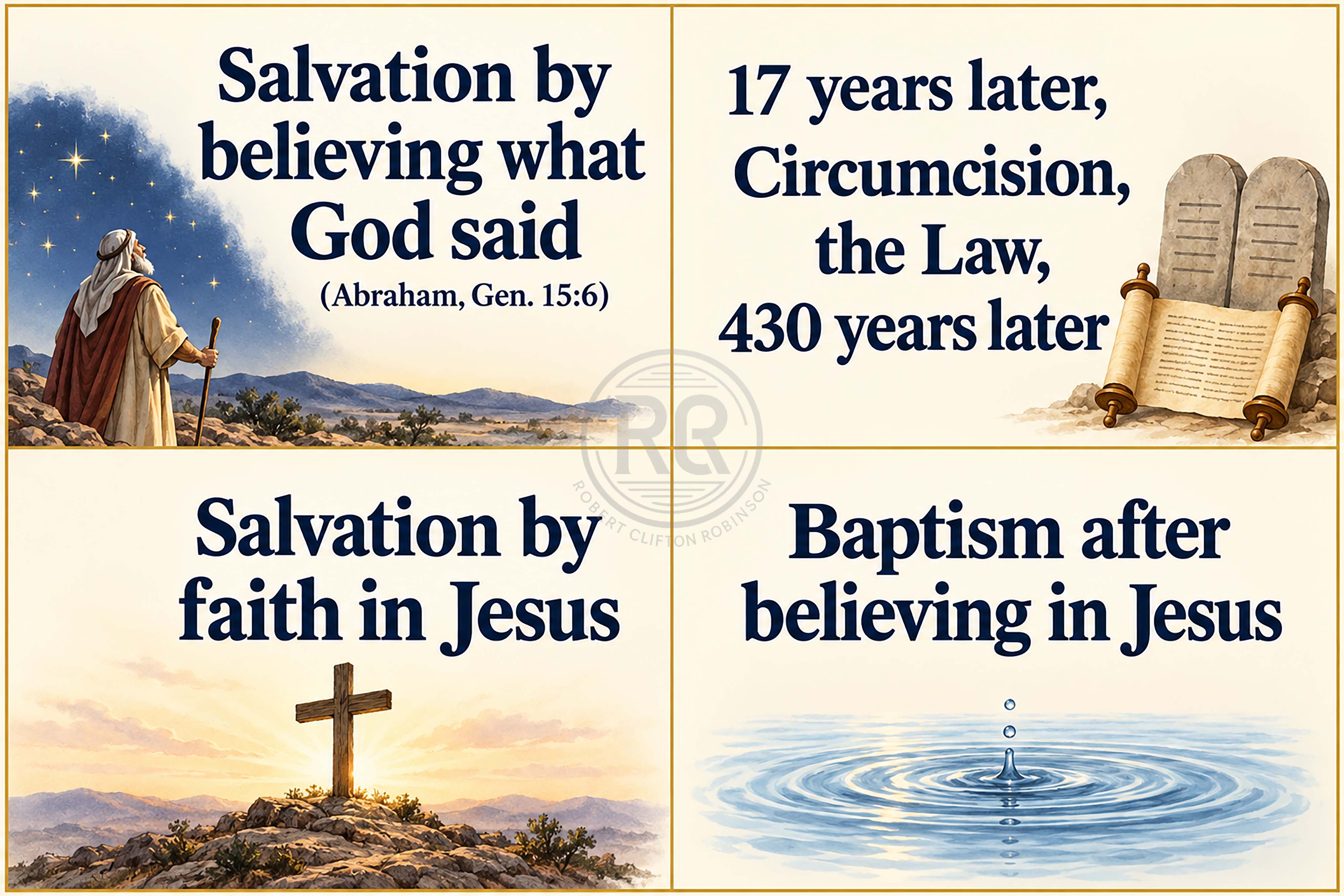
This was the big issue early in the first-century Christian church: after the Apostles taught in the churches that salvation is found only in Jesus Christ, men came into the church and insisted that a person must also keep the Law of Moses.
Romans 4:9 Now, is this blessing only for the Jews, or is it also for uncircumcised Gentiles? Well, we have been saying that Abraham was counted as righteous by God because of his faith. 10 But how did this happen? Was he counted as righteous only after he was circumcised, or was it before he was circumcised? Clearly, God accepted Abraham before he was circumcised!
This principle of God choosing us is based upon what He knew about us before He created anything. God knew that Abraham would trust what He said to him, so He predestined Abraham to be the example of faith for all people, that we should imitate him.
God counted Abraham as a righteous man because he believed what God said. God said He would make Abraham a great nation, that all the world would be blessed by Abraham’s future descendant, the Messiah, and that all the world would have the opportunity to obtain eternal life in Heaven if anyone simply believed what God said.
What did God say?
- God is Holy, perfect, and separate from sin.
- All humans are sinners, not Holy.
- God will send a Savior who will pay for our sins by His death.
- If we trust in the Savior God sent to take away our sins, God will count us as righteous, perfect, and holy.
- We will have eternal life.
If we believe what God said, He will also count us righteous as He did Abraham. This is the focus of Paul in writing his letter to the Romans: Salvation by grace, through faith. Many Jews at the time Paul penned this letter were insisting that a person must also keep the Law of Moses when they believed in Jesus as the Messiah. Paul records this letter as an argument that emphasizes Abraham was accepted by God as righteous before he was circumcised, before the Law of Moses was given by God, 430 years later.
Galatians 3:17 (Paul): This is what I am trying to say: The agreement God made with Abraham could not be canceled 430 years later when God gave the law to Moses (in Exodus 19-20).
The same is true of circumcision, the sign that the Jews are God’s people. This work of Abraham came 14 years after Abraham was counted as righteous by his faith.
Genesis 15:6 records that Abram believed the LORD, and He counted him as righteous because he believed what God said.
- Genesis 16:16 states that Abram was 86 years old when Ishmael was born.
- Genesis 17:1-11 records the beginning of circumcision.
- Genesis 17:24 states that Abraham was 99 years old when he was circumcised.
- Circumcision did not begin until 14 years after Abraham was declared righteous by God.
These biblical texts allow us to understand that Abraham believed what God said and was declared righteous before Ishmael was born. Once again, Ishmael was born when Abraham was 86. Circumcision was instituted when Abraham was 99. This means that God declared Abraham righteous 14 years before the rite of circumcision was instituted by God for the Jews. Abraham was declared righteous long before circumcision existed. Circumcision was not the cause of righteousness, but a sign and seal of a righteousness already possessed by faith.
Romans 4:9 Now, is this blessing only for the Jews, or is it also for uncircumcised Gentiles? Well, we have been saying that Abraham was counted as righteous by God because of his faith. 10 But how did this happen? Was he counted as righteous only after he was circumcised, or was it before he was circumcised? Clearly, God accepted Abraham before he was circumcised!
Neither the Law of Moses nor the rite of circumcision that signified the covenant between God and the Jews happened before Abraham was declared righteous by God because he believed what God said.
Salvation by faith has always been the way that God saves us, not performance or works.
Romans 4:11 Circumcision was a sign that Abraham already had faith and that God had already accepted him and declared him to be righteous—even before he was circumcised. So Abraham is the spiritual father of those who have faith but have not been circumcised. They are counted as righteous because of their faith. 12 And Abraham is also the spiritual father of those who have been circumcised, but only if they have the same kind of faith Abraham had before he was circumcised.
It is important at this point in our study of Romans that we understand that the Jewish rite of circumcision happened after Abraham had faith and God accepted him. This fact is often overlooked or unknown by persons seeking to keep the law for salvation.
Paul writes here in Romans Chapter 4 that the Jews under the Law of Moses will be accepted by God, but only if they first have faith in what God said about the Messiah, Jesus. He died for all sins and cleanses us from our guilt. Only by faith in what Jesus has done will anyone be saved.
Jesus stated this Himself: “I am the way, the truth, and the life. No one can come to the Father except through me (John 14:6).
Paul writes that the Gentiles will also be accepted by God even if they don’t keep the Law of Moses, as long as they have the same kind of faith that Abraham had, trusting in what God said—that only the Messiah, Jesus, has the power to take away our sins and make us acceptable to God.
The intent of Paul is clear in these statements: God only saves people who believe what He says. He said that Jesus is the way to salvation, not by our works. We are not saved by our good works; we are saved for our good works.
And it’s not salvation by faith in faith, but salvation by faith in what God said that Jesus the Messiah died for all sins. He paid the debt for our violation of God’s Law. When we trust in what Jesus did for us at the Cross, God counts us as righteous by our faith in Him.
Romans 4:13 Clearly, God’s promise to give the whole earth to Abraham and his descendants was based not on his obedience to God’s law, but on a right relationship with God that comes by faith. 14 If God’s promise is only for those who obey the law, then faith is not necessary, and the promise is pointless. 15 For the law always brings punishment on those who try to obey it. (The only way to avoid breaking the law is to have no law to break!)
The final indictment against a works doctrine for salvation is seen in Romans 4, verses 13-15, that if God would accept anyone by their good works, then Jesus would not have come to earth as a man, lived a sinless life, and died for all sins on the cross. What Jesus did for us on the cross is forever a sign that God will not accept anyone based on their goodness, good works, or attempts at being righteous.
If we are truly sorry for our sins and intend to no longer practice these sins, then we can come to God through what Jesus did for us at the cross and have our sins removed from our record. We are then made perfect, holy, righteous, and ready for heaven. No one who is still in their sins can enter heaven. We must have our sins removed from our record first by Jesus’ death for our sins and become perfect in the sight of God before we are admitted into the perfect world of heaven.
What about Baptism? Is it required for salvation, or is it in the same category as the Old Testament rite of Circumcision—events that take place after salvation has already been obtained by faith in Jesus Christ?
In the Bible, we consistently find that the correct order is salvation first, then the subsequent signs of our faith, like baptism, after we are saved. Abraham believed what God said, and then he observed the sign of circumcision. New Testament believers first believed in Jesus, and then they were baptized.
In the New Testament, baptism functions in the same category as circumcision and the Mosaic Law: it is subsequent, not causative of salvation. We never see that people were baptized first, and then they believed in Jesus for salvation.
Abraham
Faith first: Abram believed the LORD, and then he was counted as righteous by God, in Genesis 15:6. Circumcision came 14 years later, in Genesis 17.
Notice how Paul described circumcision:
Romans 4:11 Circumcision was a sign that Abraham already had faith and that God had already accepted him and declared him to be righteous—even before he was circumcised.
Circumcision did not produce righteousness; it demonstrated that righteousness had already been received from God by faith when we believe in Jesus for our salvation. The New Testament never presents baptism as the mechanism by which sins are forgiven. Instead, it presents baptism as:
- Our identification with Christ’s death and resurrection (Romans 6:3-4).
- A Public confession of faith (Acts 2:41)
- A Symbolic statement of our union with Christ that has already been received by faith (Galatians 3:26-27).
Paul is clear that Baptism was not the purpose for which Jesus sent him to proclaim the Gospel: “For Christ didn’t send me to baptize, but to preach the Good News—and not with clever speech, for fear that the cross of Christ would lose its power” (1 Corinthians 1:17). Paul feared that proclaiming baptism, circumcision, speaking in tongues, or any other rite would diminish the message that only Jesus’ Cross saves.
When Paul describes Baptism in Romans Chapter 4, he treats circumcision in the exact same way that he later treats baptism. First salvation, then subsequent public exhibitions that the salvation has already happened.
In his letter to the Colossians, Paul makes it clear that circumcision and baptism are the same: Colossians 2:11-12 “When you came to Christ, you were ‘circumcised,’ but not by a physical procedure. Christ performed a spiritual circumcision—the cutting away of your sinful nature. 12 For you were buried with Christ when you were baptized. And with him you were raised to new life because you trusted the mighty power of God, who raised Christ from the dead.”
The Text of This Essay Is From Rob’s New Commentary on Romans
 Just as circumcision did not save Abraham in the Old Testament, baptism does not save the believer in the New Testament. Both are events that take place after a person believes and is accepted by God.
A stunning New Testament example that vividly depicts faith in Jesus, not baptism, for salvation, is seen in the thief on the cross next to Jesus as He was being crucified. After watching and listening to Jesus, this man felt remorse for his sins and asked Jesus “to remember him when he came into His kingdom.” Jesus was able to look into his heart and see a truly repentant sinner who believed that Jesus was dying for all sins. To this simple statement, “Remember me,” Jesus proclaimed, “Today you will be with Me in Paradise” (Luke 23:43).
This dying thief on the cross was not baptized, he never spoke in tongues, he did not join any particular church, he just believed that Jesus was the Messiah God promised, and in His death for sins, there was a promise from God of salvation for all who trust in Him.
If water baptism were necessary for salvation, Jesus would have stated this from the cross. Some advocates of baptism for salvation say that this thief was baptized in blood; therefore, he fulfilled this requirement. We don’t find this doctrine of baptism in blood anywhere in the New Testament. There is no such rite; it is a fabricated assertion without a scriptural basis.
Some people are confused about the text in Acts 2:38: Peter replied, “Each of you must repent of your sins and turn to God, and be baptized in the name of Jesus Christ for the forgiveness of your sins. Then you will receive the gift of the Holy Spirit.”
In Scripture, the English word “for” (the Greek eis) often means “because of or with reference to,” not “in order to obtain.” We find this same usage of “for” when Jesus said repentance is “for” forgiveness (repentance is necessary before salvation).
The identical Greek construction used to describe baptism “for the forgiveness of sins” (Acts 2:38) is first used by Jesus and the Gospel writers to describe repentance “for the forgiveness of sins.”
Mark 1:4 (Jesus said) “John came baptizing in the wilderness and preaching a baptism of repentance for (eis) the remission of sins.”
Luke 3:3 And Jesus went into all the region around the Jordan, preaching a baptism of repentance for (eis) the remission of sins.
Luke 24:46-47 Then Jesus said to them, “Thus it is written, and thus it was necessary for the Christ to suffer and to rise from the dead the third day, 47 and that repentance and remission for (eis) sins should be preached in His name to all nations, beginning at Jerusalem.”
Since repentance by itself does not earn forgiveness but responds to God’s saving action, repentance is not the cause of salvation. Repentance is relational and declarative.
Peter confirms that Baptism is not the action that saves anyone; it is the response of a cleansed conscience: 1 Peter 3:21: “…baptism…not by removing dirt from your body, but as a response to God from a clean conscience.” The act of being baptized does not save us; it is our response to God after salvation, as our conscience has been cleansed of all sin.
Throughout the entire Bible:
- Abraham was saved before circumcision.
- Israel was redeemed before the Law.
- Christians are saved before baptism.
Baptism is a sign of salvation, not the source of it. Baptism is a public declaration of our commitment to Jesus for the rest of our lives, not as a condition for salvation. To make baptism a requirement for salvation is to repeat the same error that Paul refuted in this study of Romans and Galatians, but with water instead of circumcision.
Romans 4:16 So the promise is received by faith. It is given as a free gift. And we are all certain to receive it, whether or not we live according to the law of Moses, if we have faith like Abraham’s. For Abraham is the father of all who believe. 17 That is what the Scriptures mean when God told him, “I have made you the father of many nations.” This happened because Abraham believed in the God who brings the dead back to life and who creates new things out of nothing.
You might think that your sins are too many and too great for God to ever forgive you. Which of your sins did Jesus die for? All of them. It is important to understand that when Jesus died on the cross, it was for all sins, for all people, for all time.
If you think your sins are too great for God to forgive, you are dwelling on things that no longer exist. When Jesus died for all sins, they were removed from your record, and now you are clean and perfect. You are ready for heaven because of what Jesus has done for you.
Paul reminds us in verse 16 of Romans 4 that forgiveness and salvation are given to us “as free gifts. And we are all certain to receive it, whether or not we live according to the law of Moses, if we have faith like Abraham’s.”
How were Abraham’s sins forgiven, and how did he receive the gift of the Spirit of God? He believed what God said. It was not by circumcision or keeping the Law of God. Salvation comes to every person in exactly the same way: trust in what God said.
God said that you are a sinner, separated from Him by your sins. You told God that you are sorry for your sins, and you asked Him to forgive you and take away your sins. He agreed, based on what Jesus did for you on the cross when He died for your sins and took the punishment you deserve. Now you are forgiven, saved, and on your way to heaven because you believe these things that God said.
Then Paul adds an interesting statement about what Abraham believed: “This happened because Abraham believed in the God who brings the dead back to life and who creates new things out of nothing.”
When Abraham trusted in what God said, it was because he believed that only the God of the Bible has the power to bring a dead person back to life. We see this several times in the record of Jesus in the New Testament. Jesus raised several people from the dead, including Himself.
When Jesus waited for four days before going to Lazarus, his friend, He was waiting for Lazarus to die. Jesus wanted to demonstrate what He told Martha later on: “I am the resurrection and the life. Anyone who believes in me, even if they die, will live. Everyone who lives and believes in me will never die.”
Jesus stood at the tomb of Lazarus, who had been dead for four days and was in an advanced state of decomposition. Jesus simply said, “Lazarus, come out,” and Lazarus walked out of the tomb, alive.
Then Paul stated that the God of the Bible is also the “God who creates new things out of nothing.”
Genesis 1:1 states that “in the beginning God created (from nothing) the heavens and the earth.” Nothing existed before God created all that exists. He has the power to take a hopeless situation, a life that is dead, empty, with no purpose, lost, and alone, and make that person into a completely new person with purpose, hope, excitement for the future, and the assurance that they have eternal life. All it takes is a moment when you determine to believe everything God said in the Bible and trust Him for the rest of your life.
If You Enjoyed This Essay, It Came From Rob’s New Verse by Verse Romans Commentary
Categories: Robert Clifton Robinson


Please see, "Guidelines For Debate," at the right-side menu. Post your comment or argument here: