Is the argument made by atheists, that after death there is nothing, a valid argument? What is the evidence that there is life after death?
 The argument that “after death there is nothing” is not a claim that can be empirically proven. It is based on the naturalistic assumption that consciousness is entirely dependent on the physical brain, and therefore, when the brain ceases to function, consciousness also ceases to exist. This position is grounded in materialism, which holds that only physical matter exists. However, this claim is not without challenges, as the question of life after death involves metaphysical, philosophical, and spiritual dimensions that cannot be addressed solely through materialistic means.
Challenges to the “Nothing After Death” Argument:
Philosophical Assumptions: The assertion assumes that the natural world is all there is, but this is itself a philosophical position, not a scientific fact. If non-material realities, such as the soul or spirit, exist, then death might not result in annihilation.
Near-Death Experiences (NDEs): Many documented cases of near-death experiences challenge the idea that consciousness is tied solely to brain function. In some cases, individuals have reported vivid and verifiable experiences while clinically dead, suggesting that consciousness may continue beyond physical death.
Historical Testimony of The New Testament:
The Bible provides numerous affirmations of life after death, particularly through the resurrection of Jesus Christ (1 Corinthians 15:20-22). The resurrection is presented as a historical event with eyewitness testimony, offering evidence for the possibility of continued existence beyond death.
Dualism: Philosophical dualism argues that the mind (or soul) is distinct from the body. Thinkers like René Descartes proposed that while the body is material, the mind is immaterial and could theoretically exist independently of the physical brain.
Testimonies and Phenomena:
Throughout history, countless individuals have claimed experiences of the afterlife, including visions of deceased loved ones, encounters with divine beings, or other supernatural phenomena.
Though anecdotal, these claims cannot be dismissed without thorough investigation.
Evidence for Life After Death:
The Resurrection of Jesus Christ:
Central to Christian theology is the claim that Jesus rose from the dead, as documented in the New Testament (e.g., 1 Corinthians 15, Luke 24, John 20).[1] The historical reliability of the resurrection is supported by:
- Early and multiple eyewitness accounts.[2]
- The transformation of Jesus’ followers, many of whom willingly faced martyrdom, attesting to their belief in the resurrection..
- Historical Evidence That Proves The Resurrection Of Jesus
Near-Death Experiences (NDEs):
- Researchers like Dr. Raymond Moody and Dr. Bruce Greyson have studied NDEs extensively. Common elements include:
- Out-of-body experiences. Persons who were clinically dead, some blind all of their lives, recount events that took place in the hospital by physicians and nurses, see by them from above, though they had no ability to see these events.
- Encounters with deceased relatives or spiritual beings.
- Detailed, verifiable observations of events occurring while clinically dead.
- Such accounts suggest that consciousness might not be entirely dependent on the physical brain.
Philosophical and Theological Arguments:
- Aquinas’ Argument: Thomas Aquinas reasoned that the human soul, being immaterial, cannot be destroyed by physical death.
- Moral Argument: The existence of moral accountability implies an afterlife where ultimate justice is realized.
Universal Belief in the Afterlife:
- Across cultures and centuries, belief in life after death has been nearly universal, pointing to an innate sense in humanity that death is not the end.
The argument that “after death there is nothing” is based on a materialistic worldview and lacks definitive evidence. On the other hand, there is significant evidence from historical, philosophical, and experiential perspectives suggesting the reality of life after death. The resurrection of Jesus Christ stands as the most compelling evidence within the Christian tradition, supported by eyewitness accounts, early documentation, and the transformative impact on His followers. Additionally, the study of NDEs and the prevalence of belief in the afterlife across cultures offer further reasons to believe in continued existence beyond death.
- This Is What Happens The Moment You Die
- What The Death Of Jesus Did To All Of Our Sins
- How Could The Death of One Man Pay For the Sins of the World?
- Jesus Describes Death and Hell as Real and Certain
- Why Would God Create Man–Knowing that It Would Require the Death of His Son?
- The Overwhelming Empirical Evidence for Jesus Death and Resurrection
- All Time and History Itself is Marked By Jesus Life, Death, and Resurrection
- Great Grace In The Midst Of Suffering And Death
- The Historical Documentation For Jesus’ Death And Resurrection: 396 Citations
- The Death and Resurrection of the Messiah Predicted by the Old Testament
NOTES:
[1] 1.The Annals: The Reigns of Tiberius, Claudius, and Nero by Cornelius Tacitus and J. C. Yardley ISBN 0-19-282421-X Oxford pages 2-27.
2.”Tacitus and the Writing of History,” by Ronald H. Martin 1981 ISBN 0-520-04427-4, pages 104–105.
3. Letters of Pliny the Younger and the Emperor Trajan, Translated by William Whiston, From The Works of Josephus, Hendrickson Publishers, 1987.
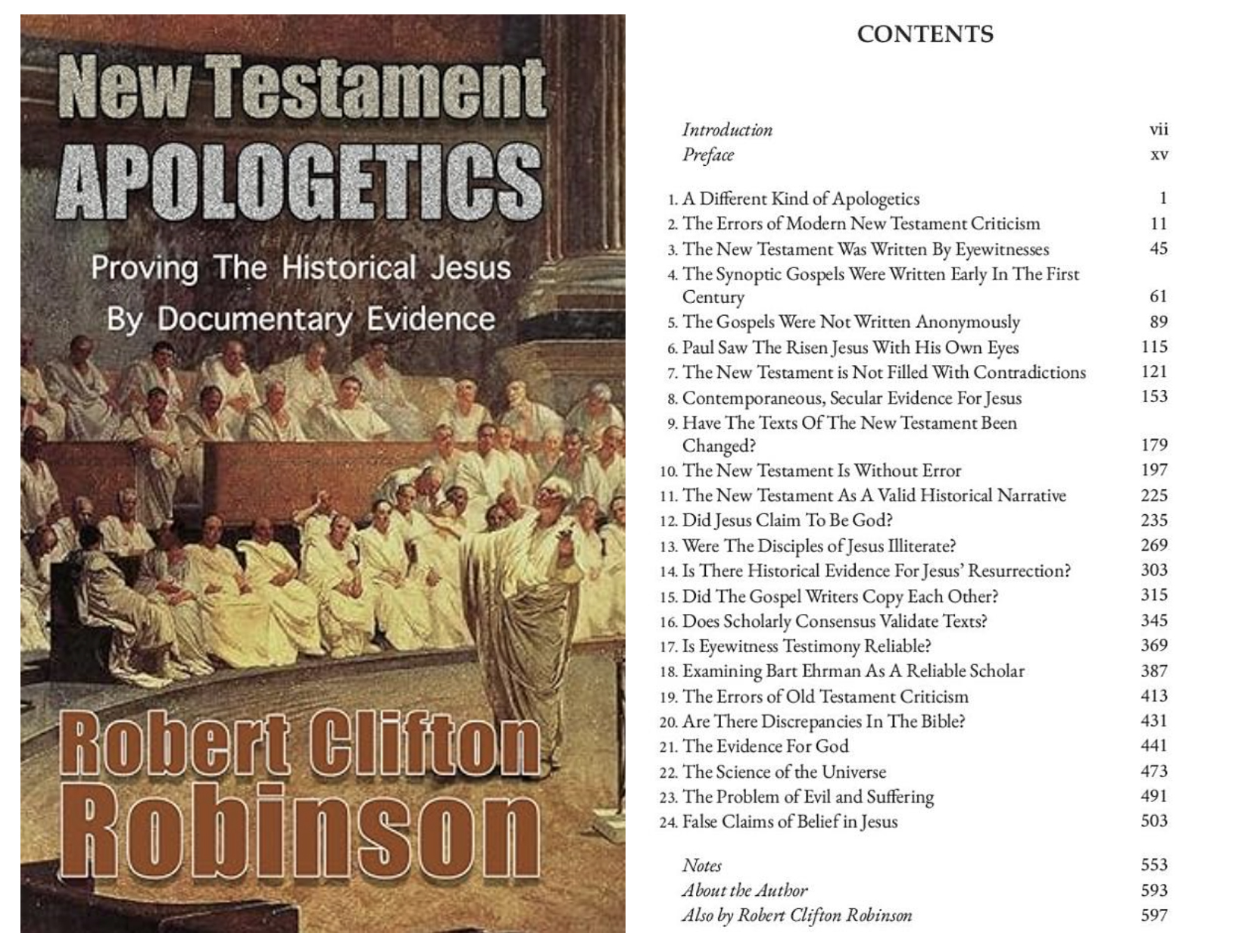
[2] 1.See the book by the same author: “New Testament Apologetics,” for documentation on the Historical, eyewitness resurrection of Jesus.
2. Persecution in the Early Church, religion facts.com, March 17, 2015
3. The early Roman writers viewed Christianity not as another kind of pietas, piety, but as a superstition, “superstition.” Pliny, a Roman governor writing circa 110 AD, called Christianity a “superstition taken to extravagant lengths.” Similarly, the Roman historian Tacitus called it “a deadly superstition,” and the historian Suetonius called Christians “a class of persons given to a new and mischievous superstition.” {9} In this context, the word “superstition” has a slightly different connotation than it has today: for the Romans, it designated something foreign and different – in a negative sense. Religious beliefs were valid only in so far as it could be shown to be old and in line with ancient customs; new and innovative teachings were regarded with distrust.”
[3] AI-Assisted Content Disclosure: Some text and images on this website were created or enhanced with the assistance of artificial intelligence tools. These tools were used to improve the quality and creativity of the content, while adhering to accuracy and originality. All content has been reviewed to ensure it aligns with the purpose and integrity of this website.
Categories: Atheists uneducated observations, Common errors of Atheists, Empirical Evidence for the Resurrection, He Is Risen, Hell is not God's will for you, How to Pray, Jesus conquered death and Hell, Jesus is God, New Testament Apologetics, No one is "good", Religion vs. Relationship, Robert Clifton Robinson, Salvation is a free gift, Salvation through Jesus, The Existence of God, The failure of religion, The Miracles of Jesus, The Resurrection, Those who stop believing, We must repent, What happens after death?, What is required for Heaven?, Why Jesus had to die
 Robert Clifton Robinson
One of my favorite books in the Bible is Ecclesiastes. Solomon, inspired by God, wrote in Ecclesiastes 12:7 the following `and the dust returns to the ground it came from, and the spirit returns to God who gave it.`
This means that our physical bodies, upon our death, will return to the earth because that is where it was taken from. Genesis 2:7 confirms this `Then the LORD God formed a man from the dust of the ground and breathed into his nostrils the breath of life, and the man became a living being.`.
So our physical body was made from the earth. But the thing that makes us alive, the breathe of life from God, ie. our spirit, came separately from God. And this is the immaterial, not of this earth, part of each of us that will return to God upon our death – whether we agree with that or not.
Thus when we die the spirit is separated from the body and returns to God and the physical body returns to which it came … the earth.
So consider.
Now lets say there is a God and you do not believe. By not believing you have chosen death and you will die permanently – your body and your spirit will positively DIE.
Now lets say there is no God whether you believe or not. In this case, you permanently DIE.
Given those two possibilities, what should be understood is that you, the none-believer, will positively DIE because both outcomes are the same. So those that do not believe in God will POSITIVELY DIE. So in that sense, atheists are correct that there this is nothing (for THEM) after death.
So those that do believe in God, for their own personal reasons, chose to have hope that life is eternal; that we can have eternal life through The Lord Our God Jesus Christ. I have that hope and I have that faith because I can explain my belief in God from Beginning to End (a story for another time).
So when an atheist says there is nothing after death, understand that there is NOTHING FOR THEM after a permanent death. It does not mean that there is nothing for YOU.
Believe in the Lord our God Jesus Christ and live eternally. Persevere now while wait for the Glory of Lord to return in the Rapture.
For those that do not believe watch for these two (convincing) signs a billion people disappear form the earth in a blink of an eye (the Rapture: 1 Thessalonians 4) and the Israelites rebuilding their temple (the opening salvo of the Tribulation: Daniel 9:27 and Revelation 11). If those two things do not convince you … then you are lost eternally.
Wishing peace and the blessing of our God to each who read this.
The Beginning is NEAR.
LikeLike