Progressive Christianity: What Is It, What Do They Believe?
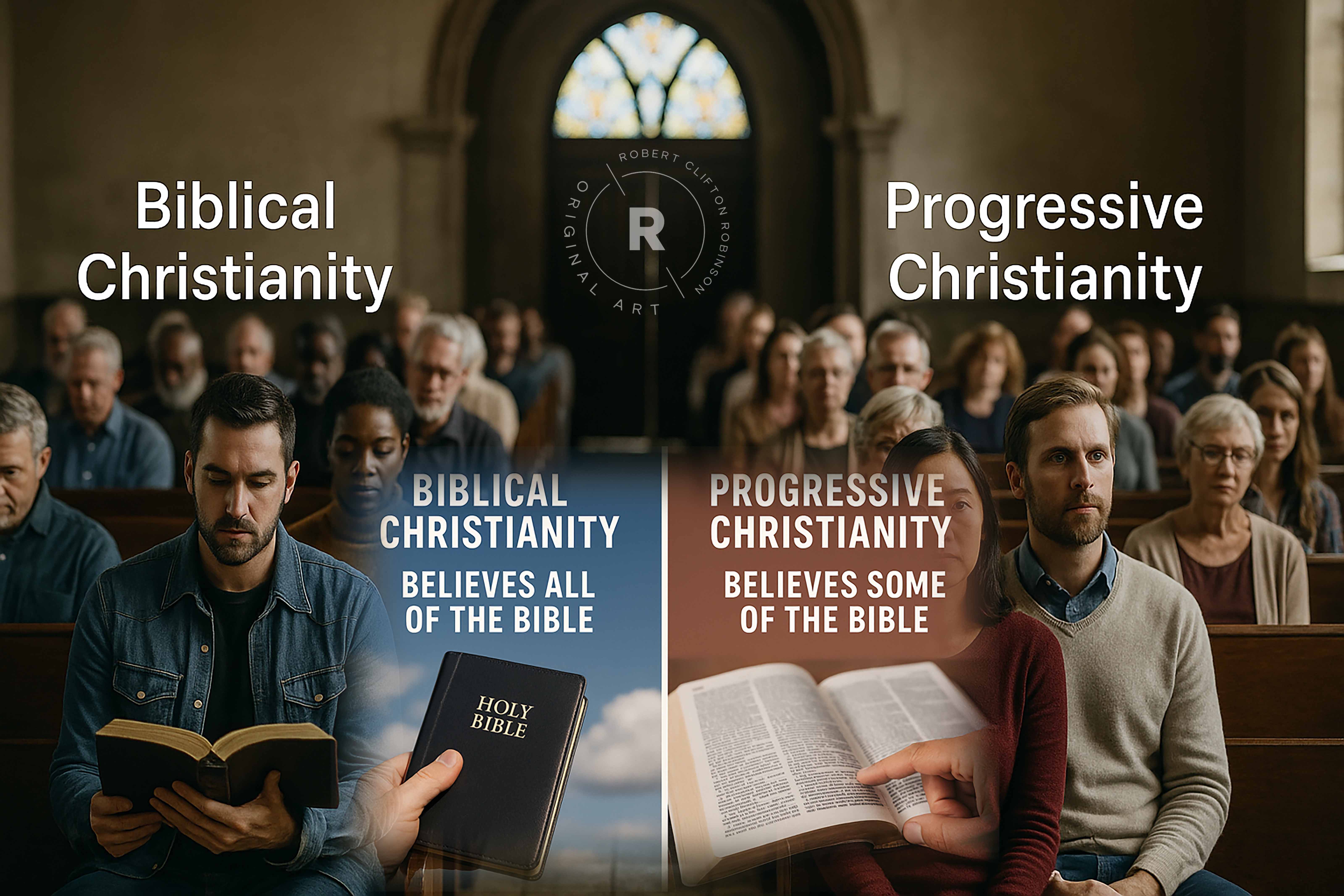
What is the Progressive Christian Church? Why does it exist? Why do we need a progressive (changing) church after 2,000 years? According to some people today, the church is not meeting the demands of inclusiveness and acceptance. Who are the people who are not being included or accepted? The LGBTQ movement.
The Bible has always been clear in its message: God is offering forgiveness of all sin and a personal relationship with the Living God, if we will repent of our sins and trust in Jesus for our salvation. For twenty decades, people have understood that sexual sin is an offense to God. During the “Jesus People Movement” of the 60’s and 70’s, we understood that God had called certain behavior, sin. We didn’t dispute that our lifestyle was wrong; we just didn’t care.
When I came to Jesus in 1975 and asked Him to forgive my sins, I understood that this meant that I was leaving my old life behind and I was beginning a new life. I have lived the last 50 years living to please God.
Today, we have a group of people who want to be accepted in the church without repentance or turning away from their sins. They didn’t find Christian churches accepting of their life as LGBTQ persons, so they created their own church. They picked the texts of the Bible that they liked; scriptures that speak of love, grace, acceptance, and forgiveness. They excluded the scriptures that speak of same-sex behavior as sins that must be ended.
Because many pastors don’t teach verse by verse through the entire Bible, people in congregations don’t get the full counsel of God’s Word. They don’t know what God has said about sin, repentance, and forgiveness.
This famine of the Word of God brought ignorance of what God requires, and the resulting creation of the Progressive Christian Church.
The Progressive Christian Church is not a single denomination with an official canon or creed, but rather a movement characterized by certain theological emphases and values. As such, Progressive Christians accept the same Bible (the 66-book Protestant canon) as other Christian traditions, but they interpret it differently, based on their opinions. Their distinctiveness lies not in the books they accept or reject, but in how they read, understand, and apply Scripture. Progressive Christians do not believe in any texts of the Bible that call for sincere repentance that ends sin. In this essay, I will show you how they view the texts that speak of sin and repentance.
Why Should Christians Who Believe In The Historical, Biblical Jesus Care?
In Matthew 24:1-4, Jesus’ disciples came up to show Him the buildings of the temple. Jesus said to them, “Do you not see all these things? Assuredly, I say to you, not one stone shall be left here upon another, that shall not be thrown down.”
After this, Matthew records: “Now as Jesus sat on the Mount of Olives, the disciples came to Him privately, saying, ‘Tell us, when will these things be? And what will be the sign of Your coming, and of the end of the age?” And Jesus answered and said to them: “Take heed that no one deceives you.”
The disciples of Jesus wanted to know when He would be returning and what the signs of His return would be. Jesus said something stunning: “Take heed that no one deceives you.”
The last of the Last Days will be characterized by the greatest time of deception the world has ever known.
The New Testament calls satan “the god of this world.”
2 Corinthians 4:4 “Satan, who is the god of this world, has blinded the minds of those who don’t believe.”
The Bible states that after the Fall of man in Genesis, Adam lost dominion of the earth to satan. Dominion of the earth has remained under satan’s limited power since that time. Satan has tried to corrupt the message of salvation that comes through the Messiah by creating false and counterfeit religions through deception. We will see how satan accomplishes this in this essay.
One of the most vivid ways that satan has tried to destroy the message of salvation in Jesus is through his many attempts at destroying the line of descendants that would bring the Messiah, Jesus, to earth.
There is a consistent pattern throughout biblical history that reveals strategic attempts by Satan to destroy the line of descendants through which the Messiah, Jesus, would come. This pattern begins in Genesis and unfolds throughout the Old Testament. The following facts present a chronological list of key events where the Bible demonstrates that satan has consistently tried to destroy the True Church by destroying the Messianic line of descendants:
Why Is this Important?
If satan can convince people that God doesn’t care about their sins but, instead, He is loving and kind and He will accept them even while they continue in certain lifestyles, according to Jesus and the Bible, these people will forfeit eternal life. Although this fact is presented throughout the entire Bible, Progressive Christian Churches deny this fact and do not teach these principles to people who attend their churches.
Instead of changing people by hearing the Word of God, Progressive Churches changed their message so people would accept the church.
People who attend Progressive Churches get a false sense of security, while their eternal lives are in jeopardy. I wrote this detailed essay because I love all people and I sincerely care about their lives.
The Progressive Christian Church vehemently disagrees with the idea that God cares about repentance from sin, and demands that people who come to Him for salvation must end their sins before He will accept them. We find an example of what God requires in true repentance from sin in Paul’s first and second letters to the Christians at Corinth:
In Paul’s first letter, he addresses a problem with a young man in the church who is in a sexual relationship with his father’s wife:
1 Corinthians 5:1-2 “I can hardly believe the report about the sexual immorality going on among you—something that even pagans don’t do. I am told that a man in your church is living in sin with his stepmother. You are so proud of yourselves, but you should be mourning in sorrow and shame. And you should remove this man from your fellowship.
After the Church at Corinth received this letter from Paul, they took steps to help this young man end his sin and be restored. Notice what Paul writes to the believers, that “God wants people to have Godly sorrow, the kind that causes them to end their sins, which results in their salvation.” The negative side of this would be that if the young man did not end the sexual sin and was unwilling to repent, then he would not be accepted by God and find salvation.
2 Corinthians 7:8-10 “I am not sorry that I sent that severe letter to you, though I was sorry at first, for I know it was painful to you for a little while. Now I am glad I sent it, not because it hurt you, but because the pain caused you to repent and change your ways. It was the kind of sorrow God wants his people to have, so you were not harmed by us in any way. For the kind of sorrow God wants us to experience leads us away from sin and results in salvation. There’s no regret for that kind of sorrow. But worldly sorrow, which lacks repentance, results in spiritual death.
Notice the last sentence above, which describes the kind of sorrow the world has when it gets caught doing wrong; it does not result in changed behavior by ending the sin. This empty sorrow that the world has, results in “Spiritual Death.
In this essay, you will see that what the Bible calls sin, the Progressive Church interprets differently. I will detail this view in the following examples.
We who love Jesus and believe what He said want everyone to be saved. We don’t want anyone to be lost. For this reason, it is important for us to tell people the truth about what God said and how He will accept us.
The following timeline details the great steps that satan takes to try and destroy lives. Primarily, satan uses religious deception to convince people that they are okay when they are not. This is why it is so important that we don’t get our advice from any church, pastor, or other person. We study what God said in the entirety of the Bible, and we follow His counsel for our lives. What I present to you in this essay is what the Bible says about sin and salvation, not my opinion about these important subjects.
Cain Murders Abel: Genesis 4:8
Attempt: After God promises a Redeemer through the “seed of the woman” (Genesis 3:15), Satan incites Cain to kill Abel, the righteous son through whom the promise might be fulfilled.
What God Did: God replaces Abel with Seth (Genesis 4:25), and the Messianic line continues through Seth (Luke 3:38).
Corruption of Humanity Before the Flood: Genesis 6:1 8
Attempt: The “sons of God” (interpreted by many as fallen angels) intermarry with human women, producing the Nephilim, corrupting the human gene pool. This could be an attempt to genetically pollute or wipe out the Messianic bloodline.
What God Did: God preserves Noah and his family (Genesis 6:9), described as “blameless in his generations,” indicating uncorrupted lineage.
Tried to Destroy Abraham’s Line: Genesis 12:10-20, Genesis 20
Attempt: Twice, Abraham lies about Sarah being his sister, and she is taken into the harem of a foreign king. If either king had relations with her, the promised line could be compromised.
What God Did: He intervenes in both cases and protects Sarah.
Tried to Kill Jacob (Israel): Genesis 27–32
Attempt: Esau vows to kill Jacob, through whom the twelve tribes (and eventually the Messiah) will come.
What God Did: Jacob escapes and is later reconciled with Esau.
Famine Threatening Abraham’s Line: Genesis 41–47
Attempt: A seven-year famine could have wiped out the family of Jacob (Israel).
What God Did: He raised up Joseph in Egypt to preserve the family, a Messianic foreshadowing (Genesis 45:7).
Pharaoh’s Order to Kill Hebrew Male Babies: Exodus 1:15–22
Attempt: Pharaoh orders the destruction of all male Hebrew infants to prevent Israel’s growth and power.
Messianic Threat: This is a satanic attempt to destroy the future nation that will birth the Messiah.
What God Did: Moses is preserved (Exodus 2), eventually leading Israel out of Egypt.
To Kill All Jews under Haman in Persia: Esther 3–9
Attempt: Haman plots to kill all the Jews in the Persian Empire.
Messianic Threat: If this were successful, it would have annihilated the nation through whom the Messiah would come.
What God Did: He uses Esther to thwart the plan.
Queen Athaliah’s Massacre of the Royal Line of Judah: 2 Kings 11:1–3
Attempt: Athaliah kills all the royal heirs of Judah (the line of David).
Messianic Threat: This nearly succeeds in wiping out the Davidic line.
What God Did: Joash, an infant son, is hidden and preserved in the temple for six years.
The Babylonian Exile and Destruction of Jerusalem: 2 Kings 24–25
Attempt: The Babylonian destruction of Jerusalem and exile of the Jews could have appeared to end the Davidic kingdom and hope for the Messiah.
What God Did: He preserves the line through Jehoiachin (see Matthew 1:12), and prophecy ensures the continuation of the Davidic promise (Jeremiah 23:5; Ezekiel 37:24–25).
Herod Orders The Slaughter of Infants At Bethlehem: Matthew 2:13–18
Attempt: Herod, motivated by fear (and by satanic influence), orders the death of all male children under two in Bethlehem.
Messianic Threat: Direct attempt to kill the Christ child.
What God Did: An angel warns Joseph, and the family escapes to Egypt.
Satan’s Temptation of Jesus in the Wilderness: Matthew 4:1–11
Attempt: Satan tries to corrupt Jesus morally or get Him to misuse His divine power, thereby disqualifying Him as the sinless Savior.
What God Did: Jesus overcomes all temptations by quoting Scripture and obeying the Father.
Satan Uses Judas Iscariot to Betray Jesus: Luke 22:3–6; John 13:27
Attempt: Satan enters Judas and leads him to betray Jesus. The aim is likely to prevent Jesus from fulfilling His purpose by inciting an early or dishonorable death.
What God Did: Jesus submits to the Father’s will, goes to the cross, and completes the work of redemption.
The Persecution of the Early Church and Attempt to Suppress the Gospel: Acts 8:1–3; Revelation 12:13–17
Attempt: During the first 250 years of the Christian church, Roman Emperors executed over 5 million believers. This opposition to the growth of Jesus’ church and attempts to stamp out the message of the Messiah.
What God Did: This massive execution and the witness of those who refused to deny Jesus as they were killed caused millions to turn to Jesus and believe. The Gospel spreads even more rapidly under persecution (Acts 8:4).
When These Attempts To Destroy Jesus’ Church Failed, Satan Used A New Tactic: The Creation of False Religion
Beginning in the early 1800s, several new religions emerged that claim to be Christian but deny the historical Jesus as He is described in the Bible. Among these are the Latter Day Saints and the Jehovah’s Witnesses. Both of these churches claim to be Christian, but they believe in and worship a different Jesus.
The latest attempt by satan to infiltrate the True Christian Church is the creation of the Progressive Christian Church. This essay is provided to inform Christians and non-Christians about the dangers and consequences of allowing this false church to continue without opposition.
First, it is important to understand that the Progressive Christian Church claims that they believe the whole Bible. Upon investigation into the actual usage of the biblical texts, they use and believe, we find that only parts of the Bible are used in the Progressive churches.
Canonical Books Affirmed
Most Progressive Christians affirm the traditional canon of Scripture:
- Old Testament (Hebrew Bible) – 39 books
- New Testament – 27 books
They typically use modern translations such as:
- NRSV (New Revised Standard Version)
- CEB (Common English Bible)
- The Message (for devotional reading)
Selective Emphasis Within the Canon
While accepting the full Bible, Progressive Christians often emphasize some books and themes over others:
Heavily Emphasized: The Gospels (especially Matthew, Mark, Luke, and John): They see Jesus’ teachings (especially on love, compassion, justice, nonviolence) as central.
- The Prophets (e.g., Isaiah, Amos, Micah): Focus on justice, mercy, and advocacy for the oppressed. They reject the words of the prophets that proclaim judgment for sin.
- Psalms and Wisdom Literature (Proverbs, Ecclesiastes): Spiritual depth and moral reflection. They ignore the Psalms, such as Psalms 51, where David gives us the model for sincere repentance from sin.
- Acts: Emphasis on early church inclusiveness and social outreach. They ignore Acts 15 where the early Christian Church prohibited sexual sin (Acts 15:18-21, 28-29. “That you abstain from sexual immorality…”
- James: Strong moral teachings and care for the marginalized. They ignore James’ instruction to live a Holy and sinless life.
- Romans 12–15, 1 Corinthians 13, Galatians 3:28: Emphasis on love, unity, and equality in Christ. They ignore Romans 1, where Paul condemns homosexual and lesbian sexual acts. They ignore 1 Corinthians 6, where homosexual acts are defined as preventing a person from entering heaven.
- The Progressive Christian Church rejects all texts in the Bible that describe judgment for sin and the penalty of eternal separation from God.
Often De-emphasized or Reinterpreted:
- Genesis 1–11: Read symbolically or mythologically, not as literal history. See: Proving The Pentateuch; Archeological And Historical Evidence That Impeaches The Documentary Hypothesis
- Leviticus and Deuteronomy: Often seen as outdated legal codes, especially on issues like sexuality or purity laws. See: Are The Levitical Laws of Death For Adultery, Sodomy, And Fornication Applicable Today?
- Judges and Joshua: Violent conquest narratives are often interpreted non-literally or criticized. See: Because You Did Not Consider The Lord Holy: Why Critics Are Wrong About God And His Judgments
- Paul’s writings (esp. Romans 1, 1 Corinthians 6, 1 Timothy 1): These are often reinterpreted or selectively read, especially on controversial topics like sexuality or gender roles.
- The Progressive Christian Church rejects the Historical, Eyewitness Narratives of the Bible as the Word of God. They choose only texts of the Bible that promote their ideology.
Core Hermeneutical Principles
Progressive Christians often apply the following interpretive filters: They accept the text from Jesus that promotes Love, Grace, Mercy, Acceptance, and Forgiveness. They reject Jesus’ teaching regarding the necessity of repentance before salvation, and eternal punishment for the unrepentant.
Though Jesus made it clear that not one word of what God said in the entire Bible will ever pass away, the Progressive Christian Church eliminates all references to what they view as “harsh laws.”
Matthew 5:18-19 Jesus said: “For assuredly, I say to you, till heaven and earth pass away, one jot or one tittle (smallest part) will by no means pass from the law till all is fulfilled. Whoever therefore breaks one of the least of these commandments, and teaches men so, shall be called least in the kingdom of heaven; but whoever does and teaches them, he shall be called great in the kingdom of heaven.”

Copyright, RCR
Denominational Examples: Progressive theology is most common in mainline and liberal denominations, including:
- United Church of Christ (UCC)
- Episcopal Church (USA)
- Presbyterian Church (USA)
- Evangelical Lutheran Church in America (ELCA)
- The Methodist movement (esp. some in the United Methodist Church)
Criticisms and Concerns
From a conservative or traditional evangelical perspective, criticisms of Progressive Christianity include:
Selective authority: Some argue that Progressive Christians treat the Bible more like a buffet—affirming what aligns with their values and discarding what doesn’t.
Denial of core doctrines: Critics often point out a lack of emphasis on substitutionary atonement, original sin, or the necessity of personal salvation.
Redefinition of sin and salvation: Traditional categories are often reinterpreted through a social or psychological lens.

Copyright, RCR
Comparison of Scripture Between Progressive Christianity and The Traditional Evangelical View

Click To Enlarge, Copyright, RCR
Repentance From All Sin Is Not Required In The Progressive Christian Church
The Progressive Christian Church generally approaches the doctrine of repentance and salvation quite differently from traditional evangelical Christianity. Rather than viewing repentance as a prerequisite for salvation in the classical sense—turning from sin in recognition of guilt and receiving forgiveness through Christ’s atoning death—Progressive Christianity tends to emphasize inclusivity, personal transformation, and social justice over traditional doctrines of sin and repentance.
There is No Salvation, Without Repentance
Comparing Biblical, Historical Christianity With Progressive Christianity
Redefining “Sin”
Progressive Christians often redefine sin, moving away from personal moral failings to broader, systemic, and relational brokenness:
Historical Biblical Christianity: Sin is rebellion against God’s moral law and requires repentance.
Progressive Christianity: Sin is more about alienation, injustice, and harm—especially when it disrupts right relationships with others, self, creation, and God.
An Example: Racism, exploitation, oppression, or environmental destruction are more likely to be emphasized than sexual or personal moral sins.
Repentance as Personal Growth, Not Legal Requirement
In Progressive theology, repentance is often viewed as an internal process of awakening, healing, and transformation rather than a legal turning from guilt that precedes justification.
Traditional Evangelical View:
“Repentance” (Greek: metanoia) is a change of mind and direction—turning away from sin, turning to God, and is necessary for salvation (cf. Acts 2:38, Luke 13:3).
Progressive Christian View:
Metanoia is interpreted more as an awakening of consciousness and a restoration of right relationships than a turning from moral wrongdoing. It’s less about appeasing divine wrath and more about personal and communal healing.
Progressive Christianity Is a Bloodless Anti Christian Religion
Progressive Christianity denies that Jesus died for all sins; personal repentance from sin is not required. For Progressive Christians, repentance is simply a lifelong journey, not a one-time event to avoid hell.
For Progressive Christianity, Salvation Is Not Primarily About Escaping The Judgment of God
Progressive Christians usually do not frame salvation as escaping hell through faith and repentance. Instead, they view salvation as:
- Union with God in the here and now
- Living into the kingdom of God through justice, love, and peace
- Liberation from oppressive systems
- Healing of the soul and community
Progressive Christianity Views Salvation as inclusive, with some suggesting that all people will be ultimately reconciled to God (universal reconciliation).
Progressive Christianity Regarding Jesus’ Death: Emphasis On His Love Instead of His Death For All Sins
Atonement For Sin In Progressive Christianity: Jesus’ death for all sins in its atonement model (Jesus dying to pay the penalty for sin) is often rejected or diminished.
Progressive Christians view Jesus’ death as:
- An act of solidarity with human suffering
- A confrontation with political and religious injustice
- A model of nonviolent love
The Historical Biblical Christian idea that we must repent from sin in order to receive forgiveness is often replaced by the idea that we are already loved and accepted by God, and that transformation flows from love, not as a condition to earn it.
- The Problem Of Sin: The Primary Issue Of Our Life
- The Fundamentals Of Salvation: God;s Responsibility; Our Responsibility
Advocates For Progressive Christianity
Key authors expressing these ideas include:
- Richard Rohr, Falling Upward: Sees sin as falling into brokenness that God uses for growth.
- Brian McLaren, A New Kind of Christianity: Questions classical doctrines of the fall and original sin.
- Rob Bell, Love Wins: Argues against eternal damnation and for universal reconciliation.
- Marcus Borg, The Heart of Christianity: Emphasizes metaphorical interpretation and spiritual transformation over doctrinal repentance.
How Progressive Christianity Is In Conflict With Traditional Biblical Christianity:
From a traditional biblical and evangelical perspective, repentance is a clear prerequisite for forgiveness and salvation:
- Luke 13:3 – “Unless you repent, you will all likewise perish.”
- Acts 2:38 – “Repent and be baptized… for the forgiveness of your sins.”
- 1 John 1:9 – “If we confess our sins, He is faithful and just to forgive…”
In contrast, Progressive theology often reframes or reinterprets these passages symbolically or theologically rather than prescriptively.

Copyright, RCR
Progressive Christianity reinterprets traditional doctrines of sin, repentance, and salvation, emphasizing personal transformation, social justice, and inclusivity over legalistic frameworks.
Progressive Christianity’s View of Repentance: A Transformative Journey
In Progressive Christian thought, repentance (metanoia) is understood as a profound transformation of heart and mind, leading to a deeper awareness of God’s presence and a commitment to justice and compassion. Rather than focusing solely on individual moral failings, repentance is seen as a call to address systemic injustices and to participate in the healing of the world. David Henson articulates this perspective:
“Repentance helps us to see where God already is… It gives us that new mind, that new way of seeing and thinking and believing about the world that is the hallmark of true repentance.”
It Was Jesus Who Destroyed Sodom And Gomorrah
Progressive Christianity’s View of Salvation: Embracing Wholeness and Liberation
Progressive Christians often view salvation not as a transactional escape from damnation but as an ongoing process of personal and communal liberation. This perspective emphasizes living into the values of the Kingdom of God—justice, mercy, and love—here and now. As one resource explains:
“Salvation is not about getting into heaven after we die; it’s about entering into the fullness of life now.”
This approach often includes a critical stance toward doctrines like original sin and substitutionary atonement, favoring interpretations that highlight God’s unconditional love and the inherent worth of all people.
Progressive Christianity’s View of Jesus’ Death: A Model of Divine Love
While traditional doctrines emphasize Jesus’ death as a substitutionary atonement for sin, Progressive Christianity often interprets the crucifixion as the ultimate demonstration of God’s solidarity with human suffering and a call to transformative love. This view challenges the notion of a wrathful God requiring a blood sacrifice, proposing instead that Jesus’ life and death reveal the depth of divine compassion and the path to human flourishing. One critique of substitutionary atonement states:
“Surely a loving God did not require the shed blood of a human sacrifice as a prerequisite for our salvation.”
Progressive Christianity’s View of Inclusivity and the Universality of God’s Grace
Progressive Christianity often embraces an inclusive theology that recognizes the presence of God’s grace beyond the boundaries of explicit Christian confession. This perspective aligns with concepts like Karl Rahner’s “Anonymous Christian,” suggesting that individuals who live according to the principles of love and justice are participating in God’s salvific (leading to salvation) work, regardless of their religious affiliation. This inclusivity reflects a belief in the expansive and unconditional nature of divine love.

Copyright, RCR
Progressive Christianity Is Not Historical Biblical Christianity
To evaluate whether Progressive Christianity is “Christian” according to Jesus, the New Testament, and historical Christianity, we must define the essential doctrinal elements that historically constitute Christianity and compare them with Progressive theology. This involves three lenses:
According to What Jesus Taught, Progressive Christianity Is Not Correct
Jesus’ Core Teachings (as recorded in the Gospels):
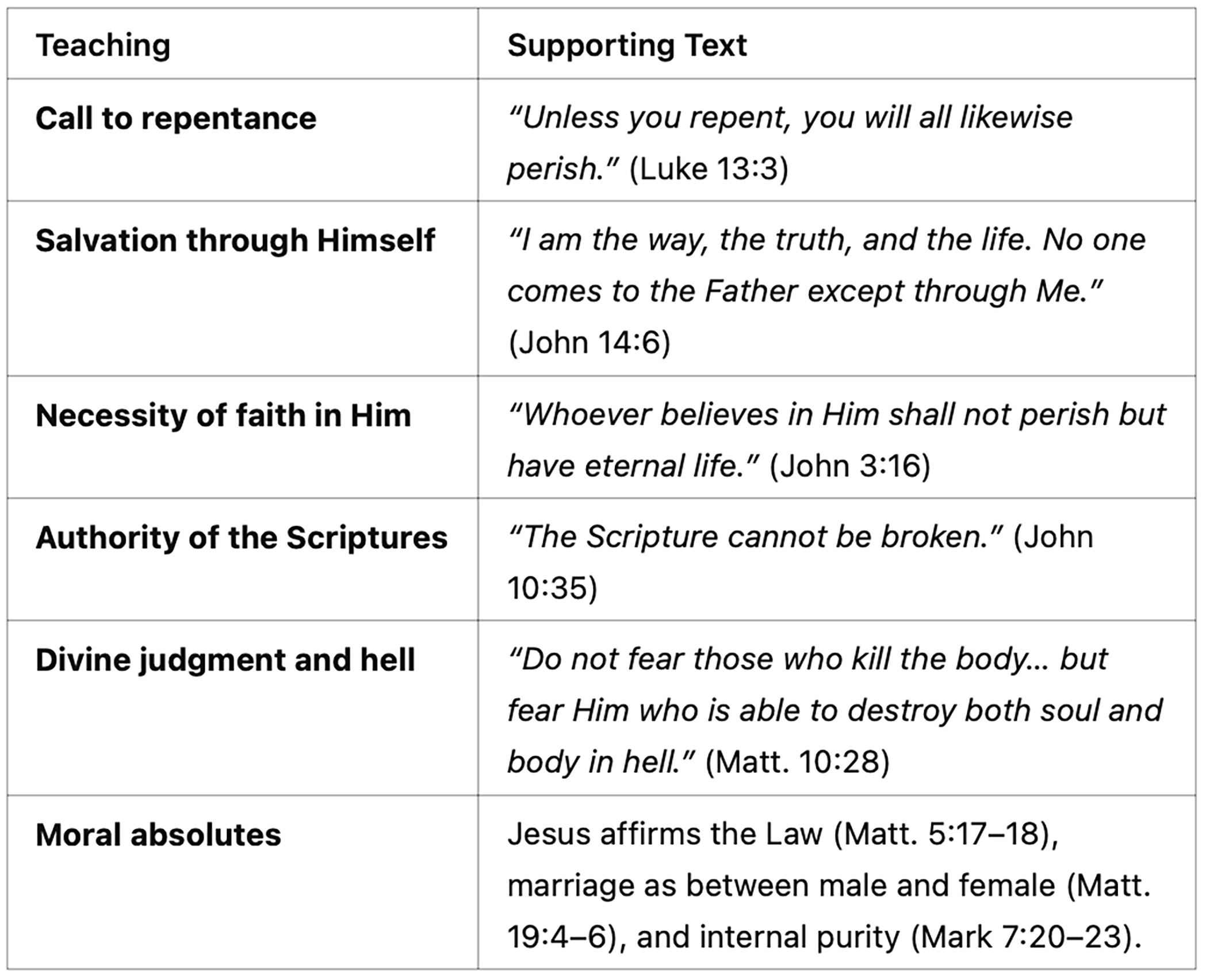
Copyright, RCR
Progressive Christianity Compared To What Jesus And The Bible Teach:
Progressive Christianity Redefines Repentance as transformation rather than turning from sin.
- They deny the exclusivity of salvation through Christ alone.
- They reject or reinterpret the idea of hell and judgment.
- They treat Scripture as fallible, culturally bound, and sometimes in error.
- They elevate personal conscience and social justice over obedience to moral law.
The Conclusion (Using Jesus’ Standard): Progressive Christianity does not align with what Jesus taught regarding sin, repentance, salvation, exclusivity, judgment, and Scriptural authority.
According to the New Testament Writers:
The Key Doctrinal Essentials from the Apostles:

Copyright, RCR
Progressive Christianity’s Errors:
- Frequently denies substitutionary atonement.
- Views salvation as a journey of healing or consciousness, not a saving act through faith in Christ.
- Downplays or redefines repentance and sin.
- •Emphasizes Scriptural diversity over inerrancy.
- Rejects eternal judgment in favor of universalism.
Conclusion (Using The New Testament Standard): Progressive Christianity diverges sharply from the apostolic gospel of the New Testament.
According to Historical Biblical Christianity:
Historical Christian Creeds (e.g., Nicene Creed, Apostles’ Creed):

Copyright, RCR
Conclusion (Using Historical Biblical Christianity): Progressive Christianity contradicts essential doctrines defined in the creeds and councils upheld by the universal Church for nearly 2,000 years.
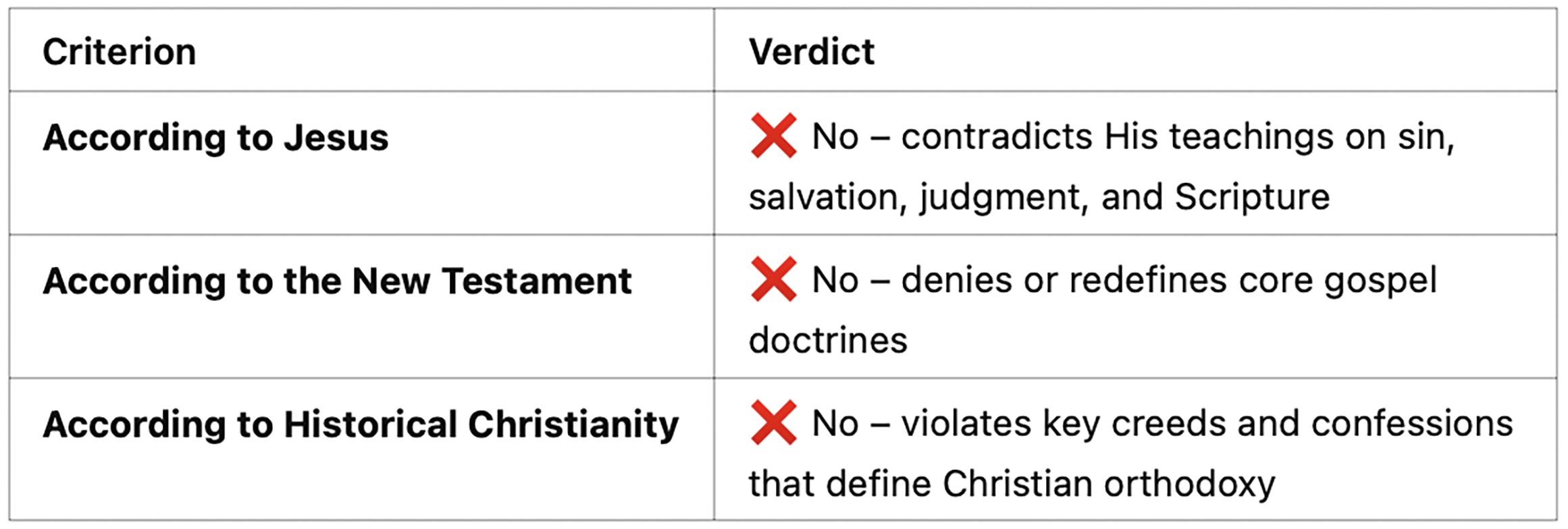
Copyright, RCR
Christian In Name But Not Practice
While Progressive Christianity uses Christian language and symbols, and while some adherents may have sincere intentions, the movement as a theological system cannot rightly be called “Christian” in the historic, biblical, and Christ-defined sense of the term.
Progressive Christianity Says That Jesus Never Said Anything Negative About Same-Sex Relationships
The Progressive Christian response to Genesis 19:24–25—where Yahweh (understood by traditional Christian theology as including the pre-incarnate Christ) destroys Sodom and Gomorrah—is typically reinterpreted or dismissed as not addressing homosexual behavior as traditionally understood. Their position seeks to reconcile Jesus’ perceived silence on LGBTQ matters in the Gospels with their theological assertion that He affirms inclusion rather than judgment.
It Was Jesus Who Destroyed Sodom And Gomorrah
Genesis 19:24–25 – The Judgment on Sodom
Genesis 19:24-25 “Then the LORD rained down fire and burning sulfur from the sky on Sodom and Gomorrah. He utterly destroyed them, along with the other cities and villages of the plain, wiping out all the people and every bit of vegetation.”
This verse uses the double divine reference: “Yahweh rained fire from Yahweh,” which early church fathers and conservative scholars have taken as evidence of plurality in the Godhead (e.g., Jesus as Yahweh acting from earth, while the Father is in heaven). This interpretation is used to link Jesus as pre-incarnate Yahweh with the judgment of Sodom.
Traditional Biblical Christian View:
- Jesus is Yahweh (cf. John 8:58, “Before Abraham was, I AM”).
- Therefore, Jesus participated in or directly enacted the judgment on Sodom.
- Sodom’s sin included sodomy (sexual sin between men), as seen in:
Genesis 19:5 – “Bring them out to us that we may know them” (Heb: yada = sexual intercourse)
Jude 1:7 – “…Sodom and Gomorrah… indulged in sexual immorality and pursued unnatural desire…”
This defines how Jesus (as Yahweh) did in fact, condemn and judge sodomy.
Progressive Christian Responses:
Progressive Christians interpret the text of Genesis 19:24-25: Progressive Christians Say That Genesis 19 is About Inhospitality, Not Homosexuality. They argue the sin of Sodom was violence, pride, and inhospitality, not consensual same-sex relationships.
Progressive Christians Cite: Ezekiel 16:49 – “This was the guilt of your sister Sodom: pride, excess of food, and prosperous ease, but did not aid the poor and needy.”
The Exegetical Problem of interpreting Ezekiel 16:49 in this manner is that Ezekiel mentions social injustice but does not exclude sexual sin. If we read the entire text of Ezekiel, we find that Progressive Christians leave out the scripture that describes sexual sin: “and committed abomination before Me.”
In Ezekiel 16:48–50, God compares Jerusalem to Sodom, saying, “Sodom never did what you and your daughters have done.” He explains that the sin of Sodom was that “She and her daughters were arrogant, overfed and unconcerned; they did not help the poor and needy. And they were haughty and committed abomination before Me.“
The Hebrew word used here for “abomination” is תּוֹעֵבָה tô‘êḇâ, the same Hebrew word used in Leviticus 18:22, “You shall not lie with a male as with a woman. It is an abomination, (Hebrew: תּוֹעֵבָה tô‘êḇâ; perverse, depraved).” The meaning is clear: The homosexual men of Sodom were practicing an abomination before God, having sex with each other, and they were also “arrogant, overfed and unconcerned; they did not help the poor and needy. And they were haughty.”
Genesis 18:20-21 states that the outcry of sin at Sodom and Gomorrah was so great that the Lord went to these cities to see this for Himself.
“And the Lord said, ‘Because the outcry against Sodom and Gomorrah is great, and because their sin is very grave, I will go down now and see whether they have done altogether according to the outcry against it that has come to Me; and if not, I will know.” ~Genesis 18:20-21
When we examine the actual texts of Genesis 19, we find that the reason there was such a great outcry over the sin of Sodom and Gomorrah is clear:
Genesis 19:1-5: “That evening, the two angels came to the entrance of the city of Sodom. Lot was sitting there, and when he saw them, he stood up to meet them. Then he welcomed them and bowed with his face to the ground. “My lords,” he said, “come to my home to wash your feet, and be my guests for the night. You may then get up early in the morning and be on your way again.” “Oh no,” they replied. “We’ll just spend the night out here in the city square.” But Lot insisted, so at last they went home with him. Lot prepared a feast for them, complete with fresh bread made without yeast, and they ate. But before they retired for the night, all the men of Sodom, young and old, came from all over the city and surrounded the house. They shouted to Lot, “Where are the men who came to spend the night with you? Bring them out to us so we can have sex with them!”
It was not the inhospitality of the men in Sodom and Gomorrah that caused the Lord to destroy the men who lived in these two cities. It was their desire for sex between men that brought the two angels to remove Lot and his family before the Lord destroyed these men in judgment. Genesis 19:24 clarifies this fact by defining the behavior of the men in Sodom and Gomorrah as an “abomination.”
Genesis 19:24 states that because these men were committing this abomination before the Lord, He came personally to the city and destroyed all of the men who lived there.
“Then the Lord rained brimstone and fire on Sodom and Gomorrah, from the Lord out of the heavens.” ~Genesis 19:24
The Hebrew word used in this verse for “Lord” is Yahweh. It is the same word used in the New Testament to describe Jesus as “Lord.” Those who translated the Koine-Greek of the New Testament into English understood that Jesus is Yahweh from the Old Testament; this is why they used the counterpart Greek word, “Kurios.”
It was the pre-incarnate Jesus who visited Sodom and Gomorrah, discovered that the men there were committing the sin of abomination by having sex with each other, and destroyed all of them.
When we arrive at the New Testament, the writers of these texts confirm that it was sex between men that caused their destruction
Jude 1:7: “And don’t forget Sodom and Gomorrah and their neighboring towns, which were filled with immorality and every kind of sexual perversion. Those cities were destroyed by fire and serve as a warning of the eternal fire of God’s judgment.”
2 Peter 2:6-10 “God condemned the cities of Sodom and Gomorrah and turned them into heaps of ashes…He is especially hard on those who follow their own twisted sexual desire.”
Why The LGBTQ+ Community Seeks To Redefine Ezekiel 16:48-50
The reason that this particular definition for the men of Sodom was placed at Wikipedia by advocates of same-sex relationships is that this is the preferred definition of the LGBTQ+ community. This definition diminishes and distorts the true acts that were taking place at Sodom, which caused its destruction.
This Redefining of Same-Sex Sin, Was Facilitated By The Progressive Christian Church
All that a person must do in order to discover what the sin of Sodom was is look up the definition for the word “Sodomy.”
The Merriam-Webster’s Dictionary Defines Sodom As Follows:
“The crime of oral or anal sexual contact or penetration between persons or of sexual intercourse between a person and an animal.“
From this definition, we learn that the term sodomy originated from the practice of sodomy that was occurring in ancient Sodom and Gomorrah. This tells us that the definition placed on Wikipedia for the sin of Sodom is intentionally inaccurate.
Jude 1:7 clearly defines their sin as “unnatural desire” (Greek: sarkos heteras, literally “different flesh”)—a sexual violation.
The Progressive Christian Church Asserts That Jesus Never Explicitly Condemned Homosexuality in the Gospels
Progressive theology often argues: “If LGBTQ behavior were so central to sin, Jesus would have said so.”
They claim His silence is approval by omission.
Response:
Jesus affirmed the sexual ethics of Genesis—male and female in marriage (Matthew 19:4–6), and upheld the moral law (Matthew 5:17–20). He did not address every sin individually (e.g., incest, bestiality, child sacrifice), yet these are universally condemned in Scripture and known to His Jewish audience.
The Progressive Christian Church Says That Jesus Is Not the Yahweh of the Old Testament (functionally)
Progressive theologians (e.g., Marcus Borg) argue that the violent depictions of Yahweh in the Old Testament reflect Israel’s limited theological development, not God’s true nature.
Jesus is seen as a corrective to violent images of God—not the same as the Yahweh who judged Sodom.
Response:
This view denies the unity of Scripture and the Trinity. The New Testament affirms that Jesus is Yahweh (John 1:1–3; Hebrews 1:1–3), and Paul confirms that Christ was present during the Exodus (1 Cor. 10:4).
The early translators of the New Testament from Koine Greek into English understood that the word “Lord” (κύριος, kurios) in the New Testament was often used to refer to Yahweh (יהוה, YHWH) in the Old Testament.
Understanding “Kurios” in the New Testament
In the Koine Greek Septuagint (LXX) translation of the Hebrew Scriptures (Tanakh), the divine name YHWH (יהוה) was consistently translated as κύριος (kurios), meaning “Lord.” This established a precedent for using “kurios” as a direct substitute for God’s covenant name.
The New Testament writers, being Jewish and well-versed in the Septuagint, carried this practice into their writings. When quoting Old Testament passages that referred to Yahweh, they used kurios in place of the Hebrew name for God. This is evident in many quotations where an Old Testament verse referring to YHWH is applied to Jesus Christ in the New Testament, equating Him with Yahweh.
Examples of “Kurios” as Yahweh in the New Testament
- Joel 2:32 → Romans 10:13
- Hebrew (Masoretic Text): “Whoever calls on the name of Yahweh (יהוה) shall be saved.”
- Septuagint (LXX): “Whoever calls on the name of kurios (κύριος) shall be saved.”
- Romans 10:13: “For whoever calls on the name of the Lord (κύριος) will be saved.”
Application: Paul explicitly applies this verse about Yahweh to Jesus Christ, equating Him with the Lord (YHWH).
- Isaiah 40:3 → Matthew 3:3
- Isaiah 40:3 (MT): “Prepare the way of Yahweh (יהוה); make straight in the desert a highway for our God.”
- Matthew 3:3: “Prepare the way of the Lord (κύριος), make His paths straight.”
Application: The verse about Yahweh is applied to Jesus, confirming that kurios in the NT refers to Yahweh.
- Psalm 102:25-27 → Hebrews 1:10-12
- Psalm 102:25-27 (MT): “Of old You laid the foundation of the earth, and the heavens are the work of Your hands… but You are the same, and Your years will have no end.”
- Hebrews 1:10-12: “You, Lord (κύριος), in the beginning laid the foundation of the earth…”
Application: The writer of Hebrews directly attributes Yahweh’s creative power to Jesus.
Did The Koine-Greek English Translators Recognize These Facts?
Yes, the early English translators (Tyndale, Geneva Bible, KJV, etc.) were aware of this exegetical connection. However, due to the limitations of English, they followed the tradition of using “LORD” (all caps) for YHWH in the Old Testament but “Lord” (capitalized) for kurios in the New Testament.
This sometimes obscured the fact that when the New Testament uses kurios, it is often referring to Yahweh Himself, particularly in passages where Jesus is identified with Yahweh.
The translators understood that kurios in the New Testament was often referring to Yahweh (יהוה) from the Old Testament. However, the lack of capitalization or differentiation in English sometimes makes this less explicit to modern readers. The theological reality remains that the NT writers, through the use of kurios, equated Jesus with YHWH, confirming His divine identity.

Copyright, RCR
Historical And Biblical Problems with the Progressive Christian View:
- Jude 1:7 refutes the “hospitality only” argument, directly tying Sodom’s sin to sexual immorality and “unnatural desire.”
- 2 Peter 2:6–8 links the destruction of Sodom to “lawless deeds,” seen as a moral warning to the ungodly.
- Jesus referred to Sodom’s judgment (Matt. 10:15; Luke 17:29) without suggesting reinterpretation or injustice.
- Jesus affirmed Torah morality, and Paul, His apostle to the Gentiles, condemned same-sex acts (Romans 1:26–27, 1 Cor. 6:9–10).
In The Final Analysis: According to Jesus, the New Testament, and historic Christian doctrine:
- Jesus is Yahweh, who judged Sodom and Gomorrah.
- The sin of Sodom was not only inhospitality but included perverse sexual sin (homosexual rape and unnatural desires).
- Jesus does not “remain silent” on sexual ethics—He upholds Genesis, marriage, and moral law.
This means that the Progressive assertion that “Jesus never condemned LGBTQ behavior” is inconsistent with the biblical record, both in terms of:
- His divine identity as Yahweh, who judged Sodom.
- His teaching ministry which upheld sexual morality.
- The teachings of His apostles, which reflect His authority and moral clarity.
The following is a detailed, documented history of the Progressive Christian movement, including its origins, theological development, key figures, institutional emergence, and rise in popularity, followed by primary sources and scholarly citations.
Historical Roots of Progressive Christianity
Progressive Christianity, as it exists today, did not emerge in a single moment, denomination, or council. Rather, it evolved gradually from 19th–21st century liberal theology, merging historical criticism of the Bible with Enlightenment humanism, postmodern skepticism, and cultural progressivism.
Precursors (18th–19th Century)
The Enlightenment (1700s): The Enlightenment introduced reason, science, and individualism as authorities rivaling the Bible. Deism and rational religion challenged the supernatural elements of Scripture.
1800s German Higher Criticism
- Schleiermacher (1768–1834) – Called the “father of liberal theology,” focused on the feeling of absolute dependence rather than doctrine or inerrancy.
- Julius Wellhausen – Documentary Hypothesis (JEDP), which questioned Mosaic authorship of the Pentateuch.
- David Friedrich Strauss – The Life of Jesus Critically Examined (1835), argued that the Gospels are myth, not history.
Primary Source: Schleiermacher, On Religion: Speeches to Its Cultured Despisers (1799)
Early 20th Century: Classical Liberal Theology
- Harry Emerson Fosdick (1878–1969) – A liberal Baptist pastor, denied the virgin birth and bodily resurrection. Sermon: “Shall the Fundamentalists Win?” (1922)
- Walter Rauschenbusch – A Theology for the Social Gospel (1917); taught that Christianity’s goal is to bring about social justice.
- The Fundamentalist–Modernist controversy erupted in mainline denominations (Presbyterian, Episcopal, Methodist, etc.)
Source: Gary Dorrien, The Making of American Liberal Theology: Imagining Progressive Religion, 1805–1900 (Westminster John Knox, 2001)
Progressive Christianity as a Named Movement (1990s–Present)
Formation of the Name “Progressive Christianity”
- 1994: Re-Imagining Conference in Minneapolis sparked widespread attention by challenging doctrines such as substitutionary atonement and affirming feminist and LGBTQ theology.
- 2006: The organization ProgressiveChristianity.org was formed (originally The Center for Progressive Christianity), formally defining “Progressive Christianity.”
The 8 Points of Progressive Christianity (by ProgressiveChristianity.org):
- Follow the teachings of Jesus.
- Affirm that the teachings of Jesus can be one path among many.
- Seek a community that is inclusive of all people.
- Value questions over absolutes.
- Affirm the search for understanding over doctrine.
- Promote justice and compassion.
- Seek peace and reconciliation.
- Recognize the importance of environmental sustainability.
Source: https://progressivechristianity.org
Cultural Rise of Progressive Christianity (2010s–Present)
Cultural Influences:
- Postmodern skepticism of meta-narratives and absolute truth.
- LGBTQ rights movement (especially post-Obergefell 2015)
- Deconstruction movement on social media and among younger evangelicals.
Popular Authors and Advocates:
- Brian McLaren – A New Kind of Christianity (2010), calls for abandoning traditional doctrines (original sin, substitutionary atonement). Source: Brian McLaren, A New Kind of Christianity (HarperOne, 2010)
- Rob Bell – Love Wins (2011), questions hell, emphasizes universalism. Source: Rob Bell, Love Wins (HarperOne, 2011)
- Richard Rohr – The Universal Christ (2019), focuses on cosmic Christology and panentheism. Source: Richard Rohr, The Universal Christ (Convergent, 2019)
- Rachel Held Evans (1981–2019) – Bridged evangelical upbringing and progressive theology.
Institutional Homes of Progressive Christianity
Denominations That Are Prominently Aligned With Progressive Ideology:
- United Church of Christ (UCC)
- Episcopal Church (USA)
- Evangelical Lutheran Church in America (ELCA)
- Presbyterian Church (USA)
- The Unitarian Universalist Association (UU—though not exclusively Christian)
Source: Diana Butler Bass, Christianity After Religion (HarperOne, 2012) – documents the shift in mainline denominations toward progressive values.
Statistical and Ecclesial Trends
While evangelical churches saw growth or stabilization through the 1990s–2010s, mainline denominations (increasingly progressive) have experienced significant numerical decline:
- PCUSA lost 61% of its membership from 1965 to 2020
- UCC and ELCA similarly declined
- Source: Pew Research Center: The Future of Religion in America
https://www.pewresearch.org/religion
Source: Aaron Earls, Lifeway Research, “Denominational Decline” (2022)

Copyright, RCR
SEE ALL OF ROB’S PUBLISHED BOOKS
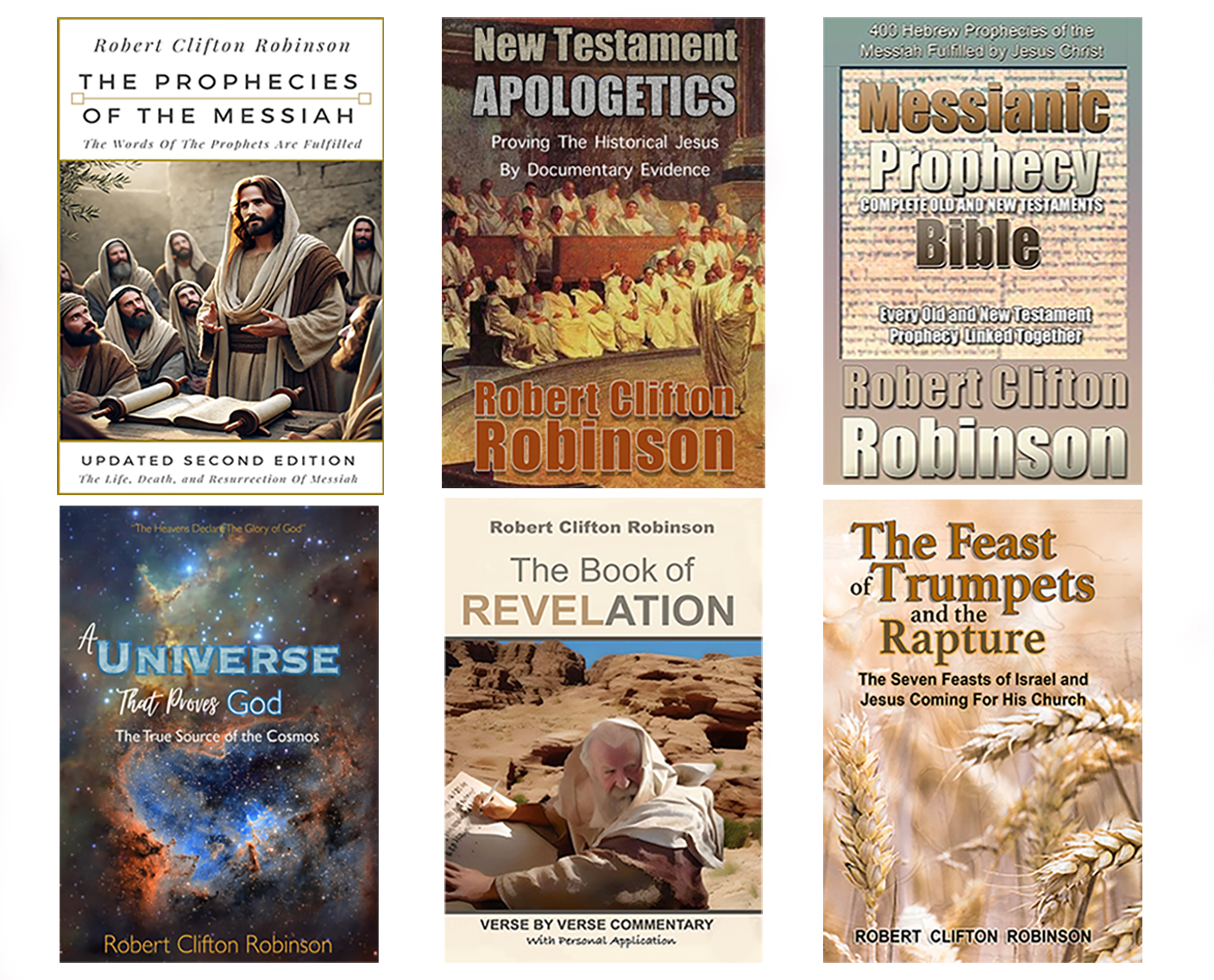
See All 43 of Rob’s Books
Sources and Citations:
Jesus as Yahweh and the Judge of Sodom
Key Scriptures:
- Genesis 19:24 – “Then the LORD rained… from the LORD out of heaven”
- John 8:58 – Jesus: “Before Abraham was, I AM.”
- Jude 1:7 – Sodom’s destruction for “sexual immorality and perversion”
- 2 Peter 2:6–8 – Sodom as an example of judgment
- Luke 17:28–30 – Jesus references Sodom’s destruction as a warning for future judgment
- 1 Corinthians 10:1–4 – Christ was the Rock in the wilderness, linking Him to OT Yahweh
Theological Sources:
- Michael Brown, Can You Be Gay and Christian?
- Argues for Jesus’ identity as Yahweh and interprets Genesis 19 as a judgment for sexual sin.
- •Robert Letham, The Holy Trinity
- Discusses the theological grounding of the Son’s preexistence and OT appearances.
Jesus’ Teachings on Repentance, Judgment, and Exclusivity
Key Scriptures:
- Luke 13:3,5 – “Unless you repent, you will all likewise perish.”
- John 14:6 – “I am the way, the truth, and the life…”
- Matthew 19:4–6 – Jesus affirms marriage as male + female
- Matthew 5:17–20 – Jesus affirms the Law, calling for obedience
- Matthew 10:28 – “Fear Him who can destroy both soul and body in hell.”
Sources:
D.A. Carson, The Gagging of God: Discusses Jesus’ moral authority and exclusivity claims.
John Stott, The Cross of Christ: A thorough evangelical defense of substitutionary atonement, showing Jesus’ teachings on sin.
Apostolic Teachings on Sin, Salvation, and Scripture
Key Scriptures:
- Romans 1:26–27 – Condemnation of same-sex relations as “unnatural”
- 1 Corinthians 6:9–10 – A list of sins that exclude from the Kingdom
- 2 Timothy 3:16–17 – “All Scripture is God-breathed…”
- Acts 2:38 – “Repent and be baptized…”
- Hebrews 9:27 – “It is appointed… to die once, and then judgment.”
Sources:
Wayne Grudem, Systematic Theology: Offers a conservative summary of biblical doctrines on sin and salvation.
Simon Gathercole, What Did Paul Really Mean?: Examines Paul’s doctrine of salvation and ethical standards.
James R. White, The King James Only Controversy: Defends biblical inspiration and apostolic authority.
Progressive Christian Interpretations
- Progressive Sources (representative, not endorsements):
- Brian McLaren, A New Kind of Christianity (2010): Rejects substitutionary atonement, critiques biblical literalism, affirms inclusivity.
- Rob Bell, Love Wins (2011): Denies eternal hell, supports universal reconciliation.
- Marcus Borg, The Heart of Christianity (2003): Advocates for metaphorical interpretations of Scripture and rejects biblical inerrancy.
- Richard Rohr, Falling Upward (2011): Emphasizes spiritual evolution over sin and judgment.
ProgressiveChristianity.org – Articles: “What Does Salvation Mean in Progressive Christianity?”
https://progressivechristianity.org
“Reclaiming Repentance as a Progressive Christian” by David Henson
https://www.patheos.com/blogs/davidhenson
Early Church Understanding (Patristics)
- Justin Martyr, Dialogue with Trypho, ch. 61: Links Jesus to the Yahweh who appeared to Abraham.
- Tertullian, Against Praxeas, ch. 15: Discusses the multiplicity of persons in the Old Testament appearances of God.
- Athanasius, On the Incarnation, sec. 2: Affirms Jesus as the divine Logos who appeared throughout the OT.
Historical Christianity and Creeds
- Nicene Creed (AD 325, revised 381): Affirms Jesus as “very God of very God… begotten, not made… by whom all things were made.”
- Apostles’ Creed: Asserts virgin birth, death, resurrection, judgment, and forgiveness of sins.
- Council of Chalcedon (AD 451): Confirms Jesus’ dual nature as fully God and fully man.
Sources:
- J.N.D. Kelly, Early Christian Doctrines: Details the historical development of key Christian doctrines.
- Philip Schaff, Creeds of Christendom: Compilation and explanation of historical Christian creeds.
Additional Sources and Citations
- Gary Dorrien, The Making of American Liberal Theology (3 vols., Westminster John Knox, 2001–2006)
- Brian McLaren, A New Kind of Christianity (2010)
- Rob Bell, Love Wins (2011)
- Richard Rohr, The Universal Christ (2019)
- Diana Butler Bass, Christianity After Religion (2012)
- ProgressiveChristianity.org – “The 8 Points of Progressive Christianity”
- Pew Research – “Religion in America: Decline of Christianity”
- Lifeway Research – “Denominational Decline and Growth” (2022)
Categories: Robert Clifton Robinson
 Robert Clifton Robinson
This was foretold to occur. It is sad. I recommend the following book.
LikeLike