The Reliability of the New Testament is Directly Linked to the Historical Manuscript Evidence and Early Church Historical Records
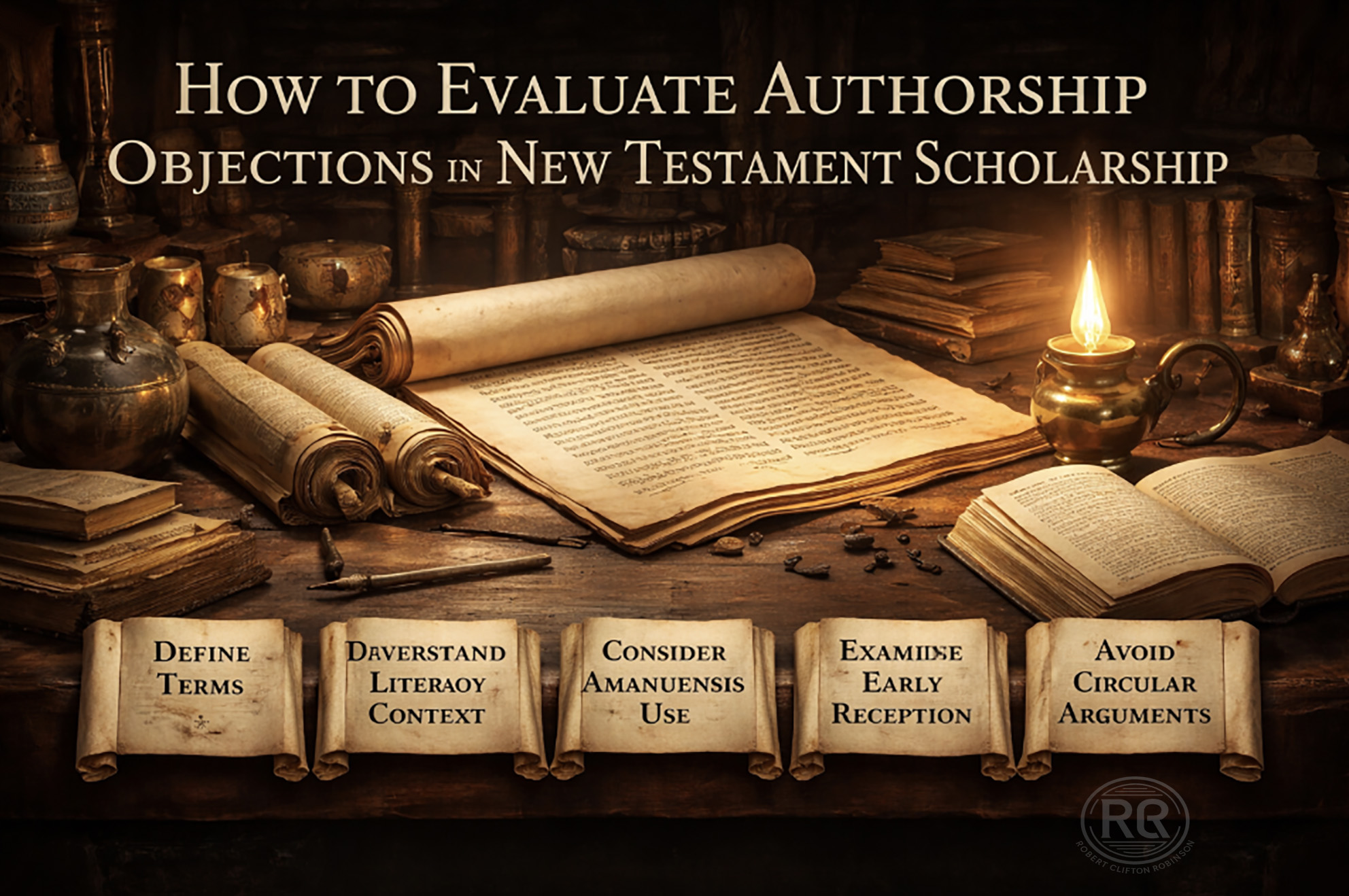
Modern New Testament scholarship has developed a recognizable pattern when evaluating disputed authorship. Whether the discussion concerns 1 Peter, the Pastoral Epistles, Ephesians, 2 Peter, or even aspects of the Gospels, the same categories of objection tend to recur: linguistic style, literacy assumptions, theological development, ecclesiastical structure, and the possibility of pseudonymity. These objections are often presented cumulatively, creating the impression of overwhelming evidence against traditional attribution. Yet when examined carefully, many of these arguments rest not upon demonstrable historical data, but upon layered assumptions, sociological generalizations, and circular models of theological development.
A disciplined methodology is therefore essential. Without one, the discussion easily devolves into presupposition-driven skepticism or reactionary defense. The question is not whether authorship claims should be examined critically—they must be—but whether they are examined with historical fairness and methodological consistency. What follows is a structured approach for evaluating authorship objections with rigor, proportion, and evidentiary discipline.
Identifying the Category of Objection
Authorship objections generally fall into five recurring types: linguistic, sociological, developmental, ecclesiastical, and pseudonymous. Linguistic objections argue that vocabulary, syntax, or rhetorical polish differ from what one would expect of the purported author. Sociological objections question whether the alleged author possessed the education or literacy necessary to compose the document. Developmental objections claim that the theology reflects a later stage of doctrinal evolution. Ecclesiastical objections argue that the church structures presupposed are too advanced for the apostolic period. Finally, pseudonymity objections suggest that writing in another’s name was a common and accepted practice in antiquity.
Each of these categories must be evaluated independently. Too often, they are blended rhetorically, creating a cumulative force that appears stronger than the individual components justify. Responsible historical inquiry requires disentangling the strands before weighing their evidentiary value.
Defining Terms Before Drawing Conclusions
Many authorship debates hinge on imprecise definitions. A frequently cited example is Acts 4:13, which describes Peter and John as ἀγράμματοι (agrammatoi). The term is commonly rendered “uneducated.” Yet lexical analysis demonstrates that the word refers to lack of formal scribal or rabbinic training, not necessarily to illiteracy in the modern sense.[1] In Second Temple Jewish usage, γραμματεύς (scribe) denoted formal training in Torah interpretation; thus, ἀγράμματος indicated absence of that credentialed status.[2] It does not follow that Peter was incapable of communication, commerce, or dictated correspondence.
Similarly, references to “polished Greek” must be defined carefully. Compared to classical Attic prose, many New Testament writings are stylistically modest. Even 1 Peter, often cited as an example of refined Greek, does not approach the sophistication of contemporary literary elites.[3] Assertions of stylistic polish frequently rest on relative comparison rather than objective linguistic thresholds.
Before accepting any objection, we must ask whether the terminology is descriptive or inferential. Does “advanced theology” describe the text’s content, or does it assume a developmental model in which high Christology could not emerge within the lifetime of eyewitnesses? Without careful definition, the conclusion may be embedded in the premise.
Literacy and Formal Education: Distinguishing Categories
Modern discussions of ancient literacy often cite estimates suggesting that only 3–10 percent of the Roman population was literate.[4] While these figures provide useful macro-level sociological insight, they cannot be applied indiscriminately to specific individuals without contextual nuance. Literacy in antiquity functioned along a spectrum, ranging from functional literacy in commerce to elite rhetorical education.[5] The ability to dictate a letter through a secretary did not require mastery of classical rhetoric.
Peter was not a subsistence peasant detached from economic networks. As a commercial fisherman operating in Galilee—a region intersecting major trade routes and exposed to Hellenistic influence—he likely possessed at least functional familiarity with Greek.[6] Archaeological discoveries, including Greek inscriptions and coinage in Galilee, complicate the image of an isolated Aramaic backwater.[7] Moreover, Peter’s decades of ministry following the events of Acts 4 would have provided ample opportunity for linguistic development.
To assume that a Galilean fisherman in his early ministry could never, under any circumstances, participate in the production of a Greek epistle decades later is to freeze a historical figure in a single moment of narrative description. Such static assumptions fail to account for growth, exposure, and collaboration.
The Role of Amanuenses in Ancient Letter Writing
One of the most neglected factors in authorship debates is the widespread use of amanuenses (secretaries) in Greco-Roman epistolary practice. Ancient letter production was frequently collaborative. Secretaries could function at varying levels of involvement: from verbatim transcription to stylistic refinement and structural organization.[8]
Explicit evidence of this practice appears within the New Testament itself. Tertius identifies himself as the one who wrote the Epistle to the Romans (Rom 16:22), while Paul remains the acknowledged author.[9] In 1 Peter 5:12, the phrase “through Silvanus” (Διὰ Σιλουανοῦ) likely indicates that Silvanus served as either courier or compositional assistant.[10] The preposition διά with the genitive commonly denotes agency or instrumentality.[11]
Ancient sources attest that secretaries often exercised significant editorial freedom while preserving the author’s intent.[12] Therefore, stylistic variation cannot be treated as an automatic disproof of authorship. On the contrary, the explicit naming of a collaborator strengthens historical plausibility, providing a concrete explanation for literary features without requiring pseudonymity.
Early Reception and Patristic Testimony
The reception history of a document carries substantial evidentiary weight. 1 Peter, for example, appears to have been widely accepted in the late first and early second centuries. Echoes of its language appear in 1 Clement and Polycarp,[13] and explicit attribution emerges in Irenaeus and Tertullian.[14] Notably, no competing authorship tradition is recorded in the early centuries.
When pseudonymous works circulated in antiquity, disputes often arose. The early church debated Hebrews, 2 Peter, Revelation, and certain other writings before their canonical recognition.[15] The absence of recorded controversy surrounding 1 Peter’s authorship suggests either early consensus or lack of grounds for dispute.
Uniform reception does not prove authenticity conclusively, but it raises the burden of proof for those proposing inauthenticity. Skepticism must be justified by positive evidence, not merely by modern plausibility.
Avoiding Developmental Circularity
Perhaps the most subtle methodological error in authorship debates is developmental circularity. The argument often proceeds as follows: the theology of a given epistle appears advanced; advanced theology must represent a later stage of doctrinal evolution; therefore, the document must be late and pseudonymous. Yet the premise that “advanced theology must be late” is itself an unproven hypothesis.[16]
High Christology appears in early Pauline material widely dated to the 50s AD, including Philippians 2:6–11 and 1 Corinthians 8:6.[17] Scholars such as Larry Hurtado and Richard Bauckham have argued that devotion to Jesus as divine emerged within the earliest Christian communities.[18] If so, theological sophistication cannot serve as a chronological disqualification.
The developmental model must be independently established before it is used as a dating mechanism. Otherwise, the conclusion simply reiterates the presupposition.
Possibility Versus Probability
A frequent logical misstep in authorship objections is the conflation of possibility with probability. It is possible that a later disciple wrote in Peter’s name. It is possible that stylistic differences indicate a different author. It is possible that theology evolved more gradually than traditionally assumed. But possibility does not equal historical likelihood.
Historical reasoning requires weighing competing hypotheses and assessing which best accounts for the totality of the evidence.[19] A pseudonymous hypothesis must explain not only linguistic features but also early reception, absence of dispute, theological coherence, and historical context. If traditional authorship accounts for the data more simply and with fewer speculative assumptions, it remains a viable explanation.
Internal Coherence and Historical Context
Authenticity gains strength when internal evidence aligns with known historical realities. 1 Peter addresses believers in Asia Minor facing social marginalization and localized persecution, conditions plausibly situated in the 60s AD under Nero.[20] The letter’s pastoral tone and emphasis on suffering resonate with traditions concerning Peter’s own martyrdom.[21]
Moreover, the use of the Septuagint reflects the needs of a Greek-speaking diaspora audience. Diaspora Jews and Gentile converts commonly relied upon the Greek Scriptures.[22] Quoting the Septuagint does not require elite literary training; it reflects pastoral accommodation to the audience.
Absent clear anachronisms, the internal evidence does not compel late dating.
Arguments from Silence and Vocabulary Variation
Authorship objections frequently appeal to vocabulary differences. The Pastoral Epistles, for example, contain numerous words absent from Paul’s undisputed letters.[23] Yet vocabulary variation can arise from changes in topic, audience, and occasion. Statistical arguments based on hapax legomena must be contextualized within the brevity of certain documents and the breadth of themes addressed.[24]
Arguments from silence—such as failure to mention particular controversies—are inherently weak. Ancient authors were not required to address every issue in every letter. Absence of expected material does not constitute proof of inauthenticity.
Burden of Proof and Methodological Neutrality
Historical inquiry must avoid asymmetrical burden-shifting. If a document claims apostolic origin, is early, lacks internal contradiction, and is uncontested in early reception, the burden lies with those rejecting its authenticity to present compelling counter-evidence.
Methodological neutrality does not require skepticism as a default. It requires proportionate evaluation. A presumption of inauthenticity is as unwarranted as blind traditionalism.
The End Result
Authorship objections in New Testament scholarship must be evaluated with lexical precision, historical context, sociological nuance, and logical discipline. Linguistic variation does not automatically disprove authorship. Literacy statistics cannot be indiscriminately imposed upon specific individuals. Developmental models must be independently demonstrated before functioning as dating tools. Early reception history carries evidentiary weight. Possibility must not be confused with probability.
When these methodological safeguards are applied, traditional authorship in many disputed cases—including 1 Peter—remains historically viable. The goal is not to shield tradition from scrutiny, nor to dismantle it reflexively, but to weigh evidence proportionally and fairly. In doing so, authorship debates become not arenas of presupposition but exercises in disciplined historical reasoning.
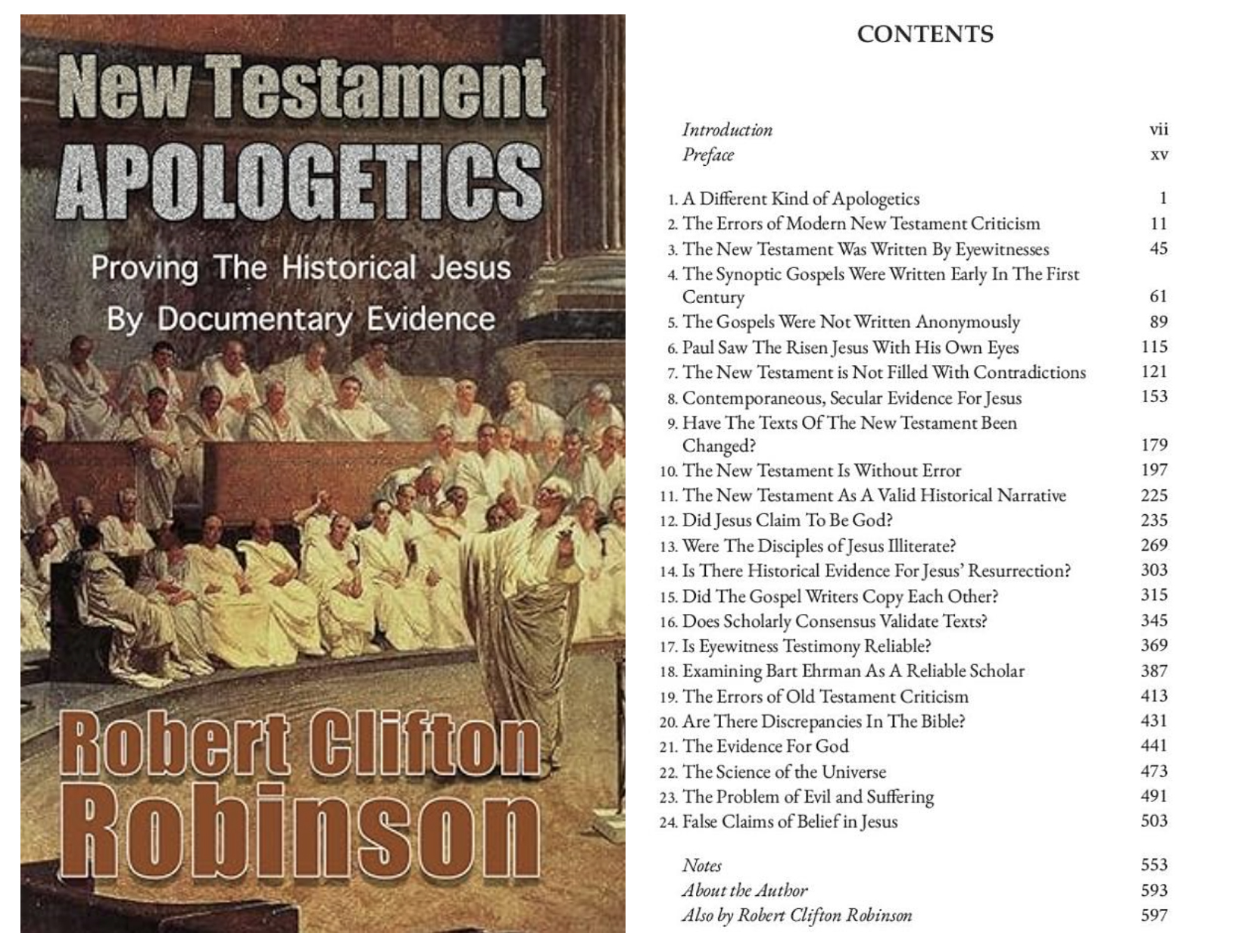
See Rob’s Concise Treatise on New Testament Reliability: “New Testament Apologetics: Proving The Historical Jesus By Documentary Evidence”
Sources and Citations
- BDAG, s.v. “ἀγράμματος.”
- Craig S. Keener, Acts: An Exegetical Commentary, Vol. 2 (Grand Rapids: Baker Academic, 2013), 1075–1076.
- Daniel B. Wallace, Greek Grammar Beyond the Basics (Grand Rapids: Zondervan, 1996), 22–23.
- William V. Harris, Ancient Literacy (Cambridge: Harvard University Press, 1989), 22–25.
- Catherine Hezser, Jewish Literacy in Roman Palestine (Tübingen: Mohr Siebeck, 2001), 35–42.
- Richard A. Horsley, Archaeology, History, and Society in Galilee (Valley Forge: Trinity Press, 1996), 48–52.
- Mark A. Chancey, The Myth of a Gentile Galilee (Cambridge: Cambridge University Press, 2002), 98–105.
- E. Randolph Richards, Paul and First-Century Letter Writing (Downers Grove: IVP Academic, 2004), 34–62.
- Ibid., 163–168.
- Karen H. Jobes, 1 Peter (Grand Rapids: Baker Academic, 2005), 305–308.
- Daniel B. Wallace, Greek Grammar Beyond the Basics, 368–369.
- Cicero, Ad Atticum 13.25.3.
- 1 Clement 49; Polycarp, Philippians 1.3.
- Irenaeus, Against Heresies 4.9.2; Tertullian, Prescription Against Heretics 36.
- Eusebius, Ecclesiastical History 3.25.
- Bart D. Ehrman, Forged (New York: HarperOne, 2011), 89–110.
- Gordon D. Fee, Pauline Christology (Peabody: Hendrickson, 2007), 31–45.
- Larry W. Hurtado, Lord Jesus Christ (Grand Rapids: Eerdmans, 2003), 2–15; Richard Bauckham, Jesus and the God of Israel (Grand Rapids: Eerdmans, 2008), 1–59.
- C. Behan McCullagh, Justifying Historical Descriptions (Cambridge: Cambridge University Press, 1984), 19–26.
- Jobes, 1 Peter, 29–35.
- Eusebius, Ecclesiastical History 2.25.
- Moisés Silva, Invitation to the Septuagint (Grand Rapids: Baker Academic, 2000), 55–60.
- P. N. Harrison, The Problem of the Pastoral Epistles (Oxford: Oxford University Press, 1921), 12–18.
- Stanley E. Porter, “The Linguistic Analysis of the Pastoral Epistles,” in Entrusted with the Gospel, ed. Köstenberger and Wilder (Nashville: B&H, 2010), 113–129.
Categories: Robert Clifton Robinson


I really appreciate the clarity of what you’ve done here. Very well-reasoned. Thank you, and bless you.
LikeLiked by 1 person
For those that wish not to believe, which is their God given right, nothing that we can say now will convince them if their heart’s are not incline to accept the truth given by the Holy Spirit.
So it is my belief that many will believe when they see with their own eyes that which is to be fulfilled – the Rapture, the Ezekiel 38:39 Wars and that which is called the Tribulation and Great Tribulation. Because we know from scripture that many will come to the truth during the Seven Year Tribulation Period (and lose their lives because of it) the words written here on these pages become very important for two reasons:
Just as it is important to have this knowledge now, possessing it in the Seven Year Tribulation Period will be hard to come by and once found will cost you your life.
Thank you Brother Rob for all you do. Thank you to the Holy Spirit for continuing to educate and enlightening us to the truth through Brother Rob.
Prayers and blessings always to those that read these pages and find salvation.
The Beginning is Near!
LikeLike