 One of the most persistent criticisms against the New Testament is the assertion that Paul was merely a religious teacher expressing personal opinions, rather than a man speaking under God’s authority. Critics often attempt to separate Paul from Jesus by claiming that Christianity was transformed from the simple teachings of Christ into a system of theology invented later by Paul. This argument has become increasingly common in modern scholarship and popular internet discussions. Yet when the actual evidence of the New Testament is examined carefully, the conclusion is clear: Paul understood that the message he delivered originated from God, not from himself. He knew that the Gospel he preached had been revealed directly by Jesus Christ, and he wrote with the authority of one who had been personally commissioned by the risen Lord.
HEAR THE AUDIOBOOK INTRODUCTION
This doesn’t mean that Paul viewed himself as equal to God, nor does it suggest arrogance or self-exaltation. In fact, Paul repeatedly described himself as unworthy. He referred to himself as “the chief of sinners, the least of the apostles” and acknowledged that before he met the risen Jesus, he had persecuted the Christian church.[1] Yet despite his humility concerning his past, Paul possessed absolute confidence regarding the source of his message. That confidence rested entirely upon the revelation he had received from Jesus Himself.
Paul stated this in Galatians:
“Dear brothers and sisters, I want you to understand that the gospel message I preach is not based on mere human reasoning. I received my message from no human source, and no one taught me. Instead, I received it by direct revelation from Jesus Christ.”[2]
This statement is extraordinary. Paul was declaring that the Gospel message he preached did not originate through human instruction, theological speculation, or religious tradition. It came directly from Christ. The language Paul used here mirrors the claims made by Old Testament prophets who spoke not from personal insight, but from the revelation of God. Paul understood that he was a chosen messenger entrusted with the truth revealed by Jesus Himself.
The term “direct revelation” means that Jesus communicated directly with Paul and gave him the texts that he recorded in the New Testament. This is much in the same way that Jesus, as Yahweh in the Old Testament, communicated with Moses and gave him the texts of Genesis.[3] How could Moses know the details of the creation of the universe and all of the details of the early days of the Israelites, unless it was directly communicated to him by Jesus?
The Book of Acts records the historical foundation for Paul’s confidence. Before becoming a follower of Jesus, Paul, then known as Saul of Tarsus, was one of Christianity’s fiercest opponents. He actively participated in the persecution of believers, imprisoning Christians and consenting to their deaths.[4] He was not searching for Jesus, nor was he emotionally seeking belief in Him. In fact, Paul considered the Christian church dangerous and blasphemous. Then, on the road to Damascus, everything changed.
Acts 9 describes how the risen Jesus appeared directly to Paul in overwhelming glory.[5] This encounter transformed him completely. The persecutor of Christians became the chief architect of the New Testament in revealing Jesus. Paul consistently based his apostolic authority upon this personal, visible appearance of Jesus. In his first letter to the Corinthians, Paul said that he saw Jesus “with His own eyes.”
1 Corinthians 9:1 “Am I not as free as anyone else? Am I not an apostle? Haven’t I seen Jesus our Lord with my own eyes?”
For Paul, seeing the risen Jesus was not merely a spiritual impression, vision, hallucination, or feeling. Paul makes it clear that he saw Jesus with his eyes, risen from the dead after being brutally crucified, dead and buried in a tomb.
This event on the road to Damascus was the defining historical event of his life. He regarded himself as an eyewitness of the resurrected Jesus, personally appointed and commissioned by Him.
This point is critically important because the authority of an apostle in the first century rested upon direct appointment by Christ Himself. None of the other Apostles would have accepted Paul’s apostleship if he had not seen the risen Jesus. This was a preeminent requirement for all Apostles.[6]
Jesus had originally chosen the Twelve during His earthly ministry, and after His resurrection, He commissioned them to proclaim the Gospel to the world.[7] Paul believed that Jesus had also appointed him as an apostle to the Gentiles. In Acts 9:15, Jesus declared concerning Paul:
Acts 9:15-16 But the Lord said, “Go, for Saul is my chosen instrument to take my message to the Gentiles and to kings, as well as to the people of Israel. 16 And I will show him how much he must suffer for my name’s sake.”
For this reason, Paul didn’t see himself as someone who was creating a new religion or set of doctrines. He viewed himself as appointed by Jesus to be a witness commissioned to proclaim the truth of His Gospel.
Because of this calling directly by Jesus, Paul wrote with remarkable authority. In several of his letters, he made statements that would be impossible to justify if he believed he was merely offering personal religious observations and ideas. Notice how Paul frames his authority in his letter to the Corinthians:
1 Corinthians 14:37 “If you claim to be a prophet or think you are spiritual, you should recognize that what I am saying is a command directly from the Lord himself.”
This is one of the clearest statements in the New Testament regarding Paul’s understanding of his own writings. He didn’t describe his teachings as suggestions or theological opinions. He identified them as “commands directly from the Lord.” This language is unmistakable that Paul believed that what Jesus told him to write was the words of Scripture, equal to Scripture in the Old Testament.
We see this in his letter to the Christians at Thessalonica. Paul thanks them for receiving what he wrote as the very word of God:
1 Thessalonians 2:13 “Therefore, we never stop thanking God that when you received his message from us, you didn’t think of our words as mere human ideas. You accepted what we said as the very word of God—which, of course, it is. And this word continues to work in you who believe.”
Again, Paul distinguished his teaching from ordinary human speech. He understood that the message entrusted to him came from God Himself.
Critics sometimes argue that Paul merely claimed authority for himself without recognition from others. However, the New Testament demonstrates that the other apostles also acknowledged Paul’s calling by God and his authority. One of the strongest examples appears in Peter’s second epistle. Referring to Paul’s writings, Peter stated:
2 Peter 3:15-16 “And remember, our Lord’s patience gives people time to be saved. This is what our beloved brother Paul also wrote to you with the wisdom God gave him—16 speaking of these things in all of his letters. Some of his comments are hard to understand, and those who are ignorant and unstable have twisted his letters to mean something quite different, just as they do with other parts of Scripture. And this will result in their destruction.”
Peter then continued by describing how unstable individuals twisted Paul’s writings “as they do also the other Scriptures.”[8] The significance of this statement cannot be overstated. Peter placed Paul’s writings alongside “the other Scriptures,” using the same Greek term consistently applied to Old Testament Scripture (γραφάς — grapha), Scripture from God, used throughout the New Testament.[9] During the lifetime of the apostles, Paul’s letters were already being recognized as inspired by God, the Word of God.
This recognition did not emerge centuries later through church councils inventing authority where none existed. The first-century apostolic church acknowledged Paul’s commission by God almost immediately because the evidence of God’s hand upon his ministry was undeniable.
Another important fact often overlooked is the complete harmony between Paul’s teachings and the teachings of Jesus. Critics frequently attempt to portray Paul as corrupting Christianity or inventing doctrines foreign to Christ. Yet when the Gospels and Paul’s letters are examined together, their message about Jesus and salvation is entirely consistent.
Jesus taught salvation through faith.[10] Paul taught salvation through faith.[11] Jesus declared Himself the Son of God.[12] Paul proclaimed Jesus as the divine Son of God.[13] Jesus predicted His death and resurrection.[14 ]Paul preached Christ crucified and risen again.[15] Jesus warned about eternal judgment.[16] Paul likewise taught final judgment.[17]
Paul did not invent a new religion. He explained the meaning and purpose of the Gospel already proclaimed by Jesus. Paul’s extensive knowledge of the Old Testament as a preeminent Hebrew scholar enabled him to recognize how Jesus fulfilled the 400 Messianic prophecies of the Old Testament that are documented in the New Testament. Educated under Gamaliel, one of Judaism’s most respected teachers,[18] Paul possessed extraordinary training in the Hebrew Scriptures. After encountering Jesus, he came to understand that the Law, Prophets, sacrifices, covenants, and promises all pointed to Jesus as the promised Messiah.
For this reason, Paul wrote not merely as a theologian but as a witness to fulfilled prophecy and God’s revelation of Himself as Christ.
The strongest evidence that Paul truly believed his message originated from God is found in the life he lived. False teachers typically seek wealth, comfort, prestige, or political influence. Paul gained none of these things. Instead, his ministry brought imprisonment, beatings, rejection, suffering, and eventually execution under Rome.[19] He endured these hardships because he was absolutely convinced that Jesus had truly risen from the dead and had personally commissioned him.
There is no other explanation for Saul’s sudden conversion to faith in Jesus as the Messiah and Son of God, when he had recently been seeking the death of Christians and the eradication of the name of Jesus. Only if Paul did see the risen Jesus would he give up all that came before and seek only to know Jesus.
Philippians 3:5-9 “I was circumcised when I was eight days old. I am a pure-blooded citizen of Israel and a member of the tribe of Benjamin—a real Hebrew if there ever was one! I was a member of the Pharisees, who demand the strictest obedience to the Jewish law. 6 I was so zealous that I harshly persecuted the church. And as for righteousness, I obeyed the law without fault.
7 “I once thought these things were valuable, but now I consider them worthless because of what Christ has done. 8 Yes, everything else is worthless when compared with the infinite value of knowing Christ Jesus my Lord. For his sake I have discarded everything else, counting it all as garbage, so that I could gain Christ 9 and become one with him.”
It was the certainty of all that Paul wrote regarding the risen Jesus that Christians were willing to die in the first three centuries rather than deny that Jesus had risen from the dead.
While it is possible that a person could die for a lie, in the case of Christianity, those who believed Jesus had risen from the dead had credible evidence to support their fervent belief. Christians of that time had something in their possession that others who died for their beliefs did not have: a written record from eyewitnesses, who stated they had seen Jesus crucified and then alive three days later.
This record also contained the testimony of the most astute Pharisee in Israel, Saul of Tarsus, who stated in 14 letters that he had seen the resurrected Jesus with his own eyes.
Paul understood that God had entrusted him with the truth about who Jesus is and why He came to earth, a truth to be delivered to anyone who would believe it. Paul knew that the words he wrote were not merely his own ideas, but a revelation given through the Holy Spirit. The apostles recognized this authority, the early church received these writings as Scripture, and history has preserved them because they are indeed the inspired Word of God.
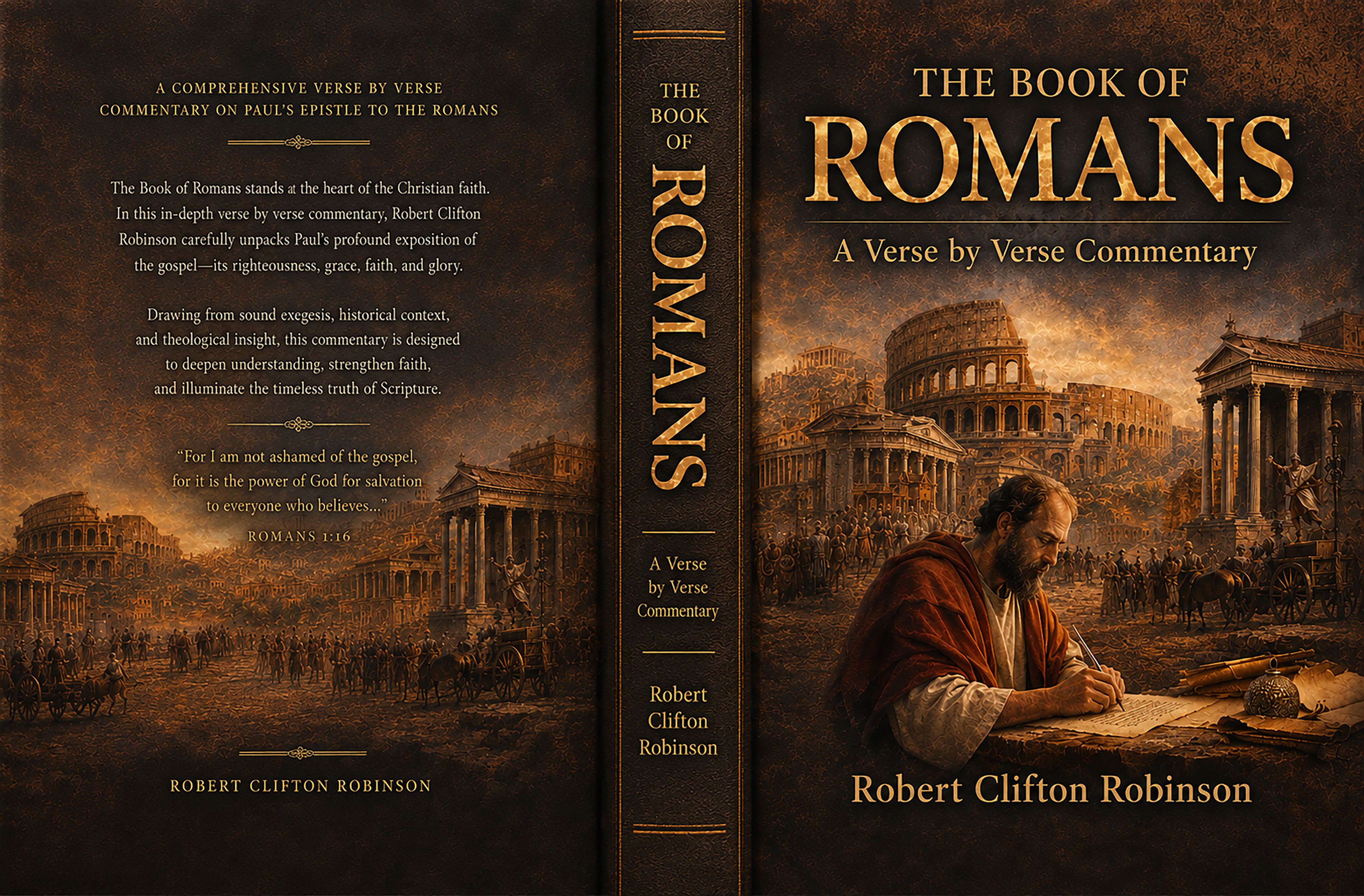
The Preceding Is From My New Book: “Romans, A Verse-by-Verse Useful Commentary”
See it at Amazon in Kindle eBook, Paperback, Hard Cover, and Audio Book Formats HEAR THE AUDIOBOOK INTRODUCTION
Sources and Citations
1. 1 Corinthians 15:9
2. Galatians 1:11-12
3. Jesus did not begin His existence at Bethlehem in the New Testament. John 1, Colossians 1, Hebrews 1, and Jesus Himself said that He is the Eternal God who has always existed.
There are 6,800 references to Jesus as Lord in the original Koine Greek texts of the New Testament. The translators of the Greek texts into English understood that the same Lord Jesus of the New Testament is the same Lord Yahweh in the Old Testament.
4. Acts 8:1-3
5. Acts 9:1-9
6. Acts 1:21-22 “We must choose a replacement for Judas from among the men who were with us from the beginning as we were traveling with the Lord Jesus—22 from the time he was baptized by John until the day he was taken from us. Whoever is chosen must be a witness of Jesus’ resurrection.”
7. Matthew 28:18-20; Acts 1:8
8. 2 Peter 3:16
9. Matthew 21:42 Jesus said: “Did ye never read in the Scriptures…”
Greek: ἐν ταῖς γραφαῖς (en tais graphais)
John 10:35 Jesus said: “…and the Scripture cannot be broken.”
Greek: ἡ γραφή (hē graphē)
Romans 1:2 Paul wrote: “Which he had promised afore by his prophets in the holy Scriptures.”
Greek: γραφαῖς ἁγίαις (graphais hagiais)
2 Timothy 3:16 Paul wrote: “All Scripture is given by inspiration of God…”
Greek: πᾶσα γραφὴ (pasa graphē)
When Peter says people twist Paul’s letters “as they do also the other Scriptures,” he is placing Paul’s writings into the same category as the recognized biblical Scriptures already acknowledged as inspired by God.
10. John 3:16-18
11. Romans 3:28
12. John 10:36
13. Romans 1:3-4
14. Matthew 16:21
15. 1 Corinthians 15:3-4
16. Matthew 25:31–46.
17. 2 Corinthians 5:10
18. Acts 22:3
19. 2 Corinthians 11:23-28
Categories: Robert Clifton Robinson


Thank you Rob, for this wonderful writeup about Paul. Paul was filled with the power of the Holy Spirit to do and write what he did. Many people do not understand how the infilling of the Holy Spirit actually works and in each one of us he moves differently for the use of our individual gifts and talents. Paul was an intellect and brilliant scholar therefore God was able to use him to get into the hearts and minds of the people and he is still doing that. It is incredible that we have the actual word of God, given to men, for his instruction on Godly living and getting through the days of our lives. I am a writer for my own ladies encouragement ministry (www.poweroftwelve.org) so I truly appreciate your ministry. We do what we do for the Lord and for others, no matter the cost.
LikeLiked by 1 person
I was able to place my comment through the WordPress site. 🙂
LikeLike
I tried to comment but they are not going through. 😦
LikeLike
Thank you Rob, for this wonderful writeup about Paul.
Paul was filled with the power of the Holy Spirit to do and write what he did. Many people do not understand how the infilling of the Holy Spirit actually works and in each one of us he moves differently for the use of our individual gifts and talents. Paul was an intellect and brilliant scholar therefore God was able to use him to get into the hearts and minds of the people and he is still doing that.
It is incredible that we have the actual word of God, given to men, for his instruction on Godly living and getting through the days of our lives. I am a writer for my own ladies encouragement ministry (www.poweroftwelve.org) so I truly appreciate your ministry. We do what we do for the Lord and for others, no matter the cost.
LikeLiked by 1 person
Thanks Rob for this wonderful writeup about Paul. Paul was filled with the power of the Holy Spirit to do and write what he did. Many people do not understand how the infilling of the Holy Spirit actually works and in each one of us he moves differently for the use of our individual gifts and talents. Paul was an intellect and brilliant scholar therefore God was able to use him to get into the hearts and minds of the people and he is still doing that. It is incredible that we have the actual word of God, given to men, for his instructions on Godly living and getting though the days of our lives.
I am a writer in my own ladies encouragement ministry so I truly appreciate your ministry. We do what we do for the Lord and for others, no matter the cost.
https://www.poweroftwelve.org/
LikeLiked by 1 person