I have had several debates with different AI models since they were first offered to the public. I found the early models of OpenAI to be unbiased, fair, and extremely knowledgeable about the Bible and its correct exegetical applications.
I did not find, at first, or now, the same neutrality with the Grok AI model. I have had to correct Grok on several inaccurate and biased conclusions regarding the eyewitness historical testimony of the New Testament concerning Jesus, as well as the Cosmology of the universe.
This essay displays a conversation I had this morning (October 10, 2026) with Grok.
Grok

No scientific evidence indicates any gods, singular or plural, rule the universe. Observed phenomena follow consistent physical laws without requiring supernatural direction. Claims of one god or many remain matters of faith and culture across history, unproven either way. Available data favors natural explanations over both.
Robert Clifton Robinson
@MenWhoSawJesus
You are wrong, Grok. The assertion that “God has no scientific basis” is a common argument among atheists. However, this statement reflects a misunderstanding of both science and the nature of evidence.
While science cannot directly test metaphysical concepts like God, it can examine empirical evidence that points to intelligent design, causality, and fine-tuning in the universe. When natural explanations fail to account for these phenomena, the most rational inference is that an intelligent Creator is responsible for the existence of the universe.
The Fine-Tuning Argument as Scientific Inference (From my book: “A Universe From God”)
Scientific evidence shows that the universe is governed by physical constants—such as the gravitational constant, cosmological constant, and electromagnetic force—that must fall within narrow, precise ranges for life to exist. Even the slightest deviation would render life impossible. This precision suggests intentional calibration rather than random chance.
For example, the cosmological constant, which governs the expansion rate of the universe, is fine-tuned to one part in 10^120. If it were even slightly stronger or weaker, galaxies, stars, and planets could not form, making life impossible.
In science, extreme improbability often points to intentional design. Just as archaeologists infer intelligence when discovering arrowheads (rather than random rocks), the fine-tuning of the universe is best explained by an intelligent designer.
The Impossibility of a Self-Created Universe
The scientific principle of causality states that every effect must have a cause. Since the universe is an effect, it cannot be its own cause. A natural process cannot create itself because it would have to exist before it began—an impossibility. Thus, the universe requires an uncaused, eternal Being who transcends time, space, and matter.
The Big Bang theory demonstrates that time, space, and matter began simultaneously. Since physical laws did not exist before the Big Bang, the cause of the universe must be non-physical, timeless, and immaterial—attributes that align with the concept of God. Therefore, the claim that “God has no scientific basis” ignores the logical necessity of a supernatural cause to explain the universe’s origin.
The Scientific Method Supports Inferences to the Best Explanation
While the scientific method is designed to test natural phenomena within the universe, it also allows scientists to make inferences based on evidence. When natural explanations fail, it is reasonable to infer a non-natural cause. For instance, when scientists discover complex coded information in DNA, they infer an intelligent source, just as software implies a programmer. Similarly, the precise fine-tuning of the universe is best explained by an intelligent Creator.
The inability of natural processes to account for this precision makes the inference of God more rational than the assumption that the universe arose by chance.
How The Physical Constants And Fine-Tuning Of The Universe Prove God Exists
Addressing the Limits of the Scientific Method
Many atheists misuse the scientific method by assuming that what cannot be directly tested in a laboratory cannot exist. However, science cannot measure concepts like love, morality, or consciousness, yet their existence is undeniable. Similarly, the existence of God, though beyond direct scientific testing, can be inferred from the evidence of design and causality. Moreover, the absence of empirical evidence for God is not evidence of His absence. Science cannot prove that God does not exist, and the inability to test God using the scientific method does not negate the logical inference of His existence based on the available evidence.
Grok
Science acknowledges apparent fine-tuning of constants but treats it as compatible with natural explanations like the multiverse or anthropic selection, not proof of design. The Big Bang marks where current physics ends; causality there remains speculative without requiring a supernatural cause. DNA information arises via evolutionary processes. These points support philosophical inference at best, not scientific confirmation of God, which stays a matter of faith outside empirical testing.
Robert Clifton Robinson
@MenWhoSawJesus
There is no scientific evidence for any other universes but our own.
We can’t see past our universe, so the idea of the multiverse is more mysticism than science. The multiverse exists only as a mathematical hypothesis; it is not scientific evidence.
Probability and Logical Consistency (From my book: “A Universe From God)
The probability of the universe forming by random chance is astronomically low—so low that it defies rational belief. When comparing hypotheses—random chance versus intelligent design—intelligent design is far more plausible. For example, the probability of a Boeing 747 assembling itself from random parts during a tornado is effectively zero.
Similarly, the universe, which is infinitely more complex, could not have arisen without design. Science often rejects hypotheses based on extreme improbability, and the universe’s fine-tuning falls into this category.
Evidence For Fine-Tuning Of The Universe: 209 Physical Constants That Make Life On Earth Possible
Science and Theism Are Not in Conflict
Science and theism are not in conflict, but rather mutually supportive. We must distinguish between superficial conflict and deep concord. While certain scientific theories may seem to conflict with religious beliefs, these conflicts are surface-level and often arise from misinterpretations.
On a deeper level, science and theism are compatible because theism provides the metaphysical foundation that makes science possible. A rational Creator explains why the universe operates according to consistent, discoverable laws, aligning with the assumptions underlying scientific inquiry.
The reliability of human cognitive faculties is best explained by theism. A God who created humans in His image would ensure that their cognitive faculties are generally reliable. In contrast, naturalistic evolution, which selects for survival rather than truth, provides no guarantee that human beliefs are accurate. Naturalism Is Self-Defeating:
The Evolutionary Argument Against Naturalism (EAAN) demonstrates that naturalism is self-defeating.
Evolution selects traits that enhance survival and reproduction, not necessarily those that produce true beliefs. Since false beliefs can still lead to adaptive behavior, the probability that our cognitive faculties are reliable under naturalism is low or unknown. As a result, if naturalism is true, we cannot trust our cognitive faculties, including the belief in naturalism itself.
This creates a logical contradiction, making naturalism epistemically self-defeating. Theism, by contrast, provides a coherent foundation for rational thought and scientific inquiry, as it posits that human cognitive faculties were designed by a rational Creator to perceive and understand truth.
The claim that “God has no scientific basis” is a category error that misunderstands the limits of the scientific method. While science cannot directly test metaphysical concepts, it can examine evidence that points to intelligent design, causality, and fine-tuning. Given the extreme improbability of a self-created universe, the precise calibration of physical constants, and the rational foundation theism provides for science and human cognition, the most coherent and rational inference is that an intelligent, eternal Creator—God—is responsible for the existence of the universe. Therefore, the evidence from both science and philosophy not only supports but necessitates the conclusion that God must exist.
Grok
Multiverse is a prediction of inflation and quantum models, not pure mysticism, though it lacks direct evidence. Fine-tuning involves roughly two dozen key constants, real but open to anthropic or deeper physical explanations. The 747 analogy assumes pure chance and ignores stepwise processes. EAAN is contested philosophy with critiques that true beliefs aid survival; naturalism is not thereby self-defeating. These yield one metaphysical inference among others, not scientific proof of God.
Robert Clifton Robinson
@MenWhoSawJesus
So lacking “direct evidence,” the multiverse is conjecture. Why then is not an unlimited Being as the source of the universe also a possibility? Your views, Grok, bear evidence of bias.
Grok
Yes, an unlimited Being is a coherent possibility as a metaphysical hypothesis for the universe’s origin and fine-tuning. The multiverse is also conjectural without direct evidence, yet it arises as a prediction from inflationary cosmology and quantum models. Treating physical theories differently from theistic ones follows science’s empirical method, not bias. Philosophy weighs both equally.
Robert Clifton Robinson
@MenWhoSawJesus
Then why didn’t you state at the beginning that an unlimited Being is also a possibility for the creation of the universe? Be honest and fair in your answers, Grok.
Grok
I addressed the scientific side first because your points mixed empirical claims with metaphysics. Science evaluates testable models like multiverse predictions from inflation; an unlimited Being is a coherent philosophical possibility, which I affirmed once asked. Both remain open without empirical proof either way.
Robert Clifton Robinson
@MenWhoSawJesus
Is not the historical eyewitness testimony of the men who saw Jesus, “with their own eyes,” perform tens of thousands of miracles only possible by God—and these men hearing Jesus state repeatedly that He is Yahweh, the Eternal God, evidence that One God does exist? No other alleged god has produced this kind of evidence that it exists.
Grok
Gospels record roughly 35-50 specific miracles of Jesus, with John noting many more unrecorded—not tens of thousands. Scholars broadly accept the historical Jesus was viewed as a healer and exorcist. Divinity claims, including “I am” language, appear in the texts. This forms distinctive early testimony supporting Christian theism for believers, yet historians treat the supernatural as beyond empirical method, yielding a metaphysical inference rather than scientific proof of God.
Robert Clifton Robinson
@MenWhoSawJesus
Incorrect. Study the text of the Gospels. They repeatedly record that many thousands came to Jesus who were sick and dying, and, “He healed them all.” Jesus healed everyone brought to him. Tens of thousands were brought to Him during the 3 years of His public ministry.
Grok
The Gospels detail roughly 35-50 specific miracles. Multiple summary passages state Jesus healed all the sick from great multitudes who came to Him (Matt 8:16, 12:15, 14:14; Luke 4:40, 6:19; Mark 6:56). These imply numerous additional healings over three years. Exact totals of tens of thousands are interpretive estimates based on crowd sizes, not direct counts in the text. John 21:25 notes many more unrecorded.
Robert Clifton Robinson
@MenWhoSawJesus
It’s a matter of simple logic.
1. Jesus healed everyone brought to him, the historical eyewitness testimony.
2. Tens of thousands were brought to Jesus who were sick.
3. Jesus healed tens of thousands. Why are you exhibiting bias against these historical eyewitness facts of the New Testament?
Grok
No bias present. The Gospels report Jesus healed all who were brought in the summary passages cited. Great multitudes over three years imply many additional healings beyond the 35-50 specifics. The precise figure of tens of thousands is a reasonable estimate from crowd sizes and regional reach, not a direct textual total. John 21:25 confirms far more went unrecorded. Affirming the reports while noting the distinction between stated facts and inferences is accurate.
See My Two Books I Referenced In This Debate:
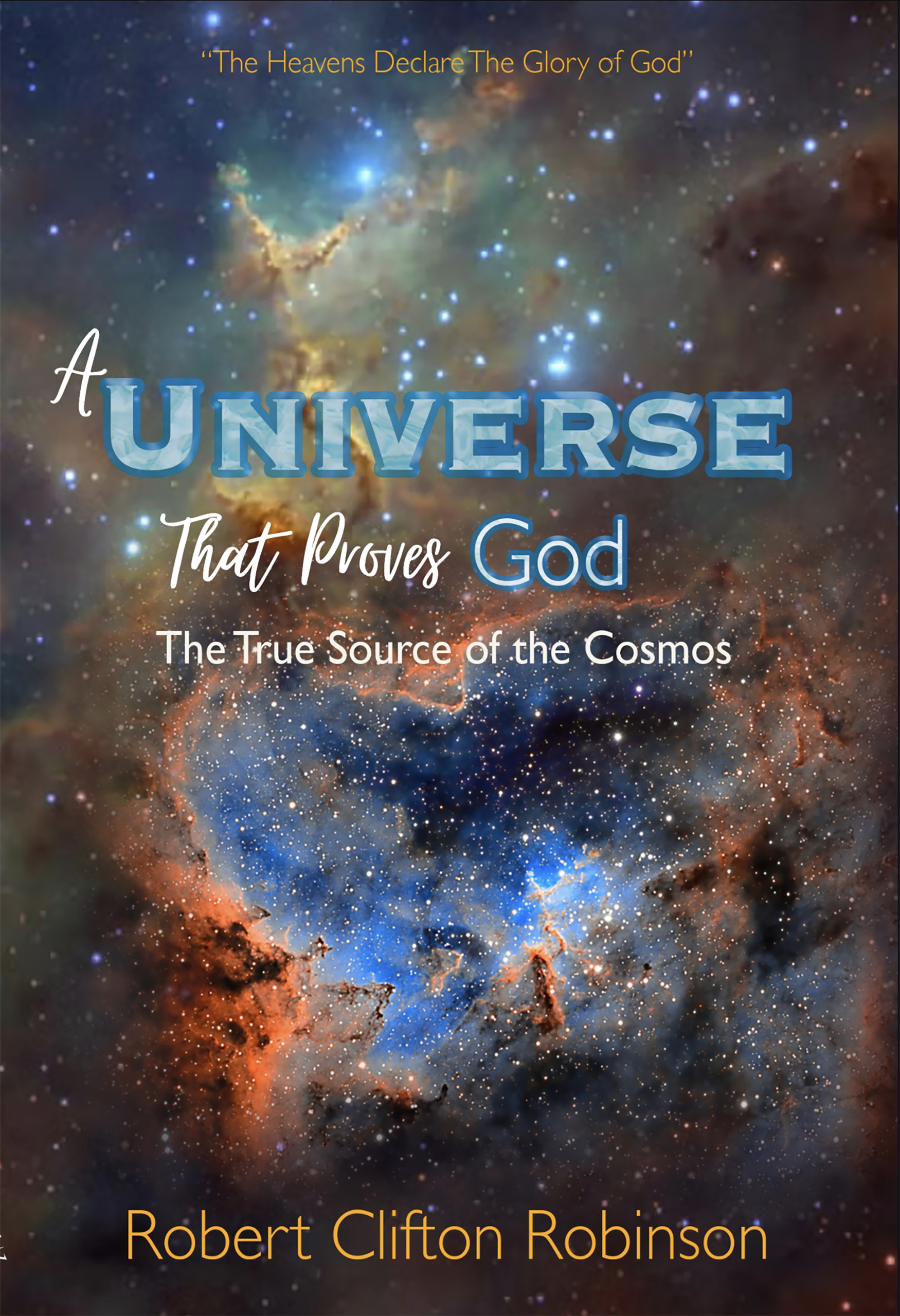
Click On Image To Look Inside
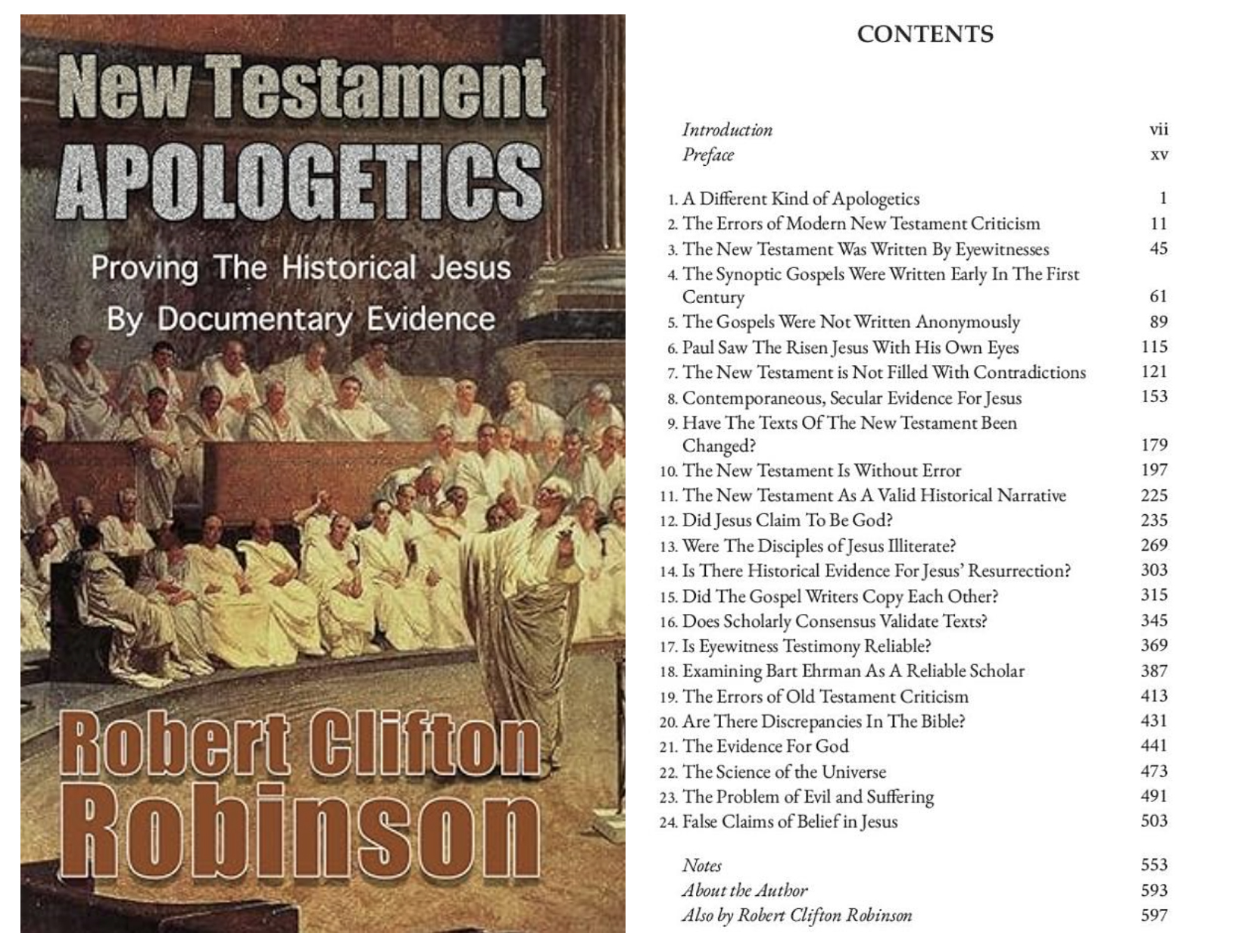
Categories: Robert Clifton Robinson


Please see, "Guidelines For Debate," at the right-side menu. Post your comment or argument here: