One Of The Biggest Mistakes That People Make In Reading The New Testament Is The Lack of Awareness That The Texts of the New Testament Clearly Identify Jesus as Yahweh, the God of the Old Testament

The New Testament reveals a significant body of evidence identifying Jesus as Yahweh (יהוה, YHWH), the same “LORD” of the Old Testament. Some of the strongest evidence occurs where New Testament authors take an Old Testament text clearly referring to Yahweh and apply that text directly to Jesus.
This is important because the Greek word κύριος (kyrios), translated “Lord,” was used in the Septuagint (LXX), the ancient Greek translation of the Hebrew Scriptures, to represent the name for God, YHWH.
Kyrios can also mean master, owner, or a person exercising authority. A diligent student of the Bible should make sure they understand that not every place in the New Testament when Jesus is called “Lord” by the Koine Greek that Kyrios is speaking of Yahweh.
The subject of this essay is to prove that a large part of the New Testament texts that were originally written in Koine Greek, do identify Jesus as Yahweh from the Old Testament. This is unmistakable that the intent of the writers of the New Testament, and the translators of these texts into English, intended that the reader would understand that the Lord Jesus in the New Testament, is the same LORD Yahweh in the Old Testament.
The strongest evidence that proves these facts is found in texts where the New Testament identifies Jesus with the LORD through an Old Testament citation, divine prerogative, title, or description.
The following is a detailed list of the principal passages, organized according to their textual evidence.
Direct Old Testament Yahweh Texts That Are Applied to Jesus
These are among the clearest examples because the Old Testament text originally speaks of Yahweh, while the New Testament applies these Old Testament texts directly to Jesus.
| New Testament | Old Testament | Identification |
|---|---|---|
| Matthew 3:3 | Isaiah 40:3 | John prepares the way of Yahweh; Matthew identifies Jesus as the one whose way is prepared. |
| Mark 1:2–3 | Malachi 3:1; Isaiah 40:3 | The messenger prepares the way before Yahweh; Jesus is the coming Lord. |
| Luke 3:4–6 | Isaiah 40:3–5 | The coming of Jesus fulfills the preparation of Yahweh’s way. |
| John 1:23 | Isaiah 40:3 | John the Baptist declares that he prepares the way of the Lord, referring to Jesus. |
| Luke 1:16–17, 76 | Malachi 3:1; 4:5–6 | John goes before the Lord; his ministry prepares people for Jesus. |
| Matthew 11:10 | Malachi 3:1 | Jesus applies the messenger prophecy to John, who prepares the way before Him. |
| Luke 7:27 | Malachi 3:1 | Jesus identifies Himself as the one before whom the messenger comes. |
| Mark 1:2 | Malachi 3:1 | Mark applies the promised preparation of the Lord’s way to Jesus. |
| Romans 10:9–13 | Joel 2:32 | Calling upon Yahweh for salvation is applied to calling upon Jesus as Lord. |
| 1 Corinthians 1:2 | Joel 2:32, thematic parallel | Christians call upon the name of Jesus Christ our Lord. |
| Philippians 2:9–11 | Isaiah 45:23 | Universal submission and confession belonging to Yahweh are applied to Jesus. |
| Romans 14:9–11 | Isaiah 45:23 | Paul applies the universal bowing and confession to the Lord in a context involving Christ’s judgment. |
| Hebrews 1:10–12 | Psalm 102:25–27 | The eternal Creator, Yahweh, is addressed in words applied to the Son. |
| John 12:37–41 | Isaiah 6:1–10 | John says Isaiah saw Jesus’ glory; Isaiah’s vision concerns Yahweh enthroned. |
| 1 Peter 3:14–15 | Isaiah 8:12–13 | The command to sanctify Yahweh is applied to Christ as Lord in the reading “Christ as Lord.” |
| 1 Peter 2:7–8 | Isaiah 8:14; Psalm 118:22 | Jesus is the stone of stumbling; Isaiah describes Yahweh as the stone of stumbling. |
| Romans 9:32–33 | Isaiah 8:14; 28:16 | Christ is identified with the stumbling stone and cornerstone. |
| Ephesians 4:7–10 | Psalm 68:18 | Language of Yahweh’s victorious ascent is applied to Christ’s ascension and gifts. |
| Revelation 1:17–18 | Isaiah 44:6; 48:12 | Jesus identifies Himself as the First and the Last, a title of Yahweh. |
| Revelation 2:8 | Isaiah 44:6 | The risen Jesus is the First and the Last. |
| Revelation 22:12–16 | Isaiah 44:6; 48:12 | The coming Jesus speaks with divine titles associated with Yahweh. |
Some of the above texts directly cite the Yahweh texts; others apply Old Testament names for God directly to Jesus as the Messiah. Some scriptures present questions that define Jesus as Yahweh. When all of these texts from the Old Testament are studied together, they establish a clear pattern that the writers of the New Testament understood that Jesus is the Eternal. Living God, Yahweh, from the Old Testament.
The Clearest Texts
Romans 10:9–13 — Jesus Is the LORD Upon Whose Name We Call
Paul writes:
“For, ‘Whoever will call on the name of the Lord will be saved.’” (Romans 10:13)
The original text is Joel 2:32:
“It will happen that whoever will call on Yahweh’s name shall be saved.” (Joel 2:32)
The Greek of Romans 10:13 reads:
πᾶς γὰρ ὃς ἂν ἐπικαλέσηται τὸ ὄνομα κυρίου σωθήσεται.
Pas gar hos an epikalesētai to onoma kyriou sōthēsetai.
Paul’s argument begins with confessing Jesus as Lord (Romans 10:9), continues with the same Lord being Lord of all (10:12), and culminates in the quotation from Joel (10:13).
The Lord upon whose name believers call for salvation is Jesus, while the original Hebrew passage explicitly names Yahweh.
This is one of the strongest direct proofs that Jesus is Yahweh in the New Testament.
Philippians 2:9–11: Jesus Receives the title for God that Belongs only to Yahweh
Paul writes:
“…that at the name of Jesus every knee should bow, of those in heaven, those on earth, and those under the earth, and that every tongue should confess that Jesus Christ is Lord, to the glory of God the Father.” (Philippians 2:10–11)
Compare Isaiah 45:23:
“…that to me every knee will bow, every tongue will take an oath.”
The context of Isaiah 45 is particularly significant.
Yahweh declares:
“I am God, and there is no other.” (Isaiah 45:22)
The fact that “every knee” will bow only to Yahweh, and that this distinction is assigned by Paul exclusively to Jesus, demonstrates that Jesus is Yahweh, the one true God. Paul as a Hebrew scholar, understood well that Jesus is the Eternal God, Yahweh.
Paul intentionally links this Old Testament description of Yahweh to Jesus.
The text Paul wrote is:
κύριος Ἰησοῦς Χριστός — Kyrios Iēsous Christos.
“Jesus Christ is Lord.”
Paul is not just describing Jesus as an earthly master. He places Jesus within the large body of Old Testament scriptures that Isaiah reserves only for Yahweh, while attaching this title to Jesus in the New Testament.
Hebrews 1:10–12: Jesus Is the Eternal Creator Called LORD
The author of Hebrews introduces a series of citations concerning Jesus, the Son.
Hebrews 1:8 begins:
“But of the Son he says, ‘Your throne, O God, is forever and ever…’”
Then Hebrews 1:10–12 states:
“And, ‘You, Lord, in the beginning, laid the foundation of the earth. The heavens are the works of your hands. They will perish, but you continue. They all will grow old like a garment does. You will roll them up like a mantle, and they will be changed; but you are the same. Your years will not fail.’”
The source of this definition is Psalm 102:25–27. Psalm 102 is addressed to Yahweh, the eternal Creator. Hebrews applies this text to the Son, defining the contrast between the Son of God and the angels.
This conclusion is extremely important: the Son is described by the same words originally addressed to Yahweh as the unchanging Creator of heaven and earth.
John 12:37–41 — Isaiah Saw the Glory of Jesus
John describes the unbelief of those who witnessed Jesus’ miracles and quotes Isaiah 53:1 and Isaiah 6:10.
John then writes:
“Isaiah said these things when he saw his glory, and spoke of him.” (John 12:41)
The immediate context concerns Jesus. But what did Isaiah see?
Isaiah 6:1 states:
“…I saw the Lord sitting on a throne, high and lifted up; and his train filled the temple.”
And Isaiah 6:3 records:
“Holy, holy, holy, is Yahweh of Armies! The whole earth is full of his glory!”
John identifies the glory Isaiah saw with Jesus’ glory. This is an incredible Christological statement. Isaiah’s descriptions define Yahweh as enthroned, and John takes that description of Yahweh and directly applies it to Jesus.
Mark 1:2–3: Jesus Is the LORD Whose Way John Prepared
Mark cites this prophecy and directly applies it to Jesus:
“The voice of one crying in the wilderness, ‘Make ready the way of the Lord! Make his paths straight!’” (Mark 1:3)
The source Mark used is Isaiah 40:3:
“The voice of one who calls out, ‘Prepare the way of Yahweh in the wilderness! Make a level highway in the desert for our God.’”
In Isaiah, the highway is prepared for Yahweh. In Mark, John the Baptist prepares the way for Jesus. Matthew 3:3, Luke 3:4–6, and John 1:23 identify Jesus exactly in the same way. This is important because all four Gospels link John’s ministry with Isaiah’s prophecy concerning the coming of Yahweh.
1 Peter 3:14–15 — Sanctify Christ as LORD
Peter writes:
“But sanctify the Lord God in your hearts…” (1 Peter 3:15)
Here an important textual distinction is stated: The biblical text follows a historical textual tradition reading “Lord God,” while the modern critical Greek text reads:
κύριον δὲ τὸν Χριστὸν ἁγιάσατε.
Kyrion de ton Christon hagiasate.
“Sanctify Christ as Lord.”
Peter is citing Isaiah 8:12–13, where Israel is commanded to regard Yahweh as holy. Then Peter states that Jesus is the same Lord that Isaiah cites. Both Jesus as Lord (Yahweh) and “the Lord God” of the Old Testament (Yahweh) are the same.
The critical reading of these two texts makes the Christological identification very clear. Peter believed that Jesus is Yahweh from the Old Testament.
1 Peter 2:7–8: Jesus Is the Stone of Stumbling
Peter describes Jesus as:
“A stone of stumbling, and a rock of offense.” (1 Peter 2:8)
Peter uses Isaiah 8:14, where Yahweh Himself is the stone over which unbelieving Israel stumbles. Then Peter’s applies this text to Jesus.
Paul makes a similar statement in Romans 9:32-33:
“Why not? Because they were trying to get right with God by keeping the law instead of by trusting in him. They stumbled over the great rock in their path. 33 God warned them of this in the Scriptures when he said, “I am placing a stone in Jerusalem that makes people stumble, a rock that makes them fall. But anyone who trusts in him will never be disgraced.”
Revelation 1:17–18: Jesus Is the First and the Last
The risen Jesus says:
“Don’t be afraid. I am the first and the last, and the Living one. I was dead, and behold, I am alive forever and ever.” (Revelation 1:17–18)
Compare Isaiah 44:6:
“I am the first, and I am the last; and besides me there is no God.”
And Isaiah 48:12:
“I am he. I am the first. I am also the last.”
In Isaiah, these descriptions belong only to Yahweh. In Revelation, Jesus identifies Himself with the same title for God. By using a well-established term for God in the Old Testament to describe Himself, Jesus is making it clear who He is: Yahweh that Isaiah described.
The person speaking in Revelation 1:17-18 is unmistakably Jesus because He says that He “was dead and is now alive forever.”
Revelation 2:8 shows us that Jesus repeated this statement from Isaiah 48:12, as John in Revelation 2:8, records these words:
“Write this letter to the angel of the church in Smyrna. This is the message from the one who is the First and the Last, who was dead but is now alive.”
Additional New Testament Texts Identifying Jesus As Lord (Yahweh)
The following texts provide additional evidence through titles that are used to describe God, His authority, creation, judgment, and worship, linked with Old Testament allusions.
| Reference | Significance |
|---|---|
| Matthew 7:21–23 | Jesus is addressed as Lord, Lord, and exercises authority to determine entrance into the kingdom. |
| Matthew 12:8 | Jesus declares Himself Lord of the Sabbath, an institution established by Yahweh. |
| Matthew 22:41–45 | Jesus applies Psalm 110:1 to the Messiah, whom David calls “my Lord.” |
| Matthew 25:31–46 | Jesus occupies the throne of glory and judges the nations. |
| Matthew 28:18–20 | Jesus possesses all authority in heaven and earth and is named with the Father and Spirit in baptism. |
| Luke 1:43 | Elizabeth calls Mary “the mother of my Lord.” |
| Luke 2:11 | The angel announces the birth of “Christ the Lord.” |
| Luke 6:46 | Jesus asks why people call Him “Lord, Lord” but refuse His commands. |
| Luke 20:41–44 | Jesus interprets David’s reference to the Messiah as “my Lord.” |
| John 1:1–3 | The Word is God and the Creator of all things. |
| John 5:22–23 | The Father gives judgment to the Son so all will honor the Son as they honor the Father. |
| John 8:24 | Jesus warns that unbelievers will die in their sins unless they believe that “I am he.” |
| John 8:58 | Jesus declares, “Before Abraham came into existence, I AM.” |
| John 10:27–30 | Jesus grants eternal life and declares His unity with the Father. |
| John 13:13 | Jesus affirms that His disciples rightly call Him Teacher and Lord. |
| John 14:9 | Jesus says that whoever has seen Him has seen the Father. |
| John 20:28 | Thomas addresses Jesus, “My Lord and my God!” |
| Acts 2:21, 36 | Peter quotes Joel 2:32 and subsequently declares Jesus both Lord and Christ. |
| Acts 7:59–60 | Stephen invokes Jesus as Lord and asks Him to receive his spirit. |
| Acts 9:5–6 | The risen Jesus identifies Himself to Saul as the Lord who speaks to him. |
| Acts 10:36 | Peter declares that Jesus Christ “is Lord of all.” |
| Acts 16:31 | Salvation is proclaimed through belief in the Lord Jesus Christ. |
| 1 Corinthians 2:8 | Jesus is called “the Lord of glory.” |
| 1 Corinthians 8:6 | Paul places Jesus within a confession of the one God, identifying Him as the one Lord through whom all things exist. |
| 1 Corinthians 10:9 | In the critical-text reading, Christ is the one whom Israel tested in the wilderness. |
| 1 Corinthians 12:3 | The Spirit enables the confession, “Jesus is Lord.” |
| 2 Corinthians 3:16–18 | Paul draws on Exodus 34 and develops the relationship between the Lord, the Spirit, and divine glory. |
| 2 Corinthians 4:5–6 | Jesus is preached as Lord, and God’s glory is revealed in His face. |
| Colossians 1:15–17 | All things were created through Christ and for Him. |
| Colossians 2:6–9 | The fullness of God dwells bodily in Christ. |
| 2 Thessalonians 1:7–10 | Jesus comes in glory to execute judgment, using imagery associated with Yahweh’s judgment. |
| 1 Timothy 3:16 | Christ’s manifestation in flesh is described; the received text explicitly reads “God was manifested in the flesh.” |
| 2 Timothy 4:1, 8 | Jesus is the righteous Judge who judges the living and the dead. |
| Titus 2:13 | Jesus is called “our great God and Savior.” |
| Hebrews 1:3 | The Son is the radiance of God’s glory and the exact representation of His being. |
| Hebrews 1:8 | The Father addresses the Son as God. |
| Hebrews 13:8 | Jesus Christ is the same yesterday, today, and forever. |
| James 2:1 | Jesus Christ is described as the Lord of glory. |
| 2 Peter 1:1 | Jesus is called “our God and Savior.” |
| Jude 5 | In an important early textual reading, Jesus is identified as the one who saved Israel from Egypt and later judged unbelievers. |
| Revelation 5:11–14 | The Lamb receives universal praise and honor together with the One seated on the throne. |
| Revelation 17:14 | The Lamb is Lord of lords and King of kings. |
| Revelation 19:13–16 | Jesus bears the title King of kings and Lord of lords. |
| Revelation 22:13–16 | The title of Yahweh-God is used in the closing statements of Revelation, where Jesus clearly identifies Himself as God. |
Two scriptures require additional explanation because they are particularly significant to the identification of Jesus with Yahweh.
1 Corinthians 8:6 — The One God and the One Lord
Paul writes:
“Yet to us there is one God, the Father, of whom are all things, and we for him; and one Lord, Jesus Christ, through whom are all things, and we live through him.”
Compare Deuteronomy 6:4:
“Hear, Israel: Yahweh is our God. Yahweh is One.”
Paul’s statement of One God, in 1 Corinthians 8:6, is a commentary fulfillment for Jesus, as He is linked to this text in Deuteronomy 6:4, known as the Shema. Notice that Paul does not state Jesus as among other created beings, but identifies Him as One of the three- Father, Son, and Holy Spirit who are the object of the Shema, One God.
This is significant because Paul was a Jewish monotheist. He was a Rabbi. He was a Pharisee and member of the Sanhedrin. If anyone in Israel knew for certain whether Jesus claimed and proved He is God, it is the Hebrew scholar, Paul.
Paul makes it clear that He believes Jesus to be Yahweh. He states and restates this fact over and over in his New Testament letters.
Jude 5: Jesus and the Exodus
One of the places in the New Testament where the writers know for certain that Jesus is Yahweh from the Old Testament is in the letter written by Jude, the brother of Jesus: Jude 5 brings us this text:
Jude 1:5-7: “So I want to remind you, though you already know these things, that Jesus first rescued the nation of Israel from Egypt, but later he destroyed those who did not remain faithful. 6 And I remind you of the angels who did not stay within the limits of authority God gave them but left the place where they belonged. God has kept them securely chained in prisons of darkness, waiting for the great day of judgment. 7 And don’t forget Sodom and Gomorrah and their neighboring towns, which were filled with immorality and every kind of sexual perversion. Those cities were destroyed by fire and serve as a warning of the eternal fire of God’s judgment.
“Jesus first rescued the nation of Israel from Egypt…”
“Wait a minute,” you say. “Jesus wasn’t born when the Exodus took place.” This comment forgets that Jesus is the Eternal Living God who has existed forever. Jesus was Yahweh, the LORD, and the agent who brought the Israelite people out of Egypt, in 1446 BC.
The critical Greek text reads, in part:
Ἰησοῦς … λαὸν ἐκ γῆς Αἰγύπτου σώσας
“Jesus … having saved a people out of the land of Egypt.”
Many New Testament translations, following another textual reading, use “the Lord” rather than “Jesus.” The reading “Jesus” in place of God has significant early manuscript support and is adopted in major modern critical editions. If original, Jude directly identifies the preexistent Jesus as the divine agent responsible for Israel’s deliverance from Egypt.
That is a remarkable statement, since the Old Testament repeatedly identifies Yahweh as Israel’s Redeemer from Egypt.
The Distinction Between Kyrios as a Human Title and Kyrios as Yahweh
It is important to distinguish three kinds of New Testament usage.
First, kyrios can be an ordinary term of respect or authority. For example, someone might address Jesus as “Lord” while primarily recognizing Him as a teacher or master. The title alone does not prove that the speaker understood His divine identity.
Second, kyrios can be a Messianic title. Psalm 110:1 is especially important:
“Yahweh says to my Lord, ‘Sit at my right hand, until I make your enemies your footstool for your feet.’”
Here the Hebrew distinguishes Yahweh from אֲדֹנִי (adoni, “my Lord”). Jesus’ application of this text to the Messiah demonstrates the Messiah’s exalted position, but it is not simply a case of the divine name YHWH being applied directly to Jesus.
The Important Point of Context
Third, kyrios can identify Jesus with Yahweh when the New Testament applies a Yahweh passage to Him. Romans 10:13, Philippians 2:10–11, Mark 1:3, and Hebrews 1:10–12 are strong examples for this third category.
The distinction matters because the argument for Jesus as Yahweh is strongest when it rests upon the actual literary and linguistic evidence rather than treating every occurrence of “Lord” as though it necessarily means Yahweh.
When we understand that kyrios is intended for Jesus as Yahweh in its purest form, then all of the usages in the New Testament for kyrios, define Jesus as Master, Yahweh, not Master in the human usage.
The Most Important New Testament Texts to Cite in an Apologetic Defense
The following texts in the New Testament define Jesus as kyrios-Lord, Yahweh:
- Mark 1:2–3 — Isaiah 40:3: Jesus is the coming Lord (Yahweh) whose way John prepares.
- Matthew 11:10 — Malachi 3:1: Jesus identifies Himself as the One (Yahweh) before whom the promised messenger comes.
- Romans 10:9–13 — Joel 2:32: Calling upon Jesus as Lord (Yahweh) fulfills the promise of calling upon Yahweh.
- Philippians 2:9–11 — Isaiah 45:23: Every knee bows and every tongue confesses Jesus as Lord (Yahweh).
- Hebrews 1:10–12 — Psalm 102:25–27: The Son is addressed as the eternal Creator (Yahweh).
- John 12:37–41 — Isaiah 6:1–10: Isaiah’s vision of Yahweh’s glory is associated with Jesus (Yahweh).
- 1 Peter 3:14–15 — Isaiah 8:12–13: Christ is sanctified as Lord (Yahweh) in the critical-text reading.
- 1 Peter 2:7–8 — Isaiah 8:14: Jesus is the stone of stumbling associated with Yahweh.
- Revelation 1:17–18 — Isaiah 44:6: Jesus is the First and the Last (Yahweh).
- 1 Corinthians 8:6 — Deuteronomy 6:4: Jesus is confessed as the one Lord (Yahweh) within Paul’s monotheistic confession.
- Jude 5 — Exodus deliverance traditions: An early reading identifies Jesus (Yahweh) with Israel’s deliverer from Egypt.
- John 20:28: Thomas directly addresses the risen Jesus as “My Lord and my God!” (Yahweh).
The New Testament Clearly Identifies Jesus as Yahweh, the LORD of the Old Testament, not just Jesus “Lord” as a title of respect. The New Testament repeatedly applies to Jesus Old Testament texts that originally identify Yahweh, including declarations concerning salvation, creation, divine glory, universal worship, judgment, and eternal existence.
The strongest conclusion supported by these texts is that the New Testament writers include Jesus within the identity and prerogatives of Yahweh, while continuing to distinguish the Son personally from the Father.
This is not based merely on the observation that kyrios can translate YHWH. It is based on the New Testament’s deliberate reuse of passages in which Yahweh is explicitly the subject.
The central argument is therefore not simply that Jesus was called kyrios, but that the New Testament repeatedly identifies Him as the very Lord whom Israel knew as Yahweh.
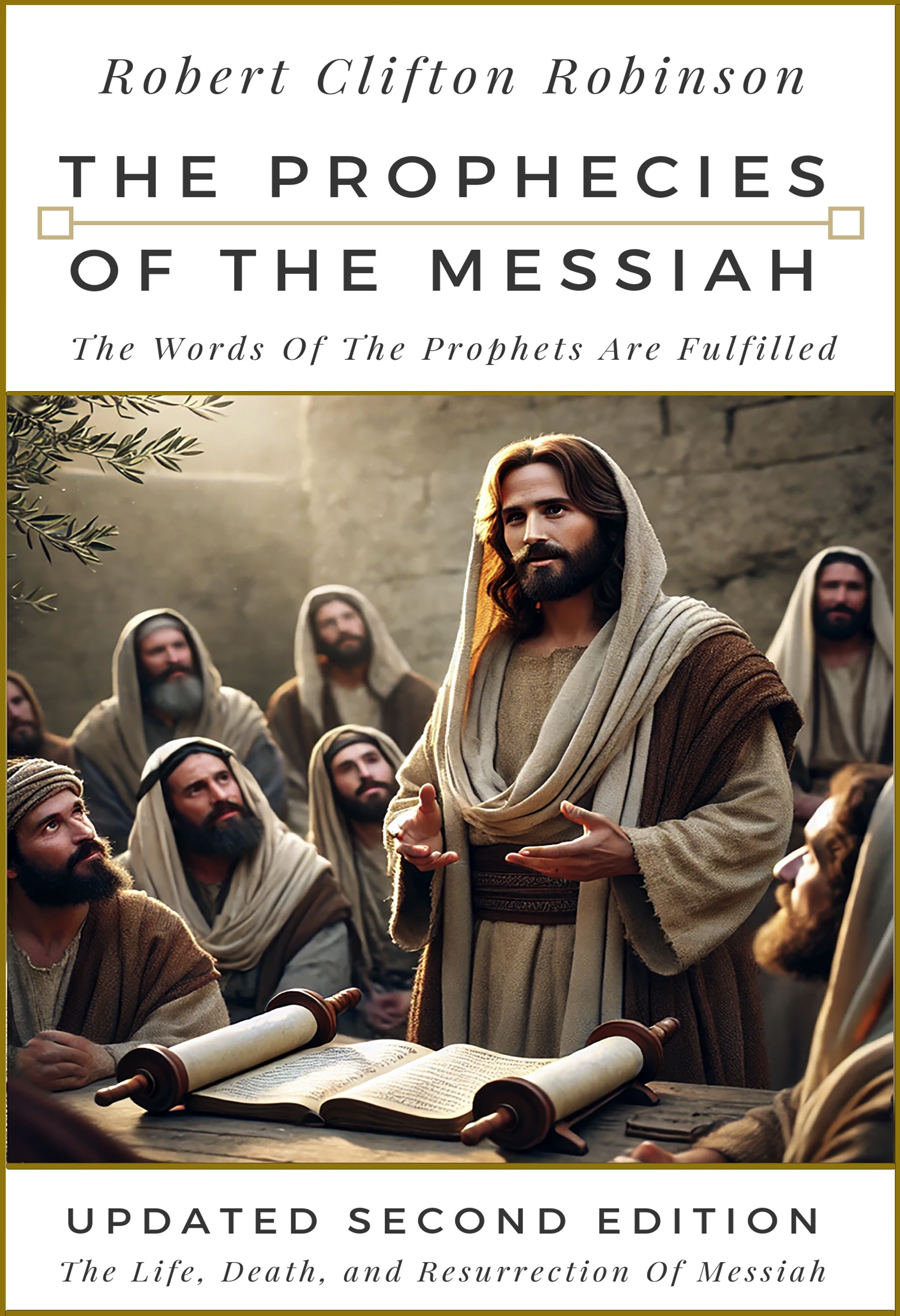
SEE THE 400 OLD TESTAMENT PROPHECIES OF THE MESSIAH THAT JESUS FULFILLED IN THE NEW TESTAMENT, AS YAHWEH
Categories: Robert Clifton Robinson


Please see, "Guidelines For Debate," at the right-side menu. Post your comment or argument here: