The Gospel of Matthew records:
“Now in the morning, as he returned to the city, he was hungry. Seeing a fig tree by the road, he came to it and found nothing on it but leaves. He said to it, ‘Let there be no fruit from you forever!’ Immediately, the fig tree withered away.” (Matthew 21:18-19)
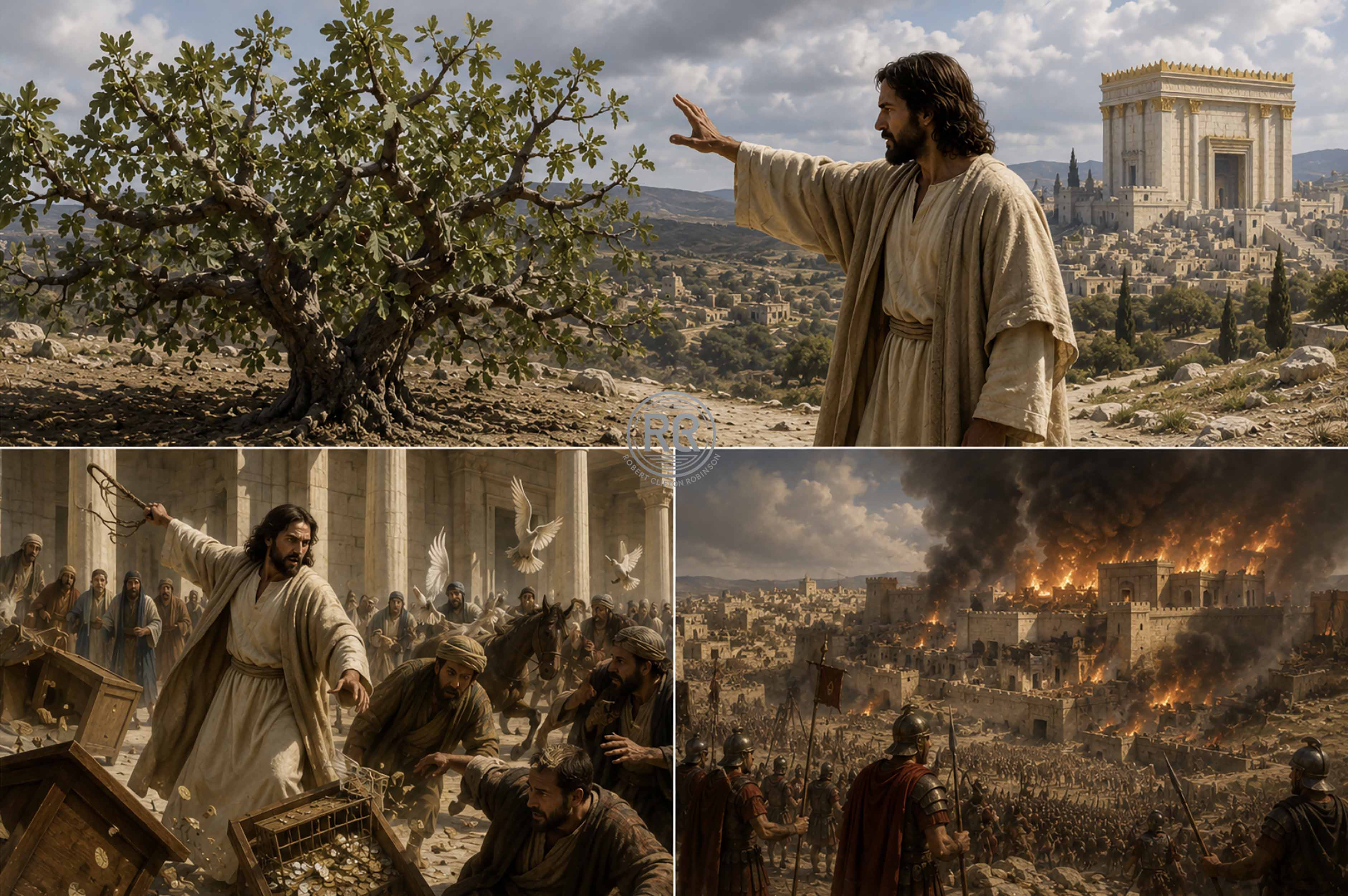
There Was No Happenstance In Anything Jesus Said, Taught, or Did
Jesus had an enduring purpose in the moment when He cursed the Fig Tree
The parallel account appears in the Gospel of Mark 11:12-21, where the event surrounds Jesus’ cleansing of the Temple. This literary arrangement is important because it reveals the interpretation of the sign.
The Fig Tree Represented Israel’s Spiritual Condition
Throughout the Old Testament, the fig tree was frequently used as a symbol for Israel.
In the Book of Hosea 9:10: “I found Israel like grapes in the wilderness. I saw your fathers as the first-ripe in the fig tree at its first season.”
In the Book of Jeremiah 8:13: “There are no grapes on the vine, nor figs on the fig tree, and the leaf shall fade.”
In the Book of Micah 7:1: “My soul desires the first-ripe fig. There is no cluster of grapes to eat.”
The illustration of a fruitless fig tree had already become a prophetic symbol for covenant unfaithfulness and coming judgment.
The Tree Had Leaves but No Fruit
Fig trees in Israel commonly produce small edible buds of fruit before or simultaneously with their leaves. A tree covered in leaves suggested that fruit should also be present. This is why Jesus approached a tree that advertised fruitfulness but possessed none. This perfectly illustrated the condition of the religious leaders of Israel at that time:
They showed magnificent Temple worship, elaborate ceremonies, long prayers, religious garments, sacrifices and festivals, but there was little justice, mercy, faithfulness, repentance, or genuine devotion to God.
Jesus had already condemned this condition: “This people honors me with their lips, but their heart is far from me.” (Matthew 15:8)
The leaves represented outward religion. The missing fruit represented the absence of righteousness.
The Event of Cursing The Fig Tree Was Connected to the Cleansing of the Temple
In Mark’s narrative, Jesus curses the tree, enters the Temple, and drives out the money changers, and then the disciples discover the withered tree the following day. The structure of these two events, together by Mark, strongly indicates that the fig tree symbolized the Temple system and its leadership.
Since only Mark records these two events together, this is a piece of forensic evidence that the Synoptic Gospels, though similar, include different details, proving they are independent eyewitness accounts, not copies of each other.
The Temple displayed magnificent external works: priests, sacrifices, incense, choirs, festivals, crowds of worshipers, while the leaders entrusted with recognizing the Messiah who were in the Temple rejected Jesus when He arrived as the Messiah. This is why Jesus pronounced judgment upon a religious system that retained its ceremonies but had abandoned its purpose.
Within just one generation, this judgment was historically fulfilled in the destruction of Jerusalem and the Temple in AD 70 during the Siege of Jerusalem.
Cursing the Fig Tree Illustrated the Principle of God Holding People Accountable For Their Actions
The more God reveals of Himself and His purposes to people and nations, the greater their accountability.
Israel had the Law, the Prophets, the covenants, the Temple, the priesthood, and ultimately the Messiah Himself. But many of the nation’s leaders rejected Him.
Jesus taught this principle in other texts: “For everyone to whom much is given, of him much will be required.” (Luke 12:48)
The fig tree demonstrated that knowledge of what God wants without fruit from this knowledge results in judgment.
Jesus Cursing The Fig Tree Was Also a Warning to All Future Believers
Churches can have buildings, programs, theology, traditions, worship services, and ministries, while lacking love, holiness, repentance, and obedience. A church can have many leaves but little fruit. This is why Jesus’ warning applies to every generation: “Every tree that doesn’t grow good fruit is cut down and thrown into the fire.” (Matthew 7:19)
God seeks fruit, not merely a profession by people who claim to know Him or about Him.
Was Jesus Declaring the End of Israel? No.
Immediately after pronouncing judgment upon unbelieving Israel, Jesus also promised Israel’s future restoration. In Paul’s letter to the Romans, in chapter 11, he teaches that Israel experienced a partial hardening “until the fullness of the Gentiles has come in,” after which God will fulfill His covenant promises to the nation.
See Rob’s In-Depth Commentary on the Book of Romans
The cursing of the fig tree symbolized judgment upon unbelief and fruitlessness, not the cancellation of God’s promises to Israel.
The cursing of the fig tree was a prophetic object lesson illustrating:
- The danger of outward religion without inward righteousness.
- God’s judgment upon spiritual hypocrisy.
- The coming judgment upon the corrupt Temple system.
- The principle that knowledge increases accountability.
- The necessity of genuine spiritual fruit in every believer and every generation.
- The tree had leaves but no fruit.
- The Temple had ritual but no repentance.
- The leaders had Scripture but rejected the Messiah.
Jesus’ parable declared that God is not looking merely for the appearance of new life, but for the fruit that proves new life by being Born Again is truly present (John 3:3).
Categories: Robert Clifton Robinson
 Robert Clifton Robinson
Thank you brother for all you do. May the Lord bless you handsomely in the coming Rapture. Bell well ’til then.
Tony
LikeLike