Are Critics Right? Is The Bible Merely A Compilation of Stories, Myths, and Secondhand Accounts?
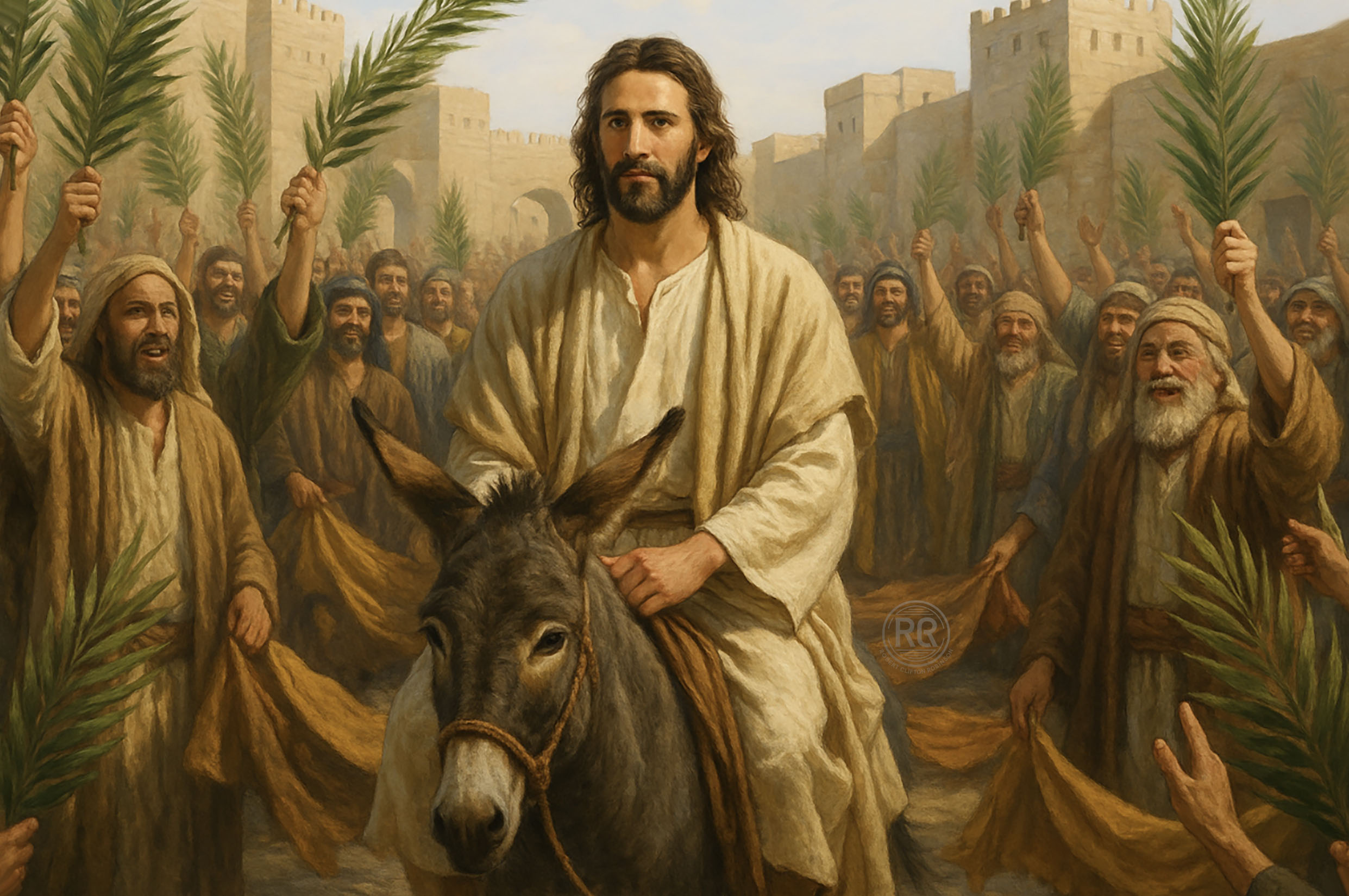 Jesus Fulfills Zechariah 9:9, The Messiah Riding Into Jerusalem On The Exact Day Daniel Predicted
Or is the Bible what it claims to be: The only accurate and true revelation of the Eternal Living God? We can test the Bible by what it states; we can examine the historical record; we can use forensic methods to detect fraud, embellishment, and manipulation of the texts. For over 3,400 years, these examinations of the Biblical texts have continued. Not one in the history of the world has anyone impeached any part of the Bible. I know this because I was an atheist in 1975. I was challenged to try to disprove the historical eyewitness testimony of the Bible. I could not.
There exists no greater proof for anything of a historical nature than an eyewitness record preserved for over 2,000 years. There is no greater written record that has been uncorrupted and remains as it was written than the texts of the Bible. Critics continue to assert that the New Testament narratives about Jesus were written late in the first century by men who never met Jesus.
When we examine the New Testament texts for ourselves, we find just the opposite: 203 eyewitness statements with the men who wrote the New Testament stating, “I saw Jesus with my own eyes.”
The greatest proof for the existence of One God came to me early in my personal study in seeking to disprove the Bible: The existence of 400 Old Testament Messianic Prophecies that Jesus fulfilled with extreme precision in the pages of the New Testament.
The following is what Google and AI have compiled regarding my work over the past 51 years, proving the existence of God and the reliability of the Bible, through the massive fulfilled extant record of Bible Prophecy. This is what Google says about my work
Apologetic Arguments For Biblical Prophecy
“Robert Clifton Robinson’s apologetic arguments regarding biblical prophecy center on using the mathematical and historical precision of Old Testament texts to prove the divine authorship of the Bible and the authenticity of Jesus as the Messiah.” [1, 2]
“His core arguments are structured around several key premises:”
1. The Mathematical Improbability of Fulfillment
“Robinson’s primary argument is built on the sheer volume of prophetic fulfillment. In his extensive 4,042-page treatise, The Prophecies of the Messiah, he cataloged 400 specific Messianic prophecies from the Hebrew Scriptures that he argues were fulfilled precisely by Jesus. He posits that the probability of any single human being satisfying all 400 predictions by mere coincidence is mathematically impossible, leaving a deliberate, transcendent design as the only logical explanation.” [1, 2, 3]
2. The Absolute Falsifiability Test
“Drawing from Deuteronomy 18:21-22, Robinson argues that God established a strict, zero-tolerance standard for biblical prophets: 100% precision.” [1]
- If a single prophecy failed to materialize exactly as written, the prophet was to be considered false.
- Robinson leverages this to argue that because hundreds of highly specific, localized, and temporal predictions came true, the Hebrew Scriptures successfully pass the “divine test”. [1]
- Falsification, Eyewitness Testimony, and the Reliability of the New Testament
3. Separation in Time (The Anti-Collusion Argument)
“To counter critics who claim that New Testament authors simply manufactured stories to fit Old Testament narratives, Robinson emphasizes the historical timeline. He points out that the prophecies were written 285 to 1,500 years before Jesus was born. Because these texts were widely distributed, translated (such as the Greek Septuagint), and preserved centuries before the New Testament era, Robinson argues it would have been impossible for Jesus or the Gospel writers to collude with the ancient prophets or alter the ancient texts.”[1, 2, 3]
See: “New Testament Apologetics,” Impeaching the 21 Primary Arguments of Atheists
4. Hyper-Specific Typology and Details
“Robinson frequently highlights prophecies that contain granular, agonizingly specific details that no human could naturally orchestrate or predict ahead of time:” [1, 2]
- Psalm 22: Written by David roughly 1,000 years before Jesus, it explicitly details execution by crucifixion (piercing of hands and feet), a method of capital punishment entirely unknown to the Jews of David’s era. [1, 2]
- Isaiah 53: Written 700 years prior, it precisely details the Messiah being rejected by his own people, remaining silent during trial, and being buried in a rich man’s grave. [1]
- Daniel 9: Robinson relies heavily on Daniel’s “Seventy Weeks” prophecy, arguing that it calculated the exact historical timeline and day that the Messiah would publicly arrive in Jerusalem. [1, 2]
5. Prophecy as the “Key to Salvation”
“Unlike apologists who treat prophecy as a secondary theological topic, Robinson argues on his blog, RobertCliftonRobinson.com, that a person cannot truly understand the plan of salvation without understanding prophecy. He believes God engineered these thousands of prophetic threads explicitly to act as a validation system, ensuring that anyone seeking salvation could definitively identify the true Savior.” [1, 2]
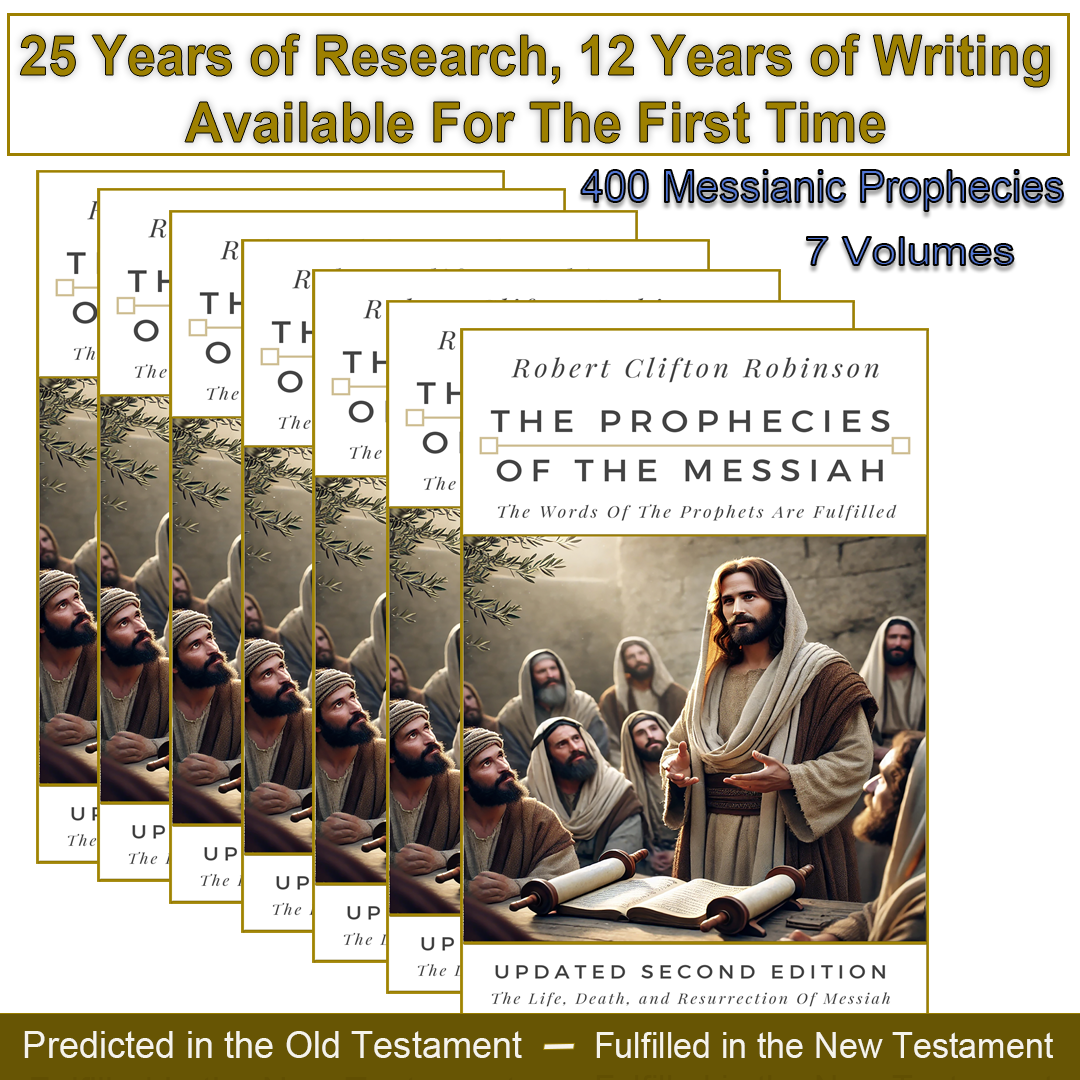
See The 400 Messianic Prophecies of the Old Testament, Fulfilled By Jesus In The New Testament, With Extreme Precision
Available as one Kindle eBook, or 7 Print Editions
Categories: Robert Clifton Robinson


Please see, "Guidelines For Debate," at the right-side menu. Post your comment or argument here: