I am sometimes criticized by people because I have stated that I don’t rely on Critical Scholars for authentic and accurate facts concerning the New Testament. To demonstrate why I place no confidence in Critical Scholarship, this Essay lists 34 Critical Scholars who have published opinions that the New Testament was written by men who never met Jesus, late in the first century. Their own statements directly contradict what the writers of the New Testament state themselves in the historical record.
This is the basis of my rejection of modern Critical Scholarship.
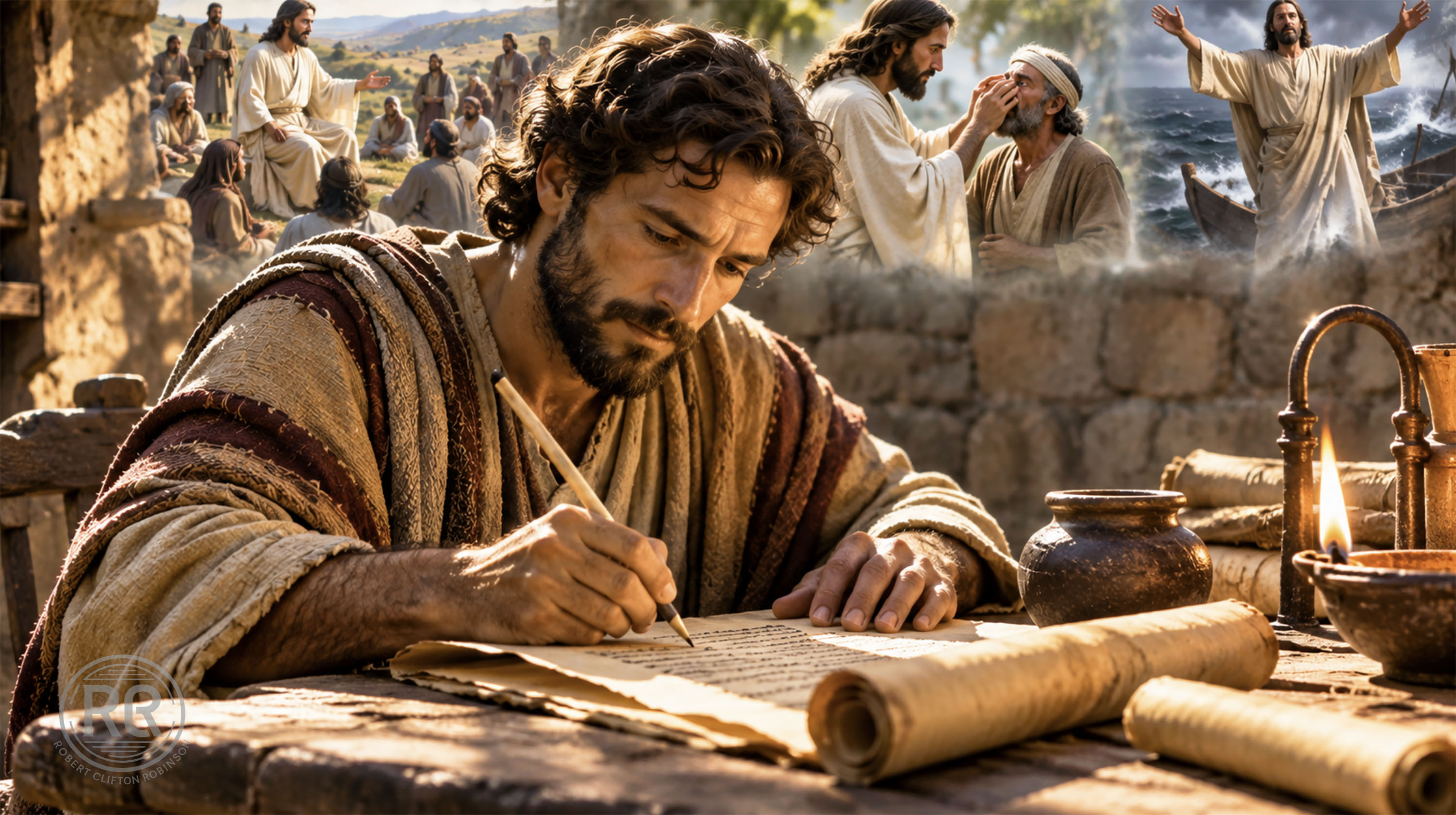
The Writers of the New Testament Say They Are Eyewitnesses
If we conduct a personal investigation concerning the Canonical Gospels of the New Testament, we quickly discern that we are reading testimony from men who were present when Jesus said and did the things recorded in these texts. These men state repeatedly that they saw and heard Jesus and there is no ambiguity in what they meant:
- Paul: 1 Corinthians 9:1: “Am I not an apostle? Haven’t I seen Jesus our Lord with my own eyes?
- Peter: 1 Peter 1:16: “We saw his majestic splendor with our own eyes.”
- John: 1 John 1:1:”We saw him with our own eyes and touched him with our own hands.”
- James, Paul, all the Apostles: 1 Corinthians 15:7: “Then Jesus was seen alive by James and later by all the apostles. Last of all, as though I had been born at the wrong time, I also saw him.”
- Mary Magdalene: John 20:18: “Mary Magdalene found the disciples and told them, “I have seen the Lord!”
- Peter: Acts 5:29-32: “But Peter and the apostles replied… We are witnesses of these things…”
- John: 1 John 1:2-3: “This one who is life itself was revealed to us, and we have seen him. And now we testify and proclaim to you that he is the one who is eternal life. He was with the Father, and then he was revealed to us. We proclaim to you what we ourselves have actually seen and heard so that you may have fellowship with us.
There are 203 eyewitness statements in the 260 chapters of the New Testament
New Testament Critical Scholars who say that the Gospels were written late in the first century by non-eyewitnesses
1. Bart D. Ehrman
Position: All four Gospels were written anonymously by later Christians, rather than by the traditional authors who are identified with the texts.
Ehrman argues that the authors were educated, Greek-speaking Christians who received stories about Jesus through traditions circulating for decades after His death.
In his November 28, 2014, article, Why Are the Gospels Anonymous?, Ehrman writes that eyewitnesses did not write the New Testament:
“The clear answer is, no, they did not.”
In another article, Eyewitnesses and the Gospels: A Blast From the Past, Ehrman acknowledges that eyewitnesses could have remained alive when the Gospels were written, but argues against the likelihood that the authors consulted them. There is no evidence anywhere that this is true.
His proposed dates are approximately:
-
Mark: AD 65–70
-
Matthew: AD 80–85
-
Luke: AD 80–85
-
John: AD 95
Primary sources:
-
Ehrman, Bart D. Jesus, Interrupted: Revealing the Hidden Contradictions in the Bible (and Why We Don’t Know About Them). HarperOne, 2009, chapter 4, “Who Wrote the Bible?”
-
Ehrman, Bart D. Jesus Before the Gospels: How the Earliest Christians Remembered, Changed, and Invented Their Stories of the Savior. HarperOne, 2016.
-
Ehrman, Bart D. Heaven and Hell: A History of the Afterlife. Simon & Schuster, 2020.
-
Ehrman, Bart D. “Our Anonymous Gospels, Starting with Luke.” November 14, 2014.
Ehrman is one of the clearest examples of a contemporary scholar who maintains both late Gospel composition and non-eyewitness authorship.
- Impeaching Bart Ehrman
- New Testament Scholar, Bart Ehrman, Tells Jesus His Miracles Don’t Meet The Historical Standard For Reliable Events
- Impeaching Bart Ehrman;Caught Red-Handed. An Unrepentant Christian Forger”
2. E. P. Sanders
Former professor of religion at Duke University and professor at Oxford University.
In the preface to The Historical Figure of Jesus, Sanders describes the sources for Jesus’ life as written:
“probably by people who were not among his followers during his lifetime.”
Sanders places their composition several decades after Jesus’ death. He also questions whether Jesus’ words and deeds were perfectly preserved during transmission.
Source: Sanders, E. P. The Historical Figure of Jesus. London: Penguin Books, 1993, Preface.
3. Raymond E. Brown
Roman Catholic priest, biblical scholar, and professor at Union Theological Seminary.
Brown maintained that the four Gospels were most likely written between AD 65 and 100. He distinguished the individuals responsible for the earliest traditions about Jesus from those who composed the final Gospel narratives.
Concerning Mark, Brown describes the author as someone:
“who was not an eyewitness of Jesus’ ministry.”
Brown nevertheless allowed for the possibility that the traditional attribution of a Gospel identified the person responsible for the underlying testimony rather than its final composition.
In The Death of the Messiah, Brown argues that the four surviving accounts of Jesus’ suffering and death were composed between thirty and seventy years afterward and were dependent upon intervening traditions.
Sources:
-
Brown, Raymond E. An Introduction to the New Testament. New York: Doubleday, 1997, chapters 6–11.
-
Brown, Raymond E. The Death of the Messiah: From Gethsemane to the Grave. Vol. 1. New York: Doubleday, 1994, introductory discussion.
-
Brown, Raymond E. The Gospel According to John I–XII. Anchor Bible 29. Doubleday, 1966.
4. Burton L. Mack
Former professor of early Christianity at the Claremont School of Theology.
Mack understood the Gospels primarily as literary and theological productions of early Christian groups rather than direct historical memoirs composed by Jesus’ disciples.
He argued that successive Christian communities developed their own narratives about Jesus in response to their social, religious, and theological circumstances.
He rejected traditional Gospel authorship and treated the names associated with the Gospels as later identifications.
Sources:
-
Mack, Burton L. Who Wrote the New Testament? The Making of the Christian Myth. San Francisco: HarperSanFrancisco, 1995, pp. 43–47.
-
Mack, Burton L. A Myth of Innocence: Mark and Christian Origins. Philadelphia: Fortress Press, 1988.
Mack’s treatment of Gospel anonymity is also documented in Mark Jokinen’s scholarly article, The Four Canonical Gospels Were Never Anonymous.
5. Werner Georg Kümmel
German New Testament scholar and professor at the University of Marburg.
Kümmel rejected the traditional attribution of the first Gospel to Matthew the apostle. He argued that its literary relationship to Mark and other sources made direct apostolic authorship improbable.
He also understood the author of the Fourth Gospel as someone associated with the tradition of the Beloved Disciple rather than John the son of Zebedee himself.
Source: Kümmel, Werner Georg. Introduction to the New Testament. Revised edition. Translated by Howard Clark Kee. Nashville: Abingdon Press, 1975, especially p. 120 and the discussion of Johannine authorship.
6. Francis Wright Beare
Canadian New Testament scholar and professor at Trinity College, Toronto.
Beare described the Gospel of Matthew as an anonymous composition that was:
“not the work of any immediate disciple of Jesus.”
He rejected the attribution of the surviving Greek Gospel to Matthew the apostle.
Source: Beare, Francis Wright. The Gospel According to Matthew: A Commentary. Oxford: Basil Blackwell, 1981, p. 7.
This wording is reproduced in a subsequent academic discussion of Matthean authorship.
7. Rudolf Bultmann
German professor of New Testament studies at the University of Marburg and one of the most influential proponents of form criticism.
Bultmann argued that the Gospel traditions underwent development within early Christian communities before being collected into written narratives. He regarded many individual Gospel accounts as products of the preaching and theological activity of the early church.
Sources:
-
Bultmann, Rudolf. The History of the Synoptic Tradition. Translated by John Marsh. Oxford: Basil Blackwell, 1963. German original, 1921.
-
Bultmann, Rudolf. The Gospel of John: A Commentary. Westminster Press, 1971.
8. Martin Dibelius
German theologian and professor at Heidelberg University.
Dibelius regarded the Gospel writers primarily as collectors and editors of traditions that had circulated within early Christian communities. His form-critical methodology reconstructed stages of oral transmission preceding Gospel composition.
Source: Dibelius, Martin. From Tradition to Gospel. Translated by Bertram Lee Woolf. London: Ivor Nicholson & Watson, 1934. German original, 1919.
9. David Friedrich Strauss
German theologian and pioneer of nineteenth-century historical criticism.
Strauss argued that many Gospel narratives originated through the development of religious myths within the early Christian movement rather than through straightforward eyewitness reporting.
He was instrumental in popularizing explanations of Gospel material that depended upon an intervening period of traditional development.
Source: Strauss, David Friedrich. The Life of Jesus Critically Examined. Translated by George Eliot. London, 1846. German original, 1835–1836.
10. Ferdinand Christian Baur
Founder of the Tübingen School of New Testament criticism.
Baur interpreted much of the New Testament as the product of theological conflicts between different branches of early Christianity.
He assigned substantially later dates to several New Testament documents than traditional Christian scholarship accepted, sometimes extending Gospel composition into the second century.
Source: Baur, Ferdinand Christian. The Church History of the First Three Centuries. Translated by Allan Menzies. London: Williams and Norgate, 1878–1879.
11. John Dominic Crossan
Former professor at DePaul University and co-founder of the Jesus Seminar.
Crossan regards the canonical Gospels as theological interpretations of Jesus developed from earlier layers of tradition. He attempts to reconstruct the historical Jesus by separating these layers and determining which traditions he considers earliest.
His methodology does not treat the canonical Gospel narratives as unmediated eyewitness memoirs.
Sources:
-
Crossan, John Dominic. The Historical Jesus: The Life of a Mediterranean Jewish Peasant. HarperSanFrancisco, 1991.
-
Crossan, John Dominic. The Birth of Christianity. HarperSanFrancisco, 1998.
12. Marcus J. Borg
Former professor of religion at Oregon State University and member of the Jesus Seminar.
Borg distinguished between the historical Jesus and the portrayal of Jesus developed within the post-Easter Christian communities.
He understood the Gospels as products of both historical memory and developing Christian theology over several decades.
Sources:
-
Borg, Marcus J. Meeting Jesus Again for the First Time. HarperSanFrancisco, 1994.
-
Borg, Marcus J. Reading the Bible Again for the First Time. HarperSanFrancisco, 2001.
13. Gerd Theissen
German New Testament scholar and professor at Heidelberg University.
Theissen examines the transmission of Jesus traditions through the earliest Christian communities, including itinerant preachers and later writers.
He regards the canonical Gospels as later literary compositions drawing on earlier traditions, while recognizing that historical information about Jesus can be recovered from them.
Source: Theissen, Gerd, and Annette Merz. The Historical Jesus: A Comprehensive Guide. Minneapolis: Fortress Press, 1998.
14. Annette Merz
New Testament scholar and co-author with Gerd Theissen.
Merz likewise distinguishes the historical Jesus, the transmission of traditions concerning Him, and the subsequent composition of the Gospel narratives.
Source: Theissen, Gerd, and Annette Merz. The Historical Jesus: A Comprehensive Guide. Fortress Press, 1998.
15. Udo Schnelle
German professor of New Testament studies at Martin Luther University Halle-Wittenberg.
Schnelle treats the Gospels within the historical development of early Christianity, questioning several traditional authorial identifications and dating Gospel composition predominantly to the latter decades of the first century.
Source: Schnelle, Udo. The History and Theology of the New Testament Writings. Translated by M. Eugene Boring. Minneapolis: Fortress Press, 1998.
16. Delbert Burkett
Professor of religious studies at Louisiana State University.
Burkett presents the Gospels as writings whose authors cannot be securely identified from the narratives themselves. He discusses the traditional attributions as part of the subsequent history of the documents.
His introductory textbook follows broadly conventional critical dates for Gospel composition.
Source: Burkett, Delbert. An Introduction to the New Testament and the Origins of Christianity. Cambridge University Press, 2002.
17. M. Eugene Boring
Former professor of New Testament at Brite Divinity School, Texas Christian University.
Boring emphasizes the Gospel writers’ roles as theologians who organized and interpreted earlier Christian traditions within their particular historical circumstances.
He distinguishes the identities of the evangelists from several of the traditional apostolic identifications.
Sources:
-
Boring, M. Eugene. An Introduction to the New Testament: History, Literature, Theology. Westminster John Knox Press, 2012.
-
Boring, M. Eugene. Mark: A Commentary. Westminster John Knox Press, 2006.
18. Helmut Koester
Professor of New Testament studies and ecclesiastical history at Harvard University.
Koester reconstructed the development of Gospel literature through earlier collections of sayings, oral traditions, and written sources.
He understood the canonical Gospels as belonging to a more extensive process of early Christian literary development.
Source: Koester, Helmut. Ancient Christian Gospels: Their History and Development. Philadelphia: Trinity Press International, 1990.
19. Norman Perrin
Professor of New Testament at the University of Chicago.
Perrin distinguished the historical teachings of Jesus from material that he believed had developed through the preaching and theological interpretation of the early Christian communities.
He understood the evangelists as authors who interpreted the traditions they received.
Sources:
-
Perrin, Norman. Rediscovering the Teaching of Jesus. Harper & Row, 1967.
-
Perrin, Norman, and Dennis C. Duling. The New Testament: An Introduction. Harcourt Brace Jovanovich, 1982.
20. Reginald H. Fuller
Anglican biblical scholar and professor at several theological institutions.
Fuller distinguished the historical ministry of Jesus from developing post-resurrection Christological traditions.
He understood the written Gospel narratives as having emerged through successive stages of tradition and theological interpretation.
Sources:
-
Fuller, Reginald H. A Critical Introduction to the New Testament. London: Duckworth, 1966.
-
Fuller, Reginald H. The Foundations of New Testament Christology. Charles Scribner’s Sons, 1965.
21. Paula Fredriksen
Historian of ancient Christianity and former professor at Boston University.
Fredriksen emphasizes the distinction between Jesus within His original Jewish historical environment and the subsequent portrayals of Him within the Gospel narratives.
She treats the Gospels as later sources through which historians must reconstruct the historical circumstances of Jesus’ ministry.
Source: Fredriksen, Paula. From Jesus to Christ: The Origins of the New Testament Images of Jesus. 2nd ed. Yale University Press, 2000.
22. Elaine Pagels
Professor of religion at Princeton University.
Pagels examines the canonical Gospels as expressions of theological developments and disagreements among early Christian groups.
In her examination of John and Thomas, she interprets the Fourth Gospel partly within the context of competing early Christian understandings of Jesus.
Sources:
-
Pagels, Elaine. The Gnostic Gospels. Random House, 1979.
-
Pagels, Elaine. Beyond Belief: The Secret Gospel of Thomas. Random House, 2003.
23. Robert W. Funk
Biblical scholar and founder of the Jesus Seminar.
Funk maintained that the Gospel traditions contained extensive material originating with the early Christian movement rather than directly with Jesus.
The Jesus Seminar attempted to distinguish authentic sayings of Jesus from what its members considered later additions and interpretations.
Source: Funk, Robert W., Roy W. Hoover, and the Jesus Seminar. The Five Gospels: The Search for the Authentic Words of Jesus. Macmillan, 1993.
24. Dennis C. Duling
New Testament scholar and professor emeritus at Canisius College.
Duling examines Gospel traditions through social-scientific criticism, literary analysis, and the development of early Christian communities.
His introductory work presents the traditional Gospel authorial identifications as historically questionable rather than established facts.
Source: Duling, Dennis C. The New Testament: History, Literature, and Social Context. 4th ed. Wadsworth, 2003.
25. G. N. Stanton
Former Lady Margaret’s Professor of Divinity at Cambridge University.
Stanton questioned whether Matthew the apostle composed the surviving Gospel of Matthew in its present Greek form.
He examined the Gospel as a literary production reflecting the circumstances and theological concerns of its Christian audience.
Source: Stanton, Graham N. A Gospel for a New People: Studies in Matthew. Edinburgh: T&T Clark, 1992.
26. Ulrich Luz
Swiss New Testament professor at the University of Bern.
Luz did not identify the author of the canonical Gospel of Matthew with the apostle Matthew. He understood its author as a later Christian writer who incorporated earlier traditions and sources.
Source: Luz, Ulrich. Matthew 1–7: A Commentary. Hermeneia. Translated by James E. Crouch. Fortress Press, 2007, Introduction.
27. John P. Meier
Roman Catholic priest and professor of New Testament at the University of Notre Dame.
Meier distinguished the historical Jesus from the theological presentation of Jesus in the canonical Gospels.
He generally accepted conventional critical dates and treated identification of the Gospel authors with the traditionally named individuals as historically uncertain.
Meier nevertheless regarded the Gospels as containing substantial recoverable historical material.
Source: Meier, John P. A Marginal Jew: Rethinking the Historical Jesus. Vol. 1, The Roots of the Problem and the Person. Doubleday, 1991.
28. J. Louis Martyn
Professor of biblical theology at Union Theological Seminary.
Martyn interpreted the Gospel of John as a narrative reflecting two historical settings: the ministry of Jesus and the subsequent experiences of the community responsible for transmitting Johannine traditions.
His approach strongly influenced the theory that the Fourth Gospel reflects theological and social developments toward the end of the first century.
Source: Martyn, J. Louis. History and Theology in the Fourth Gospel. First published 1968; 3rd ed., Westminster John Knox Press, 2003.
29. Adela Yarbro Collins
Former professor of New Testament criticism and interpretation at Yale Divinity School.
Collins treats the Gospel of Mark as a literary work composed within the historical circumstances of the latter part of the first century, examining the uncertain relationship between its author and the traditional identification with John Mark.
Source: Collins, Adela Yarbro. Mark: A Commentary. Hermeneia. Minneapolis: Fortress Press, 2007, Introduction.
30. C. K. Barrett
British New Testament scholar and professor at Durham University.
Barrett questioned the identification of the evangelist responsible for the Fourth Gospel with John the son of Zebedee.
He considered the Gospel’s relationship to earlier traditions and its developed theological presentation of Jesus.
Source: Barrett, C. K. The Gospel According to St John. 2nd ed. London: SPCK, 1978.
31. Ernst Haenchen
German New Testament scholar.
Haenchen understood John’s Gospel as a literary and theological composition drawing on earlier traditions and subjected to editorial development.
His treatment did not accept straightforward identification of the finished Gospel with the personal memoirs of John the apostle.
Source: Haenchen, Ernst. John: A Commentary on the Gospel of John. Hermeneia. Fortress Press, 1984.
32. W. D. Davies
Welsh New Testament scholar and professor at Duke University.
Davies, together with Dale Allison, examined the significant historical and literary difficulties associated with identifying the author of the surviving Gospel of Matthew.
Their commentary gives considerable weight to critical arguments against traditional authorship while acknowledging unresolved questions.
Source: Davies, W. D., and Dale C. Allison Jr. A Critical and Exegetical Commentary on the Gospel According to Saint Matthew. Vol. 1. T&T Clark, 1988, Introduction.
33. Dale C. Allison Jr.
Professor of New Testament at Princeton Theological Seminary.
Allison has extensively examined the relationship between historical memory, oral tradition, and the written Gospels.
He questions straightforward traditional attribution of Matthew while recognizing that the Gospels preserve historically valuable memories of Jesus.
He should not be classified as someone who denies all eyewitness testimony underlying the Gospels.
Sources:
-
Davies, W. D., and Dale C. Allison Jr. A Critical and Exegetical Commentary on the Gospel According to Saint Matthew. Vol. 1. T&T Clark, 1988.
-
Allison, Dale C. Constructing Jesus: Memory, Imagination, and History. Baker Academic, 2010.
34. Joshua Schachterle
Contemporary scholar and contributor to Bart Ehrman’s educational website.
In his September 15, 2026, article, Are the Gospels Eyewitness Accounts?, Schachterle argues against direct eyewitness authorship based upon the absence of authorial identification within the narratives, their literary interdependence, and their proposed composition approximately thirty-five to sixty-five years after the crucifixion.
His article also acknowledges that those dates do not necessarily exclude the possibility that eyewitnesses were still living.
Source: Schachterle, Joshua. “Are the Gospels Eyewitness Accounts?” BartEhrman.com, September 15, 2026.
Summary of the 34 scholars
|
Scholar |
Principal critical position |
|---|---|
|
1. Bart D. Ehrman |
Anonymous, non-eyewitness Gospel authors |
|
2. E. P. Sanders |
Probably written by persons who were not Jesus’ original followers |
|
3. Raymond E. Brown |
Later evangelists drawing on earlier traditions |
|
4. Burton L. Mack |
Gospel narratives developed within Christian communities |
|
5. Werner G. Kümmel |
Rejects several traditional authorial identifications |
|
6. Francis W. Beare |
Rejects eyewitness authorship of Matthew |
|
7. Rudolf Bultmann |
Form criticism and community-developed traditions |
|
8. Martin Dibelius |
Evangelists as collectors and editors of traditions |
|
9. David F. Strauss |
Development of religious myths |
|
10. Ferdinand C. Baur |
Late composition reflecting theological conflicts |
|
11. John Dominic Crossan |
Successive layers of Gospel tradition |
|
12. Marcus J. Borg |
Historical memory and post-Easter interpretation |
|
13. Gerd Theissen |
Transmission and development of Jesus traditions |
|
14. Annette Merz |
Historical-critical reconstruction of Jesus |
|
15. Udo Schnelle |
Critical authorship and composition dates |
|
16. Delbert Burkett |
Uncertain traditional Gospel authorship |
|
17. M. Eugene Boring |
Evangelists as later theological authors |
|
18. Helmut Koester |
Development of early Gospel literature |
|
19. Norman Perrin |
Tradition and theological development |
|
20. Reginald H. Fuller |
Successive stages of Christological tradition |
|
21. Paula Fredriksen |
Later Gospel portraits of Jesus |
|
22. Elaine Pagels |
Gospel theology and competing Christian traditions |
|
23. Robert W. Funk |
Extensive post-Jesus development of Gospel material |
|
24. Dennis C. Duling |
Historical and social development of Gospel traditions |
|
25. Graham N. Stanton |
Questions apostolic authorship of Matthew |
|
26. Ulrich Luz |
Non-apostolic authorship of Matthew |
|
27. John P. Meier |
Uncertain authorship and later Gospel composition |
|
28. J. Louis Martyn |
Johannine community development |
|
29. Adela Yarbro Collins |
Uncertain traditional authorship of Mark |
|
30. C. K. Barrett |
Questions apostolic authorship of John |
|
31. Ernst Haenchen |
Literary and editorial development of John |
|
32. W. D. Davies |
Questions traditional Matthean authorship |
|
33. Dale C. Allison Jr. |
Historical memory and uncertain authorship |
|
34. Joshua Schachterle |
Arguments against direct eyewitness authorship |
Scholars who do believe the New Testament was written by men who were eyewitnesses:
For purposes of New Testament apologetics, it is important to document the scholars who have challenged the historical and methodological foundations of these claims.
- Joseph Alexanian, Trinity International University
- Carl E. Armerding, Schloss Mittersill Study Centre
- Bill T. Arnold, Asbury Theological Seminary
- David Baker, Ashland Theological Seminary
- William H. Barnes, North Central University
- Ronald A. Beers, Wheaton College
- Linda Belleville, Bethel College, Mishawaka, Indiana
- Barry J. Beitzel, Trinity Evangelical Divinity School
- Daniel I. Block, Wheaton College
- Gerald Borchert, Northern Baptist Theological Seminary
- Dale A. Brueggemann, Assemblies of God Division of Foreign Missions
- Robert Bergen, Hannibal-LaGrange College
- Darrell Bock, Dallas Theological Seminary
- Frederic W. Bush, Fuller Theological Seminary
- Joyce Baldwin Caine, Trinity College, Bristol
- Greg Beale, Westminster Theological Seminary
- Craig Blomberg, Denver Seminary
- Gary M. Burge, Wheaton College
- Eugene Carpenter, Bethel College, Mishawaka, Indiana
- D. A. Carson, Trinity Evangelical Divinity School
- Joseph Coleson, Nazarene Theological Seminary
- Philip W. Comfort, NT Coordinating Editor, Coastal Carolina University
- Peter Davids, St. Stephen’s University
- Raymond B. Dillard, Westminster Theological Seminary
- David A. Dorsey, Evangelical School of Theology
- Norman R. Ericson, Senior Translator, Wheaton College
- Terry Eves, Erskine College
- Daniel C. Fredericks, Belhaven College
- Mark D. Futato, Reformed Theological Seminary
- Robert Gordon, Cambridge University
- Douglas Green, Westminster Theological Seminary
- Douglas Gropp, Catholic University of America
- Robert Guelich, Fuller Theological Seminary
- George Guthrie, Union University
- Victor Hamilton, Asbury University
- R. K. Harrison, Wycliffe College
- Roy Hayden, Oral Roberts School of Theology
- Ted Hildebrandt, Gordon College
- Andrew Hill, Wheaton College
- Paul R. House, Beeson Divinity School, Samford University
- David M. Howard Jr, Bethel Theological Seminary
- David Hubbard, Fuller Theological Seminary
- August Konkel, Providence Theological Seminary
- V. Philips Long, Regent College
- Tremper Longman III, Senior Translator, Westmont College
- Donald A. Hagner, Fuller Theological Seminary
- Harold W. Hoehner, Dallas Theological Seminary
- William Lane. Seattle Pacific University
- William J. Larkin. Columbia International University
- G. Herbert Livingston, Asbury Theological Seminary
- Elmer A. Martens, Mennonite Brethren Biblical Seminary
- Kenneth Mathews. Beeson Divinity School, Samford University
- Gerald L. Mattingly, Johnson Bible College
- J. Gordon McConville, University of Gloucester
- Scot McKnight, North Park University
- Eugene H. Merrill, Dallas Theological Seminary
- J. Ramsey Michaels, S. W. Missouri State University
- Roger Mohrlang. Whitworth University
- Robert Mounce. Whitworth University
- Douglas J. Moo, Wheaton College
- M. Robert Mulholland Jr., Asbury Theological Seminary
- Mark R. Norton, Coordinating Editor
- Raymond C. Ortlund Jr., Immanuel Church, Nashville, Tennessee
- Grant R. Osborne, Trinity Evangelical Divinity School
- Douglas A. Oss, Central Bible College
- John N. Oswalt., Asbury Theological Seminary
- Richard Patterson, Liberty University
- Richard Pratt, Reformed Theological Seminary
- Allen Ross, Beeson Divinity School, Samford University
- Thomas R. Schreiner, The Southern Baptist Theological Seminary
- Richard Schultz, Wheaton College
- Moises Silva. Gordon-Conwell Theological Seminary
- Robert Sloan. Houston Baptist University
- Gary Smith. Union University
- Klyne Snodgrass. North Park Theological Seminary
- Lawson Stone, Asbury Theological Seminary
- Robert Stein, The Southern Baptist Theological Seminary
- Daniel W. Taylor, Bethel University, Senior Stylist
- Kenneth N. Taylor, Translator, The Living Bible
- David Thompson, Asbury Theological Seminary
- John A. Thompson, University of Melbourne
- Marianne Meye Thompson, Fuller Theological Seminary
- David Turner, Grand Rapids Baptist Seminary
- J. Robert Vannoy. Biblical Theological Seminary
- John Walton, Wheaton College
- Gordon Wenham. Trinity College, Bristol
- William C. Williams, Vanguard University
- H. G. M. Williamson, Oxford University
- Raymond C. Van Leeuwen, Eastern College
- Willem VanGemeren, Trinity Evangelical Divinity School
- Al Wolters, Redeemer College
- Bruce Metzger is considered one of the world’s leading scholars concerning the text of the New Testament. He taught, for many years, at Princeton Theological Seminary. In his book, “Text of the New Testament,” he stated that when we compare the record of all other secular documents with the massive number of existing manuscripts for the New Testament, these secular documents are “embarrassed by the wealth of the New Testament material.”[1]
- F.F. Bruce (1910-1990) was a Rylands Professor of Biblical Criticism and Exegesis at the University of Manchester in England. During his distinguished career, he wrote more than forty best-selling commentaries and books. Dr. Bruce also served as the general editor of The New International Commentary on the New Testament. In regards to the reliability of the New Testament, in his book “The New Testament Documents: Are They Reliable?” he said this:
“There is no body of ancient literature in the world which enjoys such a wealth of good textual attestation as the New Testament.”[2]
Sir Frederick Kenyon—author of “The Bible and Archeology,” Biblical scholar, and one of the world’s greatest authorities in the New Testament textual criticism—said:
“No fundamental doctrine of the Christian faith rests on a disputed reading…. It cannot be too strongly asserted that in substance the text of the Bible is certain: Especially is this the case with the New Testament. The number of manuscripts of the New Testament, of early translations from it, and of quotations from it in the oldest writers of the Church, is so large that it is practically certain that the true reading of every doubtful passage is preserved in some one or other of these ancient authorities. This can be said of no other ancient book in the world.”[3]
The particularly important research of Simon Gathercole
In 2018, Cambridge University New Testament scholar Simon Gathercole published a substantial peer-reviewed investigation of the allegation that the four Gospels originally circulated anonymously.
Gathercole concluded:
“The most likely conclusion to be drawn is that the attributions of authorship are original.”
He argues that the absence of an author’s name within the narrative does not establish that the document originally circulated without identification of its author.
He also emphasizes the consistency of the early Christian attribution of the four Gospels to Matthew, Mark, Luke, and John.
Full academic citation:
Gathercole, Simon. “The Alleged Anonymity of the Canonical Gospels.” The Journal of Theological Studies 69, no. 2 (October 2018): 447–476. DOI: 10.1093/jts/fly113.
This article is particularly valuable because it directly challenges a foundational premise in Ehrman’s argument through an examination of ancient literary practices.
- Who Is Qualified To Be A Biblical Scholar?
- How to Evaluate Authorship Objections in New Testament Scholarship
- Does Scholarly Consensus Validate The Texts Of The New Testament?
The fundamental evidentiary problem with asserting non-eyewitness authorship
There is a substantial difference between stating: We cannot conclusively identify the author of this ancient document. And stating: We know that the author of this ancient document never met the person about whom he wrote.
The second claim requires additional evidence beyond the first. If a scholar maintains that the identities of the four Gospel writers are entirely unknown, that scholar must provide an independent historical basis for concluding that these unknown persons never met Jesus.
The absence of certainty about an author’s identity does not, by itself, establish the absence of eyewitness knowledge. Even if the AD 65–100 composition dates were correct, these dates would not necessarily exclude eyewitness authorship.
- The Historical Record Proves That The New Testament Was Written As Eyewitness Testimony About All That Jesus Said And Did Early In The First Century
- The Historical Evidence That Proves The New Testament Had To Be Written Early In The First Century By The Men Who Saw And Heard Jesus
The internal testimony of the New Testament
The New Testament also contains explicit assertions concerning eyewitness testimony that any historical reconstruction must address.
- When Were The Gospels Written?
- Were The Gospels Written By Eyewitnesses?
- Did The Gospel Writers Borrow From Each Other?
- Has The Text Of The New Testament Been Changed?
- Is The New Testament Filled With Errors?
- Were The Four Gospels Written Anonymously?
- The Body Of New Testament Evidence
- Are There Sources For Jesus Outside The New Testament?
- Is The New Testament A Valid Historical Narrative?
- Did Jesus Really Claim To Be God?
Luke 1:1–2
Since many have undertaken to set in order a narrative concerning those matters which have been fulfilled among us, even as those who from the beginning were eyewitnesses and servants of the word delivered them to us.
John 19:35
He who has seen has testified, and his testimony is true. He knows that he tells the truth, that you may believe.
John 21:24
This is the disciple who testifies about these things, and wrote these things. We know that his testimony is true.
Acts 4:20
For we can’t help telling the things which we saw and heard.
1 Corinthians 9:1
Am I not free? Am I not an apostle? Haven’t I seen Jesus Christ, our Lord? Aren’t you my work in the Lord?
2 Peter 1:16
For we didn’t follow cunningly devised fables when we made known to you the power and coming of our Lord Jesus Christ, but we were eyewitnesses of his majesty.
1 John 1:1
That which was from the beginning, that which we have heard, that which we have seen with our eyes, that which we saw, and our hands touched, concerning the Word of life.
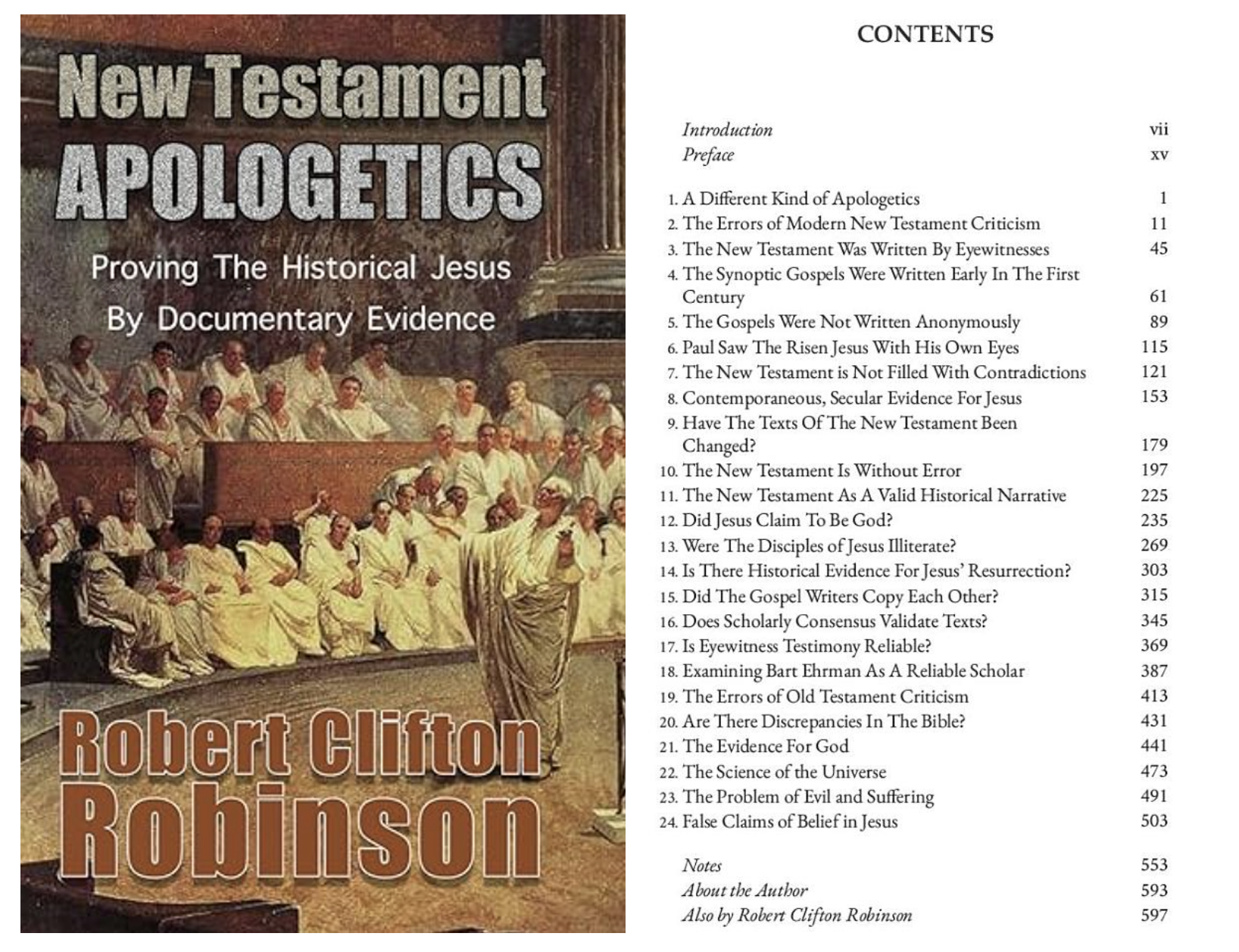
See “New Testament Apologetics,” by Robert Clifton Robinson
Categories: Robert Clifton Robinson


Please see, "Guidelines For Debate," at the right-side menu. Post your comment or argument here: